How Do Birds Contribute To The Environment: Why It Matters
Introduction
Across the United States, birds help keep forests, farms, wetlands, deserts, grasslands, and coastal areas healthy. They spread seeds, pollinate flowers, control insects, clean up dead animals, move nutrients, and serve as signs of ecosystem health.
Birds also support people. They can reduce crop pests, aid forest growth, attract nature-based tourism, and help scientists track environmental change. Their value is not limited to rare species. Common birds such as chickadees, robins, crows, swallows, hawks, and sparrows all play roles in local food webs.
The main answer is simple: birds support the environment by connecting plants, animals, soil, water, and people.

1. Birds Control Insects and Other Pests
Birds help control pest numbers by eating insects, spiders, rodents, and other small animals. This service is especially useful in forests, gardens, wetlands, and farms.
Swallows and purple martins catch flying insects. Chickadees, warblers, and vireos search leaves and bark for caterpillars and beetles. Barn owls, hawks, and kestrels hunt mice and other rodents.
A single bird may eat many insects during the breeding season. Parent birds also gather food for their young. This creates a strong demand for caterpillars and other soft-bodied prey.
How bird pest control helps ecosystems
Bird predation can:
- Limit insect outbreaks.
- Reduce damage to leaves and young plants.
- Lower the need for some chemical pesticides.
- Support plant growth.
- Keep rodent populations in check.
- Add balance to food webs.
Birds do not remove all pests. Their effect depends on habitat, season, weather, and the number of birds present. Still, research supports the value of birds as natural pest control agents.
A 2019 study in Science found that birds and bats can reduce insect damage and increase crop production in some farm systems. The effect varies by crop and region. It should not be treated as a replacement for every pest management method.

2. Birds Spread Seeds and Help Plants Reproduce
Many plants rely on birds to move their seeds. Birds eat fruit, carry seeds in their digestive systems, and later release those seeds in another place.
This process is called seed dispersal. It helps plants reach new soil, recover after disturbance, and grow away from the parent plant.
Cedar waxwings, robins, thrushes, bluebirds, and mockingbirds often eat berries and fruit. When these birds travel, they may deposit seeds in open ground, woodland edges, or forest gaps.
Why seed dispersal matters
Bird-assisted seed movement can:
- Expand plant populations.
- Help forests regenerate.
- Increase plant diversity.
- Restore vegetation after fires or storms.
- Connect separated habitats.
- Provide food for other wildlife.
The location of the dropped seed matters. A seed that lands in a suitable place has a better chance of growing than one that falls beneath a crowded parent plant.
Birds can also spread invasive plants. If a bird eats the fruit of a nonnative plant, it may carry that plant’s seeds to a new area. For this reason, gardeners should choose native plants when possible and remove invasive species according to local guidance.

3. Birds Pollinate Some Plants
Pollination happens when pollen moves from one flower part to another. This allows many plants to produce seeds and fruit.
In the United States, hummingbirds are among the best-known bird pollinators. Their long bills and tongues help them reach nectar in tubular flowers. As they feed, pollen can stick to their heads and bills and move to another flower.
Hummingbirds commonly visit plants such as:
- Bee balm.
- Cardinal flower.
- Columbine.
- Trumpet vine.
- Penstemon.
- Red buckeye.
Bird pollination is more common in some regions than others. Hummingbirds play a major role in parts of the United States, especially the West, Southwest, and Southeast. Many other plants rely more on bees, butterflies, moths, bats, wind, or self-pollination.
Bird pollination supports plant diversity
Birds may pollinate plants that produce little scent but offer bright colors and large amounts of nectar. These plants often have flowers shaped for bird feeding.
When birds move between flowers, they help maintain plant reproduction. That can support plant communities and the insects, mammals, and other birds that depend on those plants.

4. Birds Clean Up Dead Animals and Waste
Scavenging birds remove dead animals from the environment. Turkey vultures, black vultures, golden eagles, crows, ravens, and condors may feed on carrion.
This work is a form of natural sanitation. By consuming carcasses, scavengers can:
- Speed the breakdown of dead animals.
- Return nutrients to the food web.
- Reduce the time that carcasses remain exposed.
- Limit food and shelter for some disease-carrying organisms.
- Help keep roadsides, fields, and wild areas cleaner.
Vultures have strong stomach acids and other adaptations that help them process decaying meat. Their role is especially clear in warm areas, where carcasses can break down quickly.
The California condor is a well-known example. This endangered scavenger once disappeared from the wild in the United States. Conservation programs have helped return condors to parts of California, Arizona, and Utah.
Scavenger birds do not make dead animals harmless in every situation. They can be exposed to lead, pesticides, medicines, and other toxins in carcasses. Safe wildlife management still matters.
5. Birds Move Nutrients Through Ecosystems
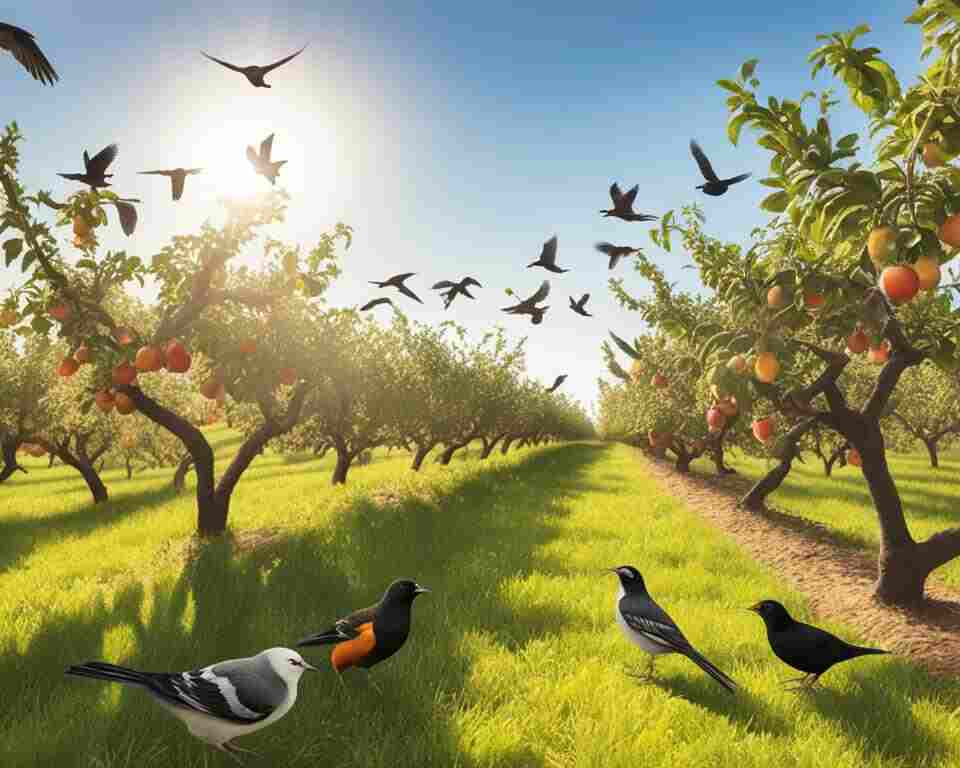
Birds move nutrients when they feed, travel, nest, and leave waste behind. This movement can link places that would otherwise have little contact.
Seabirds provide a clear example. Birds that feed at sea may nest on islands or coastal cliffs. Their droppings, called guano, carry marine nutrients onto land.
Those nutrients can support:
- Coastal plants.
- Soil organisms.
- Insects.
- Small mammals.
- Other birds.
- Island food webs.
Waterbirds also move nutrients between wetlands, lakes, rivers, and fields. Ducks, geese, herons, and shorebirds feed in one area and rest or nest in another.
Birds do not always improve nutrient balance. Large concentrations of birds in polluted or highly altered places can add too many nutrients to water. This may encourage harmful algae growth. The effect depends on the species, habitat, and local conditions.

6. Birds Help Maintain Food Webs
Birds are both predators and prey. Their presence helps connect many levels of an ecosystem.
A hawk may eat a mouse. A mouse may eat seeds. A seed may come from a tree that depends on birds for pollination or dispersal. The hawk’s role is therefore linked to plants, insects, soil, and weather.
Birds also provide food for other animals. Eggs, nestlings, and adult birds may be eaten by snakes, foxes, raccoons, mammals, and larger birds.
Birds as predators
Predatory birds can help regulate populations of:
- Mice and voles.
- Fish.
- Frogs.
- Snakes.
- Insects.
- Smaller birds.
Birds as prey
Birds support predators such as:
- Hawks.
- Falcons.
- Owls.
- Eagles.
- Foxes.
- Bobcats.
- Snakes.
Removing one bird species can affect many other species. The result may be small in one place and large in another. Food web effects are strongest when a species is abundant, specialized, or central to a habitat.

7. Birds Show Whether an Ecosystem Is Healthy
Birds are useful bioindicators. A bioindicator is a living organism whose condition or population can reveal information about the environment.
Birds are good indicators for several reasons:
- They live in nearly every habitat.
- Many species respond quickly to habitat change.
- They are easy to observe and count.
- Different species need different food and nesting sites.
- Long-term bird records are available.
A decline in insect-eating birds may point to fewer insects, pesticide exposure, habitat loss, or climate stress. A drop in wetland birds may signal changes in water level, pollution, or wetland destruction.
The North American Breeding Bird Survey and the U.S. Geological Survey provide long-term data on bird populations. The U.S. Fish and Wildlife Service also tracks migratory birds and habitat conditions.
One bird count cannot prove that an ecosystem is unhealthy. Good monitoring uses repeated surveys, several species, and information about weather and habitat.

8. Birds Support People and Local Economies
Birds provide benefits that are not always easy to measure. People watch birds in backyards, parks, refuges, forests, and coastal areas.
Birdwatching supports:
- Nature tourism.
- Local guides.
- Hotels and restaurants.
- Outdoor equipment stores.
- Conservation programs.
- Community science projects.
The U.S. Fish and Wildlife Service has reported that millions of Americans watch birds. Bird-related recreation can bring money to rural communities and public lands.
Birds also support science and education. Students can learn about migration, adaptation, food webs, and climate through local bird observations.
These benefits do not replace the ecological roles of birds. They add another reason to protect birds and the habitats they need.

9. What Threatens Birds and Their Environmental Roles?
Birds cannot provide these benefits when their populations fall sharply. The main threats in the United States include habitat loss, collisions, free-roaming cats, pollution, climate change, disease, and invasive species.
The 2019 study “Decline of the North American Avifauna,” published in Science, estimated that North America lost nearly 3 billion birds from 1970 to 2016. The estimate covered many bird groups and does not mean every species declined in the same way.
Common risks include:
- Loss of nesting and feeding habitat.
- Window strikes in homes and office buildings.
- Outdoor cats killing birds.
- Pesticide exposure.
- Lead poisoning.
- Light pollution during migration.
- Extreme heat, drought, storms, and wildfire.
- Reduced food supplies.
- Plastic and other waste.
A 2013 study in Nature Communications estimated that free-ranging cats kill billions of birds each year in the contiguous United States. The estimate is broad, and the exact number varies by method and location. It still shows why keeping cats indoors or using secure outdoor enclosures can protect wildlife.

10. How People Can Help Birds Support the Environment
Small actions can reduce common risks and improve local habitat.
Make windows safer
Window strikes kill many birds each year. To reduce collisions:
- Place screens on windows.
- Add exterior patterns, film, or cords with gaps of about 2 inches or less.
- Treat large glass areas near plants first.
- Turn off unnecessary lights at night during migration.
- Move feeders either very close to a window or more than 30 feet away.
Products and designs differ. Follow tested guidance from the American Bird Conservancy’s Bird-Friendly Windows program.
Grow native plants
Native plants provide food, shelter, and nesting sites for local wildlife. Use plants suited to your soil, sunlight, and climate.
Aim for a mix of:
- Trees.
- Shrubs.
- Native grasses.
- Flowering plants.
- Plants that produce berries or seeds.
Avoid pesticides when possible. If treatment is needed, use the least harmful option and follow the label.
Keep cats from roaming
Indoor cats face fewer risks from cars, fights, parasites, and disease. Outdoor cats can use a secure enclosure or supervised leash time.
Feed birds with care
Bird feeders can help people observe birds, but they also bring birds close together. Clean feeders and birdbaths often. Stop feeding if sick birds appear, and check current guidance from your state wildlife agency.
Do not feed birds bread as a main food. Provide clean water, and avoid salted or spoiled food.
Protect habitat
Leave some leaf litter, dead wood, and dense native plants when safe to do so. These features can provide insects, nesting material, and cover.

Common Misconceptions About Birds and the Environment
“Every bird is helpful in the same way.”
Bird species have different diets, habitats, and effects. A hummingbird pollinates flowers, while a vulture removes carrion. A duck may move nutrients between wetlands. One general claim cannot describe them all.
“Birds only matter in remote forests.”
Birds support urban parks, farms, suburbs, wetlands, and backyards. Even a small native garden can provide food and shelter during migration.
“More birds always means a healthier ecosystem.”
High numbers of one species may reflect an altered habitat. For example, a few adaptable species may increase while specialist species disappear. Diversity, habitat quality, and long-term trends give a better picture.
“Birds replace pest control in every farm.”
Birds can reduce some pests, but results depend on crop type, landscape, bird species, and farming methods. Integrated pest management may still require monitoring and other controls.
Frequently Asked Questions
Why are birds important to the food chain?
Birds are predators, prey, scavengers, and seed carriers. They connect insects, plants, mammals, reptiles, fish, and soil organisms. A change in bird numbers can affect several parts of the food chain.
Which birds help control pests?
Swallows, swifts, chickadees, warblers, bluebirds, nighthawks, owls, hawks, and kestrels all eat different pests. The best species depend on the habitat and the type of pest.
Do birds help trees grow?
Yes. Birds can spread tree seeds and pollinate some flowers. They also eat insects that damage leaves, buds, and young branches. Their effect differs by tree species and region.
Are birds affected by climate change?
Yes. Climate change can shift migration timing, change food supplies, increase heat stress, alter nesting conditions, and raise the risk of drought, wildfire, storms, and flooding.
What is the best way to help birds at home?
Start with safe windows, native plants, clean water, fewer pesticides, and no free-roaming cats. During migration, reduce outdoor lights at night. These actions address several major threats at once.
Conclusion
Birds contribute to the environment in many connected ways. They control pests, spread seeds, pollinate plants, remove carrion, move nutrients, support food webs, and reveal changes in ecosystem health.
Their benefits depend on healthy habitat and stable populations. People can help by protecting native plants, making windows safer, limiting pesticide use, keeping cats from roaming, and supporting local conservation work.
The next practical step is to identify the birds and habitats near your home. Then protect the food, water, shelter, and safe space those birds need.
Sources and Further Reading
- U.S. Fish and Wildlife Service: Birds
- U.S. Geological Survey: North American Breeding Bird Survey
- Rosenberg et al., “Decline of the North American Avifauna,” Science
- Whelan, Wenny, and Marquis, “Ecosystem Services Provided by Birds,” Annals of the New York Academy of Sciences
- American Bird Conservancy: Bird-Friendly Windows
- Loss, Will, and Marra, “The Impact of Free-Ranging Domestic Cats on Wildlife,” Nature Communications
Editorial Gap Map
| Reader question | Stage | Basis | Value | Placement |
|---|---|---|---|---|
| How do birds help farms? | During learning | Inferred next need from pest-control benefits | Connects ecology with practical land use | Pest-control section |
| How can people reduce bird deaths at home? | After learning | Inferred next need from common threats | Gives clear, low-cost actions | Practical actions section |
| Do all birds help ecosystems in the same way? | During learning | Inferred next need from species differences | Prevents overgeneralization | Misconceptions section |
| How do scientists know ecosystems are changing? | During learning | Inferred next need from the indicator role | Explains how bird data are used | Bioindicators section |