How Do Birds Migrate Without Getting Lost: Nature’s GPS
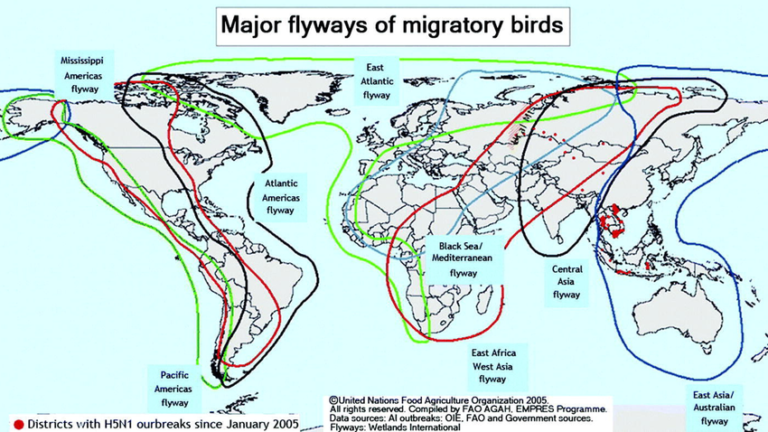
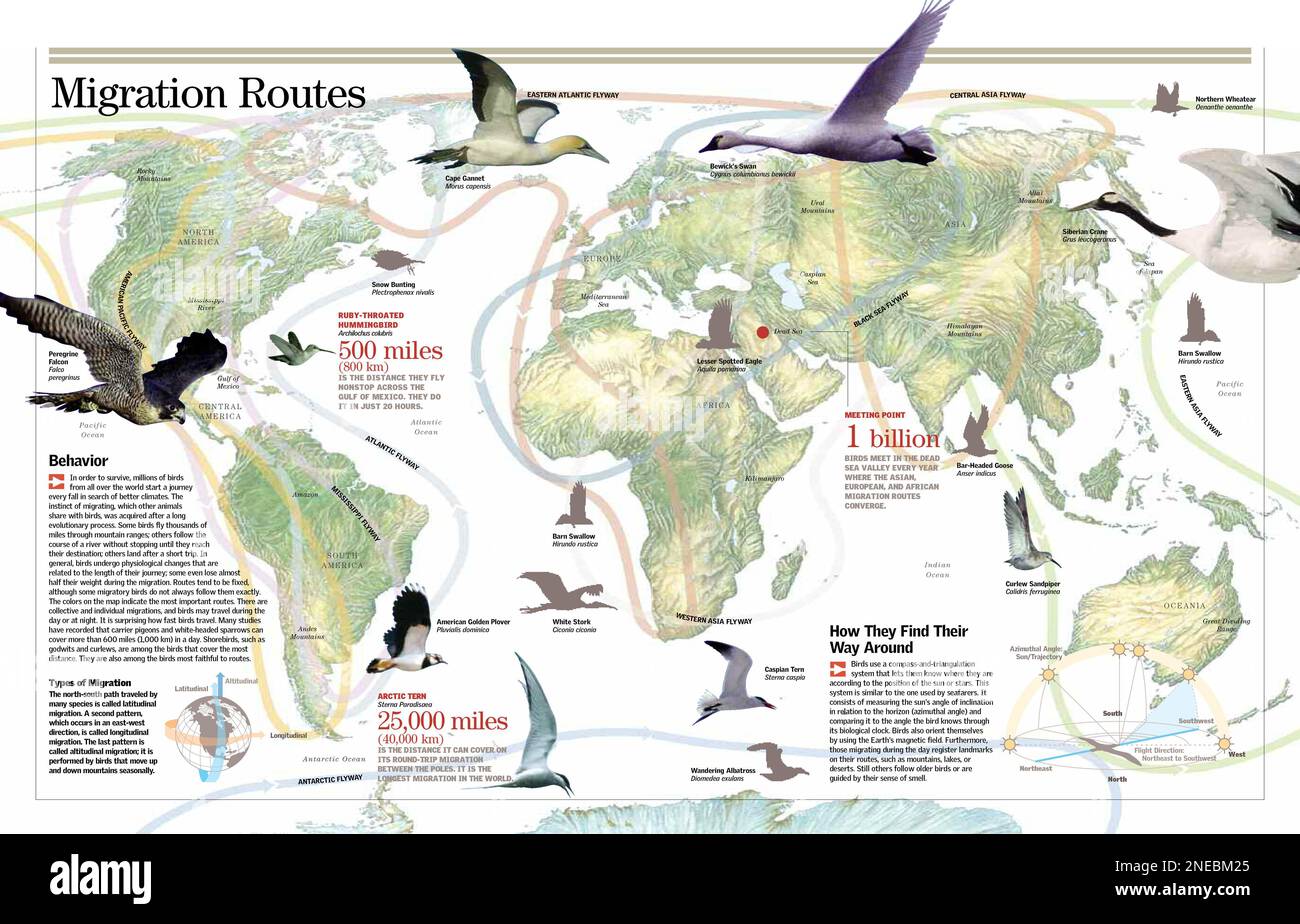
Birds in the United States migrate thousands of miles each year, often across forests, deserts, oceans, and cities. The Arctic tern, for example, travels between the Arctic and Antarctica. The bar-tailed godwit can fly from Alaska toward New Zealand without stopping for food. Many warblers leave the northern United States in fall and return to the same breeding areas in spring.
So, how do birds migrate without getting lost? They use several navigation tools at once. These include the Sun, stars, Earth’s magnetic field, landmarks, smell, wind, memory, and an inherited sense of direction. Young birds may begin with built-in instructions, then improve their routes through practice and social learning.
Bird migration is not like following one perfect road. It is more like using several maps at the same time. If clouds hide the Sun or a storm changes the wind, another system may help the bird stay on course.

Key answer: Birds migrate by combining inherited direction cues with the Sun, stars, Earth’s magnetic field, landmarks, smells, weather patterns, memory, and social learning. No single system explains every species or every journey.
Birds Use an Inherited Migration Program
Many birds are born with a basic migration plan. This plan can include the season of travel, the general direction, the time of day, and the length of the journey.
Scientists have found this through studies of birds raised in controlled settings. Young birds may show restless behavior before migration. This behavior is called zugunruhe, a German word for “migratory restlessness.” The direction in which a young bird faces or moves can match the normal route of its species.
This does not mean a young bird knows every stop on the trip. The inherited program often acts more like a compass setting than a full map. It may tell the bird to fly southwest in fall or northeast in spring.
Inherited direction is not perfect
Genes do not give every bird an exact route. Migration also depends on:
- Age
- Weather
- Food supply
- Wind
- Physical condition
- Experience
- Social learning
- Changes to habitat
A first-year bird may follow a broad direction without knowing the best feeding sites. Older birds often make better route choices because they remember stopover locations and local conditions.
Some species are more dependent on instinct. Others depend more on learning. Geese and cranes, for example, can learn routes from older birds. Many small songbirds can migrate alone on their first journey.

The Sun Helps Birds Keep Direction
The Sun provides birds with a useful compass. During the day, birds can use the Sun’s position to maintain a general heading.
The Sun moves across the sky, so birds must account for time. A bird that used the Sun as a simple fixed landmark would gradually turn off course. Instead, many birds appear to use an internal body clock. This lets them adjust for the Sun’s changing position.
This system is called a sun compass. It helps a bird know whether it is flying north, south, east, or west.
Birds can use the Sun even when it is not directly ahead
A bird does not need the Sun to sit in front of its flight path. It can use the angle between the Sun and its body. Its internal clock helps it interpret that angle.
Clouds can make this harder. Yet birds may still detect the general location of the Sun through bright areas in the sky. They may also switch to other cues when the sky is fully covered.
The Sun compass is especially useful for:
- Day-migrating birds
- Birds crossing open land
- Birds traveling over water
- Birds making broad directional movements
It is less useful at night, when birds must rely on stars, magnetic cues, landmarks, or other systems.
Stars Help Night-Migrating Birds Navigate
Many birds migrate at night. Flying after sunset can reduce heat stress, avoid some predators, and allow birds to travel when the air is calmer. Night migration is common among many North American songbirds.
Birds can use the night sky as a compass. Young birds learn the pattern of stars around the celestial poles. In the Northern Hemisphere, stars appear to rotate around the North Star, also called Polaris.
The stars do not act as road signs. Instead, their pattern helps birds find north and maintain a steady direction.
Birds learn the night sky
Research on songbirds has shown that star patterns matter during early development. Young birds need time to learn how the stars move across the sky. If researchers change the apparent star pattern, some birds change their preferred direction.
This finding supports an important point: part of bird navigation is learned, even when the urge to migrate is inherited.
Stars work best under a clear sky. Clouds, smoke, city lights, and bright moonlight can make the sky harder to read. Birds may then rely more on Earth’s magnetic field or other cues.

Earth’s Magnetic Field Acts Like a Hidden Compass
Birds can sense information from Earth’s magnetic field. This ability is called magnetoreception.
Earth’s magnetic field differs in strength and angle across the planet. Birds may use these differences to identify direction and location. In simple terms, the field can provide both a compass and, in some species, a rough map.
Scientists are still studying the exact body systems involved. Research points to more than one possible mechanism. These may include light-sensitive proteins in the eye and magnetic particles in tissues such as the beak or nervous system. The details may differ among species.
A magnetic compass is not the same as a magnetic map
A magnetic compass tells a bird which way to go. A magnetic map may help it estimate where it is.
These are separate skills. A bird may know that it should fly south but still lack a precise sense of its location. Some birds seem able to detect changes in magnetic field strength or inclination. Those changes may help them recognize broad geographic zones.
Magnetic navigation is useful because it works at night and through clouds. It can also help birds over the ocean, where there are few visible landmarks.
However, the magnetic field is not a complete GPS system. It does not always provide enough detail to guide a bird to one exact tree or nest. Birds usually combine magnetic information with other cues.

Landmarks, Smell, and Memory Refine the Route
Birds can use physical features of the landscape to stay on course. Mountains, coastlines, rivers, valleys, and large lakes can guide travel. A bird flying along the Atlantic coast, for example, may use the shoreline as a broad reference.
Landmarks are most useful when a bird has seen them before. That is why older birds often navigate more precisely than young birds. Memory can help a bird return to a nesting area, wintering site, or reliable feeding place.
Smell may help over large areas
Some birds use odors carried by the wind. The smell of plants, soil, forests, and ocean water can provide regional clues. This may be especially useful when visual landmarks are limited.
Studies of homing pigeons helped support the idea that birds can use odor maps. Other research has found that seabirds may use scents to locate productive ocean areas.
Smell is not a universal navigation tool. Its importance varies by species and setting. It may support other systems rather than replace them.
Birds can remember important locations
Migration routes often include stopover sites. These are places where birds rest and feed before continuing. A bird that remembers a rich wetland or woodland has an advantage over one that searches at random.
This makes habitat protection important. If a stopover site disappears, a bird may lose a key part of its route. A successful migration depends not only on direction but also on finding safe places to refuel.

Wind and Weather Change the Flight Path
Birds do not always fly in a straight line. They use wind to save energy and extend their range.
A tailwind pushes a bird toward its destination. A headwind slows it down and increases the energy cost of flight. Birds may wait for helpful winds, change altitude, or alter their route when weather shifts.
Some birds can detect weather changes before a storm arrives. They may respond to pressure, wind, temperature, and low-frequency sound. These signals can help them avoid dangerous conditions.
Birds correct for crosswinds
A crosswind can push a bird sideways. To compensate, the bird may point slightly into the wind. This is called wind drift compensation.
Birds do not always correct perfectly. Young birds may drift more than adults. Strong winds can push entire groups off their usual path. Some birds then use landmarks, magnetic cues, or memory to return to a safer route.
Weather can cause migration errors
Birds can become disoriented during:
- Fog
- Hurricanes
- Strong storms
- Heavy rain
- Artificial light at night
- Sudden temperature changes
- Unusual wind patterns
A bird that appears “lost” may have been blown off course rather than lacking a navigation system. Many birds can correct their route later, but not all survive the extra distance or poor conditions.

Social Learning Helps Some Birds Follow Routes
Some migrating birds learn from older members of their group. This is common in species that travel in family groups or organized flocks.
Young geese and cranes may follow experienced adults. The adults can lead them to feeding areas, roosts, and seasonal destinations. The young birds learn more than direction. They also learn when to stop, where to rest, and how to respond to weather.
Not every bird needs a teacher. Many songbirds migrate alone at night. Their first journey can rely heavily on inherited direction and environmental cues.
Flocks can improve navigation
A flock gives birds more eyes and more experience. One bird may notice a landmark. Another may respond to wind. Together, the group may maintain a more stable route than one bird flying alone.
This does not make a flock infallible. Large groups can also be drawn toward bright city lights or pushed off course by storms. Social travel helps most when birds have safe conditions and experienced leaders.

Why Birds Sometimes Get Lost
Birds do get lost. Their navigation systems reduce errors, but they do not remove risk.
A bird may stray because of a storm, illness, exhaustion, habitat loss, or a navigation mistake. Young birds face added challenges because they have less experience with landmarks and stopover sites.
Artificial light is another major problem. Bright lights from cities and tall buildings can attract or confuse birds that migrate at night. Birds may circle a light source, collide with structures, or use up energy before reaching food.
Birds can also arrive in unusual places after strong winds. A rare bird sighting in the United States may reflect natural displacement rather than a normal range.
Migration routes can change over time
Birds are not locked to one path. They may adjust their route when food, climate, water, or habitat changes. Some species now migrate at different times than they did in the past.
These changes can help a population in the short term. They can also create problems if birds arrive before food is available or reach areas with fewer safe stopover sites.
The key lesson is simple: bird migration is flexible, but it has limits. A bird can use several cues, yet it still depends on safe habitat and suitable weather.

How Scientists Study Bird Navigation
Scientists study migration with several tools. Each method answers a different question.
Common research methods include:
- Banding: Small bands identify individual birds that are later found or reported.
- Satellite transmitters: Devices can track the movement of larger birds over long distances.
- Geolocators: Tiny light sensors can estimate a bird’s location from day length and sunrise or sunset.
- Weather radar: Radar shows large movements of birds through the air.
- Stable isotopes: Chemical signatures in feathers can help link birds to broad regions.
- Controlled experiments: Researchers can change light, star patterns, magnetic fields, or odors and observe behavior.
- Genetic studies: DNA can reveal differences in migration timing and direction among populations.
No single method provides the whole answer. Tracking may show where a bird went, but not which cue it used. A controlled experiment may show that a cue matters, but not how important it is in the wild.
Researchers therefore compare field data with laboratory results. This helps separate documented behavior from proposed explanations.

A Simple Example of Bird Navigation
Imagine a young warbler leaving the northeastern United States for the Caribbean in fall.
First, its inherited program creates a strong urge to migrate and favors a general southward direction. At night, the bird can use star patterns and Earth’s magnetic field. If it sees a coastline or island, it may use that landmark as well.
Wind then changes the details. A tailwind may speed the bird along. A crosswind may push it east or west. The bird can adjust its heading with magnetic, visual, and environmental cues.
When it reaches a stopover site, memory and local conditions matter. If the site has insects, water, and shelter, the bird can refuel. If the site is damaged or covered by bright lights, the journey becomes more dangerous.
This example shows why migration is a system, not a single trick. Each cue supports the others.

Common Misconceptions About Bird Migration
Birds do not follow one invisible highway
Migration routes are often broad corridors, not exact lines. Wind and weather can shift the path. Different birds from the same species may use slightly different routes.
Birds do not always migrate in a V shape
The V formation is linked mainly with some large birds, such as geese and cranes. Many songbirds migrate alone or in loose groups. Some seabirds use different formations or fly without a visible flock.
All birds do not migrate the same way
Migration varies by species, age, sex, and population. Some birds travel thousands of miles. Others move only a short distance to find food or escape cold weather.
Magnetic navigation is not fully understood
Scientists have strong evidence that birds sense Earth’s magnetic field. The exact organs and processes may differ among species and remain an active research topic.
Birds do not need to see their destination from the start
A bird can travel toward a broad target using direction cues. It may use landmarks, smell, memory, or local signals only after it reaches the region. The final approach can involve different information from the first part of the journey.

Frequently Asked Questions
Do birds migrate at night or during the day?
Both. Many songbirds migrate at night, while hawks, swallows, cranes, and some waterfowl often travel during the day. The choice depends on the species, habitat, weather, predators, and feeding needs.
How do birds know when to migrate?
Birds respond to internal body clocks, changing daylight, temperature, food supply, and hormones. Longer or shorter days can trigger migration readiness in many species.
Can a bird migrate alone?
Yes. Many young songbirds make their first migration alone. Their route can come from inherited behavior and environmental cues. Other birds depend more on family groups or experienced flock leaders.
How do birds find the same place every year?
They combine direction cues with memory. Older birds may remember coastlines, mountains, rivers, smells, magnetic patterns, and productive stopover sites. Some species also learn routes from other birds.
Do birds ever fly across the ocean?
Yes. Seabirds and some land birds cross large stretches of ocean. They use wind, magnetic information, stars, the Sun, and body fat stored before departure. Ocean crossings can be dangerous because food and shelter are limited.
How can people help migrating birds in the United States?
People can reduce bright outdoor lighting during peak migration, keep cats indoors, make windows safer for birds, protect native plants, and preserve wetlands and wooded stopover areas. Local bird groups and the U.S. Fish and Wildlife Service provide regional guidance.
Reliable Sources for Further Reading
The following organizations and research resources explain bird migration and navigation in more detail:
- Cornell Lab of Ornithology: Bird Migration
- U.S. Fish & Wildlife Service: Migratory Birds
- National Audubon Society: Bird Migration
- NOAA: Weather Radar and Bird Migration
- British Trust for Ornithology: Migration Research
- Proceedings of the Royal Society B: Bird Navigation Research
These sources differ in purpose. The Cornell Lab and Audubon offer public explanations. The U.S. Fish and Wildlife Service covers conservation and management. NOAA supports weather and radar research. Scientific journals provide primary research and technical detail.

Conclusion
Birds migrate without getting lost by combining many forms of information. An inherited program gives them a starting direction. The Sun and stars provide compass cues. Earth’s magnetic field works in darkness and over open water. Landmarks, smells, weather, memory, and social learning help refine the route.
The process is flexible, not perfect. Storms, bright city lights, habitat loss, and inexperience can push birds off course. Protecting dark skies, safe buildings, wetlands, forests, and coastal habitats gives migrating birds a better chance to complete the journey.