How Do Birds Survive Snow Storms: Winter Survival Guide
Across the United States, birds survive snow storms by using shelter, warm feathers, stored body fat, and smart behavior. They hide from wind, fluff their feathers, reduce heat loss, and seek food before and after the storm. Some birds also enter short periods of torpor, a state that lowers body activity and saves energy.
Snow alone is not always the greatest danger. Cold wind, wet feathers, hunger, ice, and a lack of safe shelter can be more harmful. Birds that live in Alaska, the Great Lakes region, the Rocky Mountains, and the Northeast face especially harsh winter conditions, but birds across the country use the same basic survival tools.

How birds stay warm during a snow storm
Birds stay warm through a mix of insulation, body heat, behavior, and energy use. Their feathers act like a winter coat, but feathers work best when they stay dry and trap air.
They fluff their feathers
A bird can raise its feathers to create a layer of still air next to its skin. This air layer slows the loss of body heat.
You may see a bird look round or puffed up during cold weather. This shape is not a sign that the bird gained weight. It is a heat-saving posture.
Birds also tuck their heads under their wings. This protects the head and bill, which can lose heat quickly.
They shiver to make heat
Birds use rapid muscle movements, or shivering, to create heat. This takes energy, so birds must find enough food to replace the calories they burn.
Small birds face a special challenge. They have a large surface area compared with their body mass, so they can lose heat faster than larger birds. A chickadee, sparrow, or wren may need to eat often during a cold day.
They use their feet and legs carefully
Bird feet have little soft tissue and many blood vessels. Their blood flow helps reduce heat loss through a process called countercurrent heat exchange.
Warm blood moving toward the feet transfers some heat to colder blood returning to the body. This lets birds stand on snow or ice without losing as much body heat as a mammal might.
Birds may also:
- Stand on one foot while pulling the other into their feathers
- Sit on both feet to reduce heat loss
- Tuck their bill into their shoulder feathers
- Avoid standing on wet or exposed surfaces
- Move between perches to find less wind
They lower their body temperature at night
Some small birds enter a shallow state of torpor during very cold nights. Torpor lowers body temperature and slows some body processes. This helps conserve energy.
Torpor is not the same as hibernation. Birds usually remain able to wake and become active when conditions improve.
The use of torpor varies by species. It may help some birds survive a very cold night, but it does not remove the need for food and shelter.

Where birds shelter during heavy snow
Birds usually survive a snow storm by getting out of the wind rather than by staying fully exposed. A sheltered site can feel much warmer than an open field, even when both places have the same air temperature.
Common winter shelters include:
- Dense evergreen trees
- Thick shrubs and hedges
- Hollow tree trunks
- Tree cavities
- Rock cracks
- Brush piles
- Snow tunnels
- Covered porches or natural ledges
- Nest boxes used as winter roosts
Evergreen trees are useful because their needles block wind and provide cover during snowfall. Conifers such as spruce, fir, cedar, and pine can offer better shelter than bare deciduous trees.
Some birds roost together. A group can reduce the exposed surface area of each bird. However, crowding can also spread disease if birds share a dirty or poorly maintained site.
Why wind matters so much
Wind removes the layer of warm air around a bird’s body. This is called wind chill. The bird’s feathers still provide insulation, but moving air reduces the benefit.
A bird may survive a low temperature in a sheltered cavity but struggle in the same temperature with strong wind and wet snow.
For this reason, birds often choose:
- The side of a tree away from the wind
- Thick evergreen branches
- Low shrubs with dense stems
- Cavities with small openings
- Protected areas near buildings or rock walls

How birds find food before and after a snow storm
Birds need more energy in cold weather because they burn calories to stay warm. Many birds feed heavily before a major storm when weather forecasts, air pressure changes, or falling temperatures signal trouble.
They may eat:
- Seeds
- Berries
- Nuts
- Insects and insect eggs
- Tree buds
- Grain
- Fruit that remains on plants
- Sap or suet from human-provided feeders
Snow can cover natural food. Ice can also seal seeds inside plants or make insects hard to reach. Birds may then rely on food stored in the environment or on feeding stations.
Food storage helps some species
Several birds cache food. They hide seeds or nuts in soil, bark, leaf litter, or tree cracks and return to them later.
Examples include:
- Blue Jays
- Clark’s Nutcrackers
- Nuthatches
- Chickadees
- Some woodpeckers
Food caching works best when birds can remember storage sites and reach them after snow. Deep snow and ice can make some hidden food difficult to recover.
Birds change where and when they feed
During or after a storm, birds may feed in protected places rather than in open areas. They may also spend more time searching for food during the warmest part of the day.
If a bird feeder becomes buried, birds may search nearby shrubs, tree bases, and exposed ground. A feeder is helpful, but it is not the only food source birds use.
Can birds fly in a snow storm?
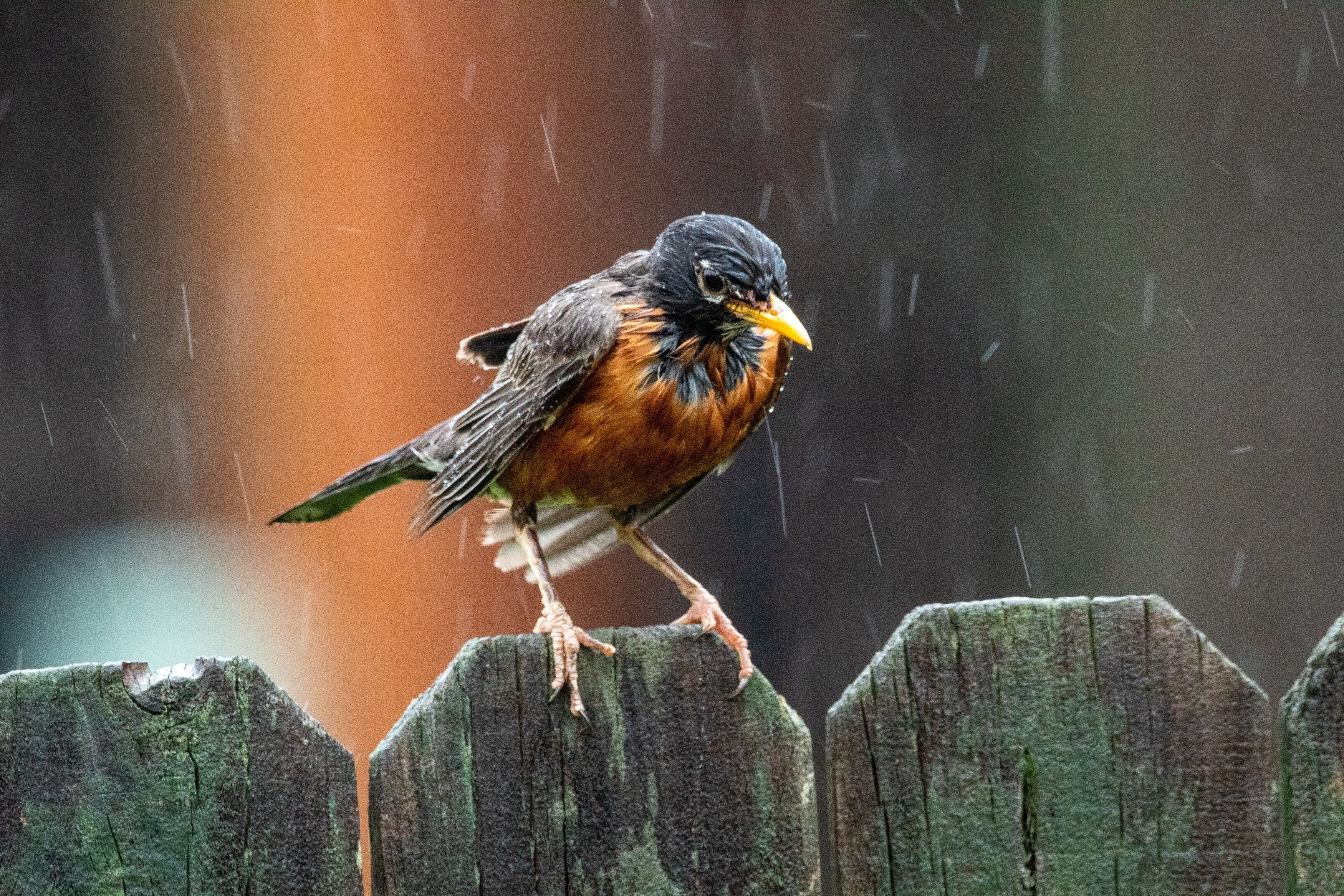
Birds can fly in light snow, but many avoid flying during the worst part of a storm. Heavy snow reduces visibility and can make it hard to control direction. Strong winds can force birds off course or increase the energy needed for flight.
Birds may stay hidden until:
- Wind speeds drop
- Visibility improves
- Snowfall becomes lighter
- They need food or water
- They must escape a predator
Some species migrate before a major storm. Others move short distances to lower, warmer, or more sheltered areas. A snow storm can also cause birds to appear in unusual places when they are pushed off their normal route.
Birds that fly at night face another risk. Snow, fog, and low cloud can increase the chance of collisions with buildings, towers, and windows. This is one reason bird-safe windows and reduced outdoor lighting can matter during migration and storm events.
What happens if a bird becomes covered in snow?
A healthy bird may allow light snow to collect around it while it sits in cover. Its body heat can melt some snow, and its feathers can continue to provide insulation if they stay dry.
A bird in deep, wet snow may be in danger if it cannot move, fly, or reach shelter. Do not assume every motionless bird needs human help, though. Cold birds often sit quietly to save energy.
Watch for clear signs of trouble:
- The bird cannot stand or perch
- One wing hangs lower than the other
- It has blood or an obvious wound
- It repeatedly hits a window
- It remains on the ground in an exposed area
- A cat or dog has touched it
- It cannot fly after the storm passes
If these signs appear, contact a licensed wildlife rehabilitator. In the United States, state wildlife agencies and local animal control offices can help identify a permitted rehabilitator.

Do birds die during snow storms?
Yes. Some birds die during severe snow storms, especially when cold weather lasts for many days. Risk rises when birds cannot find food, remain wet, lose shelter, or face repeated freezing nights.
Young birds, older birds, injured birds, and birds in poor condition may have less energy to cope with the cold. Small species can also become vulnerable faster because they lose heat quickly.
A snow storm can cause death through:
- Hypothermia
- Starvation
- Dehydration
- Exhaustion
- Collision with buildings
- Trapping under ice or snow
- Exposure to predators
- Disease made worse by crowding
Still, finding a quiet bird does not prove that it is dying. A bird may be resting in a sheltered place and may resume normal activity when the weather improves.
How long can birds survive without food?
There is no single answer. Survival time depends on the species, body size, health, temperature, wind, and stored body fat.
A small bird may need food several times a day in severe cold. It cannot safely depend on a feeder that may freeze, empty, or become inaccessible.
This is why birds use several food sources instead of one. Natural cover and native plants can provide more lasting support than a feeder alone.

How to help birds during a snow storm
The best way to help birds is to provide safe cover, reliable food, and clean water while reducing avoidable hazards.
1. Keep feeders filled and clean
If you use bird feeders, fill them before the storm. Place them near natural cover, but not so close that cats can hide beside them.
Clean feeders on a regular schedule. Remove wet, moldy, or spoiled seed. Wet seed can clump and spoil, and dirty feeding areas can help spread disease.
Different birds prefer different foods:
| Bird group | Foods they may use |
|---|---|
| Chickadees and nuthatches | Black-oil sunflower seed, peanuts, suet |
| Cardinals and finches | Sunflower seed, safflower seed |
| Sparrows and juncos | Millet and mixed seed |
| Woodpeckers | Suet, peanuts, sunflower seed |
| Blue Jays | Peanuts, sunflower seed, larger nuts |
These are general preferences, not guarantees. Local bird populations differ across the United States.
2. Provide fresh water
Snow is not always a safe or useful water source. Birds may need liquid water for drinking and feather care, even during winter.
Use a shallow birdbath and replace the water often. Keep it clean. A heated birdbath can prevent freezing, but use only equipment made for outdoor use and follow the manufacturer’s safety directions.
Do not add antifreeze, salt, or other chemicals to bird water. These substances can poison birds and other wildlife.
3. Protect natural shelter
Leave dense shrubs, evergreen branches, leaf litter, and brush piles in safe areas. These features provide cover from wind and predators.
Avoid cutting down dead trees with cavities unless they create a clear safety hazard. Many birds use cavities for winter shelter, even when they are not nesting.
Native trees and shrubs can also provide berries, seeds, and insects. Choose plants suited to your local region rather than relying on one national plant list.
4. Reduce window collisions
Move feeders either very close to a window or much farther away. A feeder placed at an intermediate distance can encourage birds to fly at high speed toward glass.
Use exterior window markers, screens, shades, or other bird-safe treatments. During major migration periods and heavy weather, turn off unnecessary outdoor lights.
5. Keep pets indoors
Cats and dogs can catch birds weakened by cold or forced onto the ground. Keep cats indoors and supervise dogs near feeding areas.
This protects birds and reduces the risk that a pet will come into contact with an injured or diseased animal.

What not to do when you see a cold bird
Do not bring every quiet bird indoors. A bird that is alert, perched, and sheltered may be coping normally.
Do not:
- Handle a healthy bird just because it is fluffed up
- Pour warm water on snow-covered feathers
- Use a hair dryer or heating pad
- Feed bread, milk, or human leftovers
- Force food or water into a weak bird’s bill
- Place a wild bird in a cage without guidance
- Keep a wild bird as a pet
- Release an injured bird without advice
If a bird is clearly injured, place it in a ventilated cardboard box lined with a clean towel. Keep the box dark, quiet, and away from children and pets. Do not give it food or water unless a wildlife professional tells you to do so.
Contact a licensed wildlife rehabilitator as soon as possible. Laws and permits differ by state, and many native birds are protected under federal law.

Which birds are best adapted to winter in the United States?
Many birds remain in the United States throughout winter. Their survival methods differ by habitat and species.
| Bird | Common winter advantage |
|---|---|
| Black-capped Chickadee | Stores food, uses sheltered roosts, and can use short torpor |
| Downy Woodpecker | Finds insects in bark and uses tree cavities |
| Northern Cardinal | Eats seeds and berries and uses dense shrubs |
| Dark-eyed Junco | Forages on or near the ground and gathers in loose groups |
| Canada Goose | Uses open water, fields, and stored body reserves |
| Wild Turkey | Uses woodland cover and feeds on seeds and plant matter |
| American Robin | Shifts its diet toward fruit in many winter areas |
| Snow Bunting | Has dense plumage and remains active in cold open habitats |
Not every individual bird follows the same pattern. Some birds migrate, some stay year-round, and some move only short distances in response to food and weather.

Frequently asked questions
Do birds feel cold in the snow?
Yes. Birds can feel cold, but their feathers, body heat, behavior, and metabolism help them manage it. They still face serious risk when they become wet, lose food, or cannot reach shelter.
Should I put food out during a snow storm?
You can provide food if you can keep the feeder clean and safe. Fill it before or during the storm, remove spoiled seed, and place it near cover but away from cat hiding spots.
Do birds sleep in the snow?
Some birds may roost in protected snow cavities or under dense cover. Most seek a place that blocks wind, such as an evergreen tree, tree cavity, shrub, or sheltered ledge.
Can birds eat snow for water?
Birds may eat snow, but snow is not always an adequate water source. Fresh liquid water can help birds drink and maintain their feathers, especially when natural water is frozen.
What should I do if a bird hits my window during a storm?
Place the bird in a ventilated box in a quiet, dark area and contact a wildlife rehabilitator if it cannot fly normally. A bird may have internal injuries even when no wound is visible.
Research basis and sources
This guide is based on documented information from U.S. wildlife and ornithology organizations, including:
- Cornell Lab of Ornithology: Winter bird survival and bird biology
- U.S. Fish & Wildlife Service: Helping injured wildlife
- National Audubon Society: Winter bird feeding and habitat guidance
- U.S. Geological Survey: Bird migration and wildlife research
- Cornell Lab of Ornithology: FeederWatch and bird health guidance
These sources support the general mechanisms described here. Exact winter behavior varies by species, location, storm severity, and individual health.

Conclusion
Birds survive snow storms by combining several defenses. Their feathers trap warm air, their muscles create heat, and their behavior helps them avoid wind and conserve energy. Food, water, dense cover, and safe roosts can make the difference during a long cold spell.
The most useful help is simple: keep feeding areas clean, offer safe water, preserve natural shelter, reduce window hazards, and call a licensed wildlife rehabilitator for birds that are clearly injured or unable to fly.