Why Does My Cat Vomit After Eating Dry Food: Causes & Fixes
Cats may vomit after dry food because they eat fast, react to ingredients, or have an underlying illness.
Understanding why does my cat vomit after eating dry food can help you respond calmly and safely. In many cases, the cause is simple, such as eating too quickly or swallowing too much air. However, repeated vomiting can point to food intolerance, parasites, dental pain, or a more serious health problem. This guide explains the common causes, warning signs, and practical steps that can help your cat keep food down.
Why does my cat vomit after eating dry food?
Why does my cat vomit after eating dry food? The most common reason is fast eating. Some cats gulp kibble without chewing it well. Their stomach then fills quickly, expands, and sends the food back up.
Other common causes include:
• Eating a large meal after a long gap
• Swallowing air while gulping kibble
• Drinking a lot of water right after eating
• Sensitivity to a food ingredient
• Sudden changes in diet
• Hairballs or mild stomach irritation
• Dental pain that makes chewing hard
• Parasites, constipation, or another illness
Dry food itself is not automatically harmful. Many cats eat it without trouble. The issue may be the recipe, the feeding method, or a health condition that makes digestion harder.

Vomiting or regurgitation: Why the difference matters
Many cat owners use the word “vomiting” for any food that comes back up. Yet vomiting and regurgitation are not the same.
Vomiting is an active process. Your cat may lick its lips, drool, swallow often, crouch, or make strong belly movements. The food may look partly digested, and yellow fluid or foam may be present.
Regurgitation is more passive. Food often comes up soon after eating. It may look like whole, tube-shaped pieces of kibble. Your cat may seem calm before and after the event.
This difference helps your veterinarian find the cause. A short video can be very useful. If it is safe, record what happens and note how long after eating the food comes back up.

Common reasons cats vomit after dry food
Eating too fast
Fast eating is one of the leading answers to why does my cat vomit after eating dry food. A cat that races to the bowl may swallow kibble whole. The stomach receives food faster than it can manage.
This often happens in homes with several pets. A cat may feel the need to guard its meal or eat before another animal takes it. Stress can turn a normal meal into a hurried one.
Try offering smaller meals more often. A slow feeder, puzzle feeder, or wide shallow dish may also help. Some cats eat more slowly when kibble is spread across a clean baking sheet.
Eating too much at once
A full bowl can encourage overeating. This is especially common when dry food is left out all day. Kibble is easy to eat, and cats may return to it many times.
Large portions can stretch the stomach and trigger vomiting. Measure each meal with a cup or kitchen scale. Your veterinarian can help set a daily amount based on your cat’s age, weight, activity, and health.
Food intolerance or allergy
A food intolerance may cause vomiting, soft stool, gas, or poor appetite. Common ingredients can still cause problems in some cats. These may include certain meat proteins, dairy ingredients, fish, or additives.
Food allergies can also cause itchy skin, ear problems, or repeated skin infections. A true food allergy needs careful testing. Randomly changing foods can make the cause harder to find.
A veterinarian may suggest a strict elimination diet. During this trial, your cat must eat only the recommended food. Treats, table scraps, flavored medicine, and other pet food can affect the result.
Sudden diet changes
A quick switch from one food to another may upset the digestive tract. This can happen when the new food has a different protein, fat level, fiber content, or calorie density.
Change food slowly over about seven to ten days unless your veterinarian gives different advice. Start with a small amount of the new food mixed with the old. Increase the new food step by step while watching your cat’s stool, appetite, and vomiting.
Hairballs
Hairballs can irritate the stomach. A cat may vomit food, clear fluid, or a long mass of hair. Cats that groom often, have long coats, or shed heavily may be more likely to develop hairballs.
Regular brushing can reduce swallowed hair. However, frequent vomiting should not be dismissed as “just hairballs.” Repeated episodes may signal another digestive problem.
Dental pain
A cat with dental disease may struggle to chew dry food. It may swallow pieces whole, drop kibble, chew on one side, or avoid the bowl. Bad breath, red gums, and pawing at the mouth are also warning signs.
Dental pain can make eating stressful. A veterinary oral exam is the safest way to check for gum disease, broken teeth, or other mouth problems. Do not try to inspect deep inside your cat’s mouth if it seems painful.
An underlying medical condition
Persistent vomiting can be linked to illness. Possible causes include:
• Intestinal parasites
• Constipation
• Inflammatory bowel disease
• Kidney disease
• Liver disease
• Pancreatitis
• Diabetes
• Hyperthyroidism
• A swallowed object
• Cancer
These conditions cannot be diagnosed by symptoms alone. A cat may seem fairly normal while an illness develops. This is why repeated vomiting deserves a veterinary check.

When cat vomiting needs urgent veterinary care
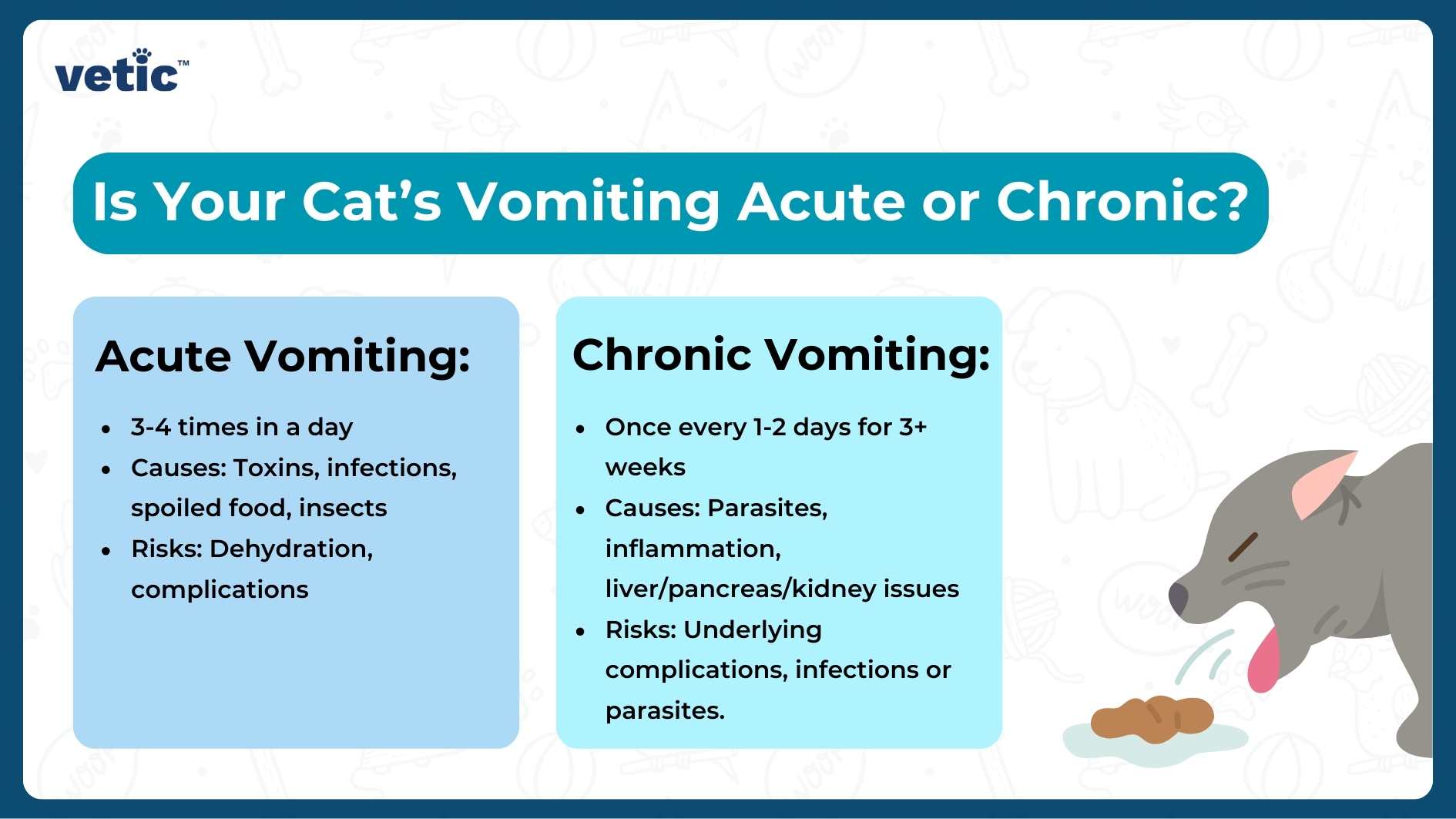
One isolated episode may not be an emergency if your cat acts normal, drinks water, and eats later. Still, watch closely for changes. Cats can become dehydrated faster than many owners expect.
Contact a veterinarian soon if your cat vomits more than once, vomits for over a day, or refuses food. Seek urgent care if any of these signs appear:
• Blood in vomit
• Black, coffee-ground-like material
• Severe weakness or collapse
• A swollen or painful belly
• Trouble breathing
• Repeated dry heaving
• Pale or white gums
• Severe diarrhea
• Signs of dehydration
• Suspected poison or swallowed object
• No food or water staying down
Kittens, senior cats, and cats with kidney, liver, or heart disease need extra care. They may become unwell more quickly. Never give human medicines unless a veterinarian specifically tells you to do so. Some common pain relievers are highly toxic to cats.
What to do when your cat vomits after dry food
Start by removing the food bowl for a short time, but do not withhold water for long periods. Offer small amounts of fresh water. If your cat vomits water, call a veterinarian promptly.
Clean the area and inspect the vomit. Look for whole kibble, hair, blood, plant pieces, string, or unusual objects. Save a photo or video if possible. These details can help your veterinarian.
Next, record useful information:
• What your cat ate
• How much it ate
• How quickly it ate
• How long after eating it vomited
• The color and texture of the vomit
• Any diarrhea, pain, or behavior changes
• Recent food, medicine, or treat changes
Do not force your cat to eat. If vomiting stops, your veterinarian may suggest small, frequent meals. Follow that advice carefully. Cats should not go without food for too long, especially if they are overweight, because sudden fasting can raise the risk of fatty liver disease.

How to prevent vomiting from dry food
Prevention depends on the cause. If fast eating is the problem, focus on slowing the meal rather than changing food right away.
Helpful steps include:
-
Divide the daily food into three or four small meals.
-
Use a slow feeder or food puzzle.
-
Spread kibble over a wide plate.
-
Feed cats in separate rooms if competition is present.
-
Measure portions instead of filling the bowl freely.
-
Keep fresh water available.
-
Brush your cat often during heavy shedding.
-
Change diets gradually.
-
Keep string, ribbon, plants, and small objects out of reach.
-
Schedule regular veterinary checkups.
Some cats do better with wet food, softened kibble, or a prescription diet. Do not make a major diet change without considering your cat’s complete health needs. Wet food can help increase water intake, but it is not a universal cure for vomiting.
Treats matter too. A cat may tolerate its main food but vomit after rich treats or table scraps. Keep treats small and simple, and include them in the daily calorie total.

Choosing the right dry food
The best dry food is not always the most expensive food. It should be complete and balanced for your cat’s life stage. Look for a product made under recognized nutritional standards and suited to your cat’s age and health.
Your veterinarian may recommend a special diet for:
• Sensitive digestion
• Food allergies
• Kidney disease
• Weight control
• Diabetes
• Recovery after illness
Avoid switching between many foods in search of a quick answer. Frequent changes can cause more stomach upset and make patterns difficult to see.
Ingredient lists can offer clues, but they do not prove a food allergy. A label that says “limited ingredient” may still contain an ingredient that bothers your cat. Veterinary diet trials are more reliable than guesswork.

How veterinarians diagnose the cause
Your veterinarian will begin with questions and a physical exam. They may ask about your cat’s diet, feeding routine, stool, water intake, weight, and home environment.
Possible tests include:
• Fecal testing for parasites
• Blood work
• Urine testing
• Dental examination
• X-rays
• Ultrasound
• A controlled food trial
The right tests depend on your cat’s age, symptoms, and medical history. A healthy young cat with one mild episode may need simple monitoring. An older cat with weight loss and repeated vomiting may need blood tests and imaging.
Veterinary care can feel stressful, but clear notes make the visit easier. Bring the food package, a list of medicines, and a short video if you have one. These small details often save time.

A practical feeding plan to try
If your cat is otherwise bright and your veterinarian has ruled out urgent problems, use a simple plan.
• Measure the daily food amount.
• Split it into several small meals.
• Offer food in a slow feeder or puzzle toy.
• Keep other pets away during meals.
• Avoid treats for a few days unless your veterinarian says otherwise.
• Watch for vomiting, stool changes, appetite loss, and weight changes.
• Keep a daily food and symptom log.
A common mistake is to give a large replacement meal after vomiting. This can overload the stomach and start the cycle again. Small portions are usually gentler, but follow your veterinarian’s instructions if your cat has a known illness.
Frequently Asked Questions About Why Does My Cat Vomit After Eating Dry Food
Why does my cat vomit dry food but not wet food?
Dry food may be eaten faster, swallowed in larger pieces, or may contain an ingredient that bothers your cat. Wet food also adds water and may be easier to chew, but repeated vomiting still needs veterinary attention.
Should I stop giving my cat dry food after vomiting?
Do not make a permanent change after one episode without looking for the cause. If vomiting repeats, ask your veterinarian whether wet food, softened kibble, or a prescription diet is more suitable.
Why does my cat vomit undigested kibble right after eating?
Undigested kibble soon after a meal often suggests regurgitation or very fast eating. A slow feeder, smaller meals, and a veterinary check can help determine the reason.
Can dry food cause a hairball?
Dry food does not directly create hairballs. A cat may vomit after eating because swallowed hair irritates the stomach, while the timing with food makes the two events seem linked.
How many times can a cat vomit before seeing a vet?
There is no safe number for every cat. One mild episode may pass, but repeated vomiting, vomiting with weakness, blood, pain, dehydration, or poor appetite should be discussed with a veterinarian promptly.
Can changing dry food cause vomiting?
Yes, a sudden diet change can upset digestion. Move to a new food gradually over seven to ten days, unless a veterinarian advises a faster change for medical reasons.
Should I use a slow feeder for a cat that vomits?
A slow feeder may help if fast eating is the cause. Choose a design your cat can use without frustration, and stop using it if your cat becomes stressed or eats even more quickly.
Conclusion
Why does my cat vomit after eating dry food? Fast eating, large meals, food sensitivity, hairballs, dental pain, and medical conditions are all possible answers. The timing, appearance of the food, and other symptoms can offer useful clues, but they cannot replace a veterinary exam.
Start with measured portions, slower feeding, gradual diet changes, and careful observation. If vomiting repeats or your cat seems painful, weak, dehydrated, or unwilling to eat, contact a veterinarian without delay. Keep a simple symptom log and share what you learn with your veterinary team so your cat can get the right care sooner.