Why Does My Cat Vomit After Eating Wet Food: Causes & Fixes
Your cat may vomit after wet food because of fast eating, food intolerance, sudden diet changes, or an underlying health problem.
If you are asking, “why does my cat vomit after eating wet food,” the answer is not always the food itself. Wet food can expose problems with eating speed, portion size, food freshness, or digestion. Learning the pattern, checking for warning signs, and making gentle feeding changes can help you know when home care is reasonable and when your cat needs a veterinarian.
Why does my cat vomit after eating wet food?
Several issues can explain why does my cat vomit after eating wet food. Some are mild and easy to fix, while others need medical care.
Eating too quickly
Some cats swallow wet food as if it might disappear. They may eat fast, gulp air, and fill the stomach too quickly. This can cause vomiting soon after the meal.
Fast eating is more common in cats that lived with other pets, missed meals in the past, or feel anxious around food. The vomit may contain mostly undigested food and appear within a few minutes.
Eating too much at once
Wet food is soft and easy to eat. A cat may finish a large serving before the stomach has time to signal that it is full.
Large meals can stretch the stomach and trigger nausea. This is especially common when a cat receives extra food after skipping a meal.
A sudden food change
A rapid switch from dry food to wet food, or from one wet food recipe to another, may upset your cat’s digestive system. The gut contains many helpful microbes, and they need time to adjust to a new diet.
Sudden changes can lead to vomiting, loose stool, gas, or reduced appetite. This does not always mean your cat can never eat wet food.
Food intolerance or allergy
Some cats do not tolerate certain ingredients. They may react to a protein such as chicken, beef, or fish, or to another ingredient in the recipe.
Food allergies can cause vomiting, diarrhea, itchy skin, ear problems, or overgrooming. A true food allergy is different from a simple intolerance, but only a veterinarian can help confirm the cause.
Spoiled or poorly stored food
Opened wet food can spoil quickly, especially when left at room temperature. Bacteria may grow even if the food does not smell terrible.
Throw away wet food that has sat out for several hours, looks dry or discolored, or has an unusual odor. Store opened cans in the refrigerator and follow the product’s storage directions.
Food served too cold
Some cats dislike refrigerated food. Cold food may also cause stomach discomfort in sensitive cats, although this is not a proven cause of vomiting in every case.
Let refrigerated food warm slightly before serving. Do not heat it until it is hot, because hot spots can burn your cat’s mouth.
Stress during meals
Noise, children, dogs, or another cat may make your pet eat too fast or feel tense. Stress can affect the digestive system and may contribute to vomiting.
Try feeding your cat in a quiet room. A calm space can help your cat slow down and finish the meal comfortably.
An underlying health problem
If you keep wondering why does my cat vomit after eating wet food, remember that the timing may be a coincidence. Vomiting can also result from:
• Hairballs
• Parasites
• Constipation
• Gastrointestinal inflammation
• Pancreatitis
• Kidney disease
• Liver disease
• Hyperthyroidism
• Diabetes
• Foreign objects
• Toxic substances
Older cats and cats with ongoing symptoms deserve extra care. A veterinary exam may include blood work, stool testing, X-rays, or an ultrasound.
Vomiting or regurgitation: why the difference matters
Many people use the word vomiting for any food that comes back up. However, vomiting and regurgitation are different events.
Vomiting is an active process. Your cat may lick its lips, drool, swallow often, crouch, retch, or contract the belly before food comes up. The material may be partly digested and mixed with fluid or bile.
Regurgitation is more passive. Food may come up soon after eating with little warning. It often looks like a tube or pile of undigested food.
Regurgitation may point to a problem in the esophagus, while vomiting often begins in the stomach or intestines. A short video can help your veterinarian tell the difference.
What to record
Write down:
• The time your cat ate
• How soon the food came back up
• The amount and appearance
• Whether your cat retched
• Any diarrhea, coughing, pain, or weakness
• Changes in thirst, urination, or weight
• The food brand, flavor, and serving size
This simple record can reveal a pattern. It can also save time during a veterinary visit.
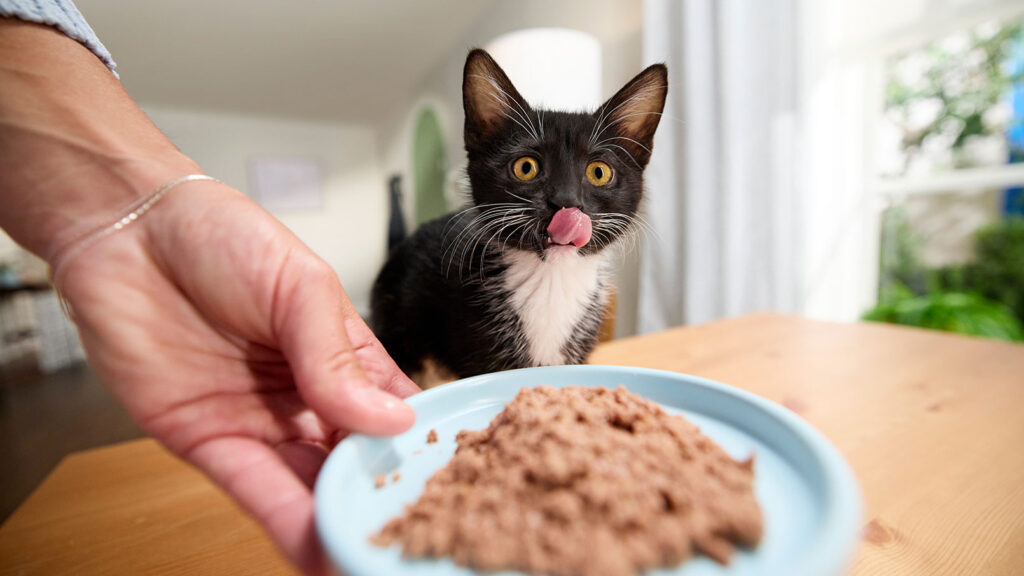
What to do when your cat vomits after wet food
If your cat vomits once but acts normal, do not panic. Watch closely and remove the remaining food for a short period while you assess the situation.
Do not force food or water. Do not give human medicine, milk, oils, or over-the-counter stomach remedies unless your veterinarian tells you to do so. Some human products are dangerous for cats.
When your cat seems comfortable, offer a small amount of its usual food. A teaspoon or two may be enough at first. If it stays down, offer small meals more often instead of one large meal.
Contact a veterinarian promptly if vomiting happens again or your cat seems unwell. Seek urgent care if you notice:
• Repeated vomiting
• Blood or coffee-ground material in vomit
• Severe weakness or collapse
• A swollen or painful belly
• Trouble breathing
• Pale, blue, or yellow gums
• Continuous diarrhea
• Inability to keep water down
• Suspected poison or swallowed object
• No appetite for about 24 hours
Kittens, senior cats, and cats with diabetes or other medical problems may become dehydrated or ill faster. They should be assessed sooner.

How to prevent vomiting after wet food
Once serious illness is ruled out, small feeding changes may help. The goal is to make meals slower, calmer, and easier to digest.
Feed smaller portions
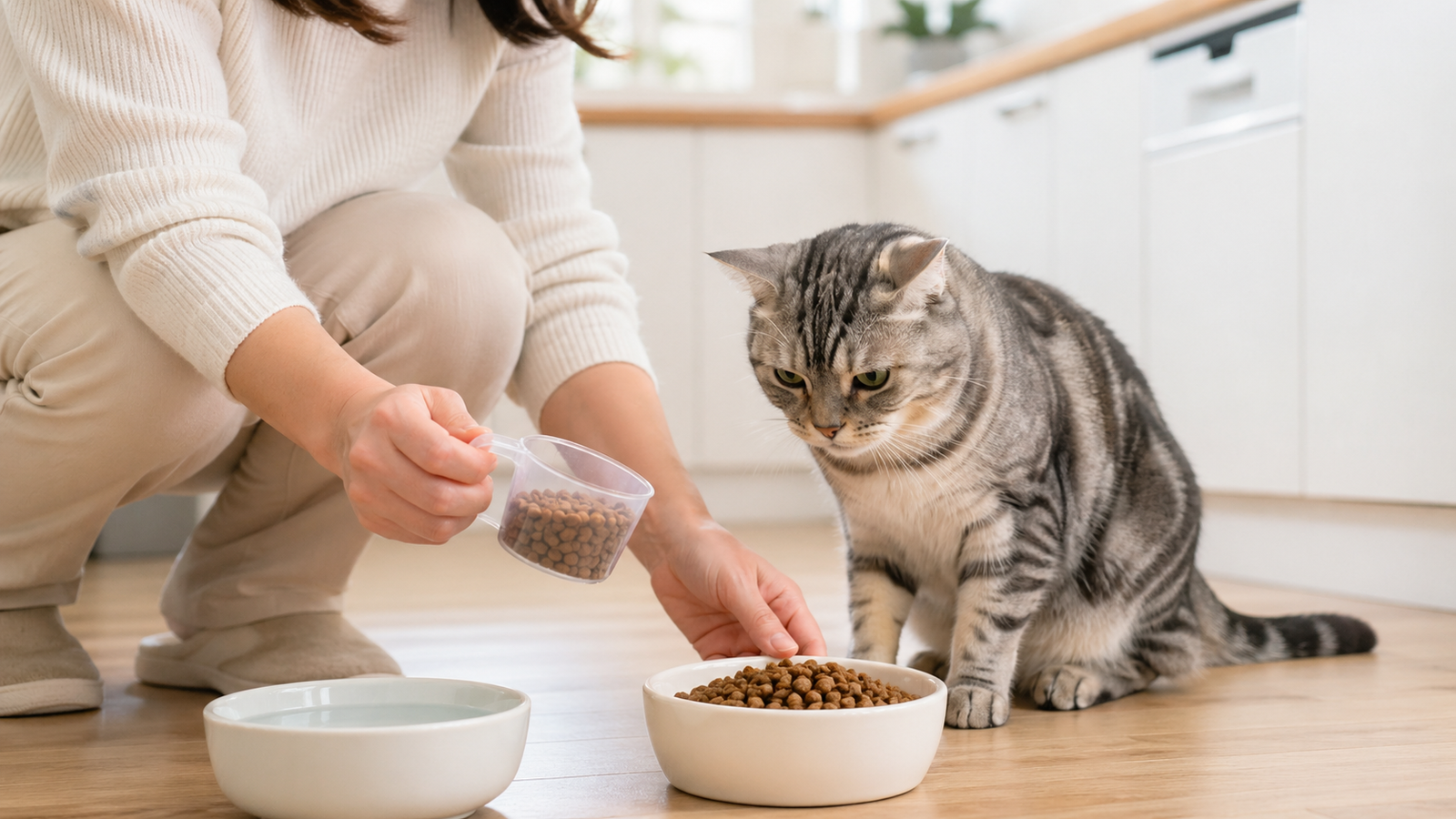
Divide the daily amount into three or four meals. Smaller portions reduce stomach stretching and may help cats that eat too quickly.
Use the feeding guide on the package as a starting point, but remember that calorie needs vary. Your veterinarian can help you choose the right daily amount.
Slow down fast eaters
Try one of these options:
• Spread the food thinly on a wide plate
• Use a slow feeder made for wet food
• Place small spoonfuls in several spots
• Feed your cat alone in a quiet room
• Offer several small meals through the day
Avoid putting large objects in the bowl to slow eating. Your cat could chew or swallow them.
Change food gradually
When introducing a new wet food, mix a small amount with the old food. Increase the new food over about seven to ten days if your cat remains comfortable.
A sensitive cat may need an even slower change. If vomiting or diarrhea begins, stop the transition and ask your veterinarian for advice.
Keep wet food fresh
Serve only the amount your cat will eat. Refrigerate opened food in a covered container and follow the label’s storage advice.
Wash the bowl after meals. Bacteria, old fat, and dried food can build up on dirty dishes. Stainless steel or ceramic bowls are often easy to clean.
Check the recipe
Look for a complete and balanced food made for your cat’s life stage. Avoid frequent flavor changes if your cat has a sensitive stomach.
If a food allergy is suspected, do not keep testing random recipes. A veterinarian may suggest a strict elimination diet using a novel or hydrolyzed protein. Every treat and supplement must follow the diet for the test to be useful.

Common mistakes cat owners make
When asking why does my cat vomit after eating wet food, many owners focus only on the food brand. The brand matters, but the full picture includes portion size, speed, storage, stress, and health history.
One common mistake is changing several things at once. For example, an owner may switch food, add treats, use a new bowl, and start a supplement on the same day. If vomiting stops or worsens, it becomes hard to know what caused the change.
Make one adjustment at a time. Keep a short food and symptom diary for one to two weeks, unless your cat has serious symptoms that need immediate care.
Another mistake is assuming that a cat is fine because it still purrs. Cats often hide illness. A cat that vomits regularly, loses weight, drinks more, or sleeps much more than usual should not be managed with feeding tricks alone.
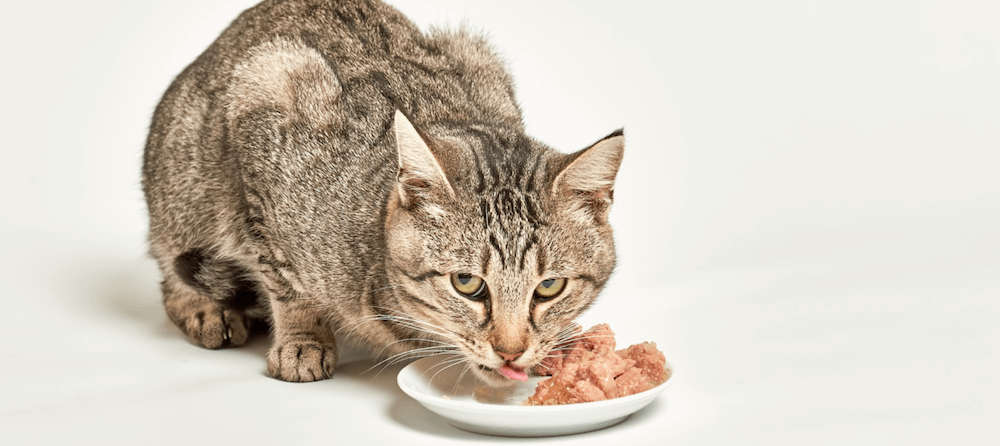
When should a veterinarian examine your cat?
A single mild episode may not be an emergency, but repeated vomiting is not normal. Arrange a veterinary appointment if your cat vomits more than once, vomits on several days, or shows a change in appetite or behavior.
Your veterinarian may ask about diet, food storage, medications, plants, toys, and access to chemicals. They may examine the mouth and belly, check hydration, and recommend tests.
There is no single test that explains every case of why does my cat vomit after eating wet food. Diagnosis depends on the pattern and the cat’s age, health, and symptoms.
Veterinary advice is especially important because vomiting can cause dehydration and loss of important minerals. It can also be an early sign of an obstruction or chronic disease.

Can wet food be good for cats?
Wet food is not automatically harmful. It can provide moisture, offer a strong smell for cats with low appetite, and support dietary variety. Many cats do well on a complete and balanced wet diet.
However, wet food is not a cure for vomiting. A cat may vomit after wet food because of the way it eats, an ingredient it cannot tolerate, or a separate medical issue.
The best diet depends on your cat’s age, weight, activity, dental health, and medical needs. Ask your veterinarian before making major changes, especially if your cat has kidney disease, urinary problems, diabetes, or digestive disease.

Frequently Asked Questions
Why does my cat vomit wet food but not dry food?
Wet food may be eaten faster, served in larger portions, or made with an ingredient your cat does not tolerate. The difference may also be linked to texture, recipe, or food storage rather than moisture itself.
Should I stop feeding wet food if my cat vomits?
Do not make a permanent change after one episode unless your veterinarian advises it. Offer smaller portions after your cat settles, and contact a veterinarian if vomiting repeats or other symptoms appear.
How long should I wait to feed my cat after vomiting?
For a healthy adult cat with one mild episode, wait briefly until the stomach settles, then offer a very small portion of familiar food. Do not withhold food for long periods without veterinary advice, since cats can become seriously ill when they stop eating.
Why does my cat vomit right after eating wet food?
Vomiting right after a meal often relates to eating too fast, eating too much, stress, or regurgitation. A video of the episode can help your veterinarian determine whether the food is being vomited or regurgitated.
Can a food allergy cause my cat to vomit?
Yes. A food allergy may cause vomiting, diarrhea, itchy skin, ear infections, or excessive grooming. Diagnosis usually requires a careful elimination diet guided by a veterinarian.
Is occasional vomiting normal for cats?
Occasional vomiting can happen, but frequent vomiting should not be dismissed as normal. Regular episodes may signal parasites, digestive disease, organ problems, or another condition that needs treatment.
When is cat vomiting an emergency?
Seek urgent veterinary care for repeated vomiting, blood, severe pain, weakness, breathing trouble, a swollen belly, suspected poisoning, or an inability to keep water down. Kittens, older cats, and cats with chronic illness may need help sooner.
Conclusion
The answer to why does my cat vomit after eating wet food may be as simple as fast eating or a large meal, but repeated vomiting can signal food intolerance or illness. Check the meal size, eating speed, food freshness, and recent diet changes. Keep a record of each episode and watch your cat’s appetite, energy, hydration, and weight.
Small meals and a slow food transition may help, but they should not replace veterinary care when warning signs appear. If your cat keeps vomiting, contact your veterinarian and share your notes or a video of the episode. Your careful attention can help your cat feel better sooner, so consider discussing this guide with your veterinary team or sharing your experience with other cat owners.