Why Does My Cat Eat So Slowly: Causes And Solutions
Your cat may eat slowly because of comfort, habit, stress, pain, or an underlying health problem.
Wondering why does my cat eat so slowly can feel worrying, especially when other cats finish meals in minutes. In many cases, slow eating is normal feline behavior, but a sudden change may point to dental pain, nausea, stress, or another health issue. This guide explains the most likely causes, what to watch for, and when to call your veterinarian.

Why does my cat eat so slowly?
Cats are natural hunters, not food racers. Even indoor cats may pause, sniff, lick, and take small bites because this pattern matches how they would eat small prey in the wild.
The answer to why does my cat eat so slowly often depends on your cat’s age, personality, food type, feeding area, and health. A cat that has always eaten at a calm pace may simply be careful. A cat that suddenly slows down needs closer attention.
Common reasons include:
• Your cat prefers small meals throughout the day.
• The food is hard to chew or has an unpleasant texture.
• Your cat feels stressed or unsafe near the bowl.
• Dental pain makes chewing difficult.
• Nausea or stomach trouble reduces interest in food.
• Your cat is aging and has a weaker sense of smell.
• Another pet is making your cat feel rushed or nervous.
A slow eater who still finishes meals, drinks normally, plays, and keeps a healthy weight is often not in danger. The key is to look for changes from your cat’s normal routine.

Normal reasons your cat eats slowly
Natural grazing behavior
Many cats like to eat several small meals instead of one or two large meals. Their stomachs are small, and their natural feeding pattern involves catching and eating small prey at different times.
Some cats take a few bites, walk away, and return later. This can be normal if the food is stored safely and your cat continues to eat enough each day.
Food texture and shape
Dry food can take longer to chew than wet food. Large kibble may be hard for a small cat, senior cat, or cat with sensitive teeth. Some cats also dislike food that is too cold, too dry, too sticky, or strongly scented.
Wet food may also slow eating if it is served in a deep bowl. A cat’s whiskers can touch the sides, which some cats find unpleasant. A wide, shallow dish may help.
A calm and careful personality
Some cats simply eat with patience. They may sniff each bite and pause between mouthfuls. This is especially common in cautious cats and cats that were raised around food competition.
If your cat has always eaten slowly and has no other symptoms, this pace may be part of its personality. It does not always mean something is wrong.
Food is always available
Free feeding can make a cat less eager to eat right away. When food stays in the bowl all day, your cat may take small bites whenever it feels hungry.
This does not automatically cause a problem. However, it can make it harder to track how much your cat eats. Measured meals can help you notice changes sooner.

Medical reasons a cat may eat slowly
When asking why does my cat eat so slowly, health problems should be considered if the behavior is new or getting worse. Cats often hide pain, so small changes can be important clues.
Dental disease and mouth pain
Dental disease is one of the most common medical reasons for slow eating. Plaque and tartar can lead to gum inflammation, tooth damage, and painful infections.
A cat with mouth pain may:
• Chew on one side of the mouth.
• Drop pieces of food.
• Prefer wet food over dry food.
• Swallow kibble without chewing.
• Paw at the mouth.
• Drool more than usual.
• Have bad breath.
Cats can still seem hungry while eating slowly because they want food but hurt when they chew. A veterinary dental exam is the safest way to find the cause.
Nausea and digestive problems
Nausea can make food less appealing. Your cat may approach the bowl, sniff it, take a few bites, and walk away. Vomiting, diarrhea, lip licking, swallowing repeatedly, or hiding may occur too.
Digestive problems can come from sudden diet changes, hairballs, intestinal disease, parasites, or other conditions. If slow eating continues for more than a day or comes with vomiting, contact your veterinarian.
Kidney disease
Older cats may eat slowly because of kidney disease or other age-related conditions. Kidney problems can cause nausea, increased thirst, increased urination, weight loss, and reduced appetite.
These signs are easy to dismiss as normal aging. They are not always harmless. Blood and urine tests can help your veterinarian check kidney function.
Respiratory problems
Cats rely heavily on smell when deciding whether food is appealing. Nasal congestion, an upper respiratory infection, or other breathing problems can reduce the smell of food.
A cat with a blocked nose may eat slowly or stop eating. Sneezing, eye discharge, noisy breathing, or a runny nose are signs that your cat may need veterinary care.
Arthritis and weakness
A cat with arthritis may feel uncomfortable standing at a bowl for a long time. Jumping to a feeding area or bending down may also hurt.
Try placing food on a low, stable surface. An elevated bowl may help some cats, but it is not right for every cat. Your veterinarian can suggest safe pain control if arthritis is suspected.

Stress can make a cat eat slowly
Stress is another important answer to why does my cat eat so slowly. Cats prefer predictable routines and safe spaces. Even small changes can affect their appetite.
Common stress triggers include:
• A new pet or baby.
• Visitors or loud house guests.
• Moving furniture.
• Home repairs.
• A new feeding location.
• Competition with another cat.
• A dirty litter box near the food area.
• Outdoor cats visible through a window.
A nervous cat may keep looking around while eating. It may leave the bowl when someone walks past. Some cats eat better at night when the home is quiet.
Feed cats in separate areas when possible. Give each cat its own bowl, water source, and resting space. A quiet room with a clear view of the surroundings can make meals feel safer.
In my experience, one of the easiest mistakes to make is moving a cat’s bowl into a busy kitchen because it seems convenient. The cat may not refuse the food, but it may eat only a little at a time. Returning the bowl to a quiet corner often improves the routine.
How to tell if slow eating is normal
A slow eating habit is usually less concerning when your cat:
• Has always eaten at this pace.
• Finishes a suitable amount of food each day.
• Maintains a stable body weight.
• Drinks and uses the litter box normally.
• Acts alert and comfortable.
• Shows no signs of mouth pain.
• Has normal grooming and play habits.
Keep a simple food log for several days. Record how much you serve, how much remains, and how long your cat takes to eat. This gives you useful information and helps your veterinarian spot a true appetite change.
Remember that a cat may eat slowly but still consume too many calories. Weight gain can happen with calorie-dense food, treats, or free feeding. Slow eating does not always mean your cat is eating too little.

When slow eating needs veterinary care
Contact your veterinarian if your cat suddenly starts eating slowly or shows other changes. A sudden shift is more meaningful than a naturally slow eating style.
Seek prompt veterinary advice if your cat:
• Eats much less than usual.
• Refuses all food for about 24 hours.
• Loses weight.
• Vomits repeatedly.
• Has diarrhea that continues.
• Drools or paws at the mouth.
• Has trouble swallowing.
• Shows extreme tiredness.
• Hides more than usual.
• Drinks or urinates much more.
• Has yellow gums, eyes, or skin.
Cats can become seriously ill when they stop eating. Overweight cats are especially at risk for hepatic lipidosis, also called fatty liver disease, after several days of poor food intake. Do not force-feed your cat unless a veterinarian has shown you how to do it safely.
A veterinary visit may include a mouth exam, weight check, blood tests, urine testing, and imaging. The right tests depend on your cat’s age, symptoms, and medical history.

Simple ways to help a slow-eating cat
Make the feeding area comfortable
Place the bowl in a quiet, clean area away from litter boxes, washing machines, and heavy foot traffic. Keep dogs and other cats from pushing in while your cat eats.
Cats often feel safer when they can see the room. Avoid placing the bowl in a tight corner where your cat cannot notice what is happening nearby.
Try a different bowl
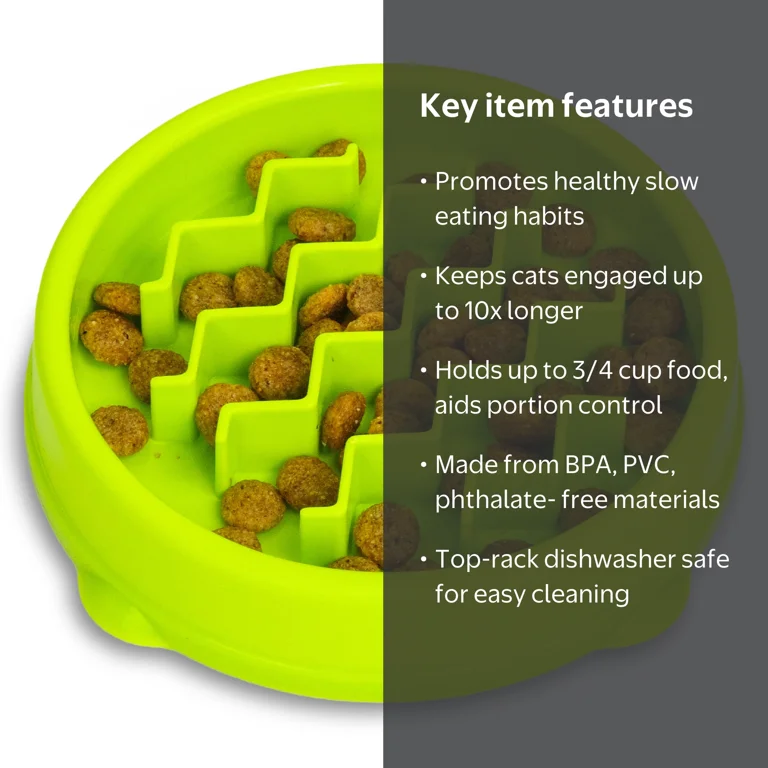
A wide ceramic or stainless steel dish may work better than a deep plastic bowl. Wash food bowls daily because old food smells can reduce interest in meals.
Some cats prefer a flat plate. Test one change at a time so you know what helps.
Warm wet food slightly
Warming wet food can increase its aroma. The food should be lukewarm, never hot. Stir it well and test the temperature before serving.
Do not leave wet food out for long periods. Follow safe food handling rules and discard leftovers that have been sitting out.
Offer smaller meals
Try dividing the daily portion into three or four small meals. Automatic feeders can help with measured portions, especially when you are away during the day.
Do not keep adding food to the bowl without measuring it. This can hide a gradual appetite change and may lead to weight gain.
Improve food access for senior cats
Older cats may benefit from a low-entry bowl placed on a stable surface. Keep food, water, and litter boxes easy to reach.
If your cat has stiff joints, avoid making it climb stairs or jump onto furniture for meals. Comfort can make a meaningful difference.
Change diets slowly
A sudden food change can cause stomach upset or refusal. Mix a small amount of the new food with the old food, then increase the new food over about seven days.
Some cats need a slower transition. If your cat has a medical diet, follow your veterinarian’s instructions rather than relying on treats or table food.

What not to do when your cat eats slowly
Avoid forcing food into your cat’s mouth. This can cause fear, choking, and food aversion. It may also make future meals more stressful.
Do not give human pain medicine. Medications such as acetaminophen and ibuprofen can be dangerous or fatal to cats. Ask a veterinarian before giving any medicine, supplement, appetite stimulant, or home remedy.
Avoid changing several things at once. If you switch food, move the bowl, add supplements, and introduce a new feeder on the same day, you will not know what helped or caused a problem.
Do not assume slow eating is only behavioral. Stress is real, but dental disease and nausea are common too. A health check is wise when the change is sudden, persistent, or paired with other symptoms.

A practical feeding check at home
You can learn a lot by watching one meal without disturbing your cat. Take note of posture, chewing, breathing, and behavior around the bowl.
Use this simple checklist:
-
Measure the food before serving it.
-
Watch whether your cat chews on both sides.
-
Check for dropped food or excessive drooling.
-
Notice whether your cat sniffs the food and walks away.
-
Record how long the meal takes.
-
Check the remaining food later.
-
Look for changes in weight, thirst, stool, and energy.
Never inspect deep inside your cat’s mouth if it seems painful. Cats may bite when frightened or hurt. A professional exam is safer and more complete.
A useful lesson from real household cases is that owners often focus only on the bowl. The full picture matters more. A cat that eats slowly, loses weight, and sleeps more needs a different response from a cat that eats slowly but remains bright and stable.
Nutrition and portion basics
Your cat’s food should be complete and balanced for its life stage. Kittens, adults, and senior cats may have different calorie and nutrient needs.
Read the feeding guide on the label, but treat it as a starting point. Calorie needs vary with size, age, activity, health, and whether your cat is spayed or neutered.
Your veterinarian can help you choose a daily portion. Weighing food with a kitchen scale is often more accurate than using a cup, especially for small portions.
Fresh water should be available at all times. Some cats drink more from a fountain, while others prefer a wide glass or ceramic bowl. Increased thirst, however, should be discussed with a veterinarian.
Frequently Asked Questions About Why Does My Cat Eat So Slowly
Is it normal for a cat to take a long time to eat?
Yes, some cats naturally eat slowly because they prefer small bites and quiet meals. It is usually normal when the habit is long-standing and your cat has a stable weight, normal energy, and no pain signs.
Why does my cat eat so slowly but act hungry?
Your cat may want food but have trouble chewing because of dental pain, mouth inflammation, or a damaged tooth. Nausea can also create interest in food without allowing your cat to finish a meal.
Should I worry if my cat suddenly eats slowly?
A sudden change deserves attention, especially if it lasts more than a day or comes with weight loss, vomiting, drooling, hiding, or low energy. Call your veterinarian for advice rather than waiting for the problem to become severe.
Can stress cause a cat to eat slowly?
Yes, stress can make a cat pause, look around, or leave food unfinished. Feed your cat in a quiet space and reduce competition, but arrange a health check if the behavior continues.
Do cats eat slowly because they dislike their food?
Sometimes. Cats may reject or slowly eat food because of its smell, texture, temperature, or shape. Change diets gradually and ask your veterinarian for guidance if your cat eats too little.
How long can a cat go without eating?
A cat should not go without food for long. Contact a veterinarian if your cat refuses food for about 24 hours, or sooner if it is a kitten, senior, overweight, or already ill.
Can dental disease make a cat eat slowly?
Yes, dental disease can make chewing painful. Signs may include bad breath, drooling, dropping food, chewing on one side, and preferring soft food.
Conclusion
Why does my cat eat so slowly has several possible answers, from normal grazing and food preference to stress, dental pain, nausea, or another illness. Focus on what is normal for your cat, then watch for changes in appetite, weight, energy, thirst, and behavior.
Try a quiet feeding space, a suitable bowl, measured meals, and a gradual food routine. If slow eating is new, worsening, or linked with other symptoms, schedule a veterinary exam. Keep a short food and symptom log, and share it with your veterinarian to support faster, clearer care.