Why Is Kitten Food Different From Cat Food: Key Facts
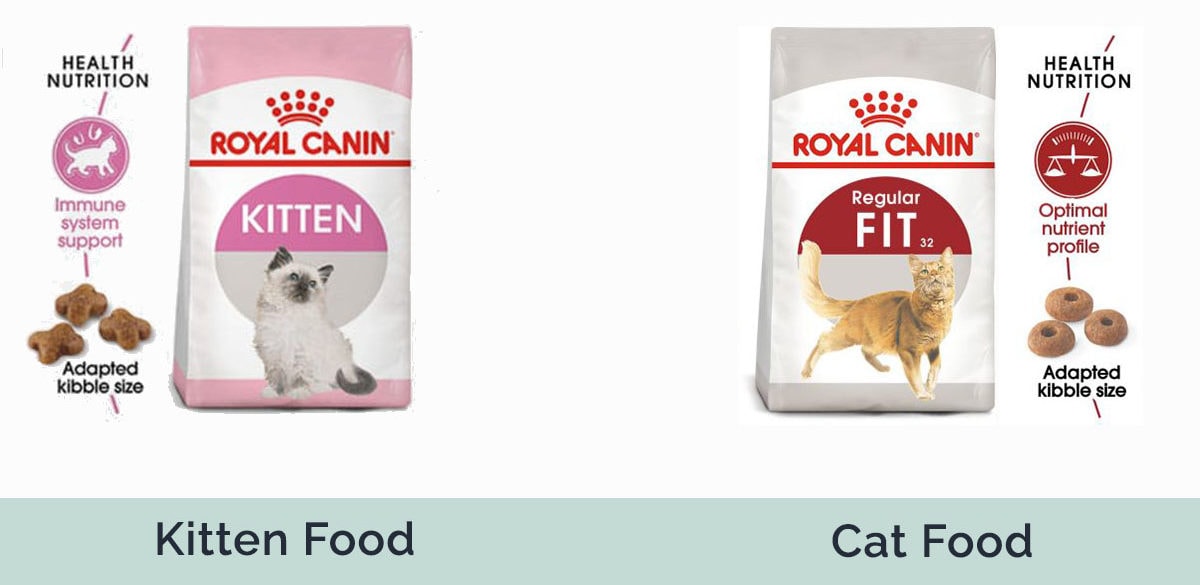
Kitten food is made for rapid growth, with more calories, protein, fat, and key nutrients than adult cat food.
If you have ever compared a bag of kitten food with adult cat food, you may notice similar ingredients and wonder what sets them apart. The answer is more than clever packaging. Kitten food supports fast bone, muscle, brain, and immune system development, while adult cat food helps maintain a fully grown body. Understanding why kitten food is different from cat food can help you choose the right diet at each stage of your pet’s life.
Why Is Kitten Food Different From Cat Food?
Kitten food is different from cat food because kittens have much higher nutrition needs than adult cats. During the first year, a kitten may grow from a tiny, unsteady newborn into an active young cat. This growth takes a lot of energy.
Adult cats usually need food for maintenance. Their bodies are already developed, so their diet must help them keep a healthy weight, strong muscles, and steady energy. Kittens need food that supports building those systems in the first place.
The main differences often include:
• More calories in each bite to support fast growth
• Higher levels of protein for muscles and organs
• More fat for energy and brain development
• Carefully balanced calcium and phosphorus for bones and teeth
• Nutrients such as DHA and taurine for vision, brain health, and heart function
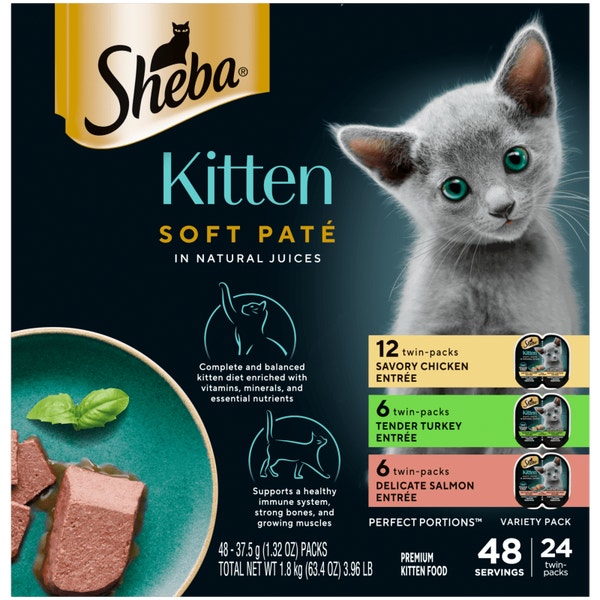
• Smaller, easier-to-eat pieces for young mouths
This is the central reason why kitten food is different from cat food: growth requires more fuel and a more precise nutrient balance than maintenance.

Kitten Food Supports Rapid Growth
Kittens grow quickly, especially during their first six months. Their bones lengthen, muscles develop, teeth appear, and their brains continue to mature. Their immune system also needs support as they explore a new world.
A kitten may seem small, but it can burn many calories through play. Running, climbing, pouncing, and learning all take energy. Kitten food packs more usable nutrition into a smaller serving.
Protein is especially important. It supplies amino acids, which are the building blocks of muscle, skin, fur, enzymes, and body tissues. Animal-based protein also provides nutrients that cats cannot make in enough amounts on their own.
Fat provides concentrated energy. It also helps the body absorb fat-soluble vitamins. Healthy fats, including omega-3 fatty acids, support the developing brain, nervous system, skin, and coat.
This does not mean that more of every nutrient is always better. A kitten needs the right balance, not simply huge amounts. Too much of certain minerals may harm developing bones, which is why a complete kitten diet is safer than adding supplements without veterinary advice.
Key Nutrients in Kitten Food
The label on kitten food can look confusing at first. You do not need to understand every technical term, but a few nutrients deserve close attention.
Protein
Kittens need strong sources of protein to build muscle and body tissue. Look for a food labeled as complete and balanced for growth or for all life stages.
The ingredient list may include chicken, turkey, beef, fish, or another animal protein. The full nutrient profile matters more than one ingredient alone. Cats need a complete diet, not just a bowl of plain meat.
Fat and Calories
Kitten food often contains more fat and calories than adult maintenance food. This helps a kitten meet its energy needs without eating an enormous amount of food.
A kitten’s stomach is small. Calorie-dense food works like a small backpack filled with useful supplies. It gives the kitten enough energy without overfilling the stomach.
DHA and Omega-3 Fatty Acids
DHA is an omega-3 fatty acid linked with brain and eye development. Many kitten foods include DHA from fish oil or other sources.
DHA is helpful, but it is only one part of a complete diet. A food should also provide balanced protein, fat, vitamins, and minerals.
Calcium and Phosphorus
Calcium and phosphorus help build bones and teeth. They must be present in the correct amounts and ratio.
This is one reason homemade kitten diets can be risky. A meal may look healthy but still lack the mineral balance a growing kitten needs. Veterinary nutrition experts often recommend a professionally formulated recipe if you want to feed homemade food.
Taurine
Taurine is an essential nutrient for cats. It supports normal vision, heart function, digestion, and reproduction.
Quality commercial kitten foods are formulated to provide taurine. Avoid giving a kitten a diet made only from human food, as it may not contain enough taurine or other essential nutrients.
How Adult Cat Food Is Formulated
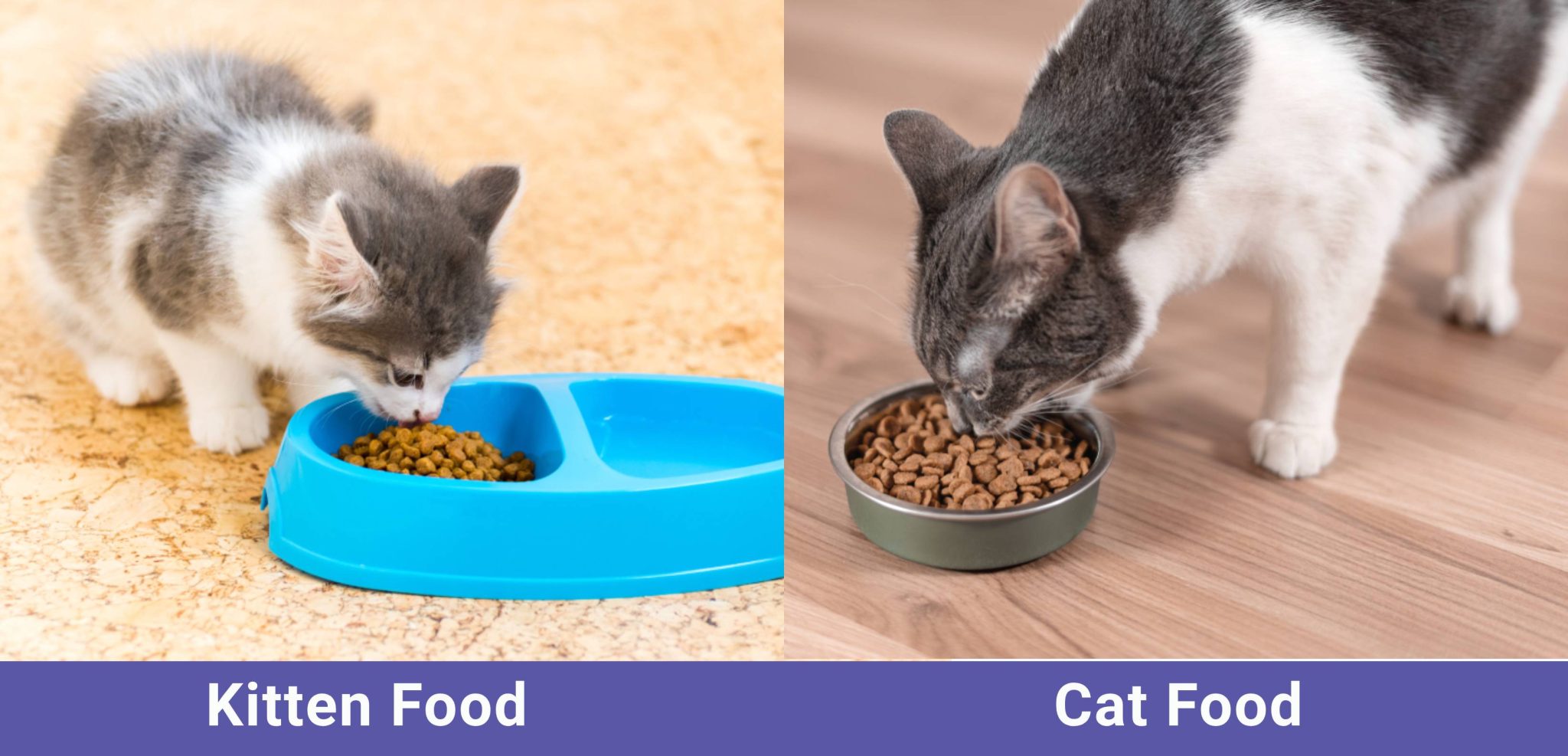
Adult cat food is usually designed for maintenance. It gives a mature cat enough nutrients to maintain muscle, organs, skin, coat, and daily activity.
Many adult cats are less active than kittens. They may sleep for much of the day and use fewer calories. Feeding a high-calorie kitten diet for too long can contribute to excess weight.
Adult cat food may also have different calorie, fat, and mineral levels. Some formulas are made for indoor cats, sterilized cats, senior cats, or cats with specific health needs.
However, not every adult cat has the same needs. A very active adult cat may need more calories than a relaxed indoor cat. A cat with kidney disease, diabetes, urinary problems, or food allergies may need a veterinary diet.
The phrase “cat food” is broad. Always read the life-stage statement on the package rather than relying only on words such as premium, natural, or indoor.
Can Kittens Eat Adult Cat Food?
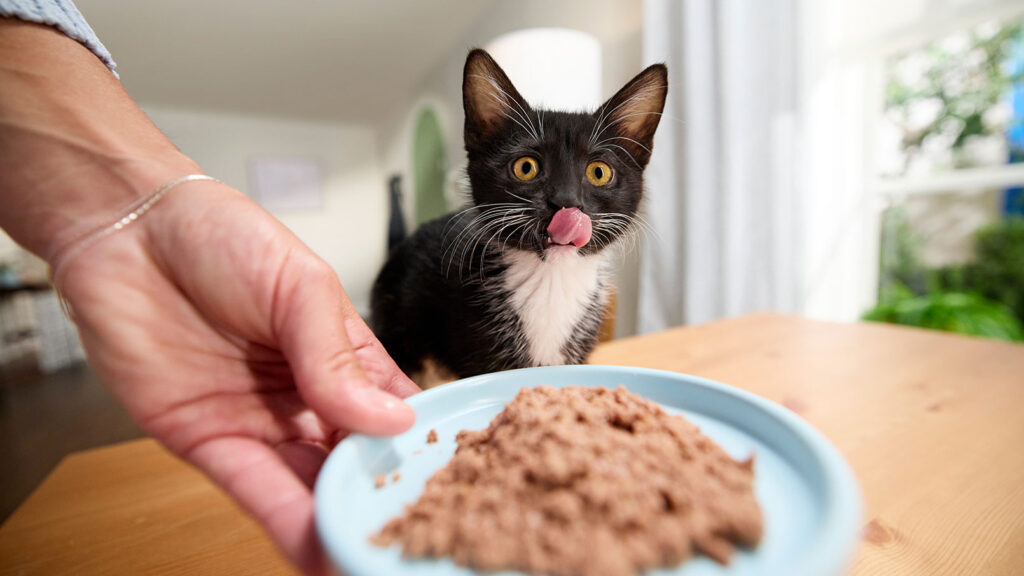
A small amount of adult cat food will not usually harm a healthy kitten. For example, a kitten may steal a few bites from an adult cat’s bowl. The concern is regular feeding over time.
Adult maintenance food may not provide enough calories or the right nutrient levels for growth. If it becomes the kitten’s main diet, the kitten may fail to gain weight well or may not receive ideal support for development.
Some foods are labeled for “all life stages.” These diets are formulated to meet the needs of both growth and adult maintenance. They can be suitable for kittens, but they may be too calorie-rich for some adult cats.
If a kitten has eaten adult food for several days, do not panic. Switch gradually to a complete kitten diet and ask your veterinarian for advice if the kitten has poor appetite, diarrhea, vomiting, low energy, or slow growth.
Can Adult Cats Eat Kitten Food?
An adult cat can eat kitten food, but it is usually not the best long-term choice unless a veterinarian recommends it. Kitten food often has more calories and fat, so an adult cat may gain weight quickly.
There are times when a veterinarian may suggest kitten food for an adult cat. A very thin cat, a cat recovering from illness, or a cat with high energy needs may benefit from a calorie-dense diet.
The key is to monitor body condition. You should be able to feel your cat’s ribs under a thin layer of fat, but the ribs should not be sharply visible. A veterinarian can help you judge your cat’s weight and muscle condition more accurately.
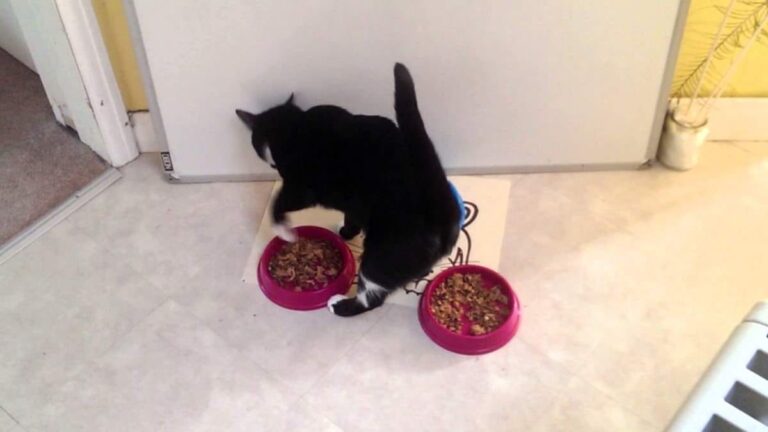
A common mistake is leaving kitten food available to every cat in a multi-cat home. The kitten may need free access to food, while the adult cat may quietly eat too much. Separate feeding areas or timed meals can help.

Wet Kitten Food vs. Dry Kitten Food
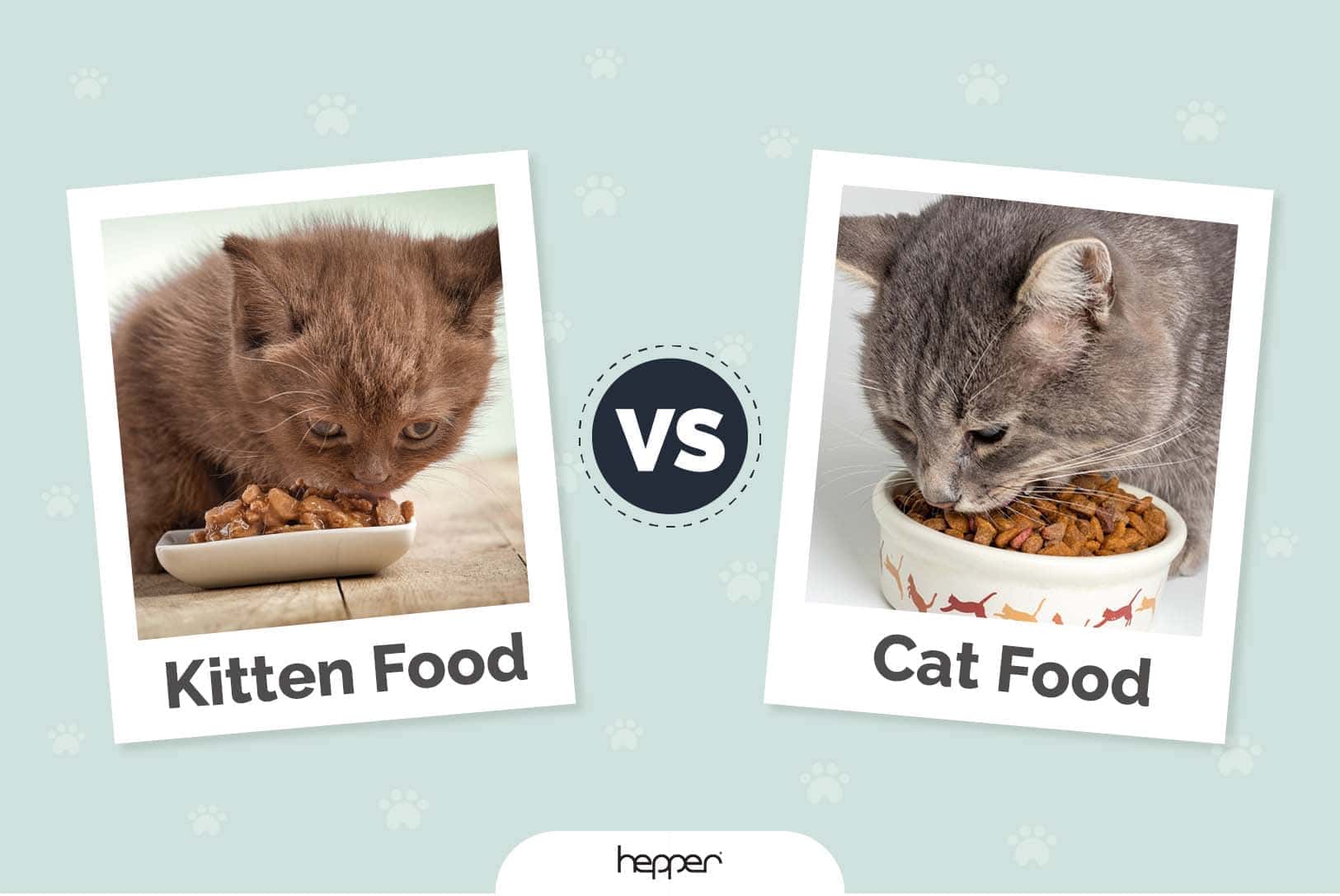
Both wet and dry kitten food can work when they are complete and balanced for growth. The best choice depends on the kitten, the household, and your veterinarian’s advice.
Wet food has a high water content. This may help increase fluid intake, and its soft texture can be easier for young kittens to eat. Many kittens also enjoy its smell and taste.
Dry food is convenient and easy to measure. It can be useful for kittens that prefer to graze, but it should not be used as a substitute for fresh water.
Some owners feed a mix of wet and dry kitten food. This can offer variety and may make it easier to manage calories and texture. Introduce new food slowly over several days to reduce the chance of stomach upset.
Helpful feeding tips include:
• Use a shallow dish that lets the kitten reach the food easily.
• Offer fresh water every day.
• Follow the package guide, then adjust portions with veterinary advice.
• Feed young kittens several small meals instead of one large meal.
• Remove wet food after it has been left out for a safe period, especially in warm rooms.
When Should a Kitten Switch to Cat Food?
Most kittens switch to adult food at about 12 months of age. Some large breeds may mature more slowly and need kitten food longer. Your veterinarian can help you choose the right timing based on breed, weight, growth, activity, and health.
Do not switch food suddenly. A gradual change over seven to ten days is often easier on the digestive system.
Try this simple schedule:
-
Feed mostly kitten food at the start.
-
Add a small amount of adult food after a few days.
-
Slowly increase the adult food while reducing the kitten food.
-
Watch stool quality, appetite, body weight, and energy.
-
Return to the earlier mix and call your veterinarian if problems appear.
One lesson many cat owners learn the hard way is that a kitten can look “grown” before it has finished developing. A lanky body does not always mean the cat is ready for adult food. Growth can continue after the kitten loses its baby-like appearance.
How to Choose the Right Kitten Food
Start with the nutritional adequacy statement on the package. In the United States, look for wording that says the food is complete and balanced for growth, or for all life stages.
You can also consider these points:
• Choose a product made by a company with qualified nutrition experts and strong quality controls.
• Check that the food is intended for kittens, not only adult maintenance.
• Select a texture your kitten can eat comfortably.
• Avoid making decisions based only on marketing words.
• Ask your veterinarian about breed-specific or medical needs.
• Monitor weight and body condition instead of guessing from appetite alone.
Ingredients matter, but they do not tell the whole story. A food may contain a familiar meat ingredient and still be unbalanced if it is not formulated as a complete diet.
Treats should make up only a small part of daily calories. Milk, table scraps, and supplements can also upset the diet. Kittens do not need cow’s milk, and many cats cannot digest lactose well.
Common Feeding Mistakes to Avoid
Even caring owners can make feeding mistakes. The most common problem is assuming that all cat foods are interchangeable.
Avoid these errors:
• Feeding adult food as the main diet during kitten growth
• Giving calcium or vitamin supplements without veterinary guidance
• Changing foods too quickly
• Measuring food only by eye
• Ignoring sudden changes in appetite or stool
• Letting an adult cat eat unlimited kitten food
• Feeding homemade meals without a balanced veterinary recipe
• Assuming a chubby kitten is always healthy
A kitten that is too thin may have parasites, illness, poor nutrition, or difficulty eating. A kitten that gains weight too quickly may also need a feeding adjustment. Regular veterinary visits help catch these concerns early.
Personal Lessons for Everyday Kitten Feeding
A practical lesson I often share with new kitten owners is to treat feeding like caring for a small athlete. A kitten needs fuel for growth and play, but the fuel still needs to be measured and balanced.
One easy mistake is topping up the bowl every time it looks empty. Kittens can be enthusiastic eaters, and some will overeat when food is always available. Measuring the daily amount and dividing it into meals gives you a clearer view of intake.
Another useful habit is weighing the kitten at home once a week. A small kitchen scale can work for young kittens if you place the kitten in a secure container and subtract the container’s weight. Older kittens can be weighed by holding them and then subtracting your own weight.
Keep a simple note of:
• The kitten’s weight
• The food brand and formula
• Daily portions
• Stool changes
• Vomiting or hairball episodes
• Energy and appetite
These notes can help your veterinarian spot patterns. They also make it easier to tell whether a food change caused a problem.
Every kitten is different. A food that suits one kitten may cause loose stool or poor interest in another. Patience, gradual changes, and professional advice usually work better than jumping from brand to brand.
Frequently Asked Questions About Why Is Kitten Food Different From Cat Food
Why is kitten food different from cat food?
Kitten food is different from cat food because it provides more energy and nutrients for rapid growth. It is formulated to support developing muscles, bones, organs, the brain, and the immune system.
How long should kittens eat kitten food?
Most kittens should eat kitten food until about 12 months old. Large breeds or kittens with special health needs may require it longer, so ask your veterinarian for a personal plan.
Is kitten food higher in protein than adult cat food?
Kitten food often has higher protein and calorie levels, but formulas vary by brand. Check the package’s guaranteed analysis and life-stage statement for accurate information.
Can a kitten eat adult cat food by mistake?
A few bites of adult food are unlikely to cause harm to a healthy kitten. However, adult food should not replace a complete kitten diet because it may not meet the kitten’s growth needs.
Can adult cats eat kitten food?
Adult cats can eat kitten food, but regular feeding may lead to excess calorie intake and weight gain. A veterinarian may recommend it for an underweight or recovering adult cat.
Is wet or dry kitten food better?
Both can be suitable when they are complete and balanced for growth. Wet food adds moisture and may be easier to eat, while dry food is convenient and simple to measure.
What happens if a kitten does not get kitten food?
A kitten may still grow on another properly formulated all-life-stages diet. But a diet made for adult maintenance or human food may not provide the calories and nutrients needed for healthy development.
Conclusion
Kitten food is different from cat food because kittens are growing, active, and still building their bodies. They usually need more calories, protein, fat, and carefully balanced nutrients than adult cats. Adult food is made mainly to maintain an already developed body.
Choose food labeled complete and balanced for growth or all life stages. Feed the right portion, change diets slowly, and track your kitten’s weight and health. If you are unsure when to switch to adult food, your veterinarian can give advice based on your cat’s growth and lifestyle.
Use these tips to make feeding safer and easier, and explore more trusted pet nutrition resources or share your kitten-feeding experience in the comments.