How Do Migratory Birds Sleep: Nighttime Secrets
Introduction
Migratory birds in the United States sleep in more than one way. Some stop to rest in trees, marshes, fields, or on shorelines. Others sleep while flying, often for only brief periods. A few can rest one side of the brain while the other side stays alert.
The answer depends on the bird, the season, the distance of the trip, and the risks along the route. A migrating songbird may sleep in short periods during a stopover. A frigatebird crossing the Pacific may sleep during flight. A duck may rest on water while watching for danger.
Migration does not remove the need for sleep. It changes when, where, and how birds sleep. Birds must balance rest with feeding, navigation, weather, predators, and the need to reach breeding or wintering grounds.

Quick answer: How do migratory birds sleep?
Migratory birds sleep by using a mix of short rest periods, deep sleep during stopovers, and—in some species—brief sleep while flying. Many birds reduce their total sleep during migration but later recover lost sleep. Some also use unihemispheric sleep, in which one brain hemisphere rests while the other remains partly alert.
Most migratory birds do not sleep in the air. This behavior is best documented in a small number of species, including great frigatebirds. For many land birds, sleep takes place at safe roosts before, during, or after a long flight.
What makes sleep during migration different?
Migration creates a basic conflict: birds need sleep, but they also need to travel and find food.
A bird may fly hundreds or thousands of miles between breeding and wintering areas. During that trip, it must manage:
- Energy use
- Fat stores
- Weather
- Wind
- Predators
- Navigation
- Food and water
- Safe places to rest
Sleep also makes a bird less able to react to danger. A bird that sleeps in an exposed place may face predators. As a result, many birds choose roosts with cover, height, water, or a large group of other birds.
Migration can also change a bird’s daily rhythm. Some species travel at night and rest by day. Others travel by day and sleep at night. Some birds pause for several hours. Others remain at a stopover site for days or weeks to feed and rebuild fat.
Why do birds give up sleep during migration?
Birds may sleep less when the benefit of travel is greater than the short-term benefit of rest. This often occurs when:
- Winds are favorable
- A bird must cross a large body of water
- Food is available for only a short time
- A bird is close to its breeding area
- Weather creates a narrow travel window
- The bird must avoid a dangerous landscape
This does not mean sleep is optional. Sleep loss can affect attention, learning, immune function, and physical recovery. Migrating birds often repay some of that loss later.

Where do migratory birds sleep?
Migratory birds sleep in places that offer shelter, food nearby, and some protection from predators. The best site depends on the species.
Common roost sites
Migratory birds may sleep in:
- Dense shrubs
- Forest canopies
- Tree cavities
- Marsh grass
- Reed beds
- mudflats
– Sandbars - Islands
- Open water
- Cliffs
- Agricultural fields
- Urban parks and green spaces
A warbler may sleep in thick vegetation. A goose may sleep on open water or a sandbar. A shorebird may rest in a large flock near a tidal flat. A hawk may roost in a tree or cliff area.
Many birds use the same stopover habitats that they need for food. For example, wetlands can provide both insects and safe cover. Coastal areas can offer shellfish, small fish, and open views of approaching predators.
Do birds sleep in nests during migration?
Usually, no. Most adult birds do not build a nest at every stop. They use temporary roosts instead.
Nests are mainly for laying eggs and raising young. During migration, an adult may sleep on a branch, in a reed bed, on the ground, or on water. Some birds use nest-like shelters, but this is not the same as breeding behavior.
Do birds sleep in groups?
Many migratory birds sleep in groups. A flock can provide several advantages:
- More birds can detect predators
- Each bird spends less time watching
- The group may find safer roost sites
- Social species can stay together during a long journey
Group sleeping is not risk-free. Large flocks can attract predators and may compete for space. Birds must still choose a site with enough food, shelter, and room.
Do birds sleep while standing?
Yes. Many birds sleep while standing on one or both legs. A foot-locking tendon can help some perching birds grip a branch without constant muscle effort.
Birds may also tuck their heads into their feathers. This can reduce heat loss. Waterbirds may sleep while floating, and some may place their heads under a wing.
Sleep posture varies by species and by risk. A bird in a safe roost may enter deeper sleep. A bird in an exposed place may remain more alert and wake often.
Do migratory birds sleep while flying?
Some do, but this is not the normal pattern for every migratory bird.
The clearest evidence comes from great frigatebirds. These seabirds can stay in the air for days while crossing the ocean. Researchers fitted birds with devices that recorded brain activity and body movement. The results showed that frigatebirds slept during flight, often in very short periods.
The birds slept with:
- Both brain hemispheres at times
- One hemisphere at other times
- One eye open during some one-sided sleep
This form of sleep is called unihemispheric slow-wave sleep. It lets part of the brain rest while the other side remains more alert.
Frigatebirds can also use rising air currents to gain height with little wing effort. That may give them enough stability to sleep briefly without falling from the sky.
Can songbirds sleep while flying?
The evidence is less clear for many songbirds. Some songbirds migrate at night and may show short periods of reduced activity, but researchers have not proved that all of them sleep during flight.
A bird that appears inactive may be gliding, resting its muscles, or responding to airflow. True sleep requires evidence from brain activity or carefully measured behavior.
It is safer to say that some birds sleep in flight, not that all migratory birds do.
How long do birds sleep in the air?
There is no single time that applies to all species. In great frigatebirds, flight sleep occurs in short bouts. The birds sleep far less in the air than they would on land.
They may remain awake for most of the journey and use brief sleep periods to prevent total sleep loss. Once they reach land, they can sleep longer.
This strategy shows the cost of long-distance travel. Sleep in flight may keep a bird functional, but it does not fully replace normal rest.

How do birds stay safe while sleeping?
Migratory birds use several defenses while they sleep. These defenses do not make sleep risk-free, but they lower the chance of attack.
One-sided sleep
With unihemispheric sleep, one side of the brain sleeps while the other remains alert. The awake side can help control posture and monitor danger.
A bird may also keep one eye open. The eye linked to the awake brain side can scan the area. Birds may switch sides so both halves of the brain receive some rest.
This behavior is useful in exposed settings, but it is not the only way birds stay safe.
Frequent waking
Many birds sleep in short periods and wake often. Frequent waking allows them to:
- Check for predators
- Follow flock movement
- Respond to noise
- Adjust their position
- Keep warm
- Resume migration when conditions improve
Short sleep is not always poor sleep. It can be a sensible response to a risky habitat.
Safe roost selection
A bird may choose a roost that makes attack difficult. Examples include:
- Tall reeds that hide the body
- Islands that reduce access by land predators
- High branches that give a clear view
- Open water that exposes approaching danger
- Dense vegetation that blocks a predator’s path
The safest place can change with the time of day. A site that is safe at night may become unsafe after sunrise.
Flock protection
Some birds sleep in groups with a form of shared watch. Birds near the edge may wake more often than birds in the middle. Large groups can also respond quickly when one bird detects a threat.
This protection has limits. Noise, light, human activity, and habitat loss can force birds to move or remain alert.

How much sleep do migratory birds get?
The amount varies by species and by stage of migration. There is no universal “normal” sleep time for all birds.
Birds may sleep:
- More before migration to build reserves
- Less during long travel periods
- In short bouts at stopover sites
- More after reaching a safe area
- More after intense activity or sleep loss
Some studies of migrating birds have found major reductions in nighttime sleep. Yet the birds may remain active and continue traveling. They can later show rebound sleep, which means they sleep longer or more deeply after the demanding period ends.
Why sleep loss does not always stop migration
Migration is not a steady process. Birds often alternate between travel and recovery.
A bird may fly through the night, feed for much of the next day, and then rest in a protected site. Another bird may stop for several days and spend that time feeding rather than sleeping for long periods.
Sleep is only one part of the energy budget. Fat stores, food supply, weather, and the distance to the next safe site may matter more at a given moment.
Does migration harm birds because of lost sleep?
Not necessarily. Short-term sleep loss appears to be part of normal migration for many species. However, repeated disturbance can make the problem worse.
Artificial light, loud noise, pets, people, and habitat loss can interrupt sleep at stopover sites. A bird that cannot rest may spend more energy, leave a food-rich site too soon, or arrive at its destination in poorer condition.
The effect depends on the species and the type of disturbance. A bright city may attract some night-migrating birds while also confusing their movement and raising collision risk.

Do birds sleep during daytime or nighttime migration?
Birds sleep when their migration schedule allows it.
Birds that migrate at night
Many songbirds migrate at night. They may spend the day feeding and resting at a stopover site. During the day, they often become easier to see as they move through trees and shrubs.
Night migration can reduce exposure to some daytime predators and may provide cooler air. But birds may arrive at dawn tired and hungry. They then need safe habitat where they can rest and feed.
Birds that migrate during the day
Many raptors, swallows, cranes, geese, and waterfowl migrate by day. They may fly during daylight and roost at night.
Day travel can help birds use visual landmarks and rising air currents. It can also make them more visible to predators. These birds often select open roosts, cliffs, water, or tall trees.
Birds with flexible schedules
Some species change their schedule based on wind, temperature, food, and danger. A bird may travel during the day in one part of its route and at night in another.
Migration is not controlled by a single clock. Internal rhythms guide behavior, but local conditions can change the plan.
How can you tell whether a bird is sleeping?
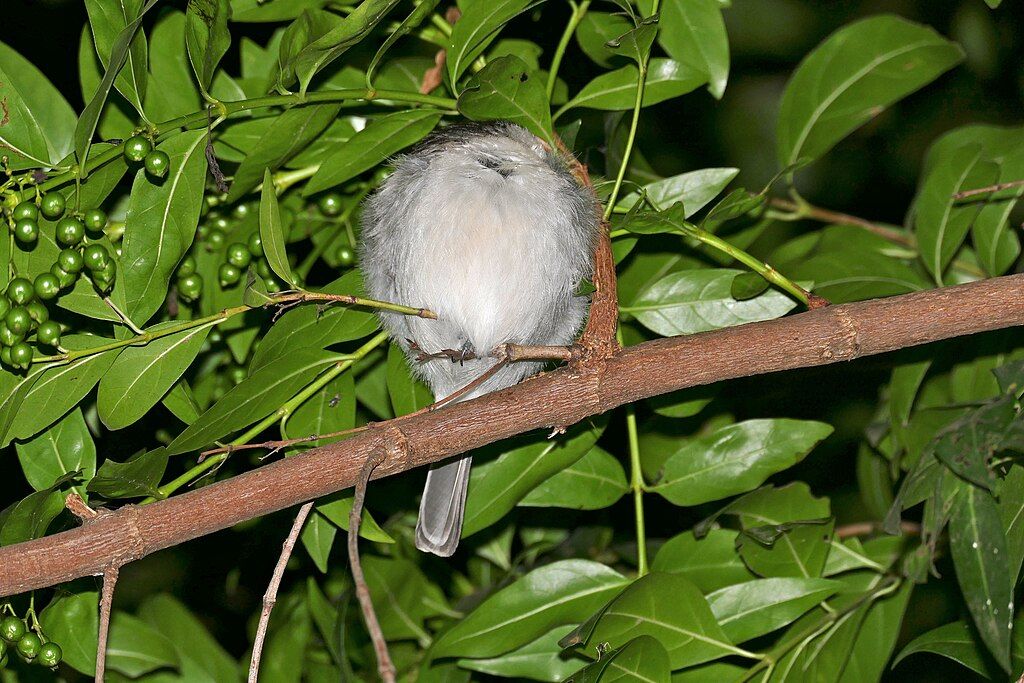
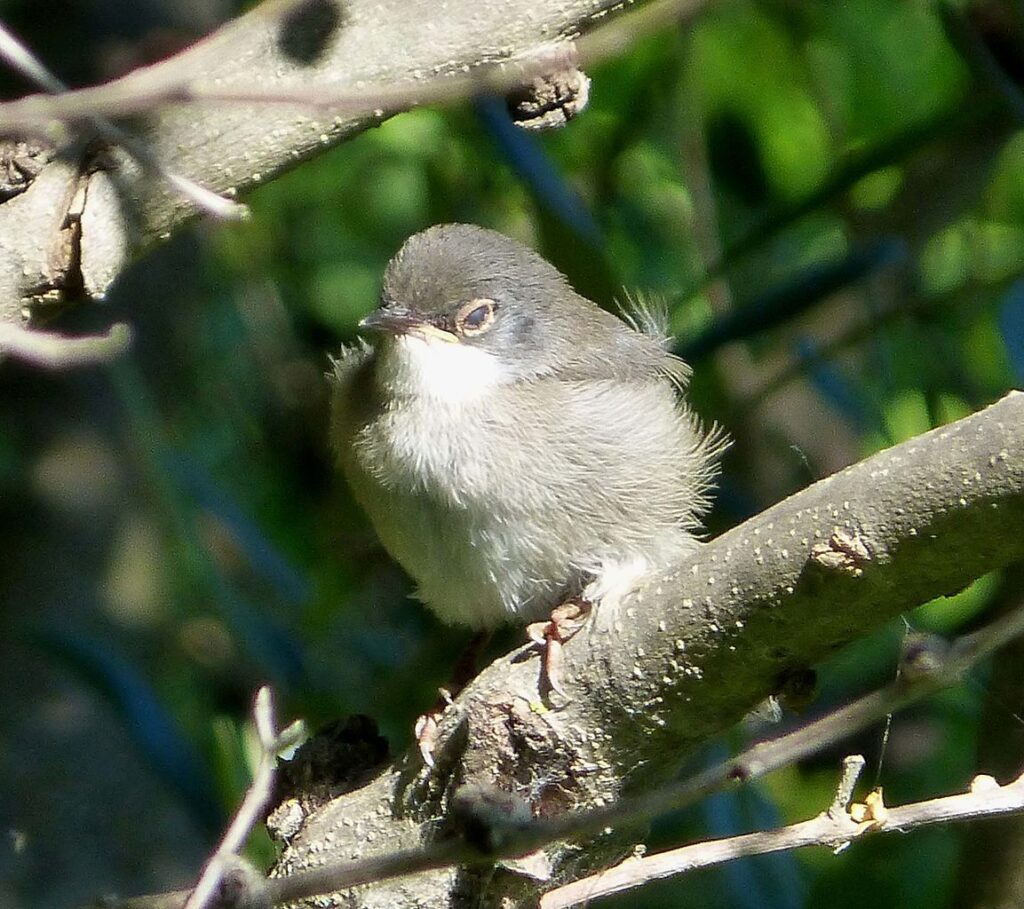
A sleeping bird may sit still, fluff its feathers, close its eyes, and tuck its head into its back feathers. But these signs do not prove that the bird is asleep.
Birds also pause to:
- Conserve energy
- Digest food
- Stay warm
- Watch for danger
- Recover from flight
A bird with one eye closed may be sleeping with one brain hemisphere at rest. A bird with both eyes closed may be in deeper sleep, but you still cannot know its brain state from appearance alone.
Researchers confirm sleep with methods such as:
- Brain activity recordings
- Eye movement records
- Muscle activity records
- Motion sensors
- Carefully timed behavioral observations
For a person watching birds, the best approach is simple: observe from a distance and do not approach or disturb a roost.

What happens when migration stopover habitat is disturbed?
When a roost or feeding site is disturbed, birds may lose both food and sleep.
Common sources of disturbance include:
- Bright nighttime lighting
- Construction
- Loud events
- Off-leash dogs
- Recreational boats
- Human traffic
- Removal of shrubs or wetland plants
- Coastal development
A single disturbance may cause a bird to move. Repeated disturbance can force birds to spend more energy searching for a new site.
How people can help migratory birds rest
In the United States, people can support resting migrants by:
- Keeping cats indoors, especially during migration seasons.
- Turning off unnecessary outdoor lights at night.
- Using window treatments or bird-safe glass features to reduce collisions.
- Leaving native shrubs, grasses, and trees in yards.
- Avoiding roosts, nesting areas, and large flocks.
- Keeping dogs away from shorebird and waterfowl resting sites.
- Supporting wetlands, forests, coastal areas, and other protected habitat.
Do not rescue or handle a wild bird unless it is clearly injured and you have guidance from a licensed wildlife rehabilitator. A sleepy bird may be resting normally.

Key takeaways
- Migratory birds still need sleep, but they often sleep in shorter or less regular periods.
- Most birds sleep at stopover sites or other safe roosts.
- Some species can sleep while flying.
- Great frigatebirds are one of the best-documented examples of flight sleep.
- Unihemispheric sleep lets one side of the brain rest while the other stays alert.
- Birds may recover lost sleep after migration or after reaching a safe area.
- Bright lights, noise, people, pets, and habitat loss can reduce safe rest.
- A quiet, sheltered habitat helps birds feed, sleep, and continue their journey.
Frequently asked questions
Do birds sleep during migration?
Yes. Birds sleep during migration, but the timing and amount vary. Many sleep at stopover sites. A few species can sleep briefly while flying.
Do birds sleep in the middle of the ocean?
Some seabirds can sleep while flying over the ocean. Great frigatebirds are a well-studied example. Other birds may rest on the water, islands, ships, or coastal areas when those options are available.
Do birds sleep with one eye open?
Some birds can sleep with one eye open by using unihemispheric sleep. This lets one side of the brain rest while the other remains more alert. Not every sleeping bird uses this method.
Do birds sleep more before migration?
Birds may change their sleep and activity before migration. They also often increase feeding and build fat reserves. The exact pattern depends on the species, route, and season.
Can birds die from lack of sleep during migration?
Severe or repeated sleep loss can harm birds by reducing recovery and increasing energy stress. However, many species are adapted to short-term changes in sleep during migration. Habitat loss and repeated disturbance can make that stress worse.
Should I wake a bird that looks asleep?
No. A quiet bird may be resting, feeding its body, or avoiding danger. Watch from a distance. If the bird appears injured, cannot stand, has a drooping wing, or is in immediate danger, contact a licensed wildlife rehabilitator.
Conclusion
Migratory birds sleep in ways that fit a difficult journey. Some rest in sheltered vegetation, wetlands, fields, or open water. Others sleep in short bursts while flying. A few use one-sided sleep to remain partly alert.
The key point is that migration changes sleep rather than ending it. Birds trade long, safe rest for short periods of recovery when travel, weather, food, and predators demand it. Protecting stopover habitat gives them the space they need to sleep, feed, and continue across the United States.
For people who want to help, the next step is practical: reduce nighttime light, protect native plants, keep pets away from flocks, and leave resting birds undisturbed.
Sources and further reading
- Cornell Lab of Ornithology: Bird migration
- Cornell Lab of Ornithology: Bird sleep and behavior resources
- National Audubon Society: Bird migration and light pollution
- U.S. Fish & Wildlife Service: Migratory birds
- Rattenborg et al., “Evidence that birds sleep in flight,” Nature Communications
- National Sleep Foundation and sleep research resources