How Do Birds Sleep In Trees: Bird Sleep Habits
In backyards across the United States, birds often vanish into trees as evening falls. They may look exposed on a thin branch, yet many can sleep there safely through wind, cold, and rain. Birds stay secure because of their foot anatomy, careful choice of roost, and sleep patterns that help them respond to danger.

Do birds really sleep in trees?
Yes. Many birds sleep in trees, especially small perching birds such as chickadees, sparrows, finches, robins, and warblers. They may sleep on a branch, in dense leaves, inside a tree cavity, or within a sheltered nest-like roost.
A sleeping site is called a roost. A roost is not always a nest. Adult birds often use nests only while raising eggs or young. At other times, they may choose a different place that offers better shelter from predators and weather.
Birds select roosts based on several factors:
- Protection from wind and rain
- Cover from owls, hawks, cats, and other predators
- A stable branch or tree cavity
- Suitable temperature
- Distance from food and water
- Competition with other birds
Some birds sleep alone. Others gather in groups. A flock can share body heat and make it harder for a predator to single out one bird, but crowding can also increase disease spread and competition.
Birds may roost in many places besides trees. Depending on the species, they may sleep in shrubs, reed beds, cliffs, nest boxes, barns, bridges, caves, or on the ground. The best sleeping place depends on the bird’s body shape, habitat, season, and risk from predators.
How do birds stay on a branch while sleeping?
Most tree-dwelling birds stay on a branch because their feet are built for gripping. When a bird bends its leg to perch, tendons in the leg and foot pull the toes around the branch. The bird can maintain a firm grip without using much active muscle force.
This design is sometimes described as a “locking” mechanism. It does not mean the toes are mechanically locked in place like a clamp. Instead, the bird’s posture and tendon arrangement help hold the toes closed while the bird rests.
A typical perching bird grips a branch as its body settles downward. Its toes wrap around the branch, and its weight helps maintain the grip. The bird can relax more fully without simply falling off.
This adaptation is called perching, and birds with feet suited to gripping branches are often grouped as perching birds, or passerines. Their feet usually have three toes pointing forward and one toe pointing backward. The rear toe helps them hold a branch from the opposite side.
Birds do not all have the same foot design. For example:
- Woodpeckers have two toes forward and two backward, which helps them cling to tree trunks.
- Parrots have two toes forward and two backward, allowing them to grasp branches and food.
- Hawks and owls have strong talons designed for catching prey.
- Ducks have webbed feet and usually sleep on water, land, or sheltered ground rather than thin branches.
- Swifts spend much of their lives in flight and do not rely on ordinary perching in the same way.
A bird can still lose its grip if it is injured, weak, wet, startled, or on an unstable branch. The foot system greatly reduces the risk, but it is not an unbreakable safety device.

What happens to a bird’s body during sleep?
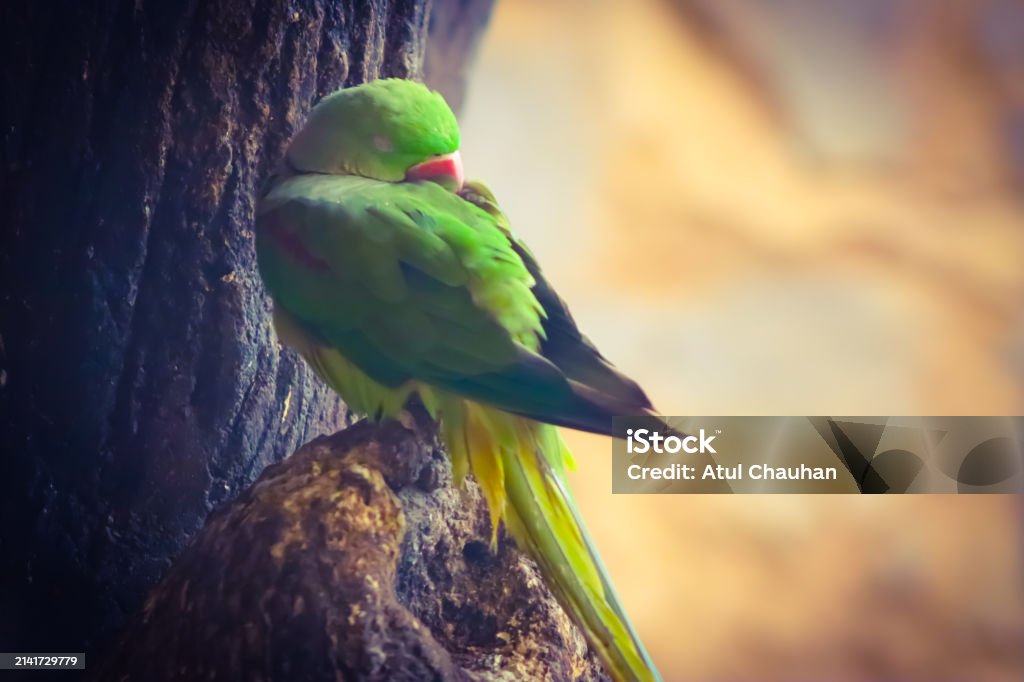
A sleeping bird usually lowers its head, fluffs its feathers, and reduces its activity. Many birds tuck their bill into the feathers on their back or shoulder. This posture helps conserve heat because the feathers trap a layer of warm air around the body.
Birds often stand on one leg while resting and switch legs at times. Pulling one leg close to the body can reduce heat loss from the exposed limb. The bird’s feathers provide most of its insulation, while its posture helps reduce the area exposed to cold air.
A bird may also enter a light sleep and wake quickly. Small birds face constant danger from predators, so their sleep is often broken into shorter periods rather than one long, deep stretch.
Bird sleep includes different states. Research on birds has identified both non-rapid eye movement sleep and rapid eye movement sleep. During some sleep periods, a bird may show brief muscle twitches or changes in posture.
Some birds can use unihemispheric sleep, in which one brain hemisphere rests while the other remains more alert. This ability is documented in several bird groups and may help certain birds watch for danger or maintain control during flight. It does not mean that every bird sleeps with one eye open all night.
A bird with one eye open may be monitoring its surroundings. The eye connected to the more alert brain hemisphere is typically the open one. Birds can change which side remains alert, but the amount of this behavior varies by species and situation.
Birds also adjust sleep according to daylight. Most songbirds are active during the day and sleep at night. Owls and other nocturnal birds reverse that pattern. Some species wake before sunrise, while others remain active later into the evening.
Where do birds sleep in trees?
Birds choose different parts of a tree depending on their size, species, and local threats. A sheltered site may be more useful than a high site. The safest branch is not always the highest branch.
Common tree roosts include:
Dense branches and evergreen foliage
Evergreen trees can provide cover during winter because their needles remain on the tree. Dense foliage can block wind, rain, and the view of predators.
Birds may also sleep in thick sections of deciduous trees during summer. Leaves provide cover then, but the protection becomes weaker after the leaves fall.
Tree cavities
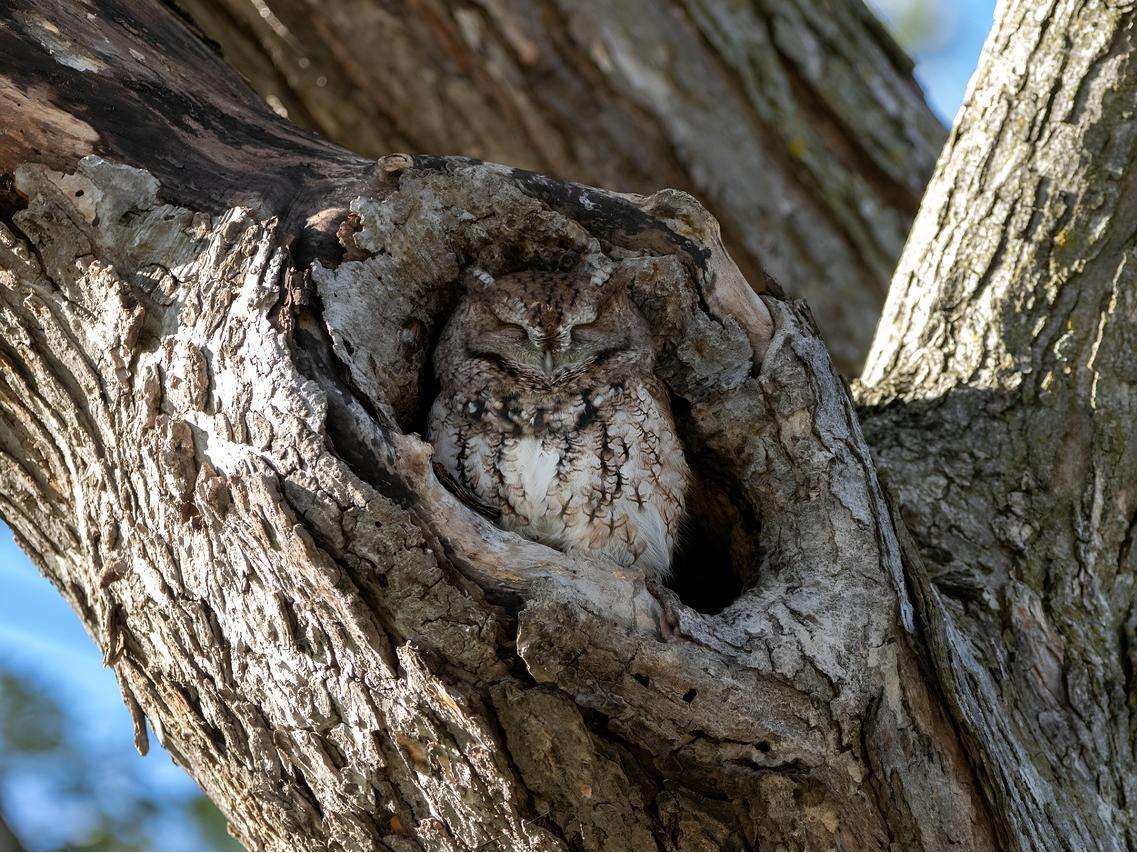
Woodpeckers, chickadees, nuthatches, wrens, and other cavity-using birds may sleep inside holes in trunks or branches. A cavity can reduce wind exposure and help birds conserve heat.
A natural cavity may be formed by decay, a broken limb, or an old woodpecker excavation. Some birds use nest boxes as sleeping sites outside the breeding season.
Forks and sheltered branch joints
A bird may settle near the junction of two branches. These spots can give the bird more stability and some protection from wind. They may also help conceal the bird from predators below.
Tree trunks
Woodpeckers and treecreepers can cling to trunks. Their toe arrangement, claws, and stiff tail feathers help them maintain contact with rough bark.
Shared roosts
Some birds gather in large communal roosts. American crows, European starlings, blackbirds, and some wintering songbirds may form groups at night. Group size can change with season, food supply, temperature, and local disturbance.
A large roost is not automatically safer. Noise, parasites, disease, predators, and human disturbance can affect the value of a communal site.
How birds choose a sleeping branch
A bird may inspect a branch before settling. It can respond to movement, noise, wind, and the presence of other birds. A branch that is too thin may sway too much. A branch that is too exposed may make the bird easy to see.
Birds often favor locations that balance three needs:
- Grip: The branch must be stable enough to hold the bird.
- Cover: Leaves, bark, or a cavity should limit exposure.
- Escape: The bird needs a clear route if a predator approaches.

How do birds stay warm while sleeping in trees?
Birds stay warm at night mainly through feathers, body temperature control, and careful roost selection. They do not heat a tree or branch around themselves.
When a bird fluffs its feathers, the feathers trap air. That trapped air slows the movement of heat away from the body. Down feathers are especially useful because they create a light, insulating layer.
Birds also reduce heat loss by:
- Tucking the bill into back feathers
- Standing on one leg
- Pulling the other leg close to the body
- Choosing a sheltered roost
- Huddling with other birds when the species allows it
- Lowering activity during the coldest period
Before a cold night, a bird may eat more food to build energy reserves. Small birds can lose heat quickly because they have a large surface area compared with their body mass. They may need to feed soon after waking.
A bird can still die from cold stress, especially if it is underfed, sick, wet, or exposed to strong wind. Healthy wild birds usually manage ordinary weather through behavior and insulation, but severe cold can be dangerous.
Do not disturb a bird at a winter roost. Repeated disturbance makes it spend energy escaping and may expose it to predators or cold air. If you provide food, use clean feeders and keep them away from places where cats can ambush birds.

Do birds sleep in nests or tree holes?
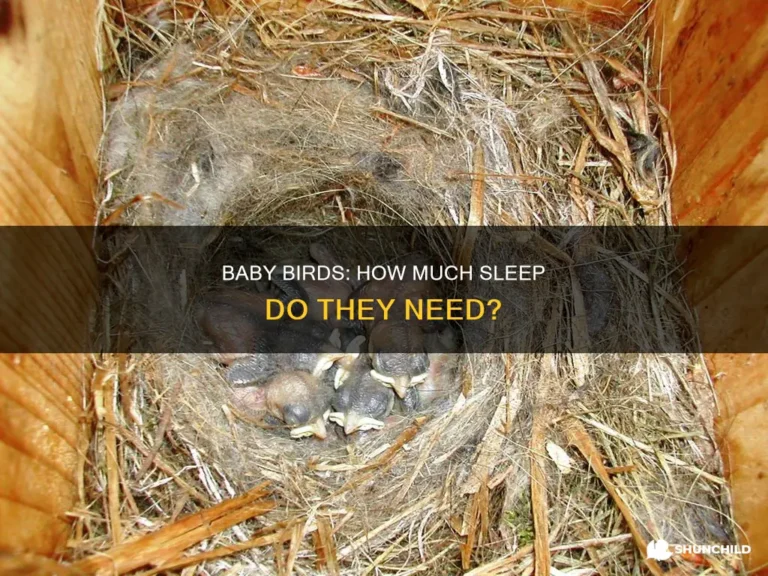
Birds may sleep in nests, but many do not use a breeding nest every night. A nest is built mainly for eggs and young. After the breeding period, adults may abandon it or use another roost.
Some birds sleep in old nests, especially when the nest offers cover. Other birds avoid them because nests can retain parasites, moisture, or odors that attract predators.
Tree cavities are often better winter shelters than open branches. They can reduce wind and help maintain a more stable temperature. However, cavities may be limited, so birds may compete for them.
A birdhouse can provide a useful roosting space if it is designed for the right species. A standard nest box may work for both nesting and roosting, but the needs are not identical. Roosting birds may prefer a box with perches or several occupants, while nesting birds need a clear interior floor and an appropriate entrance.
If you maintain a birdhouse:
- Follow a design made for the target species.
- Keep the entrance size appropriate.
- Place the box away from areas where cats can reach it.
- Clean it at the proper time for the species and region.
- Avoid opening it at night.
- Do not force a bird into a box or cavity.
A sealed or poorly ventilated box can become too hot, damp, or unsafe. Good placement matters as much as the box itself.
Do birds fall out of trees when they sleep?
Healthy adult birds rarely fall from a normal roost simply because they are asleep. Their feet can hold the branch while their posture keeps the grip secure.
Falling can happen when a bird is:
- Injured or sick
- Exhausted
- Wet and unable to maintain body heat
- Hit by a vehicle or window
- Startled by a predator
- Caught in severe wind
- Too young to perch well
- Sleeping on a damaged or unstable branch
Young birds often spend time on branches while learning to fly. A fledgling on the ground is not always abandoned. Its parents may still feed it nearby.
If you find a bird on the ground, observe from a distance first. Keep cats, dogs, and children away. Do not give food or water to an injured wild bird unless a licensed wildlife rehabilitator tells you to do so.
A bird that cannot stand, fly, grip, or avoid capture may need help. Place it in a ventilated cardboard box lined with a towel, keep the box warm and dark, and contact a licensed wildlife rehabilitator or state wildlife agency. Avoid handling raptors, herons, owls, and other large birds without professional advice because their claws and bills can cause serious injury.

Do birds sleep during storms?
Birds often seek more sheltered roosts before or during severe weather. They may move into dense foliage, tree cavities, shrubs, buildings, or other protected spaces.
A bird may remain on a branch during light rain or wind if the branch is stable and the tree provides cover. Heavy rain, ice, strong wind, and lightning create greater risks.
Birds may respond to storms by:
- Moving lower into a tree
- Choosing the side protected from prevailing wind
- Entering a cavity
- Gathering with other birds
- Leaving the area before conditions worsen
A bird may not predict a storm in the human sense. Changes in air pressure, wind, light, and other environmental signals can affect behavior, but the exact response differs among species.
Do not approach a wild bird roost during a storm. A bird that appears still may be conserving energy. Watch from a safe distance and contact a wildlife professional if the bird is visibly injured.

Why do birds chirp or move at night?
Most daytime songbirds become quiet after dark, but birds can still make sounds or shift position at night. A sudden noise, predator, storm, artificial light, or nearby human activity may wake them.
Some birds vocalize at night as part of normal behavior. Owls are active after dark, and some songbirds sing or call at night during migration or breeding season. City lights can also alter normal activity patterns.
Night movement may be caused by:
- A predator near the roost
- A competing bird
- Wind or falling branches
- Artificial light
- Migration
- A social call
- A need to find a safer position
If birds repeatedly leave a roost near a home, reduce outdoor lighting and avoid shining flashlights into trees. Bright light can disturb birds and increase their exposure to predators.
Key takeaways
- Many birds sleep in trees, but others use cavities, shrubs, buildings, cliffs, or the ground.
- Perching birds stay on branches because their feet and leg tendons help them maintain a grip.
- Birds fluff their feathers, tuck their bills, and change posture to conserve heat.
- A roost is not always a nest. Birds often choose separate sleeping sites outside the breeding season.
- Dense foliage and tree cavities offer better protection than exposed branches.
- Healthy adult birds usually do not fall from branches while sleeping.
- An injured bird that cannot perch, stand, or fly should be referred to a licensed wildlife rehabilitator.
Frequently asked questions
Do birds sleep standing up?
Many birds do sleep standing on a branch. Their feet grip the branch as their legs bend, so they do not need to lie down. Some birds sleep while sitting, crouching, floating, or clinging to a surface.
Do birds close their eyes when they sleep?
Yes. Birds commonly close both eyes during deeper sleep. In some situations, a bird may keep one eye open while part of the brain remains more alert.
Do birds sleep in the same tree every night?
Some birds return to the same roost, while others change locations. Weather, predators, food, social behavior, and disturbance can all affect the choice.
Can birds sleep in tree branches during winter?
Yes. Birds can sleep on branches in winter if they find enough shelter and food. They often choose dense evergreens, cavities, or protected branch joints to reduce exposure to cold and wind.
Should I wake a bird sleeping in my tree?
No. A sleeping bird should be left alone. Flashlights, loud sounds, and close approach can force it to use energy and may expose it to predators or harsh weather.
What is the best way to help birds find safe roosts?
Keep mature trees when possible, protect dense shrubs, limit outdoor lighting at night, and keep cats indoors or under control. Native plants can provide cover and food, while well-placed nest boxes may support cavity-nesting species.
Conclusion
Birds sleep in trees by combining strong foot anatomy, feather insulation, alert sleep, and smart roost selection. A thin branch may look unsafe to us, but a healthy perching bird can grip it with little effort. Dense foliage, cavities, and sheltered branch joints give extra protection from wind, cold, rain, and predators.
The best way to support sleeping birds is simple: protect mature trees, reduce nighttime disturbance, provide safe habitat, and seek professional help when a bird cannot perch or fly.