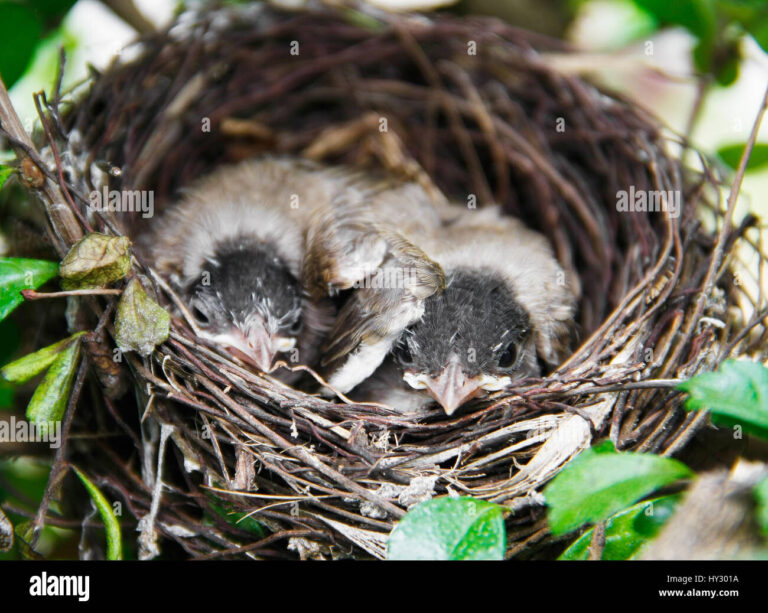
How Many Hours Do Birds Sleep: Bird Sleep Guide
For most birds kept as pets in the United States, 10 to 12 hours of sleep each night is a useful care target. Wild birds may sleep for about 8 to 12 hours, but the number changes with species, season, daylight, weather, migration, age, and safety.
Birds do not always sleep in one long, deep block like people do. Many birds wake often, change position, or use short periods of sleep. Some species can even rest one side of the brain while the other side stays alert.
If you care for a parrot, finch, canary, chicken, or another bird, a quiet, dark, regular sleep period helps support normal behavior, immune health, and daily activity.
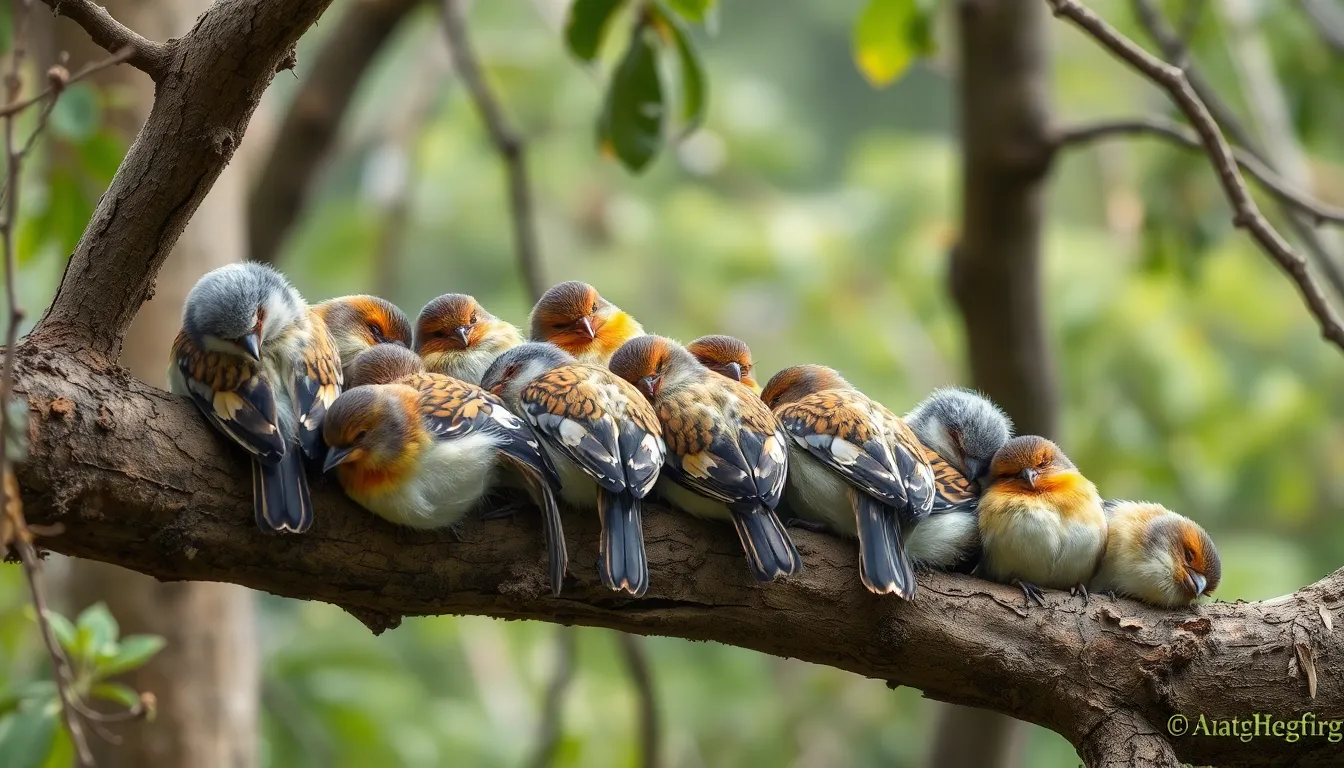
How many hours do birds sleep each day?
Most birds sleep for 8 to 12 hours in a 24-hour period. Pet birds often need the higher end of that range because indoor light, noise, and household activity can delay sleep.
| Bird or situation | Typical sleep range or need |
|---|---|
| Pet parrots | About 10–12 hours at night |
| Finches and canaries | Often about 10–12 hours |
| Chickens | Often about 8–10 hours, mainly at night |
| Wild songbirds | Commonly about 8–12 hours, depending on season and risk |
| Young or growing birds | May need more rest than adults |
| Migrating birds | Sleep may become shorter or more fragmented |
These figures are general ranges, not strict rules. A bird may sleep longer on a dark winter night and less during long summer days. A sick bird may also rest more, but unusual sleepiness should not be treated as normal without checking for other signs.
Why birds need so much sleep
Sleep helps birds restore energy, support immune function, and process information. It also gives muscles and the nervous system time to recover.
Small birds have fast metabolisms. They often spend much of the day feeding, flying, calling, grooming, and watching for danger. Sleep helps them meet the energy demands of that active schedule.
The Cornell Lab of Ornithology explains that birds usually sleep at night, although their sleep patterns vary by species and habitat. The American Veterinary Medical Association also advises bird owners to provide a regular day-and-night cycle.
Do birds sleep all at once?
No. Birds may sleep in several short periods rather than one uninterrupted stretch. They can wake briefly when they hear danger, feel movement, or change their grip on a branch.
Some birds use unihemispheric sleep. This means one side of the brain rests while the other side remains more alert. The bird may keep one eye open. This ability is useful for watching predators or maintaining group awareness.
A bird that wakes for a few seconds does not always have poor sleep. The key question is whether it appears rested and alert during the day.

How much sleep do pet birds need?
Most pet birds do best with 10 to 12 hours of quiet, dark sleep every night. This includes parrots such as budgies, cockatiels, lovebirds, conures, African greys, and macaws.
A pet bird may need a fixed bedtime even when the household stays awake. Human activity can expose a bird to light, voices, television, and movement. These distractions can reduce sleep without making the problem obvious.
A practical sleep schedule
Choose a schedule that fits your home and keep it consistent. For example:
- Sleep from 8 p.m. to 7 a.m.
- Sleep from 9 p.m. to 7 a.m.
- Sleep from 10 p.m. to 8 a.m.
The exact clock time matters less than the pattern. A bird that receives 11 hours of sleep on one night and only 6 hours the next may become stressed or irritable.
Does a bird need complete darkness?
A dark room or a well-fitted sleep cover can help. However, the setup must allow good airflow and must not cause overheating.
Some birds become frightened in total darkness. A dim night-light may help a bird that has repeated night frights, but bright light can still disrupt sleep. Place the light far enough away to create a faint glow rather than direct illumination.
Do not use a cover as a substitute for a safe cage location. Keep the cage away from smoke, strong fumes, drafts, heating vents, and other pets.
Should you cover a bird’s cage?
A cover is optional. It can block light and signal that the sleep period has begun, but some birds sleep well without one.
If you use a cover:
- Choose a clean, breathable fabric.
- Cover only the amount needed to reduce light.
- Keep air vents clear.
- Check that the bird cannot pull the fabric into the cage.
- Wash the cover often.
- Stop using it if the bird shows panic or chewing behavior.
A separate sleep cage in a quiet room may work better for a bird whose main cage is in a busy family area. This approach can provide darkness without forcing the bird to miss family time during the day.

What affects how long birds sleep?
Bird sleep changes with light, season, species, age, health, and safety. These factors explain why two healthy birds may follow different schedules.
Daylight and seasonal changes
Many birds use daylight to set their daily rhythm. Longer summer days can shorten the natural night, while winter darkness can extend it.
Indoor birds may receive more light than they would outdoors. Room lamps, screens, kitchen lights, and hallway lights can make a bird’s day last longer than its body expects.
A steady schedule usually works better than changing bedtime with every season. If you adjust the schedule, make small changes over several days.
Species and habitat
A nocturnal bird, such as an owl, follows a different pattern from a daytime songbird. Some seabirds sleep while floating or flying. Migrating birds may sleep in very short bursts because travel and predator risk limit rest.
Parrots are usually active during the day and need a long, quiet night. Chickens also sleep mainly at night, but their total sleep time and behavior differ from those of parrots.
Age
Young birds may rest more than adults because they are growing and learning. Older birds may also sleep more, especially if they have reduced stamina.
A short nap during the day is not automatically a problem. It becomes more concerning when a bird sleeps much more than usual or looks weak when awake.
Weather and temperature
Wild birds may change their sleep behavior during storms, cold snaps, heat, or strong winds. A pet bird may also rest more during stressful weather.
Temperature does not replace proper sleep care. Keep a pet bird in a stable, comfortable area and ask an avian veterinarian for advice if it shows cold stress, overheating, or sudden lethargy.
Safety and social behavior
A bird may sleep lightly when it feels exposed. Loud sounds, dogs, cats, bright lights, and frequent movement can keep it alert.
Many birds prefer to sleep near other birds. Even so, do not place birds together unless they are compatible and can live safely in the same cage. Social comfort should never override injury prevention.

How can you tell whether a bird is sleeping?
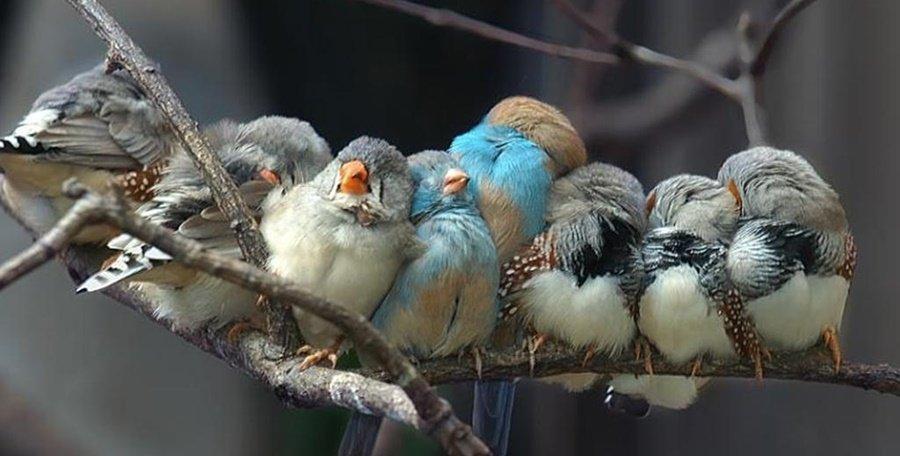
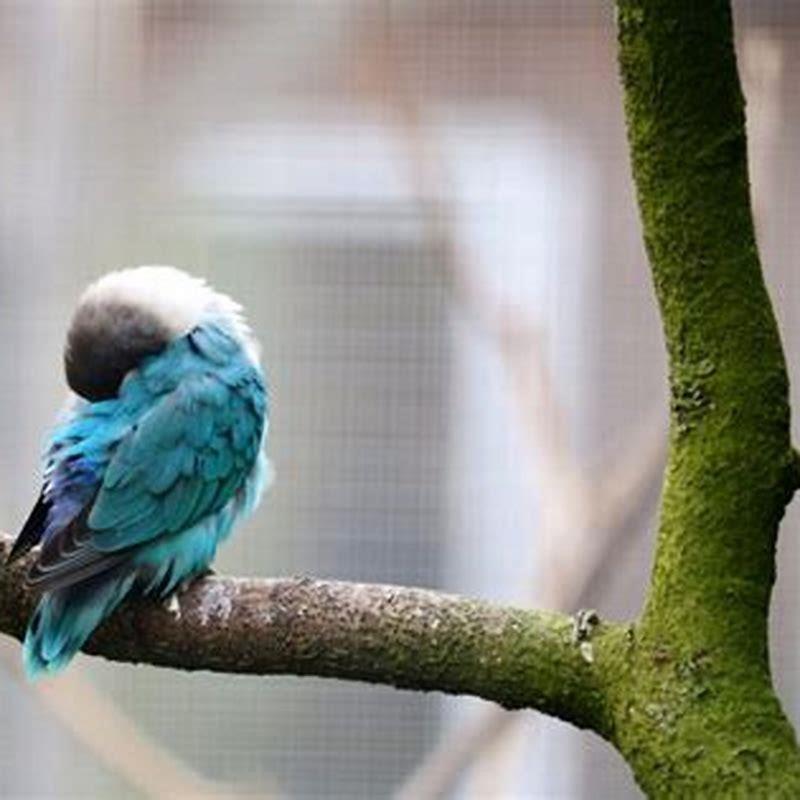
A sleeping bird often fluffs its feathers, tucks its head into its back feathers, and stands on one foot. It may close its eyes and become quiet.
Some birds sleep while perched. Others choose a familiar corner, swing, nest area, or cage platform. A healthy bird should wake and become more alert when normal morning activity begins.
Normal signs of sleep
Common sleep behaviors include:
- Closed eyes
- A relaxed posture
- Fluffed feathers during the night
- Head tucked backward
- Standing on one foot
- Little or no calling
- Brief movement when disturbed
A bird may briefly open its eyes, shift its feet, or make a small sound. These actions do not always mean that it failed to sleep.
Signs that may indicate a problem
Contact an avian veterinarian if a bird shows unusual sleepiness along with any of these signs:
- Sleeping during much of the day
- Sitting on the cage floor
- Staying fluffed for long periods while awake
- Weakness or trouble gripping the perch
- Reduced appetite or drinking
- Weight loss
- Breathing difficulty
- Tail bobbing with each breath
- Vomiting or major changes in droppings
- Sudden changes in voice or activity
- Repeated night panic or falling from the perch
Birds often hide illness. A change in sleep may be one of the first visible clues. Do not wait for severe symptoms if the change is sudden or lasts more than a short period.
Sleepiness versus illness
A bird that is quiet at bedtime is probably following its normal rhythm. A bird that remains sleepy after its usual wake time may be ill, stressed, cold, or sleep deprived.
Look at the whole pattern. Note the bird’s appetite, weight, droppings, breathing, posture, and activity. This information can help a veterinarian assess the problem.

How to help a pet bird get better sleep
The most effective method is to create a predictable sleep routine in a safe, quiet space.
Follow these steps
- Set a regular bedtime and wake time. Aim for 10 to 12 hours of quiet sleep for most pet parrots.
- Reduce light before bedtime. Turn off room lights and move the cage away from screens and windows.
- Control noise. Keep music, television, conversation, and kitchen sounds away from the sleeping area.
- Keep the temperature stable. Avoid direct drafts and sudden heat.
- Use a safe cover only if needed. Make sure it allows airflow and cannot be chewed.
- Keep the cage free of hazards. Remove loose threads, unsafe toys, and objects that could catch a toe or wing.
- Avoid late-night interruptions. Do not wake the bird for handling unless necessary.
- Watch morning behavior. A rested bird should become alert, eat, groom, and interact normally.
When the cage is in a busy room
If the bird’s cage stays in a living room, the best solution may be a separate sleep cage. Move the bird to a quiet room at bedtime, then return it to the family area in the morning.
Do not move a cage in a way that causes falls or stress. Make the new sleep location familiar during the day first. Keep food, water, and perches arranged safely.
When the bird resists bedtime
A bird may resist sleep if the schedule changes often or the environment remains bright and loud. Start a calm bedtime routine 20 to 30 minutes before lights out.
Lower the noise, dim the room, and use the same short cue each night. Avoid chasing the bird or forcing it into a covered cage. If bedtime fear continues, ask an avian veterinarian or qualified bird behavior professional for help.

Can birds sleep too much?
Yes. A bird can sleep more than normal because of sleep loss, illness, stress, cold, poor diet, or another health problem.
A bird that sleeps 12 hours at night and takes a brief daytime nap may be normal. A bird that sleeps through much of the day, refuses food, or stays fluffed while awake needs closer attention.
Check these factors first
- Did the household change the bird’s bedtime?
- Was there loud noise or bright light overnight?
- Is the room too cold or too warm?
- Has the bird experienced travel, a new pet, or another stress?
- Is it eating and drinking normally?
- Are its droppings typical?
- Has its weight changed?
- Is it breathing normally?
Weighing a small bird with a gram scale can reveal changes that are hard to see. Weigh the bird at the same time each day and record the results. A meaningful or ongoing weight loss needs veterinary advice.
Do not give human medicine or leftover pet medicine. Birds have different body sizes and drug sensitivities, and some products can be dangerous.
What happens if a bird does not get enough sleep?
Too little sleep can lead to irritability, louder calling, biting, poor focus, and changes in appetite. Ongoing sleep loss may also affect stress levels and general health.
Some parrots may show hormone-related behavior when they receive long periods of light, access to dark nest-like spaces, or frequent touching on the back and body. Sleep problems are not the only cause of these behaviors, but a stable day-and-night routine can help.
Sleep loss may also make a bird less coordinated. A tired bird may be more likely to fall, startle, or react poorly to normal handling.
One short night is usually not an emergency in an otherwise healthy bird. Repeated disruption is different. Correct the environment and contact an avian veterinarian if behavior or health does not return to normal.

Do birds sleep during the day?
Some birds nap during the day, especially after an active morning. A short daytime rest can be normal.
Daytime sleep becomes more concerning when it replaces normal activity. Healthy daytime birds should usually eat, move, groom, vocalize, and respond to their surroundings.
Wild birds may rest during the day to conserve energy or avoid heat. Some species also use short naps as part of their normal sleep pattern. The bird’s species and usual behavior matter.
For a pet bird, do not force it to stay awake. Instead, protect the full nighttime sleep period and monitor the bird for other signs of illness.
Frequently asked questions
Do birds sleep with their eyes open?
Some birds can sleep with one eye open. This behavior is linked to unihemispheric sleep, which allows part of the brain to rest while the other side remains alert. A pet bird may close both eyes when it feels safe.
Do birds sleep standing up?
Yes. Many birds sleep while gripping a perch with one foot. Their feet have a special tendon arrangement that helps them hold the perch without constant muscle effort.
Do birds dream?
Birds have sleep stages linked with brain activity, and some research suggests that birds may replay parts of their experiences during sleep. Scientists cannot confirm exactly what a bird experiences as a dream, so claims about bird dreams should remain cautious.
Should I wake my bird during the day?
Usually, no. Let a healthy bird take a short nap if it wants to rest. If it sleeps for long periods or seems weak, treat that as a possible health concern rather than simply waking it.
How many hours should a baby bird sleep?
Young birds often need more rest than adults because they are growing and developing. The right schedule depends on the species, age, feeding stage, and health. Ask an avian veterinarian for a specific plan, especially for a hand-fed or recently weaned bird.

Key takeaways
- Most pet birds need 10 to 12 hours of quiet sleep each night.
- Wild birds often sleep about 8 to 12 hours, but migration, season, safety, and species can change the pattern.
- Darkness, quiet, safety, and a regular schedule support better sleep.
- Brief waking, one-foot sleeping, and head-tucking are usually normal.
- Excessive daytime sleep, weakness, appetite loss, breathing changes, or sitting on the cage floor may signal illness.
- Do not use medicine or drastic schedule changes without veterinary guidance.
Conclusion
The best answer to “how many hours do birds sleep?” is usually 10 to 12 hours for a pet bird, with natural variation by species and circumstance. A regular sleep schedule matters as much as the total number of hours.
Start by setting a consistent bedtime, making the room dark and quiet, and watching how your bird acts when awake. If sleep changes suddenly or comes with weakness, poor appetite, breathing trouble, or other symptoms, contact an avian veterinarian promptly.