How Do Birds Know When To Fly Back North: Migration Clues
Introduction
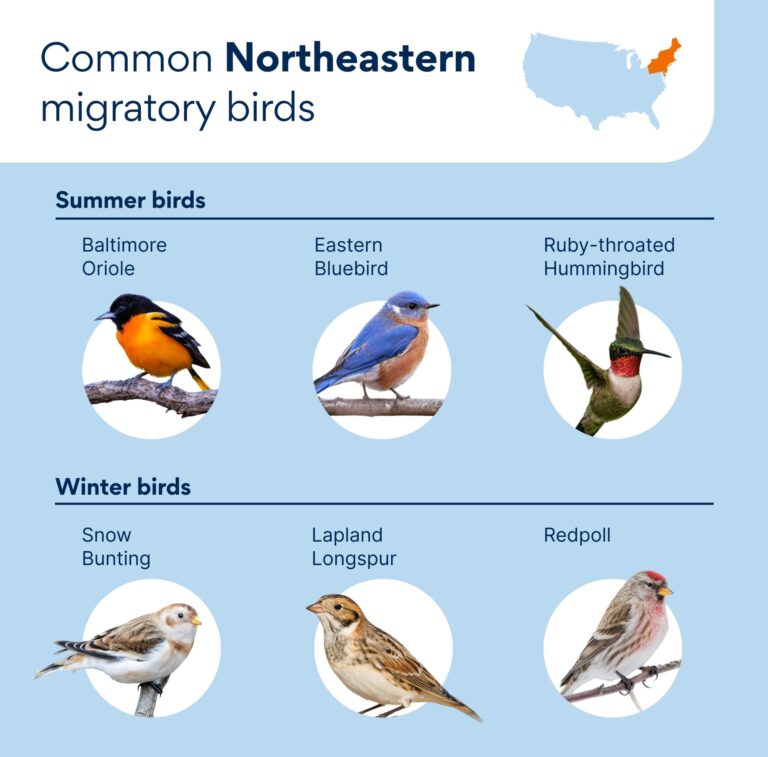
Birds in the United States do not use a calendar or map to decide when to return north. Instead, they respond to several signals at once. Longer daylight, internal body clocks, rising hormones, food supply, weather, wind, and inherited migration routes all help trigger spring migration.
A warbler in Texas, a goose in Louisiana, or an oriole in Florida may begin moving north when the days grow longer. The bird is not making a human-style plan. Its body is responding to changes that have evolved to match the best time to breed and find food in places such as the Midwest, Alaska, Canada, and the northern United States.
The main trigger is increasing daylight, but birds also use weather, food, temperature, wind, and their own biological rhythms to fine-tune the journey.
What tells birds that spring migration is near?
Birds use a group of environmental and biological cues. No single signal explains every species or every year.
1. Longer daylight
Increasing day length is one of the strongest and most reliable migration signals for many birds.
In much of the United States, daylight begins increasing soon after the winter solstice in late December. The change is small at first, but birds can detect it through light-sensitive systems linked to the brain and hormones.
Longer days can cause:
- Changes in the bird’s sleep and activity cycle
- Increased production of hormones linked to breeding
- Growth of reproductive organs
- Greater restlessness and nighttime movement
- Preparation for long-distance flight
Scientists call this seasonal restlessness zugunruhe, a German word meaning “migratory restlessness.” A bird may become active at night and show a strong urge to move in the direction its species normally travels.
Daylight helps birds prepare, but it does not always tell them to leave on one exact day. Local weather and food conditions can speed up or delay departure.
2. An internal annual clock
Many migratory birds have an inherited yearly rhythm. This rhythm helps control when they molt, store fat, migrate, breed, and prepare for winter.
The internal rhythm is often called a circannual clock. It works much like a yearly biological timer. It does not operate alone, however. Daylight helps reset or adjust it as the seasons change.
Young birds may inherit several migration traits, including:
- The general time to begin migration
- The direction of travel
- The distance to cover
- The route or region to follow
- The timing of breeding after arrival
Some birds have a strong genetic program for migration. Others learn parts of the route from parents or other adults. This difference matters because migration is both inherited and learned.
3. Breeding hormones
Longer days can activate the bird’s reproductive system. Hormones such as melatonin and reproductive hormones help link daylight, movement, and breeding behavior.
As breeding season approaches, many birds begin to:
- Defend a territory
- Search for a mate
- Grow brighter feathers or ornaments
- Sing more often
- Build nests
- Travel toward breeding grounds
For many species, reaching the breeding area at the right time is essential. Arriving too early may expose a bird to snow, cold, or a lack of insects. Arriving too late may mean that the best nesting sites or food supplies are already taken.
4. Food and plant growth
Food is a major reason birds return north. Spring brings new leaves, flowers, insects, and other resources to much of North America.
For example:
- Flycatchers follow the seasonal rise in flying insects.
- Warblers often time migration with caterpillar outbreaks.
- Hummingbirds track flowering plants and nectar.
- Shorebirds stop at wetlands and tidal flats rich in small invertebrates.
- Waterfowl use thawing wetlands and shallow lakes for food and nesting.
Food does not always trigger the first decision to migrate. In many species, daylight starts the process. Food then helps birds decide whether to continue, stop, or wait.
5. Weather and wind
Birds can sense weather patterns and often use favorable winds to reduce the energy needed for flight.
A strong tailwind can help a bird travel farther while using less stored fat. Headwinds can make migration costly and dangerous. Many birds therefore pause during poor conditions and move when winds become more favorable.
Birds may respond to:
- Wind direction and speed
- Barometric pressure
- Temperature changes
- Storm systems
- Visibility
- Rain and snow
Weather can create large waves of migration. After several days of winds from the south, birders may see many migrants arrive at once. This pattern is sometimes called a fallout, although spring migration can also produce heavy concentrations of birds.
Do birds know the exact date to fly north?
Birds do not know a date in the human sense. Their bodies respond to repeating seasonal patterns.
A bird may have an inherited tendency to become ready for migration around a certain part of the year. Daylight, weather, and food then adjust the timing. This flexible system is useful because spring does not arrive at the same time every year.
For example, a bird may leave its wintering area when:
- Its internal clock reaches the migration phase.
- Increasing daylight raises its breeding readiness.
- It has built enough fat reserves.
- Winds and weather allow safer travel.
- Conditions along the route appear suitable.
These signals can conflict. A bird may be physiologically ready to migrate but delay departure because of a cold front. Another bird may leave after a weather system creates strong tailwinds, even if temperatures remain cool.
This is why migration dates vary by species, location, age, and year.
How do birds find their way north?
Birds use more than one navigation system. The system used by a particular bird depends on its species, age, distance, weather, and experience.
The Earth’s magnetic field
Many birds can detect information from Earth’s magnetic field. This ability is known as magnetoreception.
The magnetic field may help birds determine:
- Direction
- Approximate position
- Whether they are north or south of a familiar area
- Changes in the field that act like a broad geographic guide
Research suggests that birds may detect magnetic information through more than one biological mechanism. Some evidence points to light-sensitive proteins in the eye. Other research has examined magnetic particles and sensory systems in the beak or head.
The exact details remain an active area of study. Scientists know that magnetic cues matter for many birds, but they do not yet have one complete explanation for how every species uses them.
The sun and stars
During the day, birds can use the sun as a compass. They must account for the sun’s movement across the sky, which means their internal clock helps them interpret its position.
At night, many migratory birds use the stars. Young birds can learn a star-based direction pattern before making their first migration. The North Star can provide a useful reference because it appears nearly fixed in the northern sky.
Clouds and artificial light can interfere with these cues. Bright city lights may attract or disorient nocturnal migrants, especially during low clouds or fog.
Landmarks and geography
Experienced birds may use rivers, coastlines, mountain ranges, islands, and wetlands as visual guides.
A bird flying along the Atlantic Flyway may follow the coastline or move through coastal stopover sites. Another bird may use the Mississippi Flyway, a broad migration region linked to the Mississippi River basin.
These flyways are not narrow highways. They are large routes with many branches and stopover sites. Birds may change course based on wind, habitat, water, and food.
Smell and sound
Some birds may also use odors and sounds to recognize places. Smell can be useful over large areas, especially when birds approach familiar breeding or wintering sites.
Bird calls can help family groups stay together. Young birds may also use contact calls to follow adults during migration.
Do young birds learn the route from their parents?
The answer depends on the species. Some birds largely inherit their migration direction and timing. Others learn important details from adults.
Inherited migration
Many songbirds migrate alone at night. A young bird may leave its nesting area without following its parents. Its genes can provide a basic program for direction, timing, and distance.
This program is not always perfect. It may tell the bird to travel generally southeast in fall and northeast in spring, for example. The bird then adjusts its route using weather, magnetic cues, stars, and landmarks.
Learned migration
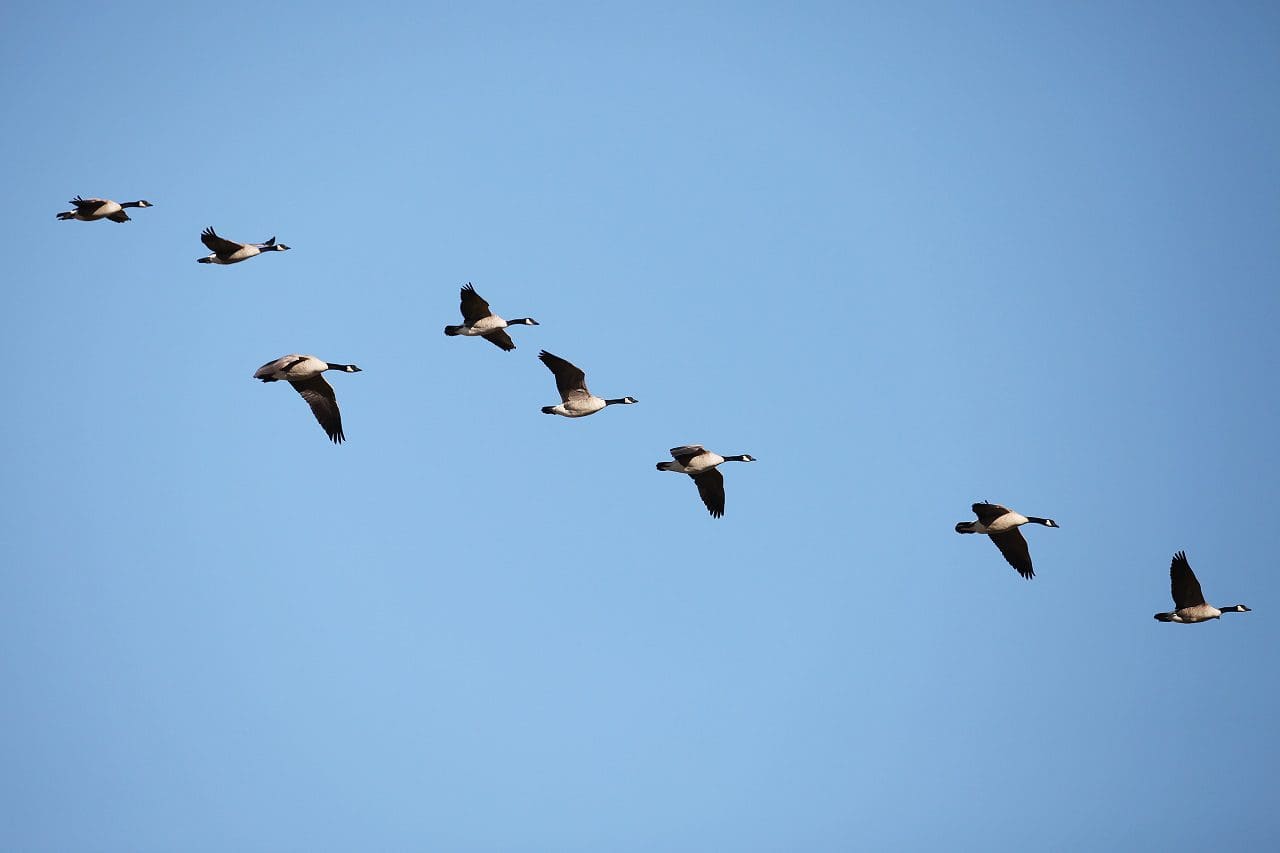
Geese, cranes, swans, and some other large birds often migrate in family groups. Young birds can learn routes, stopover areas, and social behavior from older birds.
Learning may help birds:
- Recognize reliable wetlands
- Avoid dangerous areas
- Find traditional resting sites
- Choose efficient routes
- Return to the same breeding region
An adult bird’s experience can be especially useful when weather changes or when a usual stopover site has poor food.
Why both systems help
Inherited behavior allows a bird to migrate even on its first journey. Learning adds local knowledge.
This combination gives birds flexibility. A young bird can follow a broad, inherited direction, while an older bird can improve its route through experience.
Why do birds return north in spring?
Birds return north because the breeding season offers major advantages.
More food for young birds
Spring and summer produce large amounts of food in northern regions. Insects become plentiful, plants grow rapidly, and wetlands fill with life.
This seasonal food supply can support hungry nestlings. For insect-eating birds, timing is critical. A successful nesting season may depend on matching chick growth with the peak number of caterpillars or other insects.
Longer days
Northern summers provide long daylight periods. Birds have more time to search for food, feed young, defend a territory, and care for a nest.
Less competition
Some northern habitats have fewer resident birds than tropical wintering areas. A bird that returns early may find an open territory and a good nest site.
Reproductive success
Migration costs energy and exposes birds to storms, predators, disease, and habitat loss. Birds make the journey because the breeding benefits can outweigh these risks.
This trade-off helps explain why migration evolved. A species may spend winter where food is available, then travel north when conditions support nesting and raising young.

When do birds fly back north in the United States?
There is no single national migration date. Timing differs by species and region.
| Bird group | Typical spring movement in the United States | Main timing factors |
|---|---|---|
| Waterfowl | Some begin moving north in late winter | Ice breakup, wetlands, food, wind |
| Purple martins and swallows | Often arrive as insects become available | Temperature, flying insects, tailwinds |
| Hummingbirds | Move north in waves, often beginning in the South | Flowering plants, daylight, weather |
| Warblers | Many pass through in spring before breeding farther north | Insects, daylight, wind, stopover habitat |
| Shorebirds | Use coastal and inland wetlands during long migrations | Tidal food, mudflats, weather, prey |
| Hawks and other soaring birds | Often use daytime winds and rising air | Thermals, wind direction, geography |
These are broad patterns, not fixed rules. Birds in Florida may begin moving north weeks before birds in Minnesota. A cold spring can delay movement in one region, while strong tailwinds can bring large numbers of birds to another.
Bird migration maps from the Cornell Lab of Ornithology, eBird, and the U.S. Fish and Wildlife Service can help show local timing. Local records are more useful than a nationwide average when you want to know what may appear near your home.
What makes birds leave their wintering grounds?
Birds usually leave when several conditions line up.
A practical sequence
-
Daylight increases.
The bird’s internal seasonal clock becomes active. -
The body prepares for breeding.
Hormone levels change, and the bird may gain weight or become restless at night. -
Food and water remain available.
The bird needs enough energy for travel and rest. -
Weather creates a safe travel window.
Favorable winds can greatly reduce the cost of migration. -
The bird begins a series of flights.
It may travel hundreds of miles, stop to feed, and continue when conditions improve.
Birds do not always fly the entire route in one trip. Most migrants use stopover sites. These places act like refueling stations, but they are natural habitats rather than human-made facilities.
A bird may pause for hours, days, or longer. The length of the stop depends on fat reserves, weather, food, predators, and the distance remaining.

How climate change affects northward migration
Climate change can shift the timing of migration, plant growth, insect emergence, and breeding. These events do not always change at the same rate.
For example, a bird may arrive at its breeding grounds after a warmer spring has already caused caterpillars to peak. This timing problem is called a phenological mismatch. It can reduce the food available for nestlings.
Changes may also affect:
- Drought along migration routes
- Wildfire and smoke
- Storm intensity
- Wetland availability
- Flowering dates
- Insect abundance
- Heat stress during travel
- Habitat quality at stopover sites
Not every species responds in the same way. Some can adjust their timing. Others have migration schedules that are more strongly controlled by daylight and may change less quickly.
This does not mean every early spring produces a failed migration. It means that weather, food, and migration timing can become less predictable, which may increase stress for some species.
Common misconceptions about spring bird migration
“All birds fly north on the same day.”
They do not. Species differ in their biology, route, wintering area, and food needs.
“Birds migrate only because it gets warmer.”
Temperature matters, but daylight is often a more reliable seasonal signal. Warm weather alone does not guarantee that insects, flowers, or nesting conditions are ready.
“Birds follow one fixed highway.”
Flyways are broad regions. Birds can take different paths within them and may change course because of wind, storms, habitat, or food.
“Every bird returns to the exact same place.”
Many birds show strong site fidelity, meaning they return to a familiar breeding or wintering area. Others use broader regions or establish new territories.
“Birds will not migrate if people feed them.”
Bird feeders can provide local energy, but they do not replace natural stopover habitat. Feeding birds does not generally stop normal migration. Keep feeders clean and follow disease-prevention guidance, especially when sick birds are present.
“Artificial light helps migrating birds.”
Bright nighttime light can attract and disorient some migrants. Turning off unnecessary outdoor lights during peak migration periods can reduce this risk, especially in cities and near tall buildings.

How to watch northbound migration safely
You can observe spring migration without disturbing birds.
- Use binoculars instead of approaching nests.
- Keep a respectful distance from resting or feeding birds.
- Avoid playing bird calls near nesting birds.
- Keep cats indoors, especially during migration and nesting seasons.
- Make windows safer with exterior screens, markers, or other visible patterns.
- Plant native species that provide seeds, berries, nectar, and insects.
- Keep fresh water available while preventing mosquito breeding.
- Report unusual bird sightings through established local birding platforms.
If you find an injured bird, do not try to feed it or force it to drink. Place it in a ventilated box only if you can do so safely, keep it warm and quiet, and contact a licensed wildlife rehabilitator or a local wildlife agency.
Frequently asked questions
Do birds use the moon to migrate?
Some nocturnal migrants may use the moon as one visual cue, but stars, Earth’s magnetic field, landscape, and wind are more important parts of the known navigation system. Moonlight can also change visibility and behavior.
How do birds know when to return to the same place?
They can combine inherited direction, magnetic cues, stars, landmarks, odors, and memory. Older birds often have more route experience, while young birds may rely more heavily on inherited guidance.
Can birds get lost during migration?
Yes. Storms, strong winds, artificial light, habitat changes, and inexperience can push birds off course. Many recover by using compass cues and landmarks, but some die from exhaustion, collisions, or lack of food.
Why do some birds migrate at night?
Night travel can reduce heat stress and predation risk. Cooler air may also make long flights easier. Many songbirds migrate at night and rest or feed during the day.
Do all birds migrate north?
No. Some birds remain in the same region year-round. Others move short distances up or down mountains, toward warmer lowlands, or between nearby habitats. Migration is a spectrum, not an all-or-nothing behavior.
What is the best way to know when birds will arrive locally?
Check recent local sightings, migration reports, weather patterns, and habitat conditions. A national arrival date is less useful than records from your state or migration region.
Conclusion
Birds know when to fly back north through a layered system of cues. Increasing daylight activates an internal seasonal clock. Hormones prepare the bird for breeding. Food, weather, wind, temperature, and navigation signals then help determine when and where it moves.
The bird does not need a calendar or a human-like forecast. Its body reads the season, and its inherited behavior and experience guide the journey. In the United States, you can often spot this process by watching for waves of waterfowl, swallows, hummingbirds, warblers, and shorebirds as spring moves north across the country.
The most useful next step is to check a local migration map and compare it with recent sightings, weather, and flowering or insect activity in your area.