How Do Birds Fly In Formation: The Science Explained
Introduction
Across the United States, people often see Canada geese, sandhill cranes, pelicans, and other birds flying in neat lines or V-shaped groups. This pattern is not random. Birds use formation flight to reduce effort, keep the flock together, and improve communication during long trips.
Birds fly in formation by positioning themselves to use the air currents made by the bird ahead. In a V formation, each bird usually flies slightly behind and to the side of another bird. This spot can provide upward-moving air, called upwash, which helps support the bird’s weight and may reduce the energy needed to fly.
Formation flight still costs energy. Birds must flap, steer, watch nearby flock members, and adjust their position. The formation works because each bird gains aerodynamic help while the flock stays organized.
What Is Formation Flight?
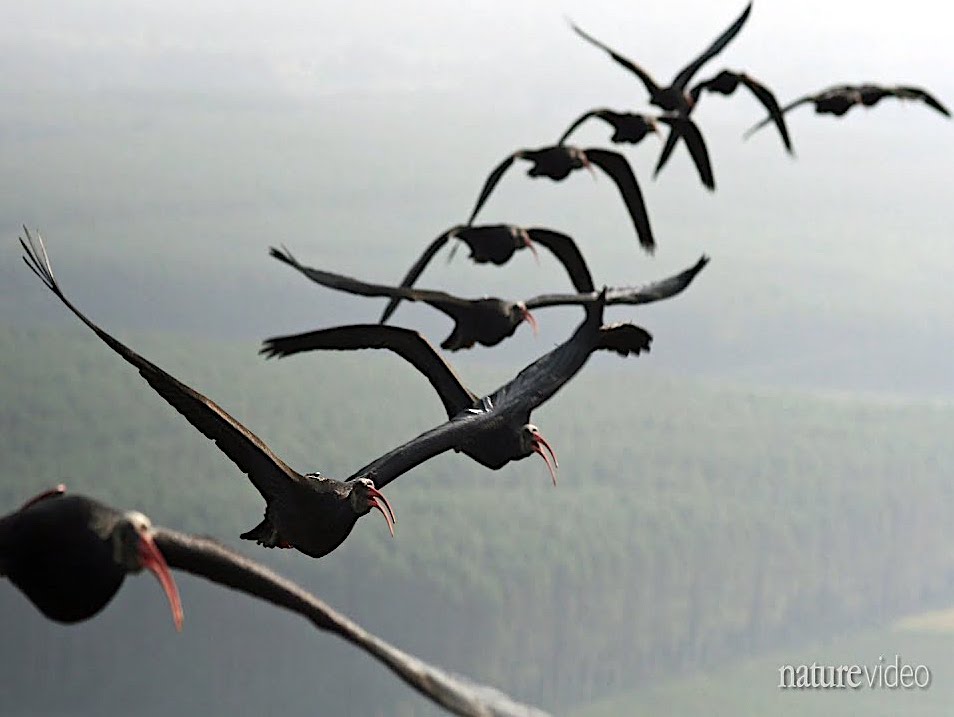
Formation flight is a group flight pattern in which birds keep fairly fixed positions relative to one another. The most familiar pattern is a V shape, but birds may also fly in a straight line, diagonal line, loose cluster, or changing group.
Common formation types include:
- V formation: Birds form two angled lines behind a lead bird.
- Echelon formation: Birds fly in a diagonal line, often on one side of the leader.
- Straight-line formation: Birds follow one another in a narrow path.
- Loose flock formation: Birds stay close but do not hold a clear geometric shape.
- Cluster formation: Birds move as a dense group, often during short flights or rapid turns.
The best shape depends on the bird species, wind, travel distance, flock size, and activity. A V shape is useful for steady travel, but it is not the only effective pattern.
Why do birds form a V?
A V shape lets most birds fly behind and to the side of another bird. This position can place a bird in a helpful part of the air disturbed by the bird ahead.
The pattern also gives each bird a clear view of the flock. Birds can watch their neighbors, match their speed, and respond quickly when the group turns. A V formation is therefore both an aerodynamic tool and a social system.
How Airflow Helps Birds Fly in Formation
The main aerodynamic benefit comes from wingtip vortices and the air that moves around them.
As a bird flies, its wings create lift. Higher pressure below the wings and lower pressure above them cause air to curl around the wingtips. This produces rotating air structures called wingtip vortices.
These vortices create different zones of air:
- Upwash: Air moves upward in some areas beside and behind the bird.
- Downwash: Air moves downward in other areas behind the wings.
- Turbulence: The air becomes less steady near the strongest part of the wake.
A bird behind the leader can adjust its position to catch useful upwash. The rising air supports part of the bird’s weight. That can lower the force needed from its wings during each wingbeat.
The best position is not directly behind
A bird flying directly behind another bird may enter downwash. Downwash pushes air downward and can make flight harder. That is why birds usually fly behind and to the side rather than directly in line.
The useful position is often near the front edge of the wake. There, a bird may gain upward lift without taking the full force of the disturbed air.
This is similar to cyclists riding in a pace line, but the mechanism differs. Cyclists mainly benefit from reduced air resistance. Birds can benefit from both reduced aerodynamic cost and helpful upward air movement.
Do all birds get the same benefit?
No. The benefit depends on several factors:
- The bird’s distance from its neighbor
- Its forward and sideways position
- Wing shape and size
- Wingbeat timing
- Flight speed
- Wind direction
- The accuracy of its alignment
- The species’ body size and flight style
A small position change can move a bird from helpful upwash into harmful downwash. Birds must keep adjusting their path to remain in a useful part of the wake.

How Birds Keep Their Position
Birds do not use rulers or fixed flight controls. They rely on vision, hearing, body movement, and fast changes in wingbeats.
A bird can change its position by:
- Increasing or reducing wingbeat speed
- Changing the angle of its wings
- Banking left or right
- Gliding for a short time
- Moving closer to or farther from a neighbor
- Changing its flight speed
- Adjusting its body angle
Birds near the front of the flock often respond first to changes in direction. Birds farther back then copy or anticipate those movements. This creates a wave of motion through the group.
How do birds avoid hitting one another?
Birds use visual spacing and rapid flight corrections to avoid collisions. Each bird tracks nearby flock members and keeps enough room to move its wings.
Many flocking birds also follow simple movement rules:
- Stay near the group.
- Match the direction and speed of nearby birds.
- Avoid getting too close.
- Turn when neighboring birds turn.
These rules can produce complex flock behavior without one bird controlling every movement.
Birds also have strong visual systems. They can detect motion around them and react quickly when another bird changes course. In a dense flock, each bird may respond mainly to nearby neighbors rather than to the whole group.
Do Birds Take Turns Leading?
Many birds change positions during long flights, but the exact pattern varies by species and flock.
The lead position can be tiring because the front bird does not receive the same aerodynamic help as birds behind it. A bird at the front must create undisturbed airflow and may face more wind resistance.
When conditions allow, another bird may move forward while the former leader drops back. This spreads the work across the flock.
However, people should not assume that every V formation uses a strict rotation system. Research on different species has found different patterns. Some flocks show clear position changes. Others maintain a less formal structure because of wind, family groups, age differences, or changes in direction.
In a family group, experienced birds may guide younger birds. Yet the front bird is not always a permanent “commander.” Formation flight often comes from local adjustments by many birds.

Why Do Birds Fly in Formation?
Birds use formation flight for more than one reason. The value of the formation changes with the task.
1. To save energy
Long-distance flight demands a great deal of energy. Birds that use upwash may need less effort to stay airborne than birds flying alone.
This can help during migration, when birds may travel hundreds or thousands of miles. Even a small energy benefit can matter when a bird must also find food, avoid predators, and survive changing weather.
The size of the benefit is not the same for every flock. It depends on alignment, wind, wing motion, and the bird’s ability to hold the right position.
2. To stay together
A flock can move as one unit when birds can see one another. Staying together helps birds maintain contact during migration and reduces the chance that a family group will separate.
Group travel may also help birds respond to sudden threats. If one bird detects danger, nearby birds can react quickly.
3. To improve communication
Birds in formation can use calls and body movements to keep contact. Geese, cranes, and other social birds often call while flying.
Vocal signals may help birds maintain group cohesion, especially when visibility is poor. Calls can also help the flock respond to changes in direction or speed.
4. To navigate as a group
Migration depends on more than one sense. Birds may use the sun, stars, landmarks, Earth’s magnetic field, wind, and learned routes.
A group can combine the experience of many birds. That does not mean every bird knows the route equally well. It means the flock can respond to environmental cues as its members adjust to one another.
5. To reduce individual risk
A group gives birds more eyes and ears. More birds can detect predators, storms, and obstacles.
This benefit has limits. Large groups can attract attention and may create competition for food or safe resting sites. Formation flight is useful, but it is not always the safest choice.
Which Birds Fly in Formation?
Formation flight is most common in birds that travel together over long distances or spend much of their time in social groups.
Examples include:
| Bird | Common flight pattern | Why it may help |
|---|---|---|
| Canada goose | V or angled line | Long-distance travel, flock contact, airflow use |
| Sandhill crane | V or loose line | Migration and group coordination |
| American white pelican | Line or angled formation | Efficient travel over water and open land |
| Cormorant | Line or loose formation | Group movement between feeding and resting areas |
| Duck species | Lines, Vs, or loose groups | Travel, safety, and flock cohesion |
| Ibis species | V or diagonal groups | Migration and coordinated movement |
The pattern can change during one flight. A flock may form a clear V during steady travel, spread out while searching for a landing site, and cluster when avoiding a predator.
Not every bird species benefits from a V. Birds that fly in dense swarms, such as starlings, use different group behaviors. Their movement depends more on close-range alignment and fast changes in direction than on a stable V shape.

Why Do Birds Sometimes Leave the Formation?
Birds leave or change formation when the pattern no longer helps.
Common causes include:
- Strong crosswinds
- Gusty or unstable air
- A nearby predator
- A need to land
- A change in feeding location
- A tired or injured bird
- A change in flock size
- Uneven flight speeds
- Poor visibility
- A need to avoid obstacles
A bird may also leave the flock because it is ready to rest. Migrating birds often stop at wetlands, fields, lakes, or coastal areas to feed and recover.
Formation flight works best in open air with steady movement. It is less useful near trees, buildings, cliffs, and other obstacles. In those places, safety and maneuverability matter more than aerodynamic spacing.
Do Birds Fly in Formation at Night?
Some migrating birds fly at night, but their formation may be harder for people to see. Birds can use calls and other cues to maintain contact in darkness.
Night flight creates extra challenges. Visual spacing is harder, weather can change quickly, and artificial lights may affect behavior in some species. Birds may still travel as a group, but the pattern may be less clear than a daytime V.
Radar research has helped scientists study bird migration when birds cannot be seen from the ground. Weather radar can detect large movements of migrating birds and reveal timing, direction, and altitude patterns. Radar does not always show the exact shape of a flock, so it cannot answer every question about formation geometry.
What Happens When One Bird Falls Out of Line?
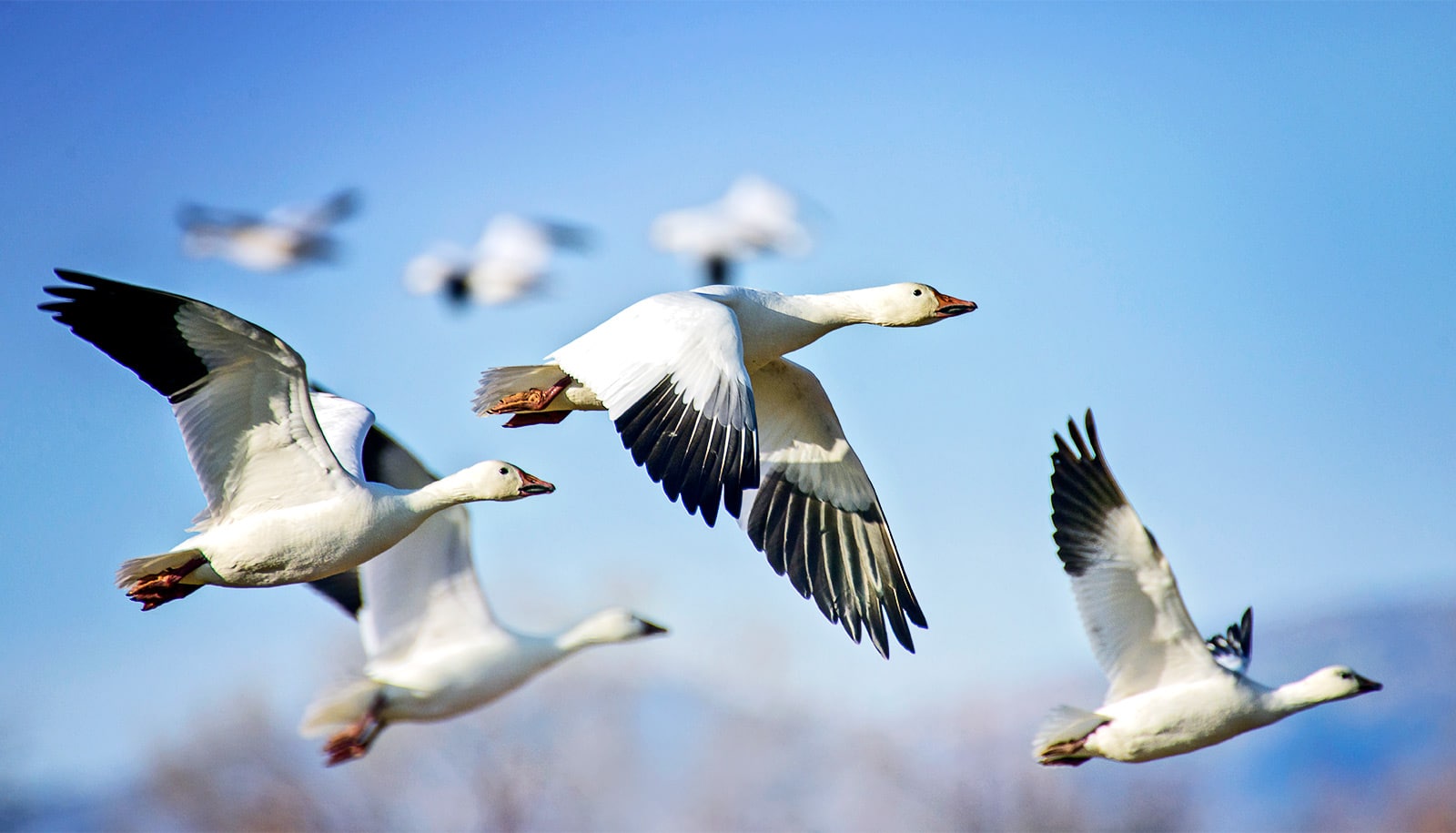
When a bird drifts out of position, it can correct its path or move to another part of the flock. The bird may flap faster, slow down, bank toward the group, or change its spacing.
If the bird cannot keep up, it may leave the formation. This can happen because of injury, fatigue, wind, or a difference in age or condition.
The flock may respond by changing shape. A V can become an uneven line, a loose group, or a smaller V. Formation flight is flexible rather than locked in place.
A single bird does not always return to the exact same position. The best spot changes as the flock turns, the wind shifts, and other birds move.
Common Misconceptions About Formation Flight
“The lead bird does all the work.”
The lead bird often faces more airflow than birds behind it, but it is not always the only hard-working bird. Every bird must flap, steer, watch its neighbors, and maintain its position.
“Birds always fly in a perfect V.”
Real formations are often uneven. One side may be longer than the other. Birds may drift, change spacing, or move between positions.
“The V shape means one bird is always in charge.”
A V shape does not prove that one bird commands the flock. Group behavior can emerge from many birds responding to nearby neighbors.
“Flying behind another bird is always easier.”
Only certain parts of the wake are helpful. A bird in the wrong spot may enter downwash or turbulence and use more energy.
“All migrating birds use formation flight.”
Many birds migrate alone or in loose groups. Some species use dense flocks, while others spread out or travel at different heights.

What Can Humans Learn From Birds Flying in Formation?
Bird formation flight has influenced research in aviation, robotics, and autonomous vehicles. Engineers study how spacing and timing affect energy use in groups of aircraft or drones.
The comparison has limits. A bird is not a small airplane. Birds can flap, twist their wings, change shape, and react to nearby movement in ways that fixed-wing aircraft cannot.
Still, the basic lesson is useful: position, timing, and airflow matter when many flying objects travel together. A small change in spacing can affect both energy use and stability.
Researchers also study bird flocks to understand distributed control. A group can act in an organized way without a central controller. Each member follows local cues, yet the group produces a coordinated pattern.
Key Takeaways
- Birds fly in formation mainly to use helpful airflow and keep the flock together.
- A V formation places birds behind and to the side of one another.
- Birds may gain support from upwash created by a neighbor’s wingtip vortices.
- Flying directly behind another bird is not always helpful because downwash can increase effort.
- Birds adjust their speed, wingbeats, and position to maintain safe spacing.
- Some birds change leaders or positions during long flights, but the pattern varies by species.
- Formation flight also supports communication, navigation, predator detection, and group safety.
- Not all birds use V formations, and real flocks are often uneven or flexible.
Frequently Asked Questions
How does a V formation help birds save energy?
A bird positioned behind and to the side of another bird may use upward-moving air from the bird ahead. This can provide partial support and reduce the effort needed to remain airborne. The benefit depends on exact spacing, wingbeat timing, wind, and species.
Why do birds fly in a V instead of a straight line?
A V lets birds avoid the strongest downwash directly behind another bird. It also gives many flock members access to helpful upwash while keeping the group visible and connected.
Do birds know who should lead the formation?
Birds may respond to experienced flock members, family structure, or local movement cues. However, a V does not always have one permanent leader. Positions can change as birds become tired, wind shifts, or the flock changes direction.
Do birds get tired while flying in formation?
Yes. Formation flight may reduce some aerodynamic effort, but birds still flap, steer, maintain spacing, and respond to danger. Migrating birds need rest, food, and water even when they travel in a formation.
Do birds fly in formation during migration?
Many migrating species do. Canada geese, cranes, pelicans, and some ducks may use V shapes or lines during travel. Other species migrate alone, in loose groups, or in dense flocks.
Conclusion
Birds fly in formation because the pattern solves several problems at once. The right position can provide useful airflow, while the group shape helps birds communicate, navigate, detect danger, and stay together.
The V shape is not a rigid rule. Birds adjust it as wind, fatigue, flock size, and surroundings change. When you see geese or cranes crossing the sky over the United States, the formation is best understood as a flexible system built from aerodynamics and cooperation.
For a closer look, watch how the birds change shape near a landing area or during a turn. Those changes show that formation flight is not just a picture-perfect V. It is a live conversation between wings, air, and flock members.
Sources for further reading
- Cornell Lab of Ornithology: Bird Migration
- U.S. Geological Survey: Bird Migration
- National Audubon Society: Bird Migration
- Weimerskirch, H. and colleagues, research on formation flight and energy use in migrating birds, published in Nature
- Lissaman, P. B., and Shollenberger, C. A., research on formation flight in birds, published in Science