How Cold Can Birds Survive: Winter Survival Guide
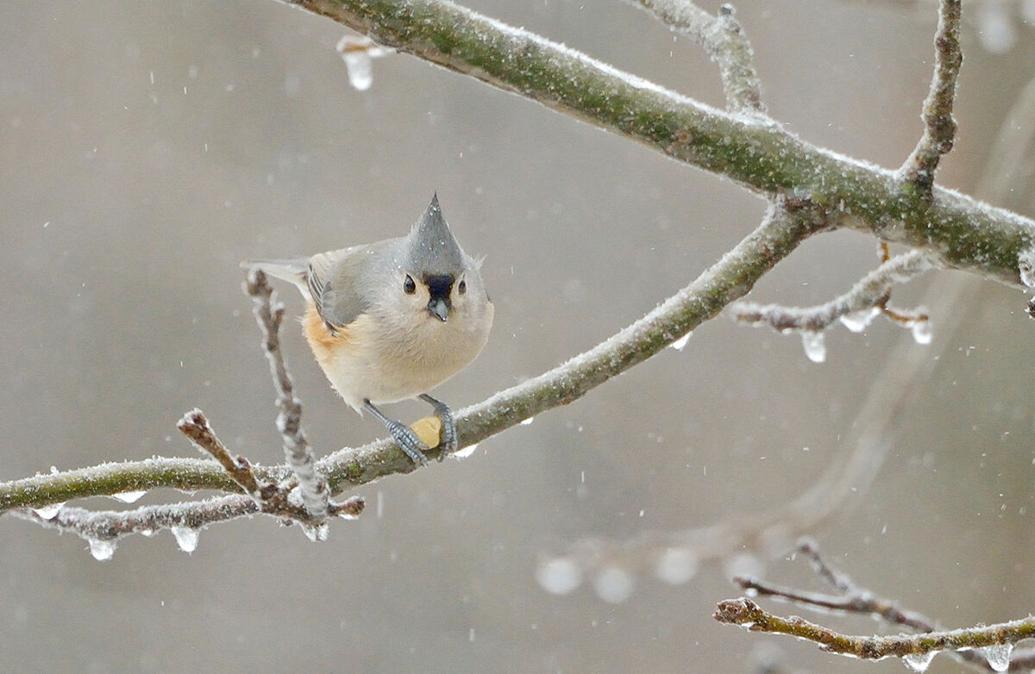
Birds in the United States can survive surprisingly cold weather. Some wild birds remain active below 0°F (-18°C) when they are healthy, dry, well fed, and protected from wind. But there is no single temperature that applies to every bird. A bird’s species, age, body size, feather condition, food supply, shelter, wind, and exposure time all change the answer.
A small bird may survive a very cold night in a dry roost. The same bird may die during cold rain, strong wind, or a long period without food. Cold weather becomes most dangerous when it raises the bird’s heat loss faster than the bird can replace that heat with energy.

How cold can wild birds survive?
Many wild birds in North America can tolerate temperatures below freezing. Cold-hardy species may survive nights near 0°F, and some acclimated birds can endure even lower air temperatures for short periods. These figures are not safe limits. They are broad examples of what healthy birds may tolerate under favorable conditions.
Birds do not all respond to cold in the same way. A chickadee, goose, sparrow, hummingbird, and blue jay have different body sizes, feather coats, diets, and winter habits.
A bird’s survival depends on several linked factors:
- Air temperature: Lower temperatures increase heat loss.
- Wind: Moving air removes warm air trapped near the feathers.
- Wet feathers: Water reduces insulation and can prevent a bird from staying warm.
- Food supply: Birds need more energy in cold weather.
- Shelter: A protected roost can greatly reduce heat loss.
- Exposure time: A short cold spell may be manageable, while several cold nights can drain energy stores.
- Health: Injury, disease, parasites, and old age reduce cold tolerance.
The key point is simple: cold alone does not determine survival. Cold plus wind, wetness, hunger, and exposure is far more dangerous.
A practical temperature guide
This table gives general guidance for healthy wild birds. It is not a medical or universal survival chart.
| Outdoor condition | General risk for wild birds |
|---|---|
| 32–50°F (0–10°C) | Most healthy native birds manage well if dry and fed |
| 20–32°F (-7–0°C) | Birds need more food and good shelter |
| 0–20°F (-18 to -7°C) | Higher risk, especially for small birds and birds exposed to wind |
| Below 0°F (-18°C) | Severe stress is possible; shelter, food, and dryness become critical |
| Any temperature with cold rain or wet snow | Potentially dangerous, even when the air is above freezing |
| Strong wind at any freezing temperature | Risk rises quickly because wind increases heat loss |
These ranges describe risk, not fixed survival thresholds. A hardy adult bird may live through a night at -10°F, while a weak or wet bird may become hypothermic near 32°F.

Why birds can survive freezing weather
Birds stay warm through insulation, heat production, behavior, and short-term energy control. Their feathers are the first line of defense.
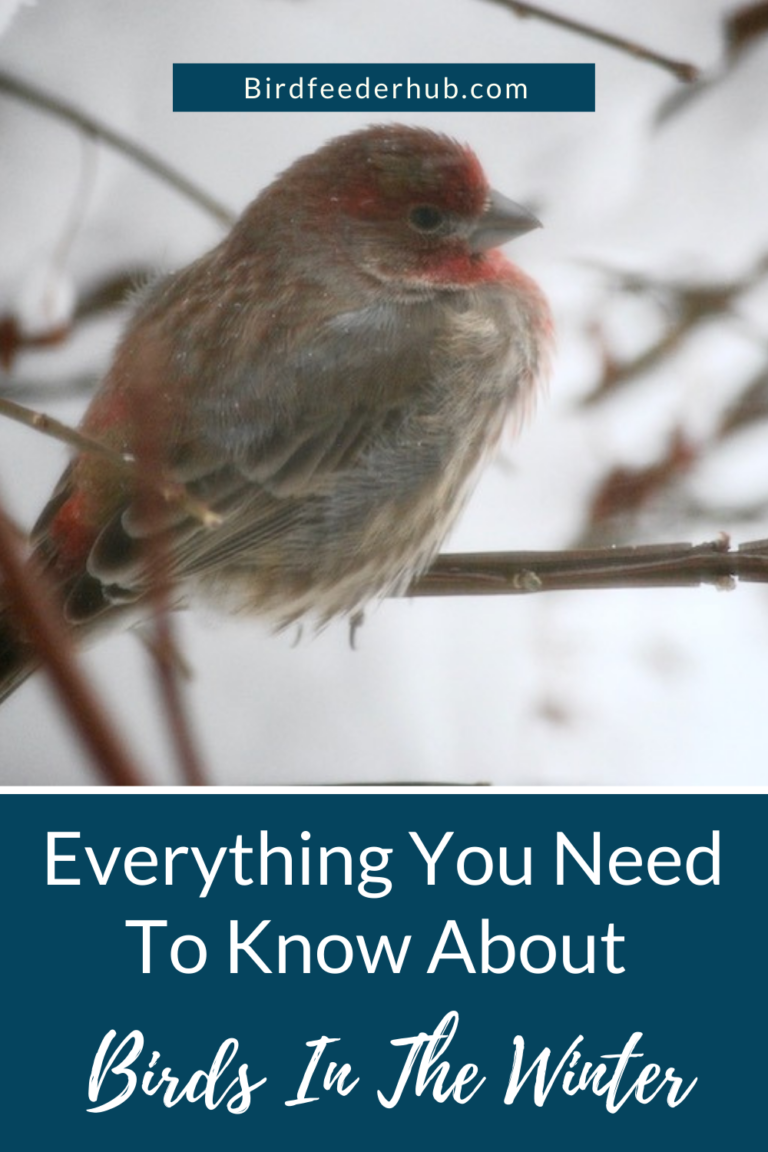
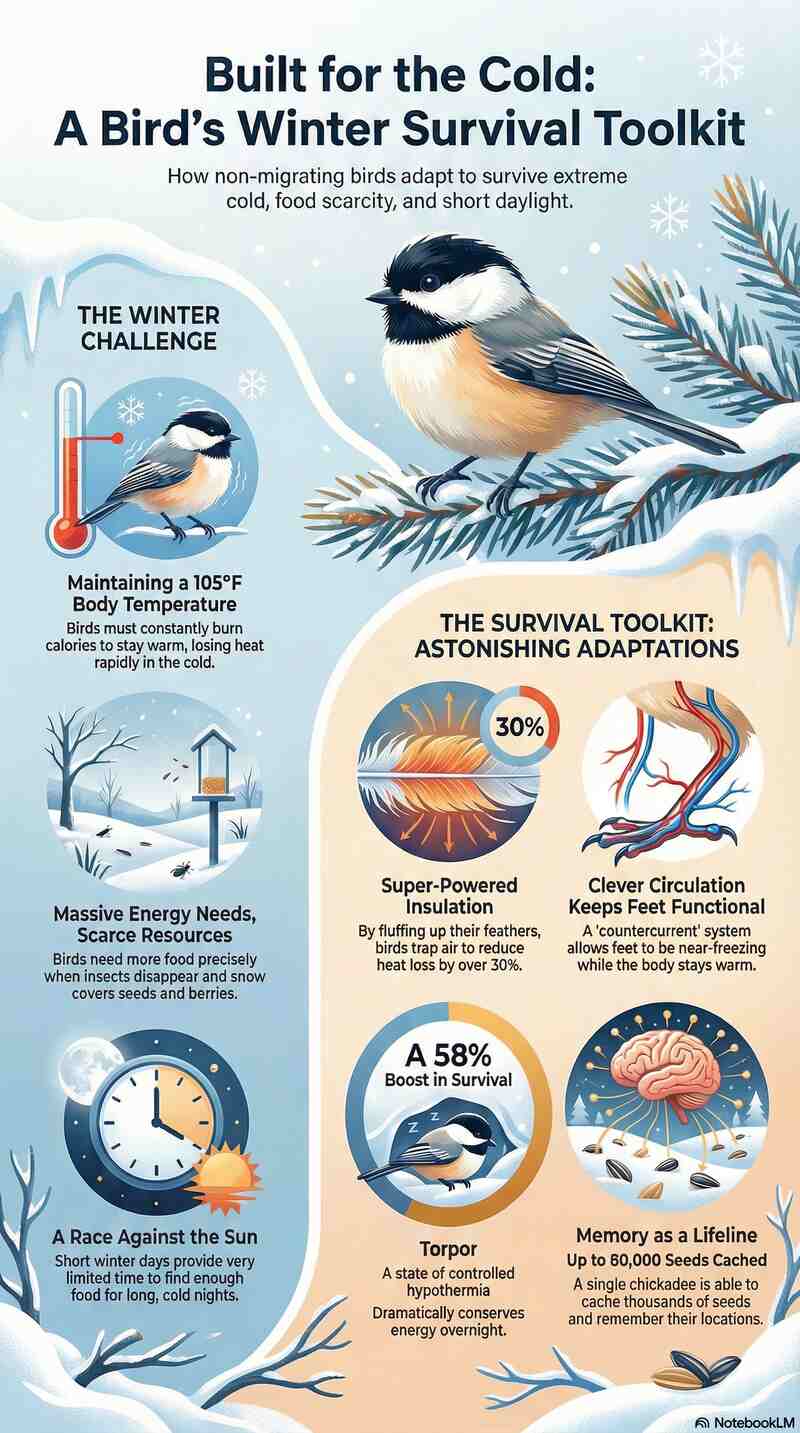
When a bird fluffs its feathers, it traps a layer of air next to its skin. Air is a poor conductor of heat, so this layer slows heat loss. Birds also use muscles near the feather roots to raise and loosen their feathers.
Birds have other useful adaptations:
- High body temperatures, often near 104–109°F (40–43°C) in many small birds.
- Fast metabolisms that create body heat.
- Heavy winter feathers in some species.
- Fat stores that provide fuel.
- Roosting sites that block wind.
- The ability to reduce activity during cold nights.
- Heat exchange in the legs and feet that limits heat loss.
A bird’s legs may feel cold, but that does not always mean the bird is freezing. Blood vessels in the legs can limit the amount of heat carried into the feet. The warm blood returning to the body can also gain heat from blood moving toward the feet. This system helps birds stand on ice or snow without losing all their body heat.
Regulated hypothermia
Some birds lower their body temperature at night. This process is called regulated hypothermia. It reduces the energy needed to stay warm when the bird is resting.
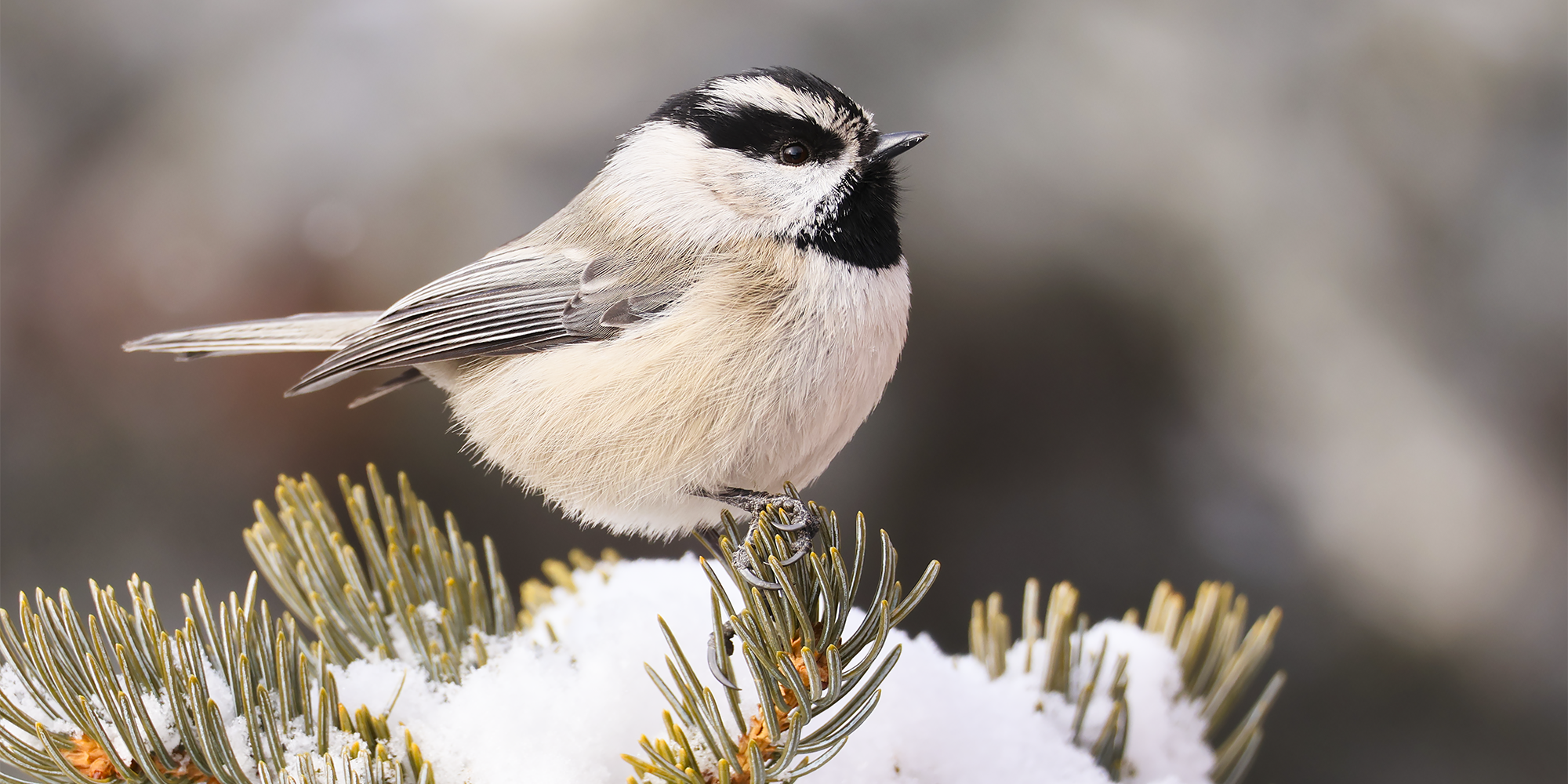
Black-capped chickadees are a well-known example. Research has found that chickadees can lower their nighttime body temperature by roughly 10–12°C under cold conditions. This saves energy, but it does not make the bird immune to cold. The bird must still warm up before it becomes active again.
Small birds often face a special problem. They lose heat faster than large birds because they have more surface area compared with their body mass. A chickadee may need to eat a large amount of food for its size each day, especially during severe weather.

Which birds handle cold weather best?
Birds that remain in the northern United States during winter often have strong cold-weather adaptations. Common examples include:
- Black-capped chickadees
- White-breasted nuthatches
- Downy woodpeckers
- Hairy woodpeckers
- Northern cardinals
- Blue jays
- American crows
- Wild turkeys
- Canada geese
- Many native sparrows
This does not mean every bird in these groups can survive every storm. It means these species commonly have behaviors or body traits that help them remain in cold regions.
Birds that migrate often leave areas where winter food becomes scarce. Migration is not always a direct response to cold. Food can be the larger issue. Insects may disappear, ponds may freeze, and seeds may become hard to reach under snow.
Small birds versus large birds
Small birds lose heat quickly because of their high surface-area-to-volume ratio. They may need to feed often and seek shelter before sunset.
Large birds usually conserve heat more easily, but they need more total food. A large bird can also suffer from frostbite if it has exposed skin, wet plumage, or poor blood flow.
Body size is only one factor. A well-insulated small bird in a dry cavity may fare better than a larger bird standing in freezing rain.
Waterbirds and cold
Ducks, geese, swans, and other waterbirds can tolerate cold water because of their dense feathers and specialized blood flow in their legs. Their feathers must remain in good condition, however.
Oil, chemical pollution, illness, or damaged feathers can destroy waterproofing. A waterbird that cannot keep its feathers dry may lose body heat rapidly.

How wind and moisture change the answer
Wind and moisture can make cold weather much more dangerous than the thermometer suggests. Weather reports often use wind chill to describe how cold exposed human skin may feel. Birds do not experience wind chill in exactly the same way humans do, but wind still increases heat loss from a bird’s body.
A calm, dry night at 10°F may be easier to survive than a windy night at 25°F. Wind can strip away the warm air held by feathers. It can also force a bird to spend more energy maintaining its body temperature.
Wet feathers create an even greater problem. Water can mat feathers and reduce the trapped air layer that provides insulation. Cold rain is especially dangerous because it combines low temperature, wetness, and often strong wind.
Watch for these high-risk conditions:
- Freezing rain
- Cold rain that lasts for hours
- Wet snow
- Strong wind
- Rapid temperature drops
- Ice that covers natural food
- Long nights after a storm
- Repeated cold nights with little food
This is why a simple “lowest temperature” answer can mislead. A bird’s cold limit is not a single number. It is a changing balance between heat loss and available energy.

How birds find warmth in winter
Birds use shelter to reduce wind and conserve body heat. Common winter roosts include:
- Tree cavities
- Dense evergreen branches
- Brush piles
- Thick shrubs
- Hollow logs
- Rock gaps
- Barns and other protected structures
- Purpose-built roost boxes
Some birds roost alone. Others gather in groups. Shared roosting can reduce heat loss, although crowding may also increase the spread of disease or parasites.
Birds may also change their daily schedule. They feed heavily before sunset, then move to a protected roost. In the morning, they may wait for sunlight before becoming fully active.
A bird that looks still in cold weather may be conserving energy. However, a bird that cannot stand, flies poorly, remains on the ground, or allows people to approach closely may be in trouble.

How much food do birds need in cold weather?
Birds often need more calories in winter because they burn energy to stay warm. Food is especially important before a long, cold night.
Useful natural and feeder foods include:
- Black oil sunflower seed
- Safflower seed
- Peanuts offered in a safe feeder
- Suet made for wild birds
- Nyjer seed for finches
- Native berries
- Acorns and other nuts
- Insects and insect larvae
High-fat foods can provide more energy per bite than many low-fat seeds. Birds still need clean water, even when temperatures are low.
Keep feeders clean and place them near cover, but not so close that cats can hide beside them. Remove spoiled food and clean feeders often. A dirty feeder can spread disease, especially when many birds gather in one place.
Do not spread seed on roads or near areas treated with salt or chemicals. Road salt can harm birds and other wildlife.

What temperature is too cold for pet birds?
Pet birds should not be exposed to outdoor winter temperatures unless a qualified avian veterinarian has provided a specific plan. Most companion birds live in controlled indoor conditions and may not be acclimated to cold.
Many pet birds become uncomfortable when room temperatures fall below about 60°F (16°C), but tolerance varies by species, health, feather condition, and acclimation. A sudden temperature change can be more harmful than a gradual, small change.
Keep a pet bird away from:
- Cold drafts
- Open windows
- Unheated porches
- Garages
- Direct contact with windows during freezing weather
- Heating vents that blow very hot, dry air
- Space heaters with unsafe coatings or fumes
Never place a bird near a kitchen, fireplace, or heater that may release smoke or fumes. Birds have highly sensitive respiratory systems. Fumes from overheated nonstick coatings, smoke, scented products, and some cleaning chemicals can cause rapid illness or death.
Signs that a pet bird may be too cold include:
- Persistent fluffing
- Shivering
- Lethargy
- Sitting low on the perch
- Weak grip
- Reduced eating
- Trouble breathing
- Staying at the bottom of the cage
If these signs appear, move the bird to a warm, draft-free area and contact an avian veterinarian. Do not use a heating pad inside the cage unless a veterinarian has directed you to do so. A bird can suffer burns or become overheated.
How to help wild birds during a cold snap
The safest help is to provide food, water, and shelter while avoiding unnecessary handling.
- Keep feeders stocked. Refill them before evening when a severe freeze is expected.
- Offer energy-rich food. Sunflower seed and suitable suet can help birds meet higher energy needs.
- Provide fresh water. Use a shallow birdbath and replace icy water. A properly designed birdbath heater may help, but keep cords and electrical parts safe.
- Add natural cover. Dense native shrubs, evergreen trees, and brush piles block wind.
- Keep cats indoors. Cold-stressed birds are easier for cats to catch.
- Clean feeding areas. Remove wet, moldy food and wash feeders regularly.
- Avoid handling healthy birds. A bird sitting quietly in a sheltered place may simply be resting.
Do not put petroleum jelly, oil, or grease on a bird’s feathers or feet. These substances can damage feathers, interfere with insulation, and create other health risks.
What to do if you find a cold or injured bird
A bird that is cold, stunned, or injured may need a licensed wildlife rehabilitator. In the United States, wildlife care rules differ by state, so contact a local wildlife agency, rehabilitation center, or veterinarian.
Until you receive instructions:
- Keep pets and children away.
- Do not force food or water into the bird’s mouth.
- Place a clearly injured bird in a small cardboard box with air holes.
- Line the box with a smooth towel or paper towel.
- Keep the box dark, quiet, and away from fumes.
- Do not keep checking on the bird.
- Do not try to treat broken bones or frostbite at home.
Use gentle warmth only if a rehabilitator or veterinarian advises it. Direct heat can burn a bird or cause dangerous overheating.
A bird that is alert, fully feathered, and able to fly may not need rescue simply because it is outdoors in freezing weather. Observe from a distance first.
Signs of an emergency
Seek professional help when a bird:
- Has a visible wound
- Cannot stand or fly
- Has a drooping wing
- Is bleeding
- Is trapped by ice or string
- Has trouble breathing
- Has been caught by a cat
- Is covered in oil or chemicals
- Is unusually tame or unresponsive
Cat-caught birds need prompt professional care even when no wound is visible. Small punctures can lead to serious infection.

Common mistakes about birds and cold weather
“Birds cannot survive below freezing.”
False. Many birds live through freezing and subzero weather. Their success depends on insulation, food, shelter, health, wind, and moisture.
“A bird puffed up in winter must be sick.”
Not always. Fluffing feathers is a normal way to trap warm air. It becomes more concerning when paired with weakness, poor balance, closed eyes, or failure to move away.
“Birds will starve if a feeder is empty for one day.”
Wild birds use many food sources, so one empty feeder does not usually cause immediate starvation. During severe cold, however, regular food can improve their energy balance. Feeders should support natural habitat, not replace it.
“Birds need people to heat them.”
Usually not. Healthy wild birds are adapted to local weather. Human help works best when it improves access to food, water, and wind protection.
“Bread helps birds stay warm.”
Bread is not a strong winter food. It offers few useful nutrients and can fill a bird’s stomach without supplying enough fat, protein, and minerals. Use species-appropriate bird food instead.
Frequently asked questions
Can birds survive overnight in snow?
Yes, many birds can survive a snowy night if they remain dry and find shelter from wind. Snow can cover food and make the next day more difficult, so access to food matters.
Can birds freeze to death?
Yes. Birds can die from hypothermia when they lose heat faster than they can produce it. Starvation, wet feathers, wind, illness, and injury raise the risk.
Do birds’ feet freeze on ice?
Birds have blood-flow systems that reduce heat loss through their legs and feet. Their feet may become very cold without freezing, but frostbite can still occur during severe exposure or when circulation is impaired.
Should I bring a wild bird inside during a freeze?
Only if the bird is injured, ill, trapped, or clearly unable to function. Bringing a healthy wild bird indoors can cause stress and may create legal or disease concerns. Contact a wildlife rehabilitator before handling it when possible.
What is the best winter food for backyard birds?
Black oil sunflower seed is a useful general choice. Suet can provide extra energy during cold weather. Choose food that matches the birds in your area, and keep feeders clean and dry.

Key takeaways
- Many birds can survive below freezing, and some tolerate temperatures below 0°F.
- There is no universal minimum temperature for all birds.
- Wind, rain, wet feathers, hunger, and illness often matter more than air temperature alone.
- Small birds need frequent food because they lose heat quickly.
- Dry shelter, natural cover, clean water, and high-energy food can help backyard birds.
- Pet birds should stay indoors and away from drafts, smoke, and dangerous fumes.
- Injured or weak wild birds should be referred to a licensed wildlife rehabilitator.
Conclusion
Birds can survive cold American winters because their feathers, metabolism, behavior, and blood flow help them conserve heat. Still, cold tolerance has limits. The most dangerous combination is freezing weather with wind, wet feathers, poor shelter, and no food.
For backyard birds, provide clean food, unfrozen water, and dense cover. For pet birds, maintain a stable indoor temperature and avoid drafts and fumes. If a wild bird is weak, injured, or unable to fly, contact a wildlife rehabilitator rather than trying to warm or feed it yourself.
Sources and further reading
- Cornell Lab of Ornithology: How Do Birds Survive the Winter?
- Cornell Lab of Ornithology: All About Birds
- U.S. Fish & Wildlife Service: Helping Wildlife
- National Audubon Society: Winter Bird Feeding
- McKechnie, A. E., and Swanson, D. L. Research on avian thermoregulation and energy use in cold conditions, published in peer-reviewed ornithology literature.