How Do Birds Sleep At Night: Nocturnal Bird Sleep Explained
Introduction
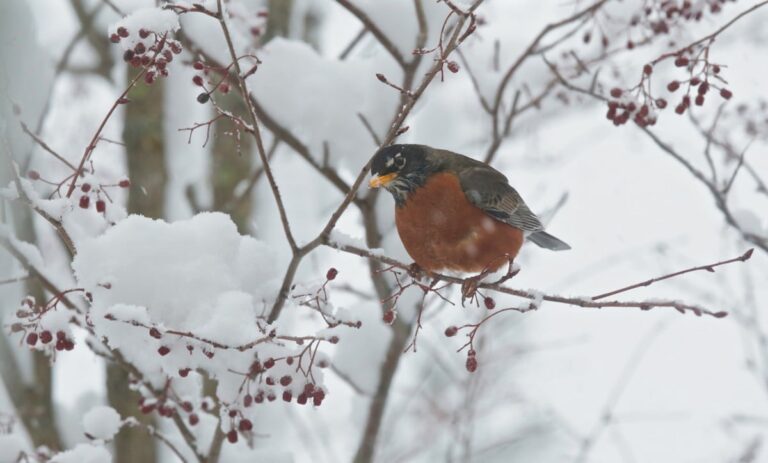
Across the United States, birds sleep in backyards, city parks, forests, wetlands, farms, and coastal areas. Most do not sleep in nests. Instead, they choose a safe roost, fluff their feathers, tuck their head, and rest while staying alert to danger.
Bird sleep is not the same as human sleep. Many birds can rest one half of the brain while the other half stays watchful. Some sleep while perched on a branch. Others sleep in tree holes, dense shrubs, nest boxes, or on the water. The exact method depends on the bird’s species, habitat, season, and risk from predators.

How Do Birds Sleep at Night?
Birds usually sleep by settling into a safe roost and entering repeated periods of non-rapid eye movement (NREM) and rapid eye movement (REM) sleep. Small perching birds often grip a branch with their feet. Many birds puff out their feathers, turn their heads, and place their bills under their shoulder feathers.
Most birds sleep at night because darkness reduces the chance of finding food and makes flight harder. Night also gives many daytime birds a quiet period to save energy. Still, birds do not all follow the same schedule.
Common nighttime sleep sites include:
- Tree branches
- Thick shrubs
- Tree cavities
- Nest boxes
- Barns and other sheltered structures
- Cliffs and ledges
- Marshes and reed beds
- Open water for some waterbirds
- The ground, in a few species
A bird’s sleeping place is called a roost. A roost is not always the same as a nest. A nest is mainly used for eggs and young. A roost is used for rest and protection.
The Cornell Lab of Ornithology explains that most birds sleep at night, but their sleep can vary with light, weather, migration, and danger. This means there is no single sleep pattern for every bird in North America.
Do Birds Sleep in Nests?
Most adult birds do not sleep in their nests unless they are caring for eggs or young. A nest is often exposed and may collect moisture, waste, or parasites. For this reason, an adult bird may use a nearby branch, cavity, or shrub instead.
A parent bird may sleep on or near a nest during the breeding season. Female ducks and other birds that incubate eggs may remain on the nest for long periods. Some birds also sleep in a nest when they are raising helpless chicks.
After the young leave, the nest may no longer serve as a regular sleeping place. Many birds choose a different roost each night or change roosts when the weather or predator risk changes.
Where common U.S. birds may roost
| Bird group | Common nighttime roost |
|---|---|
| Songbirds | Dense shrubs, tree branches, cavities, and nest boxes |
| Woodpeckers | Tree holes and cavities |
| Owls | Tree branches, cavities, barns, and other sheltered sites |
| Ducks and geese | Water, shorelines, marshes, or protected land |
| Crows | Group roosts in tall trees |
| Hummingbirds | Small branches or sheltered vegetation |
| Swallows | Reeds, bridges, barns, and other protected sites |
| Shorebirds | Beaches, mudflats, marshes, and shallow water edges |
These are broad patterns, not strict rules. A bird may choose a different location when storms, predators, cold, heat, or human activity change the risk.

How Do Birds Sleep Without Falling From a Branch?
Many perching birds have a special foot system that helps them stay on a branch while asleep. When a bird lands, tendons in its legs and feet tighten as the toes curl around the perch. The bird does not need to keep using its muscles to hold on in the same way a human would grip an object.
This automatic grip is called a perching reflex. It helps birds such as sparrows, finches, chickadees, robins, and many other songbirds remain attached to a branch during sleep.
A bird still needs a suitable perch. It may avoid a thin, unstable, wet, or exposed branch. Many birds select a spot that gives them:
- A firm grip
- Cover from wind
- Protection from rain or snow
- A view of nearby danger
- Distance from ground-based predators
- Enough room to balance
Birds may also sleep while standing on one leg. Tucking one foot into warm feathers can reduce heat loss. The bird may switch legs during the night.
Not every bird sleeps on a branch. Ducks may rest while floating or standing. Owls may sleep on a branch with their feet locked around it. Some birds sleep on the ground, while others rest in burrows, tree cavities, or buildings.
Do Birds Close Their Eyes When They Sleep?
Yes. Birds often close one or both eyes during sleep. Closing the eyes helps block light and may protect the eyes from dust, wind, and other irritation.
Many birds also have a third eyelid called the nictitating membrane. This thin membrane can move across the eye. It helps protect and moisten the eye while allowing some light to pass through.
Some birds can use unihemispheric sleep. During this type of sleep, one brain hemisphere rests while the other remains more alert. The bird may keep one eye open because each eye connects mainly to the opposite side of the brain.
This ability is useful near predators or in large groups. A bird on the edge of a flock may keep the eye facing away from the group open. Birds can also use this form of sleep during long flights or while resting in risky places.
Unihemispheric sleep does not mean a bird is fully awake on one side and fully asleep on the other at all times. Sleep depth can change. The bird may switch sides or close both eyes when conditions feel safe.
Research on mallards found that birds at the edge of a group were more likely to keep one eye open than birds in the center. The finding supports the idea that sleep position can affect how much vigilance a bird needs.

Do Birds Sleep During Flight?
Some birds can sleep during flight, but this is not a normal behavior for every bird. The best evidence comes from studies of frigatebirds, which can stay in the air for long periods over the ocean.
A study published in Nature Communications found that great frigatebirds slept for short periods while flying. They used both whole-brain sleep and one-sided sleep. Their total sleep time in flight was very low compared with sleep on land.
This finding does not mean birds regularly sleep for hours while flying. It shows that some species can take brief sleep periods when their lifestyle requires long, continuous flight.
Migrating birds may also change their sleep pattern. During migration, some species sleep less, use short rest periods, or sleep at stopover sites. The amount of sleep loss and the way birds recover varies by species.
Birds that migrate at night may fly for hours in darkness. They may rest during the day at a safe stopover site. Other species migrate during the day and sleep at night.
The key point is simple: some birds can sleep while flying, but most birds still need safe resting periods on land or water.
How Long Do Birds Sleep?
The exact sleep time depends on the species, season, age, weather, food supply, and amount of light. Many birds sleep through much of the dark period, but they may wake several times.
Birds often wake briefly to:
- Check for predators
- Move to a safer position
- Adjust their feathers
- Respond to cold or wind
- Defend a roost
- Join a group
- Begin feeding before sunrise
Birds may also sleep more deeply during cold weather because saving energy becomes more important. On the other hand, bright artificial light can cause some birds to wake earlier or remain active later.
Birds do not always sleep in one long block. Their sleep may occur in short periods. This pattern can help them balance rest with safety.
Why birds wake before sunrise
Many birds become active before the sun rises. This is called the dawn chorus, when songbirds begin calling and singing in the early morning.
A bird may wake before sunrise because:
- Its internal clock responds to changing light
- Early morning is a good time to find food
- Sound carries well in cool, calm air
- Males may defend territory through song
- The bird needs to leave a risky roost
Artificial light can shift this pattern. Outdoor lights near homes, streets, bridges, and tall buildings may affect when birds wake and migrate.
The National Audubon Society identifies light pollution as a concern for birds, especially during migration. Turning off unnecessary outdoor lights can reduce one source of nighttime disturbance.

Do Birds Sleep in Groups?
Many birds sleep alone, but some gather in groups called communal roosts. Group sleeping can provide safety because more birds can watch for danger. A large group may also help birds share body heat in cold weather.
Common examples include:
- Crows and blackbirds gathering in trees
- Swallows gathering in reeds or barns
- Waterfowl resting on lakes or marshes
- Some shorebirds standing together on beaches or mudflats
- Small songbirds using dense cover in loose groups
Group roosts can be very large. However, a flock also has costs. More birds may attract predators, create noise, and compete for the safest places.
Some birds use a “many eyes” system. Individuals on the edge of a group may stay more alert, while birds in the center may rest more deeply. Birds may also take turns changing position.
If you see many birds gathered at dusk, they may be preparing to roost rather than searching for food. Loud noise, bright lights, pets, and repeated human visits can disturb them.
How Do Birds Stay Warm While Sleeping?
Birds stay warm at night by fluffing their feathers. Fluffed feathers trap a layer of air next to the body. That air acts as insulation.
Birds may also:
- Tuck their bills into shoulder feathers
- Stand on one leg
- Cover their feet with belly feathers
- Choose a sheltered roost
- Sleep close to other birds
- Reduce movement to save energy
Small birds lose heat quickly because they have a high surface-area-to-body ratio. A cold night can be dangerous when food is scarce.
Birds need fuel to maintain body heat. This is why many birds feed heavily before nightfall and again soon after dawn. A bird that wakes cold may need to find food quickly.
Do not assume a fluffed bird is asleep. A bird may fluff its feathers because it is cold, ill, or stressed. If a bird remains on the ground, cannot fly, has a drooping wing, or allows close approach, contact a licensed wildlife rehabilitator rather than handling it without advice.

Do Birds Dream?
Birds have sleep stages that resemble mammalian NREM and REM sleep. During REM sleep, birds may show small muscle twitches and changes in brain activity. These signs suggest that birds may have complex sleep states.
However, science cannot confirm what a bird experiences in a dream. Researchers can measure brain activity and behavior, but they cannot ask a bird what it saw or felt.
It is reasonable to say that birds show sleep patterns linked with REM sleep. It is not reasonable to claim that a bird dreams about a specific event without direct evidence.
Young birds may need sleep for brain development and learning. Songbirds learn parts of their songs through practice and memory. Sleep may help the brain process and retain new information, although the exact role differs among species.
Why Do Birds Sometimes Sleep During the Day?
Birds may sleep during the day for several normal reasons. A short daytime rest does not always signal illness.
Possible reasons include:
- The species is naturally active at night
- The bird is recovering from migration
- It is very hot or cold
- Food is hard to find
- The bird is young
- The bird is digesting a large meal
- The bird is resting after intense activity
- The bird is disturbed from its normal nighttime roost
Nocturnal birds, such as owls and nightjars, usually rest during the day. Some birds also take short naps between feeding periods.
A daytime bird that sits quietly with its eyes closed for a short time may simply be resting. A bird that stays on the ground, cannot stand, breathes with difficulty, or shows an injured wing needs help.
Do not feed or give water to an injured wild bird unless a licensed rehabilitator tells you to do so. Incorrect handling or force-feeding can cause harm.
How to Help Birds Sleep Safely in Your Yard
You can make a yard safer by protecting natural roosts and reducing nighttime disturbance.
Helpful steps
-
Keep mature trees when safe to do so.
Tree branches and cavities provide important roost sites. -
Leave some dense shrubs.
Thick plants can shelter small birds from wind and predators. -
Reduce outdoor light.
Use motion sensors, timers, shields, or lower light levels when possible. -
Keep cats indoors, especially at night.
Cats can reach birds near low roosts and shrubs. -
Avoid disturbing communal roosts.
Stay back from large groups of resting birds. -
Do not seal active cavities.
A hole in a tree, building, or nest box may contain a resting or nesting bird. -
Use nest boxes correctly.
Clean and place them according to local wildlife guidance, and do not assume every box will be used only for nesting. -
Keep windows safer during migration.
Turn off indoor lights visible through windows and use bird-safe window treatments where needed.
Natural darkness is one of the simplest ways to support nighttime bird behavior. Yard lighting that is bright, constant, or aimed into trees can disrupt roosting birds.

Common Myths About Bird Sleep
Myth: All birds sleep in nests
Most adult birds do not sleep in nests. They often use branches, cavities, shrubs, water, or other roosts.
Myth: Birds fall asleep and lose their grip
Perching birds have foot and tendon structures that help them hold a branch while resting.
Myth: Birds sleep all night without waking
Birds may wake often to check danger, adjust their position, or respond to weather.
Myth: Every bird sleeps with both eyes closed
Many birds close both eyes, but some can use one-sided sleep and keep one eye open.
Myth: A bird with puffed feathers is always asleep
Fluffed feathers can mean sleep, cold, illness, or stress. The bird’s posture and behavior provide more useful clues.
Myth: Birds never sleep while flying
Some species can sleep briefly during flight. This ability is limited and does not apply equally to all birds.

What Should You Do If You Find a Bird Sleeping?
If a bird is safely perched, leave it alone. Do not shine a flashlight at it, touch it, or try to wake it for a closer look.
If a bird is on the ground, first observe from a distance. A fledgling may be learning to fly and may still have care from nearby parents. Keep pets and children away.
Seek help from a licensed wildlife rehabilitator if the bird:
- Has a visible injury
- Cannot stand or fly
- Has a wing hanging down
- Is bleeding
- Is trapped indoors
- Has been caught by a cat
- Shows trouble breathing
- Does not move when approached carefully
In the United States, you can search for a permitted wildlife rehabilitator through your state wildlife agency or the National Wildlife Rehabilitators Association.
Do not place a healthy fledgling back in a nest. If a young bird has feathers and can hop, it may be a fledgling. If it has little or no feathering and has fallen from a nest, contact a rehabilitator for guidance.
Key Takeaways
- Birds usually sleep at night in a protected roost.
- Most adult birds do not sleep in nests.
- Perching birds can grip branches while they rest.
- Birds may puff their feathers, tuck their bills, and stand on one leg to stay warm.
- Some birds use one-sided sleep and keep one eye open.
- A few species can sleep briefly during flight.
- Birds may sleep alone, in groups, on water, in cavities, or in dense plants.
- Bright lights, pets, noise, and habitat loss can disturb bird sleep.
- A bird on the ground may be a fledgling, injured bird, or sick bird. Watch first and seek qualified help when needed.
Frequently Asked Questions
Do birds sleep standing up?
Many birds do sleep standing up. Perching birds can remain on a branch because their feet grip automatically. Ducks, geese, herons, and other birds may also rest while standing.
Do birds sleep with their heads under their wings?
Many birds turn their heads and place their bills into feathers on the back or shoulder area. This position may help reduce heat loss and protect the bill.
Can birds sleep with one eye open?
Yes. Some birds can use unihemispheric sleep, in which one side of the brain rests while the other remains more alert. This may help them watch for predators.
Where do birds sleep in winter?
Birds may use tree cavities, thick shrubs, evergreen trees, barns, nest boxes, bridges, cliffs, or protected areas near water. The best roost depends on the species and local weather.
Why do birds stop singing at night?
Most daytime songbirds stop singing after dark because they cannot feed or defend territory as easily in low light. Nocturnal birds may call at night, and some birds may sing near streetlights or during migration.
Conclusion
Birds sleep at night by choosing a safe place, conserving body heat, and adjusting their sleep to local risks. A robin may settle on a hidden branch, a woodpecker may use a tree cavity, a duck may rest on water, and a crow may join a large communal roost.
Their sleep is flexible rather than simple. Birds can wake often, use one-sided sleep, change roosts, and in a few species sleep briefly during flight. Protecting dark, quiet, sheltered spaces gives birds a better chance to rest and survive.