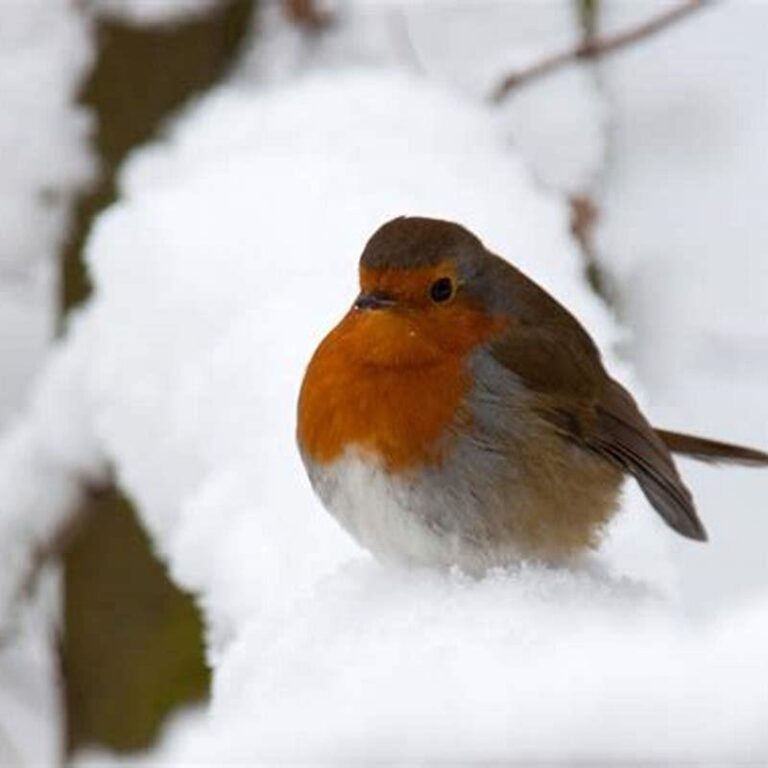
How Do Birds Know When To Migrate: Migration Explained
Introduction
Birds in the United States do not use one single signal to decide when to migrate. Most use an inherited body clock that responds to day length. They also sense temperature, food supply, weather, wind, and changes in their body. These cues work together to tell a bird when to leave, where to go, and when to stop.
A bird does not need a map or a written plan. Its brain and body hold part of the route as an inherited program. Young birds can also learn important details from older birds, landscapes, and past journeys.
This system is not perfect. Storms, drought, light pollution, habitat loss, and climate change can alter migration timing. Still, the basic process is remarkably steady across many bird species.

The short answer: Birds use an internal clock and outside cues
Birds know when to migrate through a mix of internal timing and environmental signals.
The main signals include:
- Day length: Longer or shorter days activate seasonal changes in the brain and hormones.
- An internal annual clock: Many birds have a built-in yearly rhythm.
- Food and water: Birds may leave when food becomes scarce or arrive when food becomes plentiful.
- Temperature: Cold snaps, warm spells, and changing seasons can affect timing.
- Weather and wind: Birds often wait for safe winds before starting a long trip.
- Body condition: Fat stores help determine whether a bird is ready to fly.
- Navigation cues: Birds use the sun, stars, Earth’s magnetic field, landmarks, smells, and sound.
- Social learning: Some species learn routes from parents or other birds.
Day length often acts as the first alert. It is more reliable than temperature because it changes in a regular pattern each year. Other cues then help a bird adjust its departure time.
A simple way to picture this system is to think of day length as an alarm clock. Food, weather, wind, and body condition help the bird decide whether it should leave now or wait.

How daylight starts the migration process
Changing daylight triggers chemical and physical changes inside a bird’s body. This process is called photoperiodism, which means a biological response to the length of day and night.
Birds detect light through their eyes and, in some species, through light-sensitive tissues in the brain. The changing light affects the hypothalamus, a brain region that helps control hormones, sleep, hunger, and seasonal behavior.
As spring days become longer, many birds experience:
- Increased reproductive hormones
- Growth of the reproductive organs
- More singing and territorial behavior
- Increased appetite
- Greater activity
- The urge to migrate north
As autumn days become shorter, many birds experience a different set of changes:
- Reduced breeding activity
- Growth of flight muscles in some species
- Increased feeding
- Rapid fat storage
- Restlessness, especially at night
- The urge to migrate south
Scientists call this seasonal restlessness zugunruhe, a German term that means “migratory restlessness.” Birds kept in controlled settings may become active at the time of year when their wild relatives migrate. Their behavior suggests that migration timing is partly built into their biology.
Day length does not give a bird an exact departure date. It sets the seasonal stage. Local conditions then fine-tune the decision.

Why birds migrate at different times
Bird species migrate at different times because they face different risks and use different resources. A bird that eats insects may need to arrive when insects hatch. A bird that eats seeds may wait until seeds become available. A coastal bird may follow tides and shore food rather than forest conditions.
Age, sex, and distance also matter.
Species
Some birds begin migration in late summer. Others wait until autumn is well underway. In the United States, many warblers leave before winter becomes severe because they depend on insects. Some waterfowl can remain farther north as long as open water and food remain available.
Age
Young birds may migrate later than adults. Adults often have more experience with weather, stopover sites, and safe routes. In some species, adults leave first and young birds follow later.
Sex
In some species, males migrate north earlier in spring. Early arrival can help them claim breeding areas. Females may arrive later, when food conditions have improved.
Distance
A bird that travels from Alaska to Central or South America needs more time and energy than a bird that moves a few hundred miles within the United States. Long-distance migrants often begin preparing well before they face harsh weather.
Food
Food supply can change the schedule. A sudden drop in insects, berries, nectar, or small fish may encourage a bird to leave. A rich food source may delay departure or cause a bird to remain in one area longer.
Migration is therefore not a single national event. It is a series of species-specific decisions across many regions.

How birds prepare their bodies for migration
Before migration, birds enter a preparation period called migratory conditioning. Their bodies change so they can travel long distances with few stops.
Many birds gain fat. Fat is a light and energy-rich fuel. A small songbird may nearly double its body mass before a long flight, although the amount varies by species and route.
Birds may also:
- Eat more often
- Shift toward high-energy foods
- Increase heart and lung performance
- Change muscle function
- Improve their ability to store and use fat
- Become restless at the proper season
- Choose safe places to rest and feed
A bird must balance fuel with weight. More fat provides more energy, but extra weight also makes flight harder. Birds often build fuel in stages at stopover sites, where they rest and feed during migration.
This is why wetlands, coastal areas, forests, grasslands, and backyards can matter far beyond their local boundaries. A bird may depend on several small feeding areas during one trip.
A bird that cannot build enough energy may delay departure, take a shorter route, or face a greater risk of exhaustion. Migration timing is therefore linked to habitat quality.

How birds choose the right direction
Knowing when to leave is only one part of migration. Birds also need to maintain a direction over hundreds or thousands of miles.
They use several navigation systems at once.
The sun
During the day, birds can use the sun as a compass. Their internal clocks help them account for the sun’s movement across the sky. A bird with a disrupted body clock may make directional errors, which shows that time and sun position work together.
The stars
Some night-migrating birds use the stars. Young birds can learn the pattern of the night sky by observing the stars before migration. The North Star and the general rotation of the sky can provide directional information.
Earth’s magnetic field
Many birds sense Earth’s magnetic field. The field can help them determine direction and, in some species, estimate location. Research suggests that birds may detect magnetic information through light-sensitive molecules in the eye and through other sensory systems.
The magnetic sense is not a complete GPS device. It can be affected by magnetic conditions and may work alongside vision, smell, and landmarks.
Landmarks
Rivers, coastlines, mountain ranges, forests, and cities can help birds maintain a route. Experienced birds may remember major features from earlier journeys.
Smell
Some birds use odors to help recognize areas and orient themselves. Airborne scents may provide information about nearby landscapes or geographic regions.
No single navigation cue explains every species. Birds appear to combine several systems and switch between them when one cue becomes weak.

Do young birds know the route, or do they learn it?
The answer depends on the species. Some birds appear to inherit a broad direction and timing. Others learn much of the route from older birds.
A young bird may inherit instructions such as:
- The season to begin
- A general compass direction
- The distance to travel
- The type of habitat to seek
This is sometimes called a migration program. It is not a detailed map. It is closer to a set of biological instructions.
Species with strong individual migration programs may travel alone or at night. Some young birds can find the correct direction without following an adult.
Other species depend heavily on social learning. Young geese, cranes, swans, and some other large birds may follow parents or experienced flock members. They can learn where to stop, how to avoid hazards, and which route is safe.
Birds can also refine their routes over time. A bird that survives several migrations may remember productive feeding sites and favorable flight paths.
This creates a useful division:
- Inherited behavior helps a bird start in the right direction and season.
- Learning and memory help a bird improve its route and timing.
- Current conditions help the bird adjust its immediate choices.

How weather changes migration timing
Weather can speed up, delay, or redirect migration. Birds often wait for favorable winds because wind can reduce the energy needed for flight.
For example, a small bird crossing the Gulf of Mexico may benefit from tailwinds. A strong headwind can make the same trip much more difficult. Birds may remain at a stopover site until conditions improve.
Weather affects migration in several ways:
- Tailwinds can support faster travel.
- Headwinds can increase energy use.
- Storms can force birds to land.
- Heavy rain can reduce visibility.
- Fog can interfere with navigation.
- Heat can increase water needs.
- Cold can reduce insect and plant food.
- Drought can remove key stopover resources.
A storm does not always stop migration. Some birds continue flying through poor conditions, especially when they have limited food or time. But severe weather can cause injury, exhaustion, or large numbers of birds to gather in one safe area.
Weather radar can detect large movements of birds. In the United States, researchers and weather agencies use radar data to study migration intensity and movement patterns. Radar can show that birds are flying, but it usually cannot identify every species.

What happens when climate change shifts the usual cues?
Climate change can disrupt the timing between migration and food availability. This problem is called a phenological mismatch.
For example, a bird may arrive at its breeding grounds at a time that used to match a large insect hatch. If spring warms earlier, insects may appear before the birds arrive. The birds then miss a major food supply when they are feeding young.
Climate change can affect:
- Spring arrival dates
- Fall departure dates
- Stopover conditions
- Drought risk
- Storm patterns
- Insect emergence
- Flowering and fruiting times
- Water availability
Some birds adjust by migrating earlier or changing their route. Others have less flexibility. A bird that depends on a narrow food window may be more vulnerable than a generalist species.
Artificial light creates another problem, especially for birds that migrate at night. Bright city lights can attract or disorient birds. Birds may circle buildings, collide with glass, or waste energy.
People can reduce some risks by turning off unnecessary lights during peak migration periods, using bird-safe glass treatments, and protecting native habitat.
Examples of migration in the United States
Migration looks different across North America. These examples show why no single rule applies to every bird.
Ruby-throated hummingbirds
Ruby-throated hummingbirds migrate between the eastern United States and Mexico or Central America. Many cross the Gulf of Mexico, while others travel around the coast. Their timing responds to seasonal cues, food, wind, and body condition.
American robins
American robins do not all migrate in the same way. Some northern birds move south, while many birds in milder areas remain year-round. Local food and winter conditions strongly affect their movements.
Arctic terns
Arctic terns pass through or breed in parts of the United States and undertake one of the longest migrations known in the animal world. Their route links polar breeding areas with waters near Antarctica. Their migration shows how seasonal food and daylight can shape movements across the globe.
Sandhill cranes
Sandhill cranes use wetlands and open areas during migration. Young birds can learn routes and stopover sites from older birds. Habitat protection is vital because large birds need safe places to rest.
Canada geese
Canada geese show wide variation. Some populations migrate long distances, while others move only short distances or remain near cities and farms. Local food, open water, hunting pressure, and weather all influence movement.
These examples show that “migration” can mean a long international journey, a short regional shift, or a seasonal change in local abundance.
Common myths about bird migration
Myth: Every bird migrates south in winter
Many birds do migrate south, but not all do. Some remain in the same area. Others move east, west, uphill, downhill, or only a short distance.
Myth: Birds migrate only because of cold
Cold matters, but food often matters more. A bird may leave a cold area because insects disappear, plants stop producing food, or water freezes.
Myth: Birds follow the same path as a road or river
Some birds use rivers and coastlines as landmarks, but they do not simply follow roads. Their route depends on geography, wind, habitat, and inherited behavior.
Myth: Birds learn every route from their parents
Some do. Others inherit a general direction and migrate without adult guides. The balance between instinct and learning differs by species.
Myth: Birds leave on one fixed date every year
Migration timing changes with weather, food, age, sex, geography, and yearly conditions. A species may have a usual range of dates rather than one exact date.
Myth: A bird that stays late must be lost
A late bird may be a normal resident, a young bird, a bird from a different population, or a species responding to local food. A single observation rarely proves that a bird is lost.
How people can help migrating birds
The most useful actions protect food, shelter, and safe passage.
- Keep native plants that provide seeds, berries, nectar, and insects.
- Avoid pesticides when safer methods are available.
- Keep cats indoors, especially during migration seasons.
- Turn off nonessential outdoor lights at night.
- Add window screens, exterior shades, or bird-safe window patterns.
- Protect wetlands, forests, grasslands, and coastal habitat.
- Provide clean water and maintain it safely.
- Keep dogs and people from disturbing resting birds.
- Record sightings through a reputable bird-monitoring project.
If you find an injured or stunned bird, keep people and pets away. Do not force food or water into its mouth. Place it in a ventilated box only when needed for immediate safety, and contact a licensed wildlife rehabilitator or a local wildlife agency for instructions.
Migration is a natural process, but modern landscapes can make it harder. Small actions help most when many people take them across a bird’s full route.
Key takeaways
- Birds use both an internal annual clock and outside environmental cues.
- Day length is often the main seasonal signal.
- Food, temperature, wind, weather, and body condition fine-tune departure time.
- Birds navigate with the sun, stars, magnetic fields, landmarks, smells, and memory.
- Some migration behavior is inherited, while other parts are learned from adults and experience.
- Species differ widely. Not every bird migrates, and not every migrant travels south.
- Habitat protection and dark-sky practices can make migration safer.
FAQs
How do birds know when to migrate south?
Shorter days often activate autumn migration behavior. Birds then respond to food loss, falling temperatures, weather, and body condition. The exact timing differs by species and location.
Can birds predict the weather before migration?
Birds can detect changes in air pressure, wind, temperature, and weather patterns. These signals may help them choose a good time to fly, but they do not predict weather in the same way a forecast does.
Do birds migrate at night or during the day?
Both. Many songbirds migrate at night, when air conditions may be calmer and predators may be fewer. Hawks, geese, cranes, and many other large birds often migrate during the day.
How do birds avoid getting lost?
Birds combine several navigation tools. These may include magnetic sensing, the sun, stars, landmarks, smell, memory, and social learning. If one cue fails, another may help.
Why do some birds stay in the United States during winter?
Some birds find enough food and shelter to remain. Others live in areas with mild winters or belong to populations that migrate only short distances. Species and local conditions determine the pattern.
Can birds change their migration time?
Yes. Birds can adjust their departure and stopover timing in response to weather, food, wind, and body condition. Long-term changes may also occur when climate or habitat conditions shift.
Sources and further reading
- U.S. Fish & Wildlife Service: Migratory Birds
- Cornell Lab of Ornithology: Bird Migration
- Smithsonian’s National Zoo: Bird Migration
- National Audubon Society: Bird Migration
- Wiltschko, W. and Wiltschko, R. “Sensing Magnetic Directions in Birds.” Journal of the Royal Society Interface, 2014.
- Dingle, H. and Drake, V. A. “What Is Migration?” BioScience, 2007.
Conclusion
Birds know when to migrate because their bodies combine a built-in seasonal clock with real-time information from the world around them. Day length starts the process, while food, weather, wind, temperature, and body condition help set the final timing.
Their routes are equally complex. Birds may inherit a general direction, learn landmarks from older birds, and use the sun, stars, magnetic fields, and smells to stay on course. Migration is not one fixed behavior. It is a flexible system shaped by biology, memory, weather, and habitat.