How Do Birds Migrate: Bird Migration Explained
Birds migrate by using inherited instincts, memory, Earth’s magnetic field, the sun, stars, landmarks, winds, and food signals. In the United States, millions of birds move between breeding areas in Alaska, Canada, and the northern states and wintering areas in the southern United States, Mexico, the Caribbean, and Central and South America.
Migration is not one long, nonstop flight for most birds. Many species travel in stages, stop to rest and feed, and change their route when weather or food conditions shift. The timing and path depend on the species, age, weather, daylight, habitat, and energy supply.
What Is Bird Migration?
Bird migration is the regular, seasonal movement of birds between two areas. Birds often travel north in spring to breed and south in fall to find food and safer conditions.
Migration differs from ordinary movement. A bird that moves a short distance to find water is not usually considered a migrant. Migration is a repeated pattern tied to a season or life stage.
Birds may migrate:
- Between continents
- Along a coastline
- Across deserts
- Through mountain passes
- Between nearby regions
- At different heights in the sky
- During the day, night, or both
Some birds complete the full trip in a few days. Others move over many weeks. Young birds may travel without their parents, while some species migrate in family groups or large flocks.
Why do birds migrate?
Birds migrate mainly because food, shelter, and breeding conditions change during the year.
Many birds breed in the northern United States, Canada, and Alaska because spring and summer bring:
- Longer daylight
- More insects
- Abundant plant growth
- Open nesting sites
- Fewer competitors in some habitats
When cold weather arrives, insects decline, plants stop producing food, and water may freeze. Birds then move to warmer areas where food is easier to find.
Migration also helps birds take advantage of seasonal food booms. A warbler may fly north to feed on insects during spring leaf growth. A shorebird may travel to coastal wetlands when rich mudflats expose worms and small shellfish.
Migration has a cost. Birds use large amounts of energy, face storms and predators, and may lose access to safe stopover habitat. A bird migrates when the benefit of moving is greater than the risk and energy cost of staying.
How Do Birds Know When to Migrate?
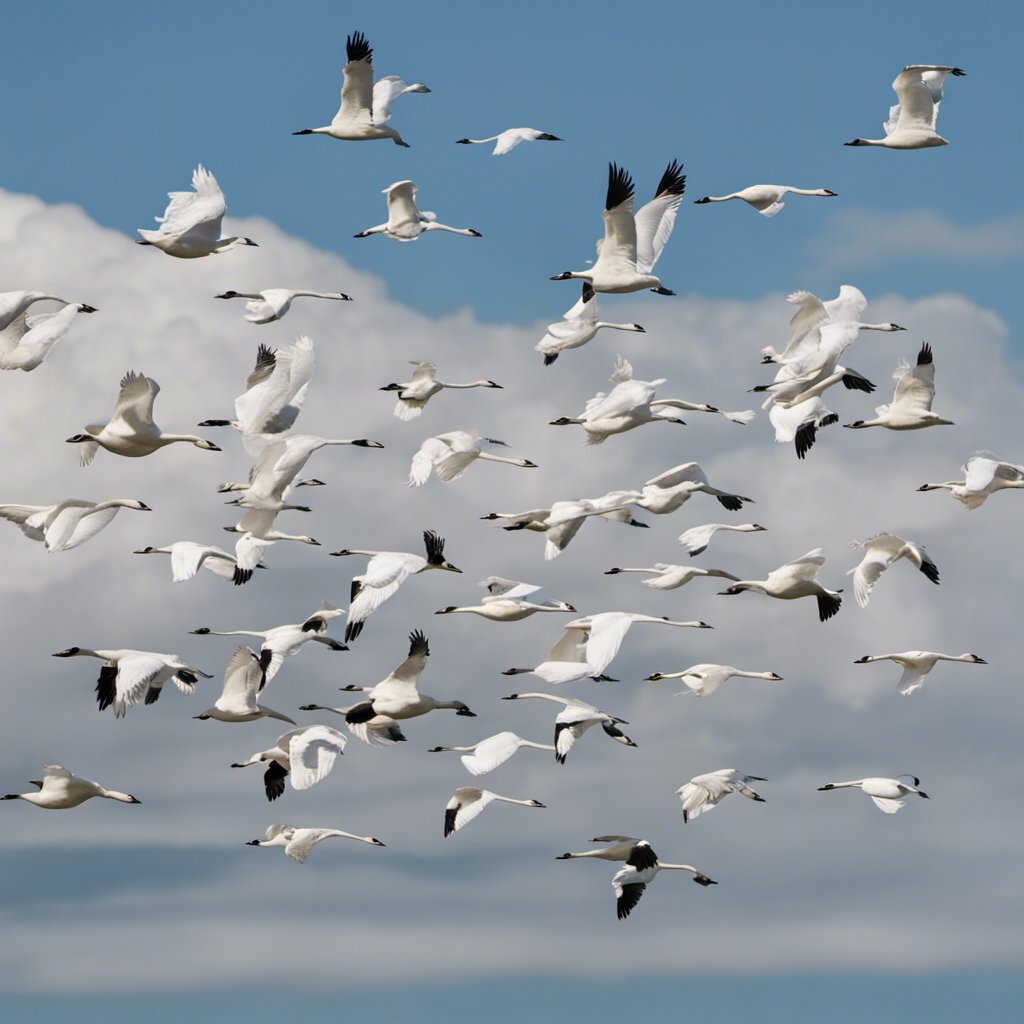
Birds use a mix of internal clocks, daylight, weather, food supply, and body changes to decide when to migrate.
Daylight is a major signal
The length of daylight changes with the seasons. Birds detect this change through their eyes and brain. Longer days can trigger hormone changes linked to breeding and spring migration.
Shorter days can trigger fall migration. This signal works even when a bird has not yet seen snow or felt cold weather.
Daylight is not the only trigger. Temperature, wind, rainfall, food, and local conditions can speed up or delay migration.
Birds prepare their bodies
Before migration, many birds enter a state called zugunruhe, a German term for migratory restlessness. Birds may become more active at night, face in the direction of travel, and show strong movement urges.
They also build fat reserves. Fat provides more energy per unit of weight than protein or carbohydrates. Some birds nearly double their body mass before crossing a large barrier such as the Gulf of Mexico.
This extra weight is useful, but it also creates a trade-off. A heavier bird has more fuel but may fly less easily and become more vulnerable if weather changes.
Weather changes the schedule
Birds often wait for favorable winds before beginning a long trip. Tailwinds can reduce the energy needed for flight. Strong headwinds may delay departure or force birds to land.
Fall migration can begin even when local weather still feels warm. The bird’s internal clock may tell it to leave before food becomes scarce. In spring, birds may move north in waves after warm fronts pass.
How Do Migrating Birds Navigate?
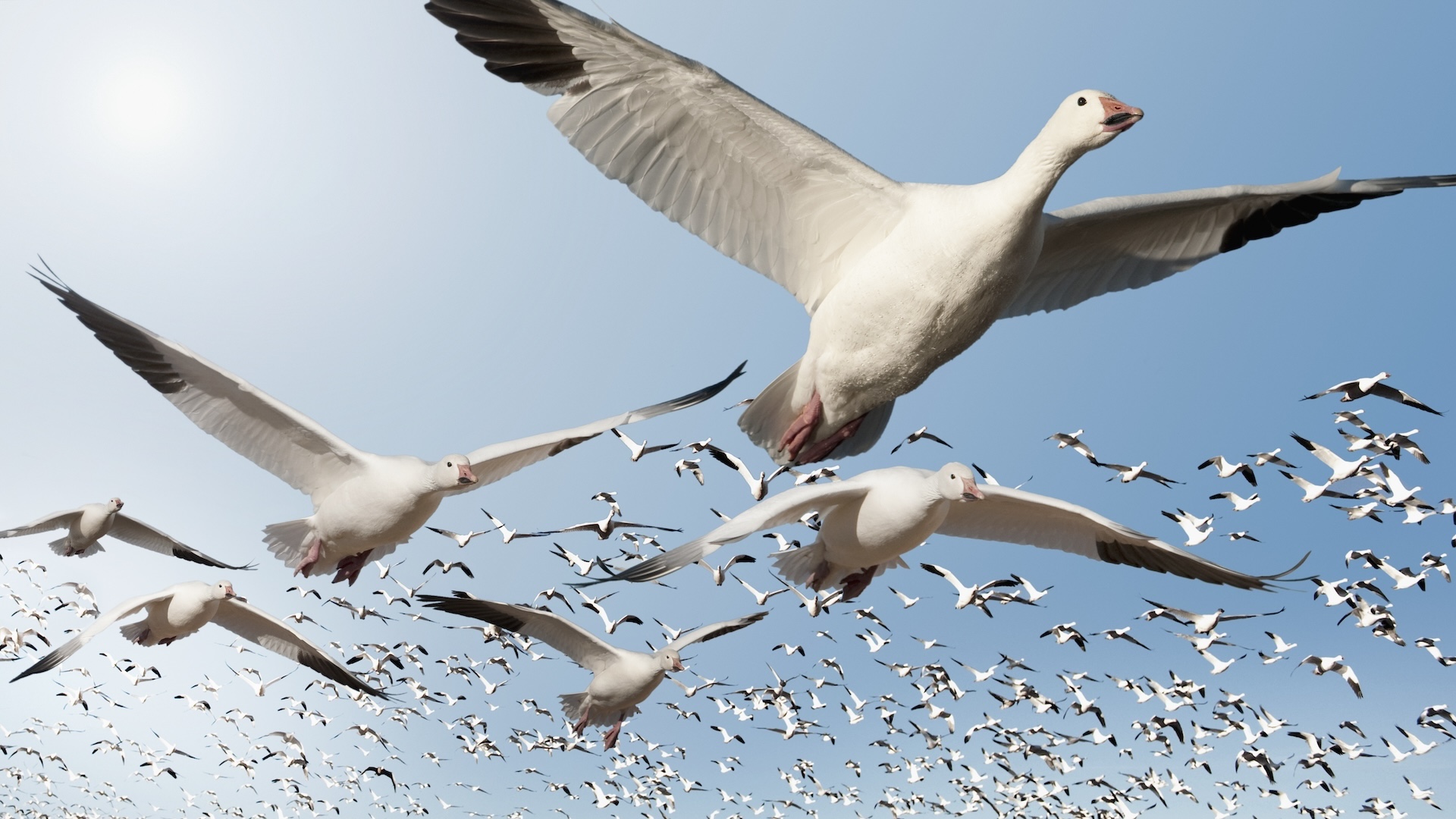
Birds use several navigation tools at once. No single system explains every migration route.
The sun compass
During the day, birds can use the sun as a compass. They account for the sun’s movement across the sky by combining its position with their internal body clock.
A bird does not simply fly toward the sun. It uses the sun’s angle to maintain a direction.
Cloudy weather can make this harder, but many birds can switch to other signals.
The stars
Some night-migrating birds use the stars. Young birds can learn the pattern of the night sky and use it to identify direction.
The North Star is useful because it appears nearly fixed in the northern sky. Birds can also learn the rotation pattern of the stars around it.
Artificial light can disrupt this system. Bright city lights may attract or confuse birds during night migration.
Earth’s magnetic field
Birds can detect information from Earth’s magnetic field. This sense may help them determine direction and, in some species, estimate location.
Researchers have found evidence that birds use light-sensitive proteins in the eye as part of magnetic sensing. Birds may also detect magnetic information through structures in the beak or nervous system, though the exact role of each system remains an active research topic.
Magnetic navigation is not like reading a road sign. It provides a broad directional or positional cue. Birds combine it with landmarks, smells, wind, and celestial signals.
Landmarks and geography
Birds often follow familiar landscape features, such as:
- Rivers
- Mountain ranges
- Coastlines
- Islands
- Forest edges
- Wetlands
- Open plains
Older birds may remember productive stopover sites from past trips. A young bird may rely more on inherited direction and distance rules.
Smell and sound
Some birds use odor patterns to recognize regions. Wind can carry scents from forests, wetlands, or coastal areas. These smells may help a bird identify a familiar place.
Sound can also matter. Birds may recognize calls from members of their species or use local sounds after reaching a destination.
Do Birds Follow the Same Migration Routes Every Year?
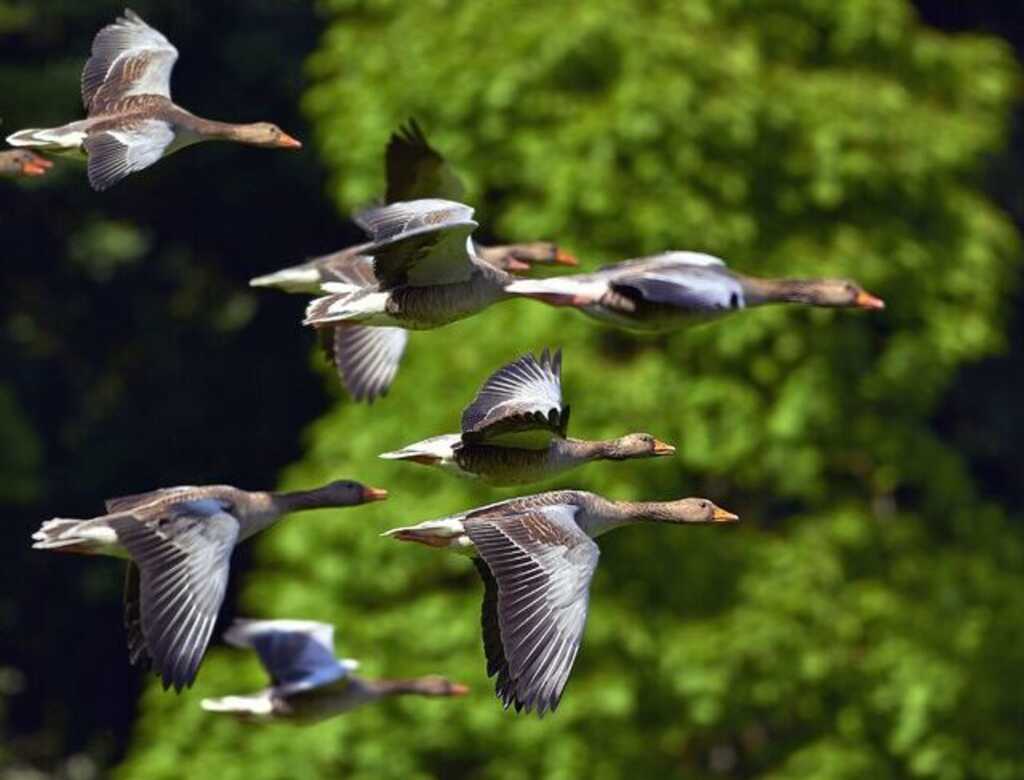
Many birds follow a broad route each year, but the exact path can change. Wind, storms, drought, wildfires, habitat loss, and food supply all affect movement.
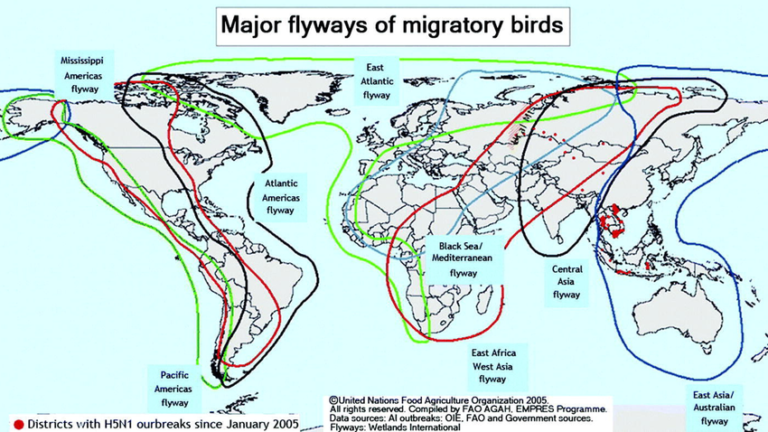
A route is often called a flyway. In North America, four major flyways are commonly used to describe broad migration paths:
| Flyway | General area | Examples of important habitats |
|---|---|---|
| Atlantic Flyway | Eastern United States and Atlantic coast | Marshes, coastal islands, forests, and estuaries |
| Mississippi Flyway | Central United States and Mississippi River basin | Rivers, wetlands, prairies, and lakes |
| Central Flyway | Great Plains and central Rocky Mountain region | Grasslands, reservoirs, wetlands, and mountain valleys |
| Pacific Flyway | Western United States and Pacific coast | Coastal wetlands, deserts, valleys, and inland lakes |
These flyways are not narrow lanes. They are large regions with many branches and alternate routes.
For example, a bird may travel along the Atlantic coast one year and move farther inland during another year. A storm may push it off course. If food is poor at one stop, it may continue to a different site.
Migration routes can cross barriers
Birds face major geographic barriers during migration:
- The Gulf of Mexico
- The Caribbean Sea
- Large deserts
- High mountain ranges
- Wide areas of open ocean
- Ice-covered northern regions
Some birds fly over these barriers without stopping. Others follow coastlines or island chains. Birds that cross the Gulf of Mexico may need enough stored energy to fly for many hours over open water.

How Far and How Fast Do Birds Migrate?
Migration distance varies greatly by species. A local migrant may travel a few hundred miles. A long-distance migrant may travel thousands of miles each year.
Some North American examples include:
- Ruby-throated hummingbirds: Many travel between the eastern United States and Mexico or Central America. Some cross the Gulf of Mexico, while others follow the Texas coastline.
- Arctic terns: Some populations travel between Arctic breeding areas and Antarctic waters. Their full annual journey is one of the longest known bird migrations.
- Bar-tailed godwits: Some individuals make extremely long nonstop flights over the Pacific, though these birds are more associated with Pacific migration routes than with the continental United States.
- American robins: Some move south, while others remain near their breeding areas if food remains available.
- Canada geese: Many migrate, but some populations now remain year-round in areas with food, open water, and suitable conditions.
Speed depends on wind, body size, flight style, distance between stopovers, and whether the bird travels at night.
A bird may fly for many hours but spend more time resting and feeding than flying. Total migration time therefore differs from actual time in the air.
Altitude changes during migration
Most migration occurs at relatively low or moderate heights, but birds may fly much higher when crossing mountains or responding to wind. Radar studies have shown that large numbers of birds migrate at night above ordinary human sight.
Birds often select flight levels with favorable winds. They may rise, descend, or change direction to save energy.
When Do Birds Migrate in the United States?
Migration occurs in every season, but spring and fall are the most visible periods in the United States.
Spring migration
Spring migration usually moves north. Birds return to breeding areas when insects, seeds, nectar, and nesting sites become available.
In the Lower 48 states, spring migration may begin in late winter and continue into early summer. Timing varies by latitude and species. Birds often arrive earlier in the southern United States and later in Alaska and northern New England.
Fall migration
Fall migration usually moves south. It often lasts longer than spring migration because birds may stop to molt, feed, or wait for favorable weather.
Some birds leave their breeding grounds soon after nesting. Others stay longer to feed and build fat reserves.
Winter and summer residents
Not every bird leaves the United States during winter. Some species migrate only short distances. Others move from northern states into the South but do not cross into Mexico.
A bird’s migration strategy may also differ by population. One group may migrate long distances, while another group of the same species remains in place year-round.
Why Do Some Birds Migrate at Night?
Many small songbirds migrate at night. Night travel can reduce exposure to some predators, avoid daytime heat, and allow birds to feed during the day.
Night skies also provide useful navigation cues. Birds can use stars, the moon, Earth’s magnetic field, and wind direction.
Birds that migrate at night often stop at dawn. They use the day to rest, find water, and replace energy through feeding.
Nocturnal migrants are at risk from artificial light. Bright buildings, towers, and other structures can disorient birds. During heavy migration, birds may circle lit areas, collide with windows, or lose valuable energy.
To reduce risks around homes and buildings:
- Turn off unnecessary outdoor lights at night.
- Close blinds or shades after dark.
- Use window screens, exterior shades, or bird-safe window patterns.
- Keep cats indoors, especially during migration seasons.
- Avoid placing feeders directly beside clear windows.
Lights Out programs in many U.S. cities encourage residents and building managers to reduce light during peak migration periods.
How Do Birds Survive Long Migration Trips?
Birds survive migration by managing energy, choosing safe stopovers, and adjusting their behavior to conditions.
They store fuel
Stored fat powers long flights. Before departure, birds may feed heavily on insects, berries, seeds, nectar, or other high-energy foods.
They stop to refuel
Stopover habitats are essential. A wetland, forest, grassland, backyard, or coastal marsh may provide food and shelter for only a few hours or several days.
A bird can fail to complete migration if too many stopovers disappear. Habitat quality matters as much as habitat area. A large site with little food may be less useful than a smaller site with rich resources.
They use tailwinds
Birds often wait for favorable winds or change altitude to find them. This behavior reduces fuel use and may increase travel speed.
They travel in groups
Flocks can help birds detect predators, locate food, and respond to wind. Group travel may also help some species reduce the cost of flight, although the benefit depends on body shape and flight pattern.
They slow down when conditions are poor
Birds may stop during storms, cold snaps, smoke events, or strong headwinds. Some seek shelter in vegetation. Others descend to wetlands, fields, or shorelines.
What Threats Do Migrating Birds Face?
The largest risks often occur at stopover sites, where birds must rest and feed.
Major threats include:
- Loss of wetlands, grasslands, forests, and coastal habitat
- Window collisions
- Artificial light at night
- Pesticide exposure
- Outdoor cats
- Towers and power lines
- Drought and changing water levels
- Extreme storms and heat
- Plastic and other pollution
- Reduced food supplies caused by climate shifts
Climate change can alter the timing of insects, flowers, rainfall, and plant growth. If birds arrive after a major food peak, they may struggle to feed themselves or raise young.
Not every climate effect is the same for every species. Some birds may expand their range, while others may lose key breeding or wintering habitat.
How people can help migrating birds
The most useful actions are simple:
- Keep cats indoors or use a secure outdoor enclosure.
- Make windows visible with closely spaced external markers or screens.
- Turn off nonessential lights at night during migration.
- Plant native trees, shrubs, and flowers that provide food and shelter.
- Avoid pesticide use when safer options are available.
- Keep fresh water available, but clean birdbaths often.
- Support protection of wetlands, forests, grasslands, and coastal areas.
If you find an injured or stunned bird, place it in a ventilated box in a quiet, dark area and contact a licensed wildlife rehabilitator. Do not force food or water into its mouth.
How Can You Tell When Birds Are Migrating?
You can observe migration through changes in bird numbers, species, calls, and behavior.
Signs include:
- New species appearing in a yard or park
- Large flocks moving overhead
- Increased bird calls at dawn
- Birds feeding heavily before departure
- Shorebirds gathering on mudflats
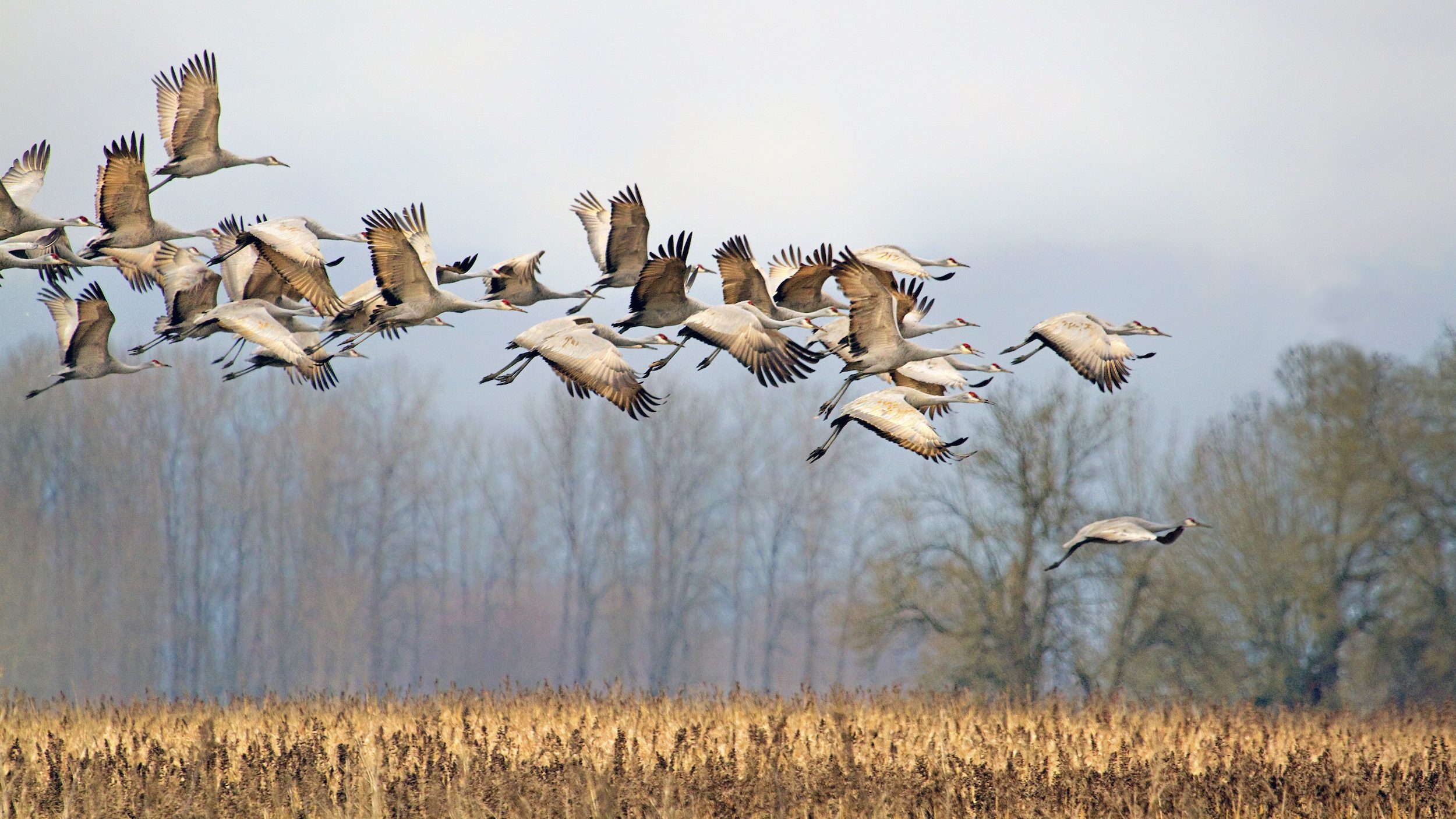
- Geese or cranes flying in formation
- Small birds striking windows during peak movement
The best way to track migration is to use a local birding group, eBird reports, radar-based migration maps, or the Cornell Lab of Ornithology’s BirdCast tools. These tools can show when migration is likely to be strong in a region.
Avoid disturbing resting birds. Watch from a distance, stay on marked paths, and keep dogs leashed where required.
Common Misconceptions About Bird Migration
“All birds fly south for winter.”
Many birds migrate south, but some migrate short distances, move east or west, or remain in the same area year-round.
“Birds migrate because they dislike cold weather.”
Cold matters, but food is often the stronger reason. A bird may tolerate cold if it can find enough food and shelter.
“Young birds must follow their parents.”
Some species migrate with adults. Others use inherited direction and distance cues. Young birds may complete their first migration without an experienced guide.
“Birds fly in a straight line.”
Birds often follow broad routes, but they adjust for wind, terrain, storms, food, and safe landing sites.
“Migration always happens on the same date.”
Timing changes from year to year. Weather and food can shift departure and arrival dates.
Frequently Asked Questions About Bird Migration
Do birds migrate together or alone?
Both. Geese, cranes, pelicans, and many shorebirds often migrate in groups. Many songbirds migrate alone or in loose groups, especially at night.
How do birds know where they were born?
Birds can use several clues, including magnetic information, landmarks, celestial cues, smells, and memory. In some species, the route is partly inherited. In others, older birds learn important stopover locations over time.
Do birds sleep while flying?
Some birds may rest parts of their brains during flight, but this ability is not shared equally by all species. Many migrants instead fly for a period, land, and rest before continuing.
Can weather push birds off course?
Yes. Strong winds can carry birds away from their usual route. Some return to the route after conditions improve. Others remain in the new area if they find food and shelter.
Should I stop feeding birds during migration?
No. Clean, well-maintained feeders can provide useful food during migration. Keep feeders clean, place them where birds can escape predators, and remove them temporarily if disease spreads among local birds.
Recommended Sources for Further Reading
- U.S. Fish and Wildlife Service: Migratory Birds
- Cornell Lab of Ornithology: Bird Migration
- Cornell Lab BirdCast
- National Audubon Society: Bird Migration
- U.S. Geological Survey: Bird Migration and Tracking
Conclusion
Birds migrate through a combination of instinct, body clocks, daylight, magnetic sensing, stars, landmarks, weather, and memory. They move to reach seasonal food and breeding conditions, often using broad flyways with many stopover sites.
The best way to help is to protect those sites, reduce nighttime light, make windows safer, keep cats indoors, and provide native plants. During migration, even a small backyard can serve as a safe place to rest and refuel.