How Often Do Birds Migrate: Migration Facts Explained
Introduction
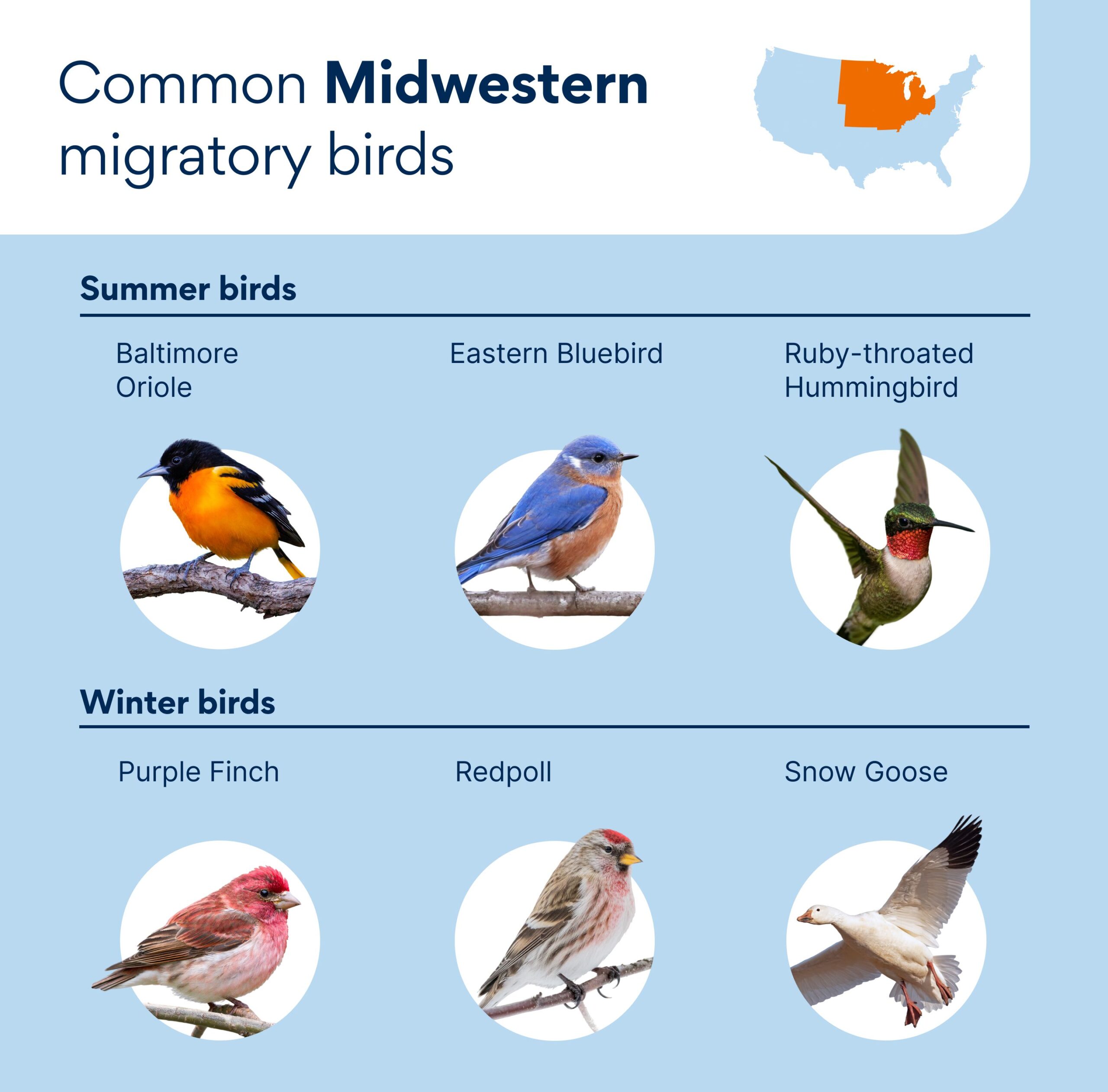
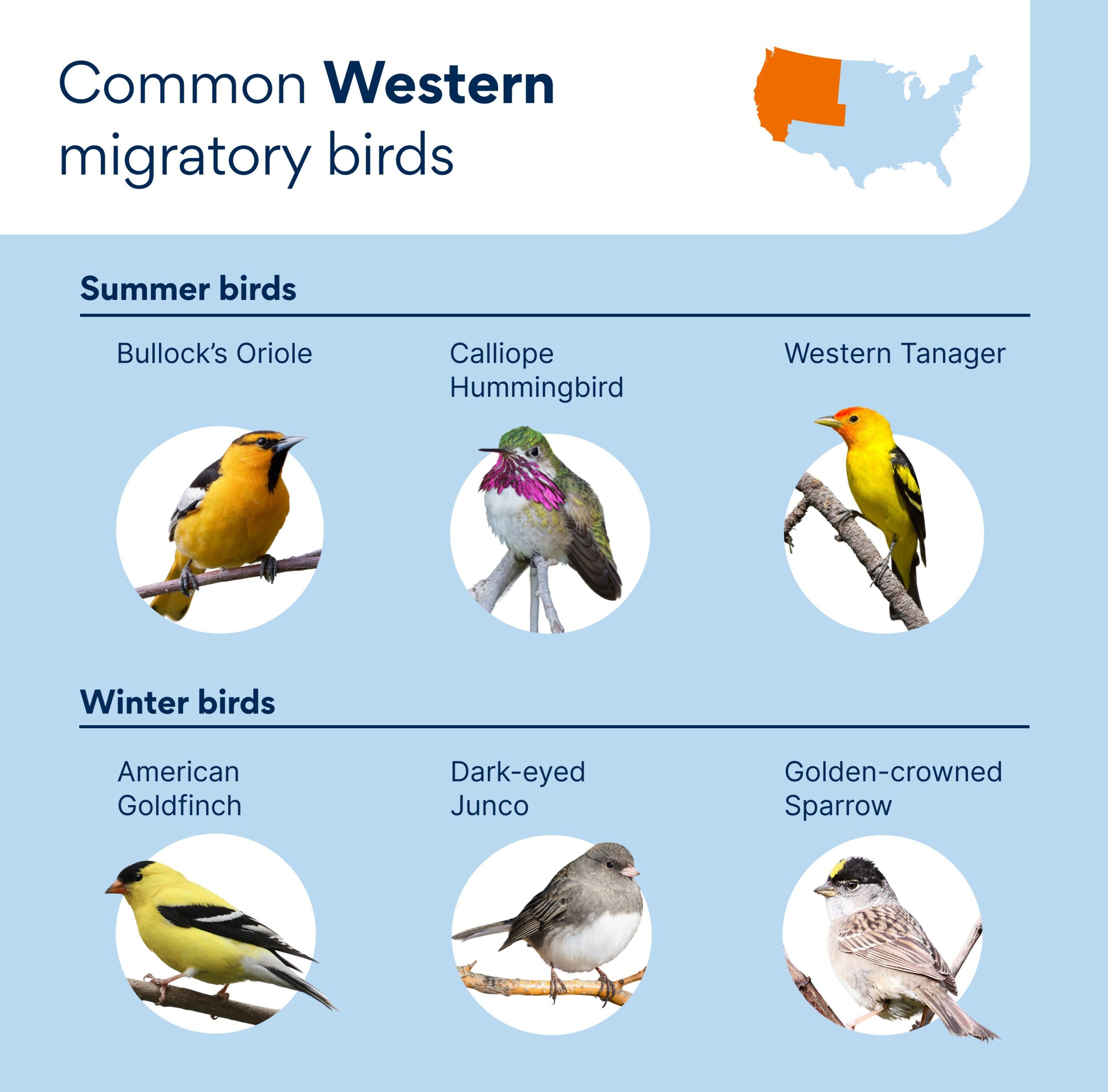
In the United States, many birds migrate twice each year: once north in spring to breed and once south in fall to find food and survive winter. This means one migration cycle often includes a round trip. However, not every bird migrates, and some species move only short distances or migrate more than once in a year.
The exact pattern depends on the species, age, weather, food supply, daylight, and breeding needs. A Canada Goose may travel hundreds or thousands of miles between seasonal areas, while a mountain bird may move only a few miles downhill for winter.

The Short Answer: How Often Do Birds Migrate?
Most migratory birds in the United States migrate two times per year:
- Spring migration: Birds travel toward breeding grounds.
- Fall migration: Birds return to wintering grounds.
These two journeys form one annual migration cycle. A bird may make one long trip in each direction, or it may stop many times along the way to rest and feed.
For example, a warbler that spends summer in the northern United States or Canada may fly south to Central or South America in fall. It then returns north in spring. Although this is often called “migrating once a year,” the bird is making two seasonal journeys.
Migration is not the same for all birds. Some birds:
- Migrate once each year in one direction
- Make a return trip every year
- Migrate more than twice because they move between several sites
- Travel only a short distance
- Stay in the same area all year
- Change their route or timing when conditions change
The National Audubon Society and the U.S. Fish and Wildlife Service describe migration as a regular movement linked to food, breeding, weather, and survival. The Cornell Lab of Ornithology also notes that migration patterns vary widely among species.

What Counts as Bird Migration?
Bird migration is a regular, seasonal movement between different areas. The movement is usually linked to breeding, food, temperature, or survival.
Migration does not always mean a bird crosses a continent. A bird can migrate:
- Across a country
- Between the United States and another country
- From a mountain slope to a lower valley
- From inland habitat to the coast
- Between wetlands, forests, grasslands, or farms
A short seasonal movement is still migration if it happens regularly and serves a biological purpose.
Long-distance migration
Long-distance migrants travel hundreds or thousands of miles. Many shorebirds, warblers, swallows, and some raptors fall into this group.
The Arctic Tern is famous for its very long annual journey between the Arctic and Antarctic. In the United States, species such as the Ruby-throated Hummingbird and many Neotropical songbirds also make major seasonal movements.
Short-distance migration
Short-distance migrants may move only a few miles or several hundred miles. These birds often respond to local changes in temperature or food.
For example, some birds move from high elevations to low elevations during winter. Others leave northern areas but remain within the United States.
Irruptive movement
Irruptive movement happens when birds appear in unusually large numbers outside their normal range. This often occurs when food supplies fail.
Pine Siskins, Red crossbills, Snowy Owls, and other species may show irruptive movements. These events do not always follow a simple yearly pattern. A bird may remain near its usual range one year but travel far south the next.
Why Do Birds Migrate?
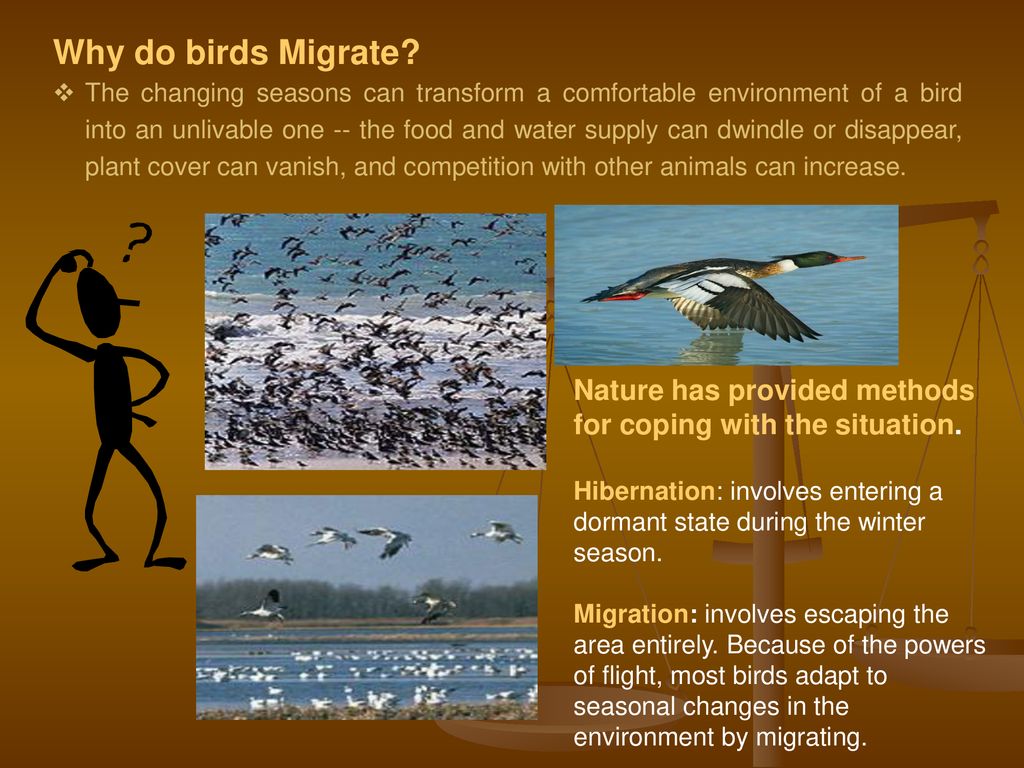
Birds migrate because seasonal movement can improve their chances of finding food, raising young, and surviving.
Food supply
Food is one of the strongest drivers of migration. Insects, berries, seeds, nectar, and small animals become scarce in many northern areas during winter.
In spring and summer, northern regions often offer long daylight hours and abundant insects. This can help birds feed their young. When cold weather arrives and food declines, many birds move south.
Breeding opportunities
Many birds travel north to breed because spring and summer provide:
- More daylight
- More insects and other food
- Nesting sites
- Less competition in some habitats
- Better conditions for raising young
A bird may spend only part of the year in its breeding range. The rest of the year may be spent in warmer areas with more reliable food.
Weather and temperature
Cold weather can make survival difficult, especially for small birds. Snow and ice may hide food or block access to water.
Temperature does not act alone. Some birds begin migration before severe cold arrives because their bodies respond to changing daylight and seasonal hormones.
Daylight
Changing day length helps many birds prepare for migration. Longer or shorter days can affect hormone levels, feeding behavior, fat storage, and restlessness.
This seasonal restlessness is called zugunruhe. It is a natural increase in movement and activity before migration.
Habitat conditions
Birds need safe places to rest and feed during migration. Wetlands, forests, grasslands, shorelines, and coastal islands can act as stopover sites.
When these areas are lost or damaged, birds may struggle even if their breeding and wintering grounds remain intact.
Do All Birds Migrate Every Year?
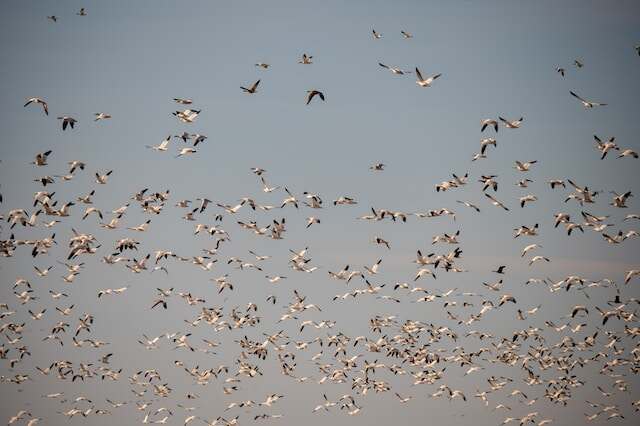
No. Some birds migrate every year, while others stay in one area throughout the year.
Bird movement usually falls into four broad patterns.
| Migration pattern | What it means | Examples in the United States |
|---|---|---|
| Complete migration | Nearly all individuals leave the area seasonally | Many warblers and some shorebirds |
| Partial migration | Some birds migrate, while others remain | Many blackbirds, robins, and waterfowl |
| Altitudinal migration | Birds move up or down in elevation | Some mountain birds |
| Resident behavior | Birds remain in the same region year-round | Northern Cardinals and many urban birds |
These categories are not rigid. A species may behave differently in different parts of its range.
For example, American Robins in Alaska may migrate south, while robins in parts of the lower United States may remain all year. A bird’s age, sex, health, food supply, and local weather can also affect its choice.
Some young birds migrate farther than adults. In other species, males return to breeding grounds earlier because they compete for territories.

When Do Birds Migrate in the United States?
Bird migration in the United States usually peaks during spring and fall, but the exact timing differs by region and species.
Spring migration
Spring migration often begins in late winter in the southern United States. It continues north through spring and may reach Alaska and Canada by late spring or early summer.
Typical spring patterns include:
- Waterfowl moving north in late winter and early spring
- Hummingbirds arriving in southern states before moving farther north
- Songbirds reaching northern breeding areas in April, May, or June
- Shorebirds stopping along wetlands and coastal areas during the journey
Fall migration
Fall migration often begins in late summer. Many birds leave northern breeding grounds before winter arrives.
Typical fall patterns include:
- Shorebirds moving south in late summer
- Warblers and flycatchers migrating from late summer into fall
- Raptors using favorable winds in September and October
- Waterfowl moving south as lakes and wetlands begin to freeze
Fall migration may last longer than spring migration because birds often stop to feed and young birds may be traveling for the first time.
Regional differences
Migration timing varies across the country:
- Northeast: Spring arrivals often build from March through May. Fall movement may peak from August through November.
- Southeast: Some birds arrive earlier in spring and leave later in fall.
- Great Plains: Weather fronts can cause large movements in a short time.
- Rocky Mountains: Elevation strongly affects timing.
- Pacific Coast: Some species migrate along the coast, while others use inland routes.
- Alaska: Many species arrive later because winter lasts longer.
These are broad patterns, not fixed dates. A cold front, storm, drought, wildfire, or food shortage can change the timing.

How Far Do Migrating Birds Travel?
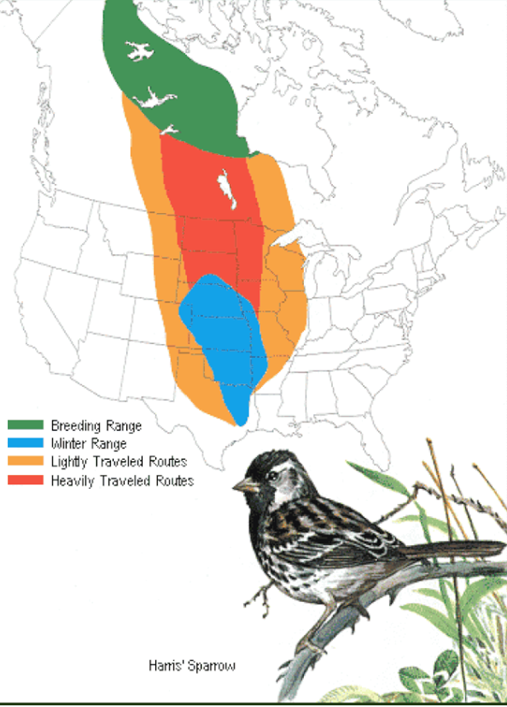
The distance can range from a few miles to more than 10,000 miles in a year.
A bird’s annual travel depends on its species and route. A local mountain migrant may move less than 50 miles between seasons. A bird that breeds in Alaska and winters in South America may travel several thousand miles each way.
Distance also depends on how it is measured. A straight-line distance is shorter than the actual route. Birds may follow coastlines, mountain ranges, rivers, or areas with reliable food.
Some birds also make side trips during migration. They may leave the main route to avoid storms, find food, or reach a safe resting place.
Example: the Ruby-throated Hummingbird
Ruby-throated Hummingbirds breed across much of the eastern United States and Canada. Many spend winter in Mexico or Central America.
Some cross the Gulf of Mexico in a single flight of roughly 500 miles, although not every bird takes the same route. Others travel around the Gulf through Texas or along the coast.
The timing and route can vary with wind, storms, food, and the bird’s condition.
Example: Arctic-breeding shorebirds
Some shorebirds travel between Arctic breeding areas and South America. They may stop at wetlands and coastal mudflats to rebuild energy.
These stopover sites are vital. A bird may not complete a long journey without several places to rest and feed.

How Do Birds Know When and Where to Go?
Birds use several systems to prepare for and navigate migration.
Internal biological clocks
Many birds have internal rhythms linked to daylight. These rhythms help control when they feed more, store fat, become restless, and begin moving.
Sun and stars
Some birds use the position of the sun during the day. At night, certain birds can use stars to help maintain direction.
Earth’s magnetic field
Research indicates that many birds can detect information from Earth’s magnetic field. This may help them orient during long flights, especially when landmarks are not visible.
The exact process differs among species and remains an active area of study.
Landmarks and landscape features
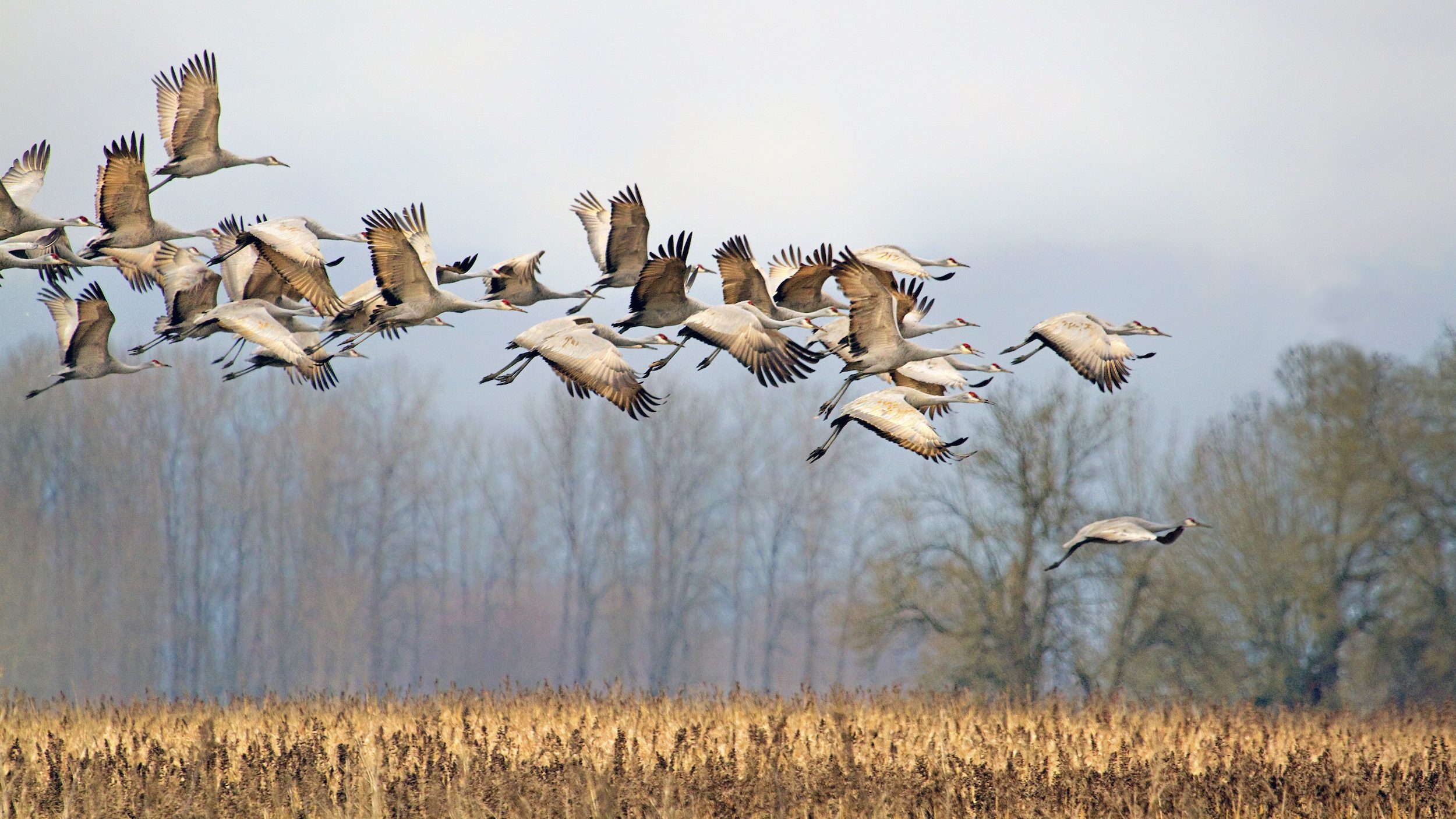
Birds may follow coastlines, rivers, mountain ranges, and other large features. They can also learn familiar routes over time.
Smell and local cues
Some birds appear to use odors and other local environmental signals. These cues may help them recognize areas and adjust their route.
No single navigation method explains all bird migration. Birds often combine several signals.
What Affects How Often a Bird Migrates?
The number of migrations in a year depends on the bird’s life cycle and environment.
Species
Species have different migration programs. A Barn Swallow may travel between North and South America, while a Northern Cardinal often stays near its home range.
Age
Young birds may migrate without an experienced adult. Some learn routes from older birds, while others rely mostly on inherited navigation skills.
Sex
In some species, males and females migrate at different times or travel different distances. Males may arrive early to claim breeding territories.
Weather
Strong winds can speed up migration or delay it. Storms may force birds to stop, turn around, or use a different route.
Food
A rich food supply can delay movement. A sudden shortage can push birds farther than usual.
Habitat loss
A bird may still migrate twice a year, but habitat loss can make each trip more difficult. Fewer stopover sites mean longer gaps between food and shelter.
Climate change
Long-term changes in temperature and seasonal weather can shift migration timing. Some birds now arrive earlier in spring in certain areas, while others face a mismatch between migration and peak food availability.
These changes do not affect all species in the same way. Local data is needed to understand a specific population.

How Can You Tell When Birds Are Migrating?
You can often notice migration by watching changes in bird numbers and species.
Look for:
- New species appearing in your yard
- Large flocks forming before sunset
- Birds feeding intensely for several days
- Sudden waves of warblers or sparrows
- Waterfowl gathering on lakes and marshes
- Raptors circling over ridges or coastlines
- Fewer resident birds after a cold front
- Birds calling at night during migration periods
Bird migration can happen at night. Many songbirds fly after dark, so people may hear calls without seeing the birds.
A simple way to track local movement is to record the date, species, location, and number of birds seen. Tools such as eBird can help birders compare observations, but individual sightings are not proof of a species-wide trend.
Never handle a wild bird unless you are trained and legally authorized to do so. If you find an injured or grounded bird, contact a licensed wildlife rehabilitator.
How Often Should You Put Out Bird Feeders During Migration?
You can keep bird feeders available during migration if you clean them and maintain them safely.
Feeders do not usually make birds migrate or prevent migration. Migration is controlled by broader biological and environmental signals, including daylight, weather, and food conditions.
To support birds:
- Clean feeders often to reduce disease spread.
- Replace wet or spoiled seed.
- Keep cats indoors or use a secure outdoor enclosure.
- Place feeders near cover but away from easy predator ambush points.
- Offer native plants that provide insects, seeds, berries, or nectar.
- Keep windows safer with exterior screens, decals, or other visible patterns.
- Do not use feeders as a substitute for habitat.
If sick birds gather at a feeder, temporarily remove the feeder and clean the area. Follow current guidance from your state wildlife agency or the U.S. Fish and Wildlife Service, because disease recommendations can change.
Common Misconceptions About Bird Migration
“Every bird migrates twice a year.”
Many do, but some birds stay in one place. Others make short movements or migrate irregularly.
“Birds migrate only because it gets cold.”
Cold matters, but food supply, daylight, breeding, wind, and habitat also shape migration.
“All birds fly south for winter.”
Not all birds fly south. Some move east, west, downhill, or toward a nearby wetland. Some remain where they are.
“Birds migrate in one nonstop flight.”
A few species can fly very long distances without stopping. Most birds use stopover sites during their journey.
“A bird that arrives early is always healthier.”
Early arrival may help a bird claim a territory, but it can also increase exposure to storms, cold, and limited food. Timing involves trade-offs.
“Bird migration dates never change.”
Migration timing can shift from year to year. Weather and food conditions can cause early, late, or interrupted movements.
Key Takeaways
- Most migratory birds in the United States migrate twice each year.
- One trip usually occurs in spring, and the return trip occurs in fall.
- A full migration cycle is often a round trip between breeding and wintering areas.
- Some birds migrate only short distances, while others travel thousands of miles.
- Partial migrants may include birds that migrate and birds that remain in the same region.
- Food, daylight, breeding needs, weather, and habitat shape migration.
- Migration timing varies by species, region, year, and local conditions.
- Birds need safe stopover sites for rest and food along their routes.
Frequently Asked Questions
Do birds migrate every year?
Many migratory birds follow a yearly pattern, but not all do. Partial migrants may move in some years and stay in others. Irruptive species may travel far only when food supplies decline.
Do birds migrate at night?
Yes. Many songbirds migrate at night. Night travel can reduce heat stress and help birds avoid some predators. Birds may use stars, Earth’s magnetic field, and other cues to navigate.
Do birds return to the same place every year?
Many birds return to the same breeding or wintering areas. However, routes and stopover sites can change because of weather, food, storms, habitat loss, or age.
Which birds migrate the farthest?
Several shorebirds and seabirds make extremely long journeys. Arctic Terns are among the best-known long-distance migrants. Some birds that breed in the Arctic also travel to South America for the nonbreeding season.
Do birds migrate because they are cold?
Cold can encourage migration, but it is not the only cause. Birds also respond to shorter days, reduced food, breeding cycles, wind, and habitat conditions.
What month do birds migrate?
There is no single migration month for the entire United States. Spring migration often occurs from late winter through late spring. Fall migration often begins in late summer and continues through fall. The timing depends on species and location.
Conclusion
Most migratory birds in the United States migrate two times per year: north in spring and south in fall. Some species make a long round trip, while others move short distances, migrate irregularly, or remain in the same area year-round.
The best way to understand local migration is to watch when species arrive, how long they stay, and when they leave. Record your sightings, protect food and shelter, and use trusted sources such as the Cornell Lab of Ornithology, the U.S. Fish and Wildlife Service, and local bird organizations for regional updates.