How Do Birds Decide Who Leads The V: Flock Leadership
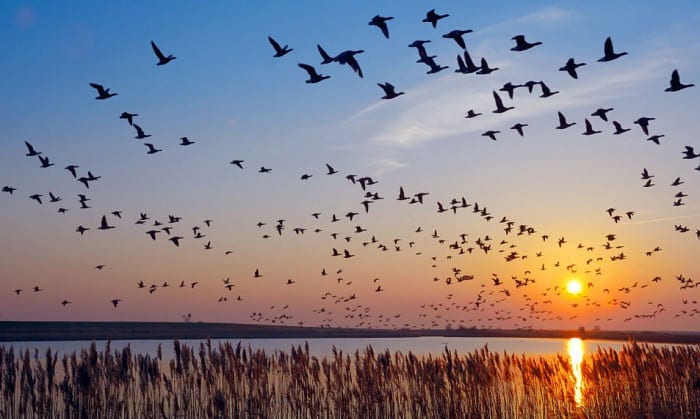
Birds in the United States, such as Canada geese, often fly in a V formation during long trips. The bird at the point is not always the oldest, strongest, or permanent “leader.” Instead, the flock changes positions as birds respond to wind, fatigue, direction, and the need to save energy.
The lead bird usually does the hardest work because it meets undisturbed air. Birds behind it can use rising air from the wingbeats ahead. When the front bird tires, another bird may move forward, and the former leader drops back into the formation.

Why Do Birds Fly in a V Formation?
Birds fly in a V because the formation can reduce the effort needed for flight. Each bird creates moving air with its wings. Behind and slightly to the side of the bird, that air may rise and help support the next bird.
This effect is called upwash. It gives a following bird some extra lift. A bird that flies in the wrong spot may instead meet sinking air, called downwash, which makes flight harder.
A V formation also helps birds:
- Keep visual contact with the flock
- Follow the group during migration
- Reduce the energy cost of long flights
- Coordinate turns and changes in speed
- Hear calls from nearby flock members
- Maintain a clear path ahead
The formation is not limited to geese. Researchers have observed similar flight patterns in species such as:
- Canada geese
- Whooping cranes
- Sandhill cranes
- Pelicans
- Ibises
- Ducks and other waterfowl
The exact benefit varies by species, flock size, wing shape, wind, and flight speed. A V is useful, but it is not a perfect shape. Birds constantly adjust their spacing and angle.
Is the Bird at the Front the Leader?
The front bird leads the flock’s movement, but it is not necessarily the social leader. “Leader” can mean two different things:
- The point bird: The bird flying at the front of the V.
- The social leader: A bird that influences group behavior, such as when to leave, stop, or change direction.
In many flocks, these roles may not belong to the same bird. A socially dominant bird may not spend the most time at the front. The point position is costly because the lead bird receives little or no aerodynamic help from birds ahead.
For this reason, the flock usually shares the work. A bird may take the front for a while, then move back as another bird takes its place.
This pattern is similar to cyclists taking turns at the front of a group. The first cyclist faces the most air resistance. The others benefit from riding behind. By rotating positions, the group can travel farther without placing the full burden on one member.

How Do Birds Decide Who Leads the V?
Birds do not appear to use one fixed rule for choosing the lead bird. The decision likely comes from several simple behaviors working together.
1. A bird moves forward as the flock changes speed
When a flock speeds up, turns, or changes its spacing, one bird may naturally move toward the point. That bird may then become the temporary leader.
The bird does not need to win a formal contest. Small changes in speed and position can move it ahead of the others.
2. The current leader becomes tired
The point position demands more effort. When the front bird needs a break, it can slow slightly or drift to one side. A bird behind may then move forward.
In a well-organized flock, this exchange can happen without conflict. The birds match speed and maintain the V while positions shift.
3. Birds respond to wind and terrain
Wind can change which position is most useful. A bird may move toward the front or side that offers better support. The flock may also change shape when it crosses a valley, open field, coastline, or body of water.
Birds may need to adjust their formation when:
- A crosswind pushes the flock sideways
- A headwind raises the cost of flight
- The flock climbs to a new altitude
- The route passes over hills or buildings
- The group encounters another flock
The point bird must keep the route clear, but other birds also influence the direction through their movement and calls.
4. Experience may affect direction
Older or more experienced birds may know parts of a migration route. They may influence turns, stopovers, and the timing of travel.
However, experience does not mean that an older bird always flies at the point. Long-distance movement is a group task. Younger birds can follow, learn, and later help guide the flock.
Research on migratory birds suggests that movement can reflect shared decisions rather than one bird giving every command. The exact system differs among species, and scientists do not have one universal rule for all birds.
5. Calls help the flock stay coordinated
Many geese and cranes call while flying. These calls may help birds maintain contact, match speed, and respond to changes in direction.
A call does not prove that one bird is giving an order. It may serve several purposes, including:
- Keeping the flock together
- Warning of danger
- Supporting social bonds
- Helping birds match movement
- Signaling changes during flight
The front bird may influence the route, but the flock still depends on feedback from birds behind it.
Do Birds Take Turns at the Front?
Often, yes. Birds in a V formation can rotate the point position to share the cost of leading.
The change may look simple from the ground. The lead bird slows, drops back, and joins one side of the V. Another bird moves forward and becomes the new point bird.
This rotation is easier when birds:
- Have similar flight speeds
- Travel in a stable flock
- Stay close enough to see one another
- Face steady wind conditions
- Have enough space to change positions
The exchange may be less orderly in a small or disturbed flock. Predators, aircraft, loud noise, storms, and nearby buildings can break the formation. Birds may then regroup before returning to a stable pattern.
A flock also does not need to keep a perfect V at all times. The shape may widen, narrow, bend, or become uneven. These changes are normal. Birds prioritize safe flight and group contact over geometric perfection.

What Makes a Good Lead Bird?
A good lead bird is not simply the biggest bird. The best point bird is one that can keep a steady direction and speed while the flock follows.
Useful traits may include:
- Strong and steady flight
- Familiarity with the route
- Ability to respond to wind
- Good awareness of nearby birds
- Strong social ties with the flock
- Ability to keep the group moving together
The ideal leader can change during a trip. A bird that is well rested may lead now, while a more experienced bird may guide a turn later.
Some birds may also lead only part of the journey. A flock can change direction, land, rest, and start again. Each stage may create a new point bird.
Does the Strongest or Oldest Bird Always Lead?
No. That is a common misconception.
A strong bird may be able to lead for longer, but constant leadership would still cost energy. An older bird may know the route, but it may not have the stamina to remain at the front.
The flock’s needs also change. A young bird may fly at the point for a short time while an older bird follows. In other cases, a parent and young bird may stay near each other rather than follow a strict leader.
Bird behavior is flexible. The flock does not need one permanent commander to maintain a route. Position, energy, weather, social bonds, and immediate movement all matter.
How Much Energy Does the V Formation Save?
The energy savings can be meaningful, but no single percentage applies to every flock.
A frequently cited study of migrating white pelicans found that birds flying in formation could reduce the effort of flight compared with flying alone. Later research on northern bald ibises used high-speed tracking to show that birds adjusted their wingbeats and positions to use beneficial air currents.
These studies support the basic idea that formation flight can save energy. They do not mean that every bird receives the same benefit or that every V-shaped flock saves the same amount.
The result depends on:
| Factor | Why it matters |
|---|---|
| Bird species | Wing size and shape change the air pattern |
| Position in the V | Some spots receive more upwash than others |
| Wind direction | Wind can strengthen or weaken the benefit |
| Spacing | Birds must avoid both poor air and collisions |
| Flight speed | Airflow changes as speed changes |
| Flock size | More birds create more options for position changes |
| Wingbeat timing | Matching or adjusting wingbeats can improve lift |
The lead bird usually gets the least aerodynamic help. That is why rotating the front position can benefit the entire flock.

How Can You Tell Which Bird Is Leading?
From the ground, the point bird is easy to spot, but its role can be easy to misread.
Look for the bird that:
- Flies at the front tip of the V
- Sets the general direction of travel
- Has open air directly ahead
- Causes the flock to adjust when it turns
- Is later replaced by another bird
Do not assume that this bird is the permanent leader. Watch for position changes over several minutes. If the point bird drops back and another bird moves forward, the flock is sharing the work.
Also remember that a flock may appear to have two leaders during a turn. One bird may be at the point while another influences the direction from a side position. Flight coordination is not always as simple as one bird commanding the rest.
Do All Birds That Fly in a V Share Leadership?
No. Formation flight and leadership vary by species.
Some birds form V patterns mainly during migration. Others use them during local travel or while moving between feeding and resting areas. A flock may also use a loose line, cluster, or uneven formation when conditions change.
There is stronger evidence for shared aerodynamic effort in some studied species than in others. Researchers have directly measured wing movement and spacing in selected birds, but those findings should not be applied to every bird that appears to fly in a V.
The safest conclusion is this: many birds can benefit from shared formation flight, and many rotate the costly front position, but the exact leadership system depends on the species and situation.
Common Myths About V Formation Flight
Myth: The front bird is always the boss
The point bird leads movement at that moment. It is not proof of social dominance.
Myth: The largest bird must lead
Size may affect flight ability, but the largest bird does not automatically take the front.
Myth: The V is always perfectly balanced
Wind, fatigue, age, spacing, and distractions can make one side longer or less even.
Myth: The same bird leads the entire migration
Many birds can rotate positions. The flock may use several leaders during one flight.
Myth: Every bird gets the same benefit
The best aerodynamic position depends on spacing, wingbeats, wind, and species. The point bird usually faces the highest cost.

Frequently Asked Questions
Do geese choose a leader before they fly?
Usually, there is no clear evidence that geese hold a formal selection process before every flight. The point bird may emerge as the flock starts moving, and positions can change during the journey.
Why do geese honk while flying?
Geese may call to keep the flock together, maintain contact, coordinate movement, and support social bonds. A call does not always mean that one goose is issuing a command.
Does the lead bird get tired first?
It may. The point bird faces more air resistance than birds behind it. This is one reason birds can rotate positions during long flights.
Can a young bird lead a flock?
Yes, a young bird can reach the front, especially during position changes. However, older or more experienced birds may influence route choices and timing.
Do birds use the V formation at night?
Some migratory birds fly at night, but the visibility, formation shape, and level of coordination can differ. The V is easier to observe in daylight, so people may notice it more often then.
Why do some flocks fly in a straight line instead?
A straight line may work better for the species, group size, wind, or available space. Birds also change formation when they need to avoid obstacles or stay close together.
Key Takeaways
- Birds do not use one universal rule to choose the lead bird.
- The front bird usually faces the greatest flight effort.
- Birds behind the leader may use rising air to save energy.
- Many flocks rotate the point position during long flights.
- Experience, fatigue, wind, speed, social ties, and route knowledge may affect who leads.
- The point bird is not always the social leader.
- V formation flight differs among species and is not always perfectly shaped.
Conclusion
Birds decide who leads the V through movement, cooperation, and changing conditions rather than a fixed chain of command. The bird at the front may guide the flock for a time, but it usually pays the highest aerodynamic cost.
As that bird tires, another can move forward. Wind, route knowledge, flock size, social behavior, and flight skill can all shape the change. The V works best when birds share the work and respond to one another.
Sources and Evidence
- Weimerskirch et al., “Energy saving in flight formation,” Nature — research on energy use in flying pelicans.
- Portugal et al., “Upwash exploitation and downwash avoidance by flap phasing in ibis formation flight,” Nature — research on wingbeat timing and airflow in northern bald ibises.
- Cornell Lab of Ornithology, Canada Goose — species behavior and migration background.
- U.S. Fish & Wildlife Service, Migratory Birds — United States context for migratory bird conservation and species protection.