How Do Birds Sleep: Fascinating Sleeping Habits
In the United States, birds sleep in many places, from backyard nest boxes and tree branches to marshes, cliffs, and open water. Most birds sleep while perched or resting, often with their head tucked under one wing. Some species can rest one half of the brain at a time, and a few birds can even sleep during long flights.
Bird sleep is not the same for every species. A robin, mallard, owl, hummingbird, and albatross may use very different sleep sites and routines. Their sleep choices depend on food, weather, predators, migration, and the bird’s body shape.
The short answer is this: most birds sleep by finding a safe place, lowering their activity, closing one or both eyes, and entering periods of quiet sleep. Many can grip a branch without falling because of special foot tendons.

How do birds sleep at night?
Most birds sleep at night in a protected place. They may perch on a branch, stand in shallow water, rest in dense plants, or settle inside a cavity. Some birds sleep alone, while others gather in groups.
A sleeping bird often:
- Fluffs its feathers to trap warm air.
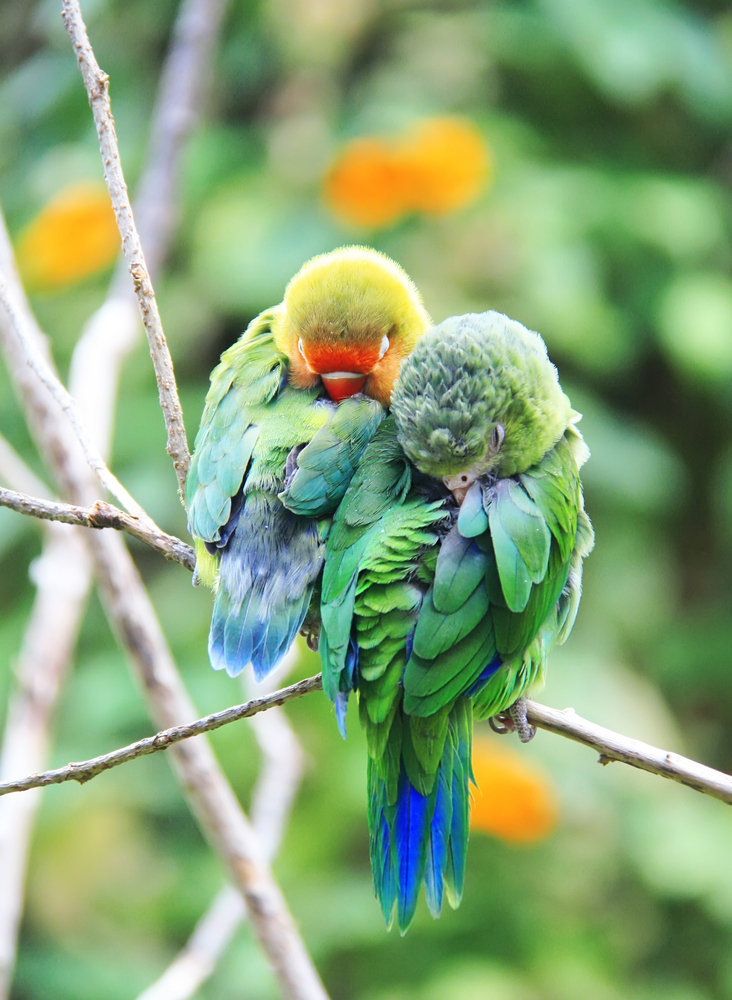
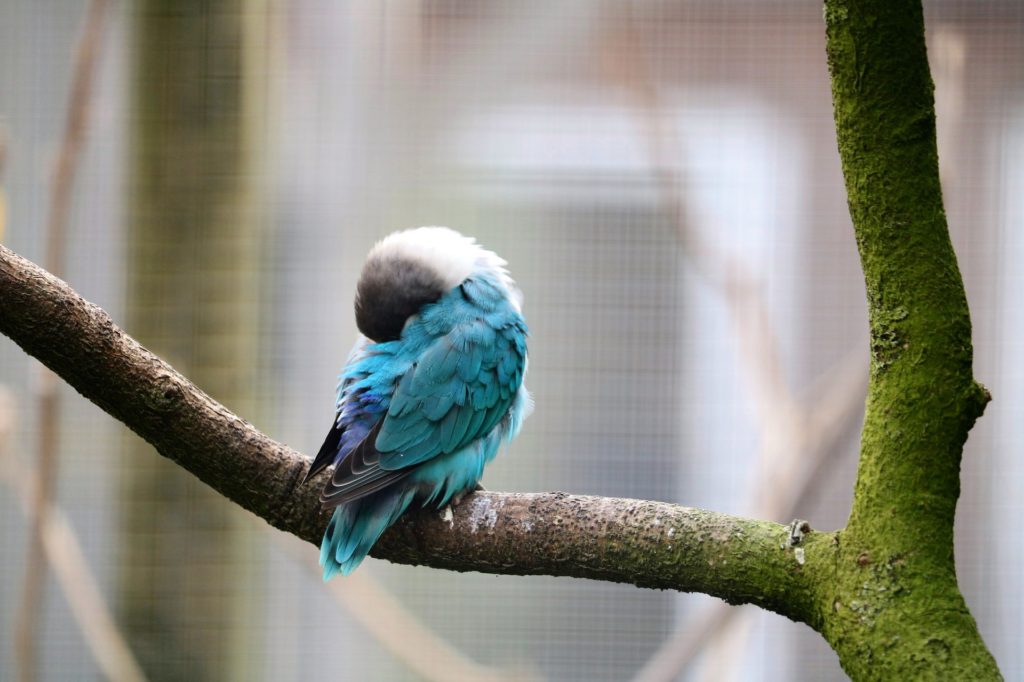
- Tucks its bill into its back feathers.
- Stands on one leg or sits on both feet.
- Closes one or both eyes.
- Becomes still and less alert.
- Lowers its body temperature slightly in some species.
Birds usually choose a sleep site that helps them avoid danger. A tree cavity can protect a small bird from wind and predators. Dense shrubs can hide a bird from hawks and mammals. Water can give ducks and other water birds an early warning if a predator approaches.
Some birds sleep in places that seem exposed. A gull may rest on a roof. A pigeon may sleep on a building ledge. A hawk may sleep on a high branch. These sites still provide a useful view, a quick escape route, or protection from ground-based predators.
Do birds sleep while standing?
Yes. Many birds sleep while standing on one or both legs. Perching birds can hold onto a branch without using much muscle force.
A bird’s foot has tendons that run down the leg and into the toes. When the bird bends its leg, the tendons pull the toes around the branch. This grip can stay closed while the bird rests.
This does not mean every bird sleeps while standing. Some birds sit on a nest, lie down, or squat on a flat surface. Large birds may rest on the ground. Water birds may float or sleep while standing in shallow water.
Why do birds puff up when they sleep?
Fluffed feathers create a layer of trapped air around the body. That layer slows heat loss. This matters because small birds lose body heat quickly, especially on cold nights.
A bird that looks round and puffy at night is often simply protecting its warmth. However, a bird that stays puffed up during the day, sits low, or shows trouble breathing may be sick. In that case, contact a licensed wildlife rehabilitator or an avian veterinarian.

Do birds close both eyes when they sleep?
Many birds close both eyes during deeper sleep. They may also sleep with one eye open. This ability is called unihemispheric slow-wave sleep, or USWS.
During USWS, one side of the brain sleeps while the other side stays more alert. The eye linked to the alert side of the brain may remain open. This lets a bird watch for danger while resting.
Birds do not always use this method. They may close both eyes when they feel safe. They may use one-eye sleep in a risky place, during travel, or when they need to watch nearby birds.
A bird can also switch sides. It may rest one side of the brain, then later rest the other side. This helps balance the need for sleep with the need for safety.
Which birds use one-eye sleep?
Researchers have recorded forms of one-eye sleep in several bird groups. These include ducks, chickens, some songbirds, and other species.
Ducks provide a useful example. A duck at the edge of a group may keep the eye facing outward open more often. The eye facing the group may close. Birds in the center of the group can often sleep with less need to watch for predators.
This pattern does not mean a bird is fully awake on one side and fully asleep on the other in a simple way. Bird sleep has several stages, and brain activity can change over time.
Can birds sleep with one eye open?
Yes. Some birds can sleep with one eye open during one-sided sleep. The open eye is part of a wider safety system.
This skill helps birds rest in places where danger remains possible. It does not make them immune to threats. A sleeping bird still needs a safe site, and long-term disturbance can reduce the quality of its sleep.
How do birds stay on a branch while sleeping?
Birds stay on a branch through a mix of foot anatomy, balance, and body position.
When a perching bird bends its legs, its toe tendons tighten. The toes curl around the branch. The bird’s body weight can help maintain the grip. As a result, the bird does not need to actively squeeze the branch all night.
This system works best on branches with a suitable size and texture. Birds can also adjust their toes and balance if wind moves the branch.
Many birds choose a branch with care. The site may offer:
- A stable surface.
- Cover from wind.
- A clear view of danger.
- A fast flight path.
- Distance from cats, raccoons, snakes, and other threats.
A bird will usually wake or shift if it loses balance. Sudden movement, loud noise, rain, or a predator can wake it quickly.
Do birds fall out of trees when they sleep?
Healthy birds rarely fall from a normal perch while sleeping. Their foot structure helps them hold on. They may move to a better branch if the wind becomes strong or the perch becomes unsafe.
Young birds, injured birds, and sick birds face more risk. A bird found on the ground at night may be resting, but it may also need help. Do not assume that every grounded bird is abandoned or injured.
Before touching a wild bird, observe from a distance. If it has a broken wing, cannot stand, has been caught by a cat, or appears weak, call a wildlife rehabilitator. Cat-caught birds need prompt professional care even when no wound is visible.

Where do birds sleep?
Birds sleep in many types of places. The best site depends on the species and the local risks.
| Sleep location | Birds that may use it | Main benefit |
|---|---|---|
| Tree branches | Songbirds, crows, hawks | Height and escape routes |
| Tree cavities | Woodpeckers, chickadees, owls | Shelter from wind and predators |
| Dense shrubs | Sparrows and small songbirds | Cover and warmth |
| Reeds or marsh plants | Marsh birds and rails | Concealment |
| Water | Ducks, geese, and some shorebirds | Early warning and group safety |
| Cliffs or ledges | Gulls, vultures, and seabirds | Height and limited access |
| Buildings | Pigeons, swallows, and some urban birds | Shelter and warmth |
| The ground | Quail, nighthawks, and some water birds | A natural part of their behavior |
Do birds sleep in nests?
Adult birds usually do not sleep in a nest after the breeding season. A nest is mainly a place for eggs and young birds. It may be poorly protected from predators and weather.
Some birds do sleep in nest-like structures. Certain species use roost nests, cavities, or sheltered bowls outside the breeding period. A bird may also return to a former nest if it offers useful cover.
Do not disturb an active nest. In the United States, many native bird nests, eggs, and young birds receive protection under the Migratory Bird Treaty Act. Rules can vary by species and situation.
Where do birds sleep in winter?
In winter, birds often choose sheltered roosts. They may use evergreen trees, tree holes, thick hedges, barns, bridges, or building ledges.
Small birds may gather close together to reduce heat loss. Some species enter a state called torpor, in which body temperature and energy use drop for a short period. Torpor is not the same as ordinary sleep. It is a stronger energy-saving state.
A backyard can help winter birds by providing native shrubs, dense cover, clean water, and suitable food. Avoid disturbing a group of roosting birds after dark.
Do birds sleep during the day?
Some birds sleep during the day because they are active at night. Owls, nighthawks, and nightjars are common examples. They often rest in shaded or hidden places during daylight.
Daytime sleep can also occur in birds that are normally active during the day. A bird may take short rest periods after feeding, during poor weather, or during migration.
Birds do not always follow one long sleep period like humans. They may sleep in several shorter blocks. This pattern can help them respond to predators, defend a territory, feed young, or take advantage of daylight.
How do nocturnal birds sleep?
Nocturnal birds sleep during the day in places that reduce light and disturbance. An owl may roost against a tree trunk. A nightjar may rest on the ground, where its camouflage makes it hard to see.
Nocturnal birds often become active near dusk. If you find an owl sitting quietly during the day, that behavior may be normal. It becomes more concerning if the bird is on the ground, cannot fly, or shows visible injury.

Can birds sleep while flying?
Some birds can sleep during flight, but this behavior is not common across all birds.
Research on great frigatebirds found that they can sleep during long flights over the ocean. They can use one-sided sleep and, for short periods, sleep with both sides of the brain. This finding applies to a specialized species with a unique lifestyle. It does not show that most birds sleep while flying.
Migrating birds also use different sleep strategies. Some reduce sleep, take brief rests, or sleep in short periods before and after travel. The exact pattern depends on the species, migration distance, weather, food, and the need to avoid predators.
Birds still need enough rest to maintain attention, movement, and health. A bird that loses sleep because of repeated disturbance may face higher energy costs and reduced performance.

How much sleep do birds need?
There is no single sleep requirement for all birds. Sleep time varies by species, age, season, habitat, and activity.
A captive pet bird needs a regular dark period. Many companion birds do well with about 10 to 12 hours of quiet, dark sleep, but the right schedule can vary by species and by veterinary advice. A bird that lives in a bright, noisy room may not get proper rest even if it remains still.
Wild birds may sleep in shorter periods. They may wake often to respond to predators, cold, noise, or nearby birds. During migration, some species change their sleep pattern to meet the demands of travel.
Signs that a pet bird may not be sleeping well
Watch for changes such as:
- Irritability or unusual biting.
- Excessive daytime sleep.
- Reduced activity.
- Poor appetite.
- Feather damage from over-preening.
- Trouble staying on a perch.
- Repeated night fright.
- A sudden change in vocal behavior.
These signs can have many causes, including illness, stress, poor diet, pain, or an unsuitable sleep routine. Contact an avian veterinarian if the change is sudden, severe, or persistent.
How to help a pet bird sleep
Give a pet bird a consistent sleep schedule. Keep its sleeping area dark and quiet at night. Reduce television, bright lights, loud music, and handling during its sleep period.
A separate sleep cage can help some birds. It should be safe, clean, and placed away from drafts and household hazards. Do not cover a cage if the cover causes panic, poor airflow, or overheating.
Never use sleep aids, sedatives, or human medicines unless an avian veterinarian prescribes them.

How do birds sleep in bad weather?
Birds change their behavior during storms, cold snaps, and strong winds. They may seek thick cover, tree cavities, buildings, or sheltered cliffs. Water birds may move to protected sections of a lake or marsh.
Rain can make feathers heavy and increase heat loss. Birds often sleep less deeply during severe weather because they must adjust their position and protect their feathers.
Birds also conserve energy during cold weather. They may eat more before nightfall, fluff their feathers, and choose a site with less wind. Some may enter torpor, especially when food is scarce.
Do not force a wild bird out of cover during bad weather. If you find an injured bird, place it in a ventilated box only when advised by a wildlife rehabilitator. Keep the box warm, dark, and quiet, and do not give food or water unless a professional tells you to do so.

Common myths about bird sleep
Myth: Birds sleep all night without waking
Birds often wake several times. They may respond to sound, movement, weather, or predators. Some species also use short sleep periods rather than one long block.
Myth: A bird with its eyes closed is always asleep
A bird may close its eyes because it is resting, relaxed, ill, or reacting to bright light. Eye closure alone does not prove normal sleep.
Myth: Birds always sleep in nests
Most adult birds sleep in roosting sites, not breeding nests. A nest is not always the safest place for an adult.
Myth: Birds cannot sleep in flight
Some birds can sleep during flight, but this is a special adaptation. It should not be applied to birds as a whole.
Myth: A bird on the ground is always asleep
A grounded bird may be resting, but it may also be injured, sick, stunned, or too young to fly. Look for warning signs before deciding what to do.

Key takeaways
- Most birds sleep while perched, standing, floating, or resting in a sheltered place.
- Many birds tuck their bill into their feathers and fluff up to stay warm.
- Some birds can sleep with one eye open by resting one side of the brain at a time.
- Special leg tendons help many birds grip a branch while they sleep.
- Sleep sites vary by species, season, weather, and predator risk.
- A few birds can sleep during flight, but this is not normal for most species.
- A pet bird needs a regular, dark, quiet sleep period.
- A wild bird on the ground may need help. Contact a wildlife rehabilitator when injury or illness is possible.
Frequently asked questions
Do birds dream?
Birds have sleep stages that resemble some sleep stages in mammals, including rapid eye movement, or REM, sleep. Researchers have observed brain and body activity linked to REM sleep in birds. Whether birds dream in the same rich way humans do cannot be confirmed from current evidence.
Do birds sleep with their heads tucked under their wings?
Many birds tuck their bill into feathers on the back or shoulder. The phrase “under the wing” is common, but the bill often rests in back feathers rather than deep under the wing. This position may help conserve heat.
Can birds sleep in the rain?
Yes, birds can sleep during rain if they find enough shelter. They may use thick foliage, cavities, covered ledges, or other protected sites. Heavy rain and wind can disrupt sleep and increase energy loss.
Why do birds chirp at night?
Night singing can occur for several reasons. Nocturnal species call as part of normal behavior. Some daytime songbirds sing at night during migration or breeding season. Artificial light, noise, territorial conflict, or alarm can also trigger calls.
Should I wake a sleeping bird?
Do not wake a wild bird unless it is in immediate danger. For a pet bird, keep handling and noise low during its normal sleep period. If the bird is unusually hard to wake, weak, or unable to perch, seek veterinary help.
Research basis and further reading
The main facts in this guide are supported by established bird biology resources and published research, including:
- Cornell Lab of Ornithology: All About Birds
- National Audubon Society: Bird behavior and identification resources
- U.S. Fish & Wildlife Service: Migratory Bird Program
- Rattenborg and colleagues’ research on sleep in flying great frigatebirds, published in Nature Communications.
- Research on avian sleep, one-sided brain sleep, migration, and torpor in ornithology and animal behavior journals.
These sources support broad patterns, not a single sleep rule for every bird. Species, habitat, season, health, and human disturbance can change how a bird rests.

Conclusion
Birds sleep by balancing rest with survival. Most find a safe roost, fluff their feathers, close their eyes, and use their feet or body position to stay secure. Some birds add another layer of protection by sleeping with one side of the brain at a time.
If you are watching birds in the United States, look for quiet roosts at dusk and dawn. Keep a respectful distance, protect natural cover, and avoid disturbing birds during cold weather or nesting season. For a pet bird, provide a steady dark period and seek an avian veterinarian when sleep or behavior changes suddenly.