How Do Birds Know Where To Migrate: Bird Navigation
Birds in the United States use several navigation tools to find seasonal destinations. These include an inherited sense of direction, the Sun, stars, Earth’s magnetic field, landmarks, smells, and information learned from older birds. No single system explains every species or every trip.
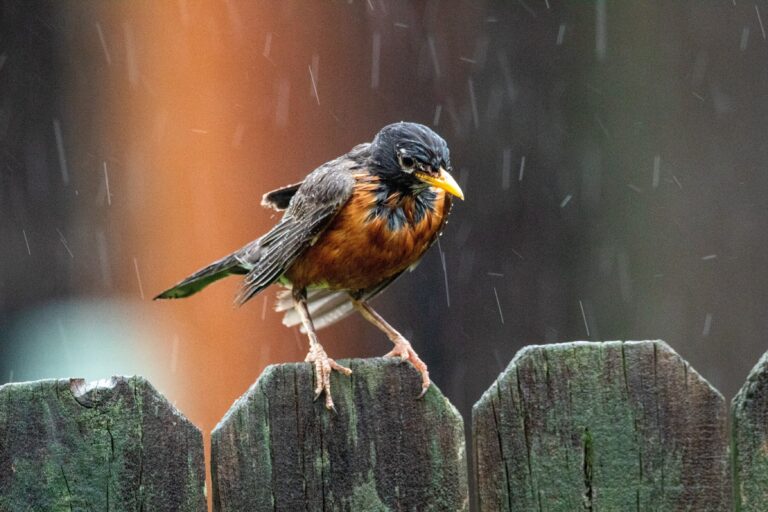
A young American robin may follow a built-in migration direction, while an adult bird can improve its route by using rivers, coastlines, weather patterns, and past experience. Migration is less like following one road and more like using several backup maps at once.

The short answer: birds use several navigation systems
Birds know where to migrate through a mix of genetic programming, environmental cues, memory, and social learning.
Their systems work in stages:
- Inherited direction: Young birds often leave with a basic direction and timing built into their behavior.
- Sun compass: Birds can use the Sun’s position, adjusted for the time of day.
- Star compass: Some night migrants learn direction from the rotation of the night sky.
- Magnetic sensing: Birds can detect features of Earth’s magnetic field.
- Landmarks: Rivers, mountain ranges, coastlines, and other features help guide experienced birds.
- Smell: Some birds may use regional odors to identify areas and routes.
- Social knowledge: Young birds can learn routes and stopover sites from parents or other adults.
The exact mix depends on the bird. A first-year bird often relies more on inherited behavior and broad compass cues. An experienced adult can use memory and local landmarks to make finer route choices.
Migration also has two separate parts:
- Orientation means maintaining a general direction, such as south or southwest.
- Navigation means determining where the bird is and how to reach a specific destination.
A bird may know it needs to travel south without knowing its exact location. Its navigation tools help correct that problem along the way.
What tells a bird when to migrate?
Birds use changes in daylight, temperature, food supply, and hormones to decide when to migrate.
The strongest seasonal signal for many birds is photoperiod, or the length of daylight. As spring or fall approaches, changing day length affects hormone levels and behavior. Some birds develop a strong urge to fly, called zugunruhe, a German term often used by scientists for migratory restlessness.
Other signals include:
- Declining insects or berries
- Freezing water and snow
- Changing temperatures
- Winds that make travel easier
- Rain and storms
- The condition of breeding or wintering habitat
- Body fat stored for long flights
Day length can start the process, but it does not control the exact departure time. A bird may delay travel during heavy rain or leave when favorable winds reduce the energy cost of flight.
In the United States, this helps explain why millions of birds move through the Great Plains, the Mississippi Flyway, and the Atlantic Flyway each spring and fall. Weather can shift the timing by days or change the number of birds seen at a migration site.

Do birds inherit their migration routes?
Many birds inherit part of their migration program, but they do not inherit a complete road map.
Research on captive birds has found that some species show a built-in direction and distance. Young birds may know whether to travel generally south, southeast, or southwest and may also have a rough sense of how long to continue.
This inherited program is called endogenous navigation. It can include:
- A preferred migration direction
- A season for departure
- A tendency to travel at night or during the day
- A rough travel distance
- The ability to adjust direction under certain conditions
The program is flexible rather than exact. It must work across years with different weather, food conditions, and landscape changes.
Young birds and adult birds differ
Young birds often make their first migration without their parents. Many songbirds, such as some warblers and flycatchers, can travel alone using inherited direction and compass cues.
Adult birds have extra advantages. They may remember:
- Productive feeding areas
- Safe roosts
- Mountain passes
- River valleys
- Coastlines
- Typical wind patterns
- Locations of breeding territories
This difference creates a useful pattern: young birds often follow a broad inherited route, while adults refine it with experience.
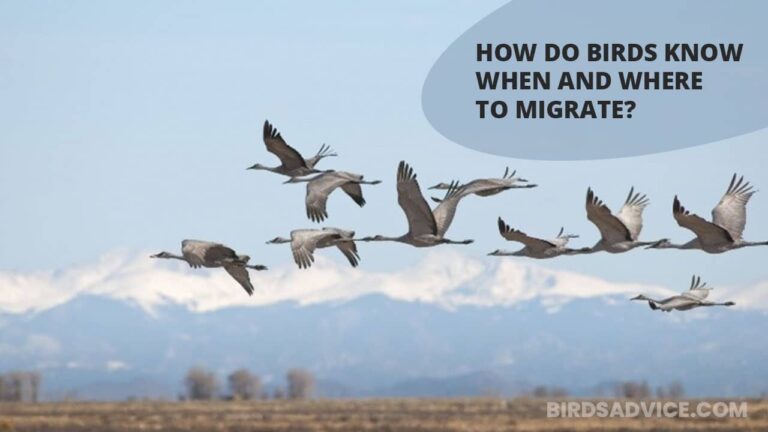
Not every species works this way. Geese, cranes, and some other large birds often migrate in family groups. Young birds can learn routes by following experienced adults.

How does Earth’s magnetic field guide birds?
Birds can detect information from Earth’s magnetic field and use it as a compass. Some evidence also suggests that certain birds use magnetic features to estimate their position.
Earth’s magnetic field varies across the planet. Its strength and angle change by location. Birds may detect:
- The direction of magnetic field lines
- The angle at which the field enters Earth
- Changes in field intensity
- Regional magnetic patterns
A magnetic compass can tell a bird which way to travel. A magnetic map could help it recognize whether it is north or south of a familiar area. Scientists have stronger evidence for magnetic compass use than for a complete magnetic map in every species.
The eyes and beak may both matter
Research suggests that birds may use more than one magnetic-sensing system.
One proposed system involves light-sensitive proteins in the eye, including cryptochrome. This may help birds detect directional information through a light-dependent process.
Other research has examined iron-containing structures in the beak or head. These structures may help detect magnetic field strength or direction. The exact role of these cells remains an active research topic.
The safest conclusion is that birds can respond to magnetic information, but scientists are still working out the biological details. It is not accurate to describe a bird’s magnetic sense as a simple built-in GPS.
How do birds use the Sun and stars?
Birds can use the Sun and stars as moving reference points.
The Sun acts like a time-compensated compass
The Sun appears to move across the sky during the day. If a bird used its position without adjusting for time, its direction would change as the hours passed.
Many birds solve this with a sun compass. Their internal body clock helps them account for the Sun’s movement. A bird can then maintain a direction even when the Sun is not directly in front of it.
This system can fail if the bird’s internal clock is shifted. Experiments with altered light schedules have shown that birds may change their apparent direction when their clock and the Sun are out of sync.
Birds can also use polarized light near sunrise and sunset. This faint pattern in the sky can provide directional information when the Sun itself is low or partly hidden.
Night migrants use the stars
Many North American songbirds migrate at night. On clear nights, they can use the pattern and rotation of the stars to establish direction.
Young birds do not appear to be born knowing a specific star map. They can learn the sky’s pattern by observing how stars rotate around the celestial pole. Artificial planetarium studies have shown that changing the apparent rotation of the stars can change the direction in which birds try to migrate.
Clouds can block the stars. When that happens, birds may switch to magnetic cues, landscape features, or other signals.
Do birds follow landmarks?
Experienced birds can use landmarks, but landmarks usually work with compass systems rather than replacing them.
Useful landscape features include:
- Coastlines
- Large rivers
- Mountain chains
- Desert edges
- Forest boundaries
- Lakes and wetlands
- Urban areas and bridges
A landmark gives a bird local information. For example, a bird may use the Appalachian Mountains to maintain a broad route or follow the Atlantic coast during part of its journey.
Landmarks are most useful when the bird has seen them before. This is one reason adult birds often navigate more precisely than juveniles.
Landscapes can also mislead birds. A new reservoir, bright city, or large cluster of lights may attract a migrating bird without helping it reach its destination. Habitat loss can remove familiar feeding areas and force birds to change their route.
Can birds smell their way during migration?
Smell appears to help some birds recognize regions and navigate, especially when they are near familiar areas.
Birds do not simply follow one scent from a breeding ground to a wintering ground. Instead, they may build a scent map from combinations of odors carried by the wind.
This idea is supported by studies of homing pigeons and other birds. When researchers block or alter a bird’s sense of smell, its ability to return to a familiar area can be affected. The effect varies by species and situation.
Smell may be especially useful:
- Near the home area
- In coastal or forest environments
- When landmarks are hidden
- When wind carries stable regional odors
- During the final part of a journey
Scientists do not treat smell as the only explanation for bird migration. It is one part of a larger navigation system.
How do birds learn routes and stopover sites?
Birds learn routes through experience, family groups, and repeated trips.
A stopover site is a place where a bird pauses to rest and feed during migration. These areas are essential because many birds cannot fly from their breeding grounds to their wintering grounds in one nonstop trip.
Birds may remember sites with:
- Rich insects
- Fruit or seeds
- Clean water
- Cover from predators
- Safe night roosts
- Favorable wind conditions
Some species pass route knowledge from adults to young. Sandhill cranes, geese, and other social migrants are well-known examples. In contrast, many small songbirds complete their first migration with little or no direct guidance from parents.
The route can change with age. A young bird may take a broad, genetically influenced path. After surviving one or more journeys, it can remember better locations and adjust its route to local conditions.
Why do birds migrate along the same major routes?
Birds often follow broad migration corridors because geography, food, water, and wind make those paths useful.
In North America, the four commonly recognized flyways are:
| Flyway | General region | Typical features |
|---|---|---|
| Atlantic Flyway | Eastern United States and Atlantic coast | Coastal wetlands, forests, and barrier islands |
| Mississippi Flyway | Central and eastern interior | Mississippi River, Great Lakes, and major wetlands |
| Central Flyway | Great Plains and central states | Prairie wetlands, grasslands, and river systems |
| Pacific Flyway | Western United States | Pacific coast, deserts, mountain valleys, and inland wetlands |
A flyway is not a narrow highway that every bird follows. It is a broad region used by many species and populations.
Different populations of the same species may take different routes. For example, birds that breed in Alaska may use a different path from birds that breed in the lower 48 states. Weather, age, habitat, and wind can also change the route.
What happens when migration cues fail?
Birds can become disoriented when their normal cues are blocked or distorted.
Common problems include:
- Cloud cover: This can hide the Sun or stars.
- Artificial light: Bright city lights can attract or confuse night migrants.
- Storms: Wind can push birds far from their normal path.
- Habitat loss: Birds may lose key feeding and rest sites.
- Glass buildings: Birds may strike windows after being drawn toward reflections or indoor light.
- Magnetic disruption: Strong local disturbances may affect magnetic orientation.
- Climate change: Earlier springs, warmer winters, drought, and changing food cycles can create timing problems.
A bird that is blown off course may correct its direction when conditions improve. Birds can also use a different cue if one becomes unavailable.
This flexibility is useful, but it has limits. A bird cannot always compensate for the loss of a wetland, a long storm, or a rapidly changing food supply.
Why do some birds migrate while others stay?
Migration evolves when the benefits of moving outweigh the costs.
Birds may migrate to reach:
- Longer summer daylight
- More insects and plant food
- Better nesting conditions
- Fewer winter competitors
- Areas with lower cold-weather stress
Migration also has major costs. Birds use large amounts of energy, face predators, encounter storms, and risk collisions with buildings or power lines.
Some birds remain year-round because they can find enough food and shelter in winter. Others migrate only a short distance. This creates a range of strategies:
- Resident: Stays in the same region all year
- Short-distance migrant: Moves between nearby areas
- Long-distance migrant: Travels between continents or far-apart regions
- Partial migrant: Some individuals migrate while others remain
The same species can use different strategies in different parts of the United States.
How can people help migrating birds in the United States?
People can reduce common risks during migration by making homes, yards, and communities safer.
Useful steps include:
- Turn off unnecessary outdoor lights at night, especially during peak migration.
- Use window treatments or bird-safe window patterns where birds gather.
- Keep cats indoors or use controlled outdoor access.
- Plant native trees, shrubs, and flowers that provide food and cover.
- Protect ponds, wetlands, and other stopover habitat.
- Avoid cutting shrubs during the nesting season when possible.
- Keep clean water available, but clean birdbaths often to reduce disease risk.
- Support local habitat projects and bird-friendly building programs.
Bird feeders can help some species, but they do not replace natural habitat. Feeders also need regular cleaning, and sick birds should not gather around them. The U.S. Fish and Wildlife Service and state wildlife agencies provide local guidance when disease outbreaks occur.
Common myths about bird migration
Myth: Birds follow one leader with a map
Some social birds learn from adults, but many young birds migrate alone. Their first route may come from inherited direction, compass cues, and basic distance programming.
Myth: Birds use Earth’s magnetic field like a phone GPS
Birds can detect magnetic information, but their system is not the same as satellite navigation. Magnetic cues may provide direction and, in some cases, location clues. They work alongside other senses.
Myth: All birds migrate south
Many birds move south from the United States in fall, but some move east, west, or to lower elevations. Some species migrate within the United States, while others remain year-round.
Myth: Bad weather always stops migration
Storms can delay migration, but birds may also take advantage of favorable winds. Weather can change the timing, route, and number of birds seen at a location.
Frequently asked questions
How do birds know where to migrate for the first time?
Many young birds use inherited direction, timing, and distance rules. They may also use Earth’s magnetic field, the Sun, stars, and landscape cues. Species that migrate in family groups can learn from older birds.
Do birds remember where they were born?
Many adult birds can return to the same breeding area or territory. Memory, magnetic cues, smells, and landmarks may all support this ability. Return accuracy differs by species and individual.
Can birds get lost during migration?
Yes. Storms, strong winds, artificial light, habitat changes, and unfamiliar landscapes can disorient birds. Some recover by using other cues or correcting their course.
Do birds migrate at night?
Many songbirds migrate at night. Night travel can reduce heat stress and predation and may provide steadier air. These birds often use stars, magnetic cues, and inherited direction.
How far can a bird migrate?
Distance varies widely. Some birds move only a few miles between elevations or habitats. Others travel thousands of miles between North America and Central or South America. The distance depends on species, population, season, and available habitat.
Conclusion: bird migration is a layered navigation system
Birds know where to migrate because several systems work together. Inherited behavior gives many birds a starting direction. The Sun, stars, and magnetic field provide compass information. Smell, landmarks, memory, weather, and social learning help birds refine the route.
The best way to understand migration is not to search for one “bird GPS.” Migration is a flexible system with backups. That flexibility helps birds cross the United States each year, but it cannot fully protect them from habitat loss, artificial light, severe weather, and other human-made risks.
Sources and evidence
This article is based on established findings summarized by the following scientific and public agencies: