How Long Do Blue Birds Live: Lifespan Facts And More
bluebirds in the United States usually live for several years in the wild, but their lifespan depends on the species, weather, food, predators, disease, and nesting success. The oldest recorded wild bluebirds have lived for about 9 to 10 years.
The name “bluebird” can mean one of three common North American species:
- Eastern Bluebird: Oldest recorded bird, about 10 years and 5 months
- Western Bluebird: Oldest recorded bird, about 9 years
- Mountain Bluebird: Oldest recorded bird, about 9 years and 9 months
These are record ages, not typical lifespans. Many young bluebirds die during their first year, so the average age in a wild population is much lower than the maximum recorded age.

How Long Do Different Bluebird Species Live?
The three bluebird species found in the United States have similar life cycles, but their ranges and habitats differ. The figures below refer to documented longevity records for wild birds, usually based on banding data.
| Bluebird species | Main U.S. range | Oldest recorded age |
|---|---|---|
| Eastern Bluebird | Eastern and central United States | About 10 years, 5 months |
| Western Bluebird | Western United States and parts of Mexico | About 9 years |
| Mountain Bluebird | Western and central mountain regions | About 9 years, 9 months |
Eastern Bluebird
The Eastern Bluebird is the most familiar bluebird across much of the eastern United States. It lives in open woods, farms, parks, golf courses, meadows, and suburban areas.
According to the Cornell Lab of Ornithology, the oldest known Eastern Bluebird reached about 10 years and 5 months. This is an exceptional record. Most Eastern Bluebirds do not live that long because young birds face heavy risks from predators, storms, food shortages, and collisions.
Western Bluebird
The Western Bluebird lives across much of the western United States. It often uses oak woodlands, open forests, farms, vineyards, and suburban areas with mature trees.
The Cornell Lab of Ornithology reports a recorded lifespan of about 9 years for the species. A Western Bluebird may live longer when it has steady food, safe nesting cavities, and protection from severe weather and predators.
Mountain Bluebird
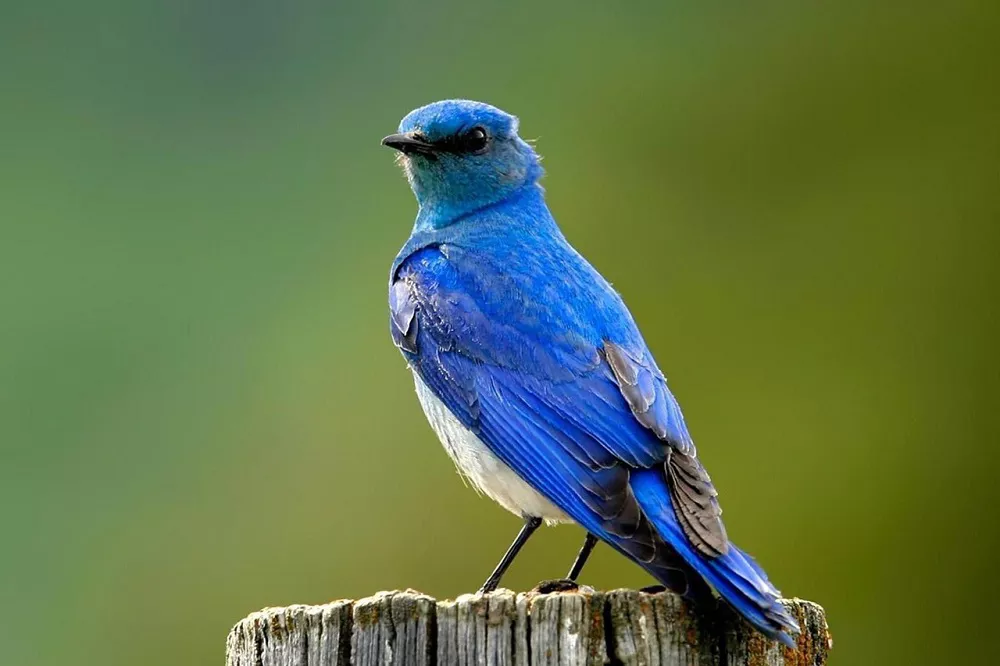
The Mountain Bluebird is common in open country across the western and central mountain regions of the United States. It often nests in cavities near grasslands, sagebrush, ranches, and high-elevation meadows.
The Cornell Lab of Ornithology reports that the oldest known Mountain Bluebird lived about 9 years and 9 months. Cold weather and limited food can make survival difficult, especially during winter and migration.
What Is the Average Lifespan of a Bluebird?
There is no single average lifespan for every bluebird species or every U.S. habitat. A practical estimate is that a bluebird that survives its first year may live several more years, while only a small number reach 9 or 10 years.
The difference between average lifespan and maximum lifespan matters:
- Maximum lifespan is the age reached by the oldest documented bird.
- Average lifespan is the typical age across an entire population.
- Life expectancy at hatching includes young birds that die before adulthood.
- Adult survival measures how likely a mature bird is to survive from one year to the next.
Young bluebirds face the greatest danger. A nestling may be exposed to cold rain, heat, starvation, disease, nest parasites, snakes, raccoons, cats, and larger birds. Even after leaving the nest, a young bluebird must find food and avoid predators.
Because many young birds die early, the population average can be much lower than the record age. This pattern is common among small wild birds.
Why record ages do not show a normal lifespan
A banding record proves that at least one bird reached a certain age. It does not mean that most bluebirds live to that age.
For example, a 10-year record shows that an Eastern Bluebird can survive that long under favorable conditions. It does not mean that a typical Eastern Bluebird should be expected to live for 10 years.

What Affects How Long Bluebirds Live?
Bluebird lifespan depends on several connected factors. The most important are survival during the first year, access to food, nest safety, weather, disease, and human-related hazards.
Food supply
Bluebirds eat insects, spiders, and other small invertebrates during much of the year. They also eat berries and other fruit, especially when insects are scarce.
A healthy habitat gives bluebirds:
- Open ground where they can spot prey
- Native plants that support insects
- Berry-producing shrubs and trees
- Clean water nearby
- Perches such as fence posts or low branches
Lawns treated with broad-spectrum pesticides may reduce the insects bluebirds need. Pesticide exposure can also harm birds directly, depending on the chemical and dose.
Predators
Predators can kill both adult bluebirds and young birds. Common nest predators include:
- Snakes
- Raccoons
- House cats
- Squirrels
- Mice
- Chipmunks
- Larger birds
A nest box placed too close to shrubs, fences, or tree limbs may give predators an easy route to the nest. A properly fitted predator guard can reduce this risk.
Severe weather
Bluebirds can survive ordinary seasonal changes, but extreme weather can reduce survival. Cold snaps may limit insects. Heavy rain can chill nestlings. Heat can make nest boxes dangerously warm, especially in full afternoon sun.
Winter storms may also reduce access to berries and insects. Birds that cannot find enough food must use stored energy to stay warm, which can weaken them.
Disease and parasites
Bluebirds may suffer from diseases and parasites that affect wild songbirds. Crowded nest boxes, poor drainage, old nesting material, and dirty feeding areas can increase exposure.
A nest box should be cleaned only when it is safe and appropriate to do so. Wear gloves, avoid inhaling dust, and do not disturb active nests. Federal law protects many native birds, their nests, eggs, and young under the Migratory Bird Treaty Act.
Collisions and other human hazards
Window strikes, vehicle traffic, outdoor cats, pesticide use, and poorly placed nest boxes can shorten a bluebird’s life.
Window collisions are especially dangerous because a bird may fly into clear or reflective glass at full speed. Moving bird feeders either within 3 feet of a window or more than 30 feet away can help reduce some collision risks, but additional window markers may still be needed.

Do Bluebirds Return to the Same Nest or Nest Box?
Bluebirds may return to the same general area in later years, and some may reuse a nest box. However, seeing a bluebird at the same box does not prove that it is the same individual.
A breeding pair may use one box for more than one brood in a season. In other cases, a new pair may take over the box after the former occupants leave. Bluebirds may also move to a different site after migration or winter.
Banding is the reliable way to identify an individual bird. Without a band or another research method, age and identity are difficult to determine from appearance alone.
Why a bluebird may seem to disappear
A bluebird may stop appearing because it:
- Moved to another feeding area
- Began migrating
- Changed territories
- Lost its mate
- Was killed by a predator or collision
- Is feeding young away from the usual viewing spot
- Is avoiding a disturbed nest site
A missing bird does not automatically mean it died. Wild birds can change their routines quickly as food, weather, and breeding conditions change.

How Can You Help Bluebirds Live Longer?
The best way to help bluebirds is to improve habitat while avoiding unnecessary interference. A safe yard cannot remove every natural risk, but it can reduce preventable dangers.
1. Provide suitable nesting habitat
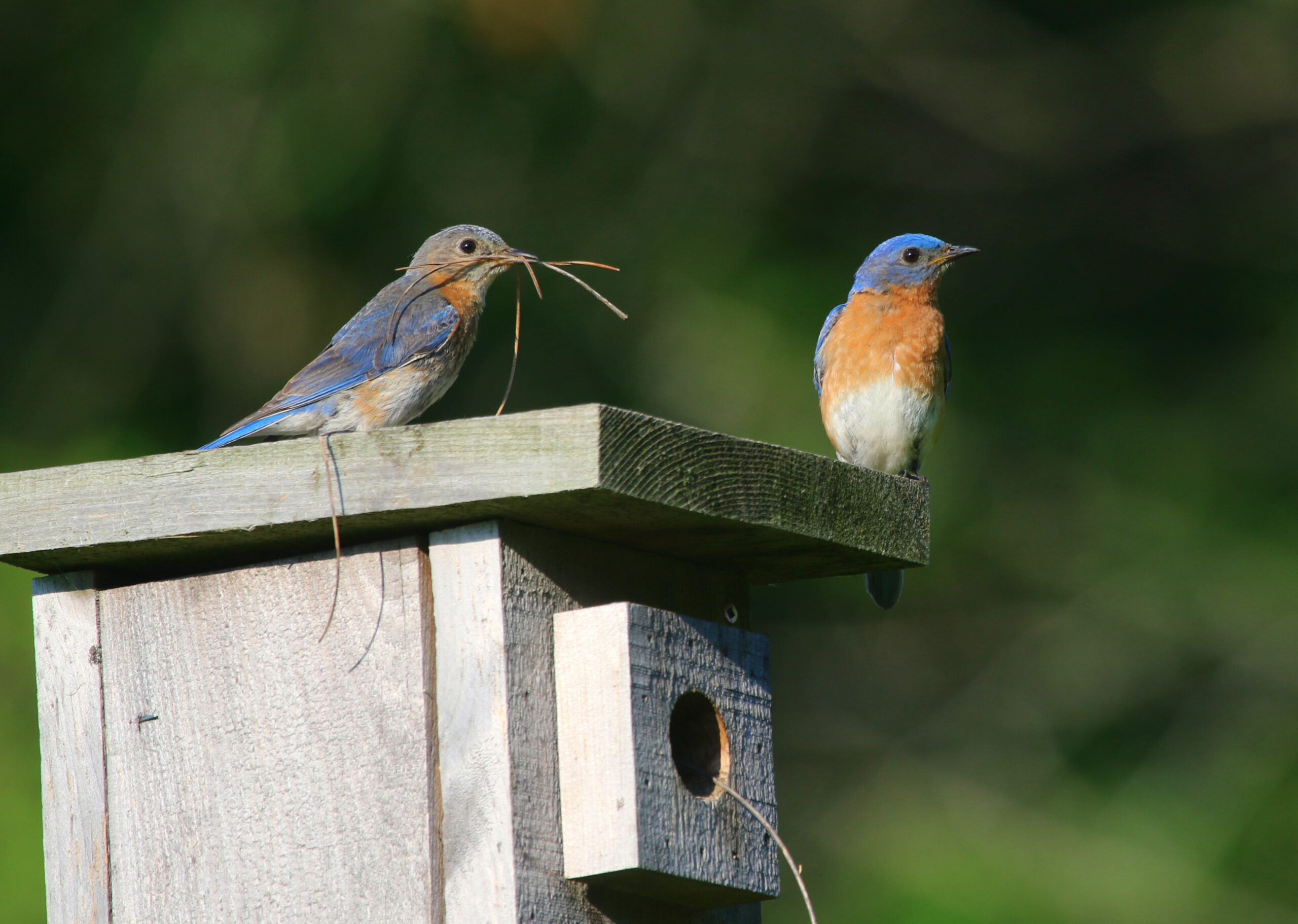
Bluebirds use natural cavities and nest boxes. If you install a box, use a design intended for the bluebird species in your region.
Place the box:
- In open habitat
- Away from dense branches that help predators
- With the entrance facing away from prevailing weather when practical
- At a safe height for the local area
- Where it can be monitored without repeated disturbance
Local bluebird groups, state wildlife agencies, and the North American Bluebird Society can provide region-specific guidance.
2. Add native plants
Native trees, shrubs, and flowers can support insects and provide fruit. Choose plants suited to your state, soil, and water conditions.
Avoid replacing all open ground with dense vegetation. Bluebirds often hunt by perching and dropping to the ground, so they need a mix of open space, low cover, and nearby perches.
3. Keep cats indoors
Outdoor cats are a major hazard for small birds. Keeping cats indoors protects bluebirds and other wildlife while also reducing risks to the cats themselves.
If outdoor access is necessary, a secure enclosure can provide fresh air without allowing free hunting.
4. Reduce pesticide use
Use nonchemical pest control when possible. If a pesticide is necessary, follow the product label and avoid applying it near active nests, birdbaths, or feeding areas.
Do not assume that a product is safe for birds simply because it is labeled natural or organic. Risk depends on the substance, amount, exposure route, and species.
5. Prevent window strikes
Use visible window markers, screens, exterior shades, or other products designed to break up reflections. One small decoration on a large window is usually not enough.
Treat windows near feeders, nest boxes, and flight paths as priority areas.
6. Keep water clean
Birdbaths can help during hot or dry periods, but dirty water can spread disease. Change the water often, scrub the basin, and place it where birds have nearby cover but predators cannot hide close to it.
What Should You Do If You Find a Bluebird?
A fully feathered young bluebird on the ground may be a fledgling, not an abandoned bird. Fledglings often spend time on the ground while their parents continue to feed them.
Use this basic approach:
- Watch from a distance. Parents may stay away while people are nearby.
- Keep pets and children away.
- Move the bird only if it is in immediate danger. Place it under a nearby shrub or on a low branch.
- Do not give it food or water.
- Contact a licensed wildlife rehabilitator if the bird is injured, cold, bleeding, unable to stand, or clearly orphaned.
Do not try to raise a wild bluebird at home. Young birds need specialized food, warmth, housing, and care. In the United States, possession of native wild birds may also require legal authorization.
A nestling with few or no feathers that has fallen from a nest may need help. If you can safely reach the nest, you may place the nestling back inside. Parent birds generally do not reject a young bird because a person touched it.

Bluebird Lifespan Compared With Other Common Birds
Bluebirds are small songbirds, so their maximum lifespan is shorter than that of many larger birds. Still, a bluebird that reaches adulthood can survive for many breeding seasons.
| Bird group | General lifespan pattern |
|---|---|
| Bluebirds | Often several years in the wild; records approach 9–10 years |
| Small songbirds | Commonly face high first-year mortality |
| Large hawks and eagles | Often live much longer than bluebirds |
| Backyard chickens | Lifespan depends heavily on breed, care, and disease control |
| Pet birds | May live longer because food, shelter, and medical care are controlled |
These comparisons are broad. Species, habitat, disease, and the quality of available records can change the result.
The main lesson is simple: body size does not tell the whole story. A small bird may have a short average lifespan but still produce several broods during its adult years.
Frequently Asked Questions
Do bluebirds live longer in captivity?
Bluebirds are wild native birds, not common household pets. Their lifespan in captivity cannot be compared directly with their lifespan in the wild because captivity changes food, shelter, movement, stress, and disease exposure.
Do not capture or keep a wild bluebird. If you find an injured bird, contact a licensed wildlife rehabilitator.
How many broods can a bluebird have in one year?
Eastern Bluebirds may raise more than one brood during a breeding season, and the exact number varies by location, weather, food, and nest success. A longer adult life can therefore provide several breeding opportunities, but many eggs and nestlings do not survive.
Do male or female bluebirds live longer?
There is no simple lifespan rule that applies to all bluebird species. Survival may differ by sex in some populations, but the result can change with nesting duties, migration, predators, and local conditions.
How can I tell how old a bluebird is?
You usually cannot tell the exact age of a bluebird by looking at it. Plumage can help distinguish a young bird from an adult, but it cannot provide a precise age. Banding or a documented research record is needed for reliable individual identification.
What is the oldest bluebird ever recorded?
The oldest documented records are close to 10 years. The oldest listed Eastern Bluebird reached about 10 years and 5 months. The oldest records for Western and Mountain Bluebirds are about 9 years and about 9 years and 9 months, respectively.
Final Answer: How Long Do Blue Birds Live?
In the United States, bluebirds generally live for several years in the wild. The oldest documented individuals have lived about 9 to 10 years, depending on the species.
The Eastern Bluebird has the longest widely cited record at roughly 10 years and 5 months. Most bluebirds do not reach that age because the first year of life is dangerous. Safe nesting sites, native food sources, clean water, fewer predators, and reduced window and pesticide risks can all improve their chances of surviving longer.
For a bluebird in your yard, the best next step is to protect habitat rather than handle the bird. Provide open foraging areas, suitable native plants, safe nest boxes, and a low-risk space where it can raise young.