Why Is Kitten Food Higher In Protein: Key Nutrition Facts
Kitten food is higher in protein because growing bodies need extra amino acids to build healthy tissue.
Understanding why is kitten food higher in protein helps you choose food that supports strong muscles, healthy organs, brain development, and steady growth. This guide explains the science, the right feeding habits, common mistakes, and when adult cat food may become the better choice.
Why Is Kitten Food Higher in Protein?
The main reason is simple: kittens are growing at a rapid rate. Their bodies build muscle, bone, skin, organs, and other tissues every day. Protein supplies the amino acids needed for this work.
A kitten’s nutritional needs are different from an adult cat’s needs. An adult cat mainly needs to maintain its body. A kitten needs to maintain its body while also creating a larger, stronger one.
This is why is kitten food higher in protein than many adult cat foods. It is designed for growth, not just maintenance.
Protein also supports:
- Muscle growth and movement
- Healthy skin and a soft coat
- Enzyme and hormone production
- Immune system function
- Tissue repair
- Normal brain and nervous system development
- Healthy blood and internal organs
Think of protein as the building material for a kitten’s body. If growth is the construction project, protein is part of the supply truck bringing bricks, tools, and workers to the site.
Most complete kitten foods also provide more calories, fat, vitamins, and minerals than adult formulas. These nutrients work together. Protein alone cannot support healthy growth if the overall diet is unbalanced.

How Much Protein Do Kittens Need?
There is no single protein number that fits every kitten. The right amount depends on the kitten’s age, size, activity level, health, and the food’s moisture content.
For dry food, protein is listed as a percentage of the food as fed. Wet food contains much more water, so its protein percentage may look lower even when it provides a similar amount of protein on a dry matter basis.
For example, a dry food may list 40% protein, while a canned food may list 10% protein. The canned food is not automatically lower in protein. Much of its weight comes from water.
To compare foods fairly, use the dry matter basis:
- Subtract the moisture percentage from 100.
- Divide the listed protein percentage by the remaining dry matter percentage.
- Multiply by 100.
Example:
- Canned food contains 10% protein and 78% moisture.
- Dry matter equals 22%.
- Ten divided by 22, multiplied by 100, equals about 45% protein on a dry matter basis.
Many commercial kitten diets are made to meet growth standards set by recognized pet food nutrition guidelines. These standards consider protein, amino acids, fat, calories, minerals, and vitamins together.
The label should say that the food is complete and balanced for kittens, growth, or all life stages. This statement is more useful than looking at protein alone.
Why Growing Kittens Use More Protein
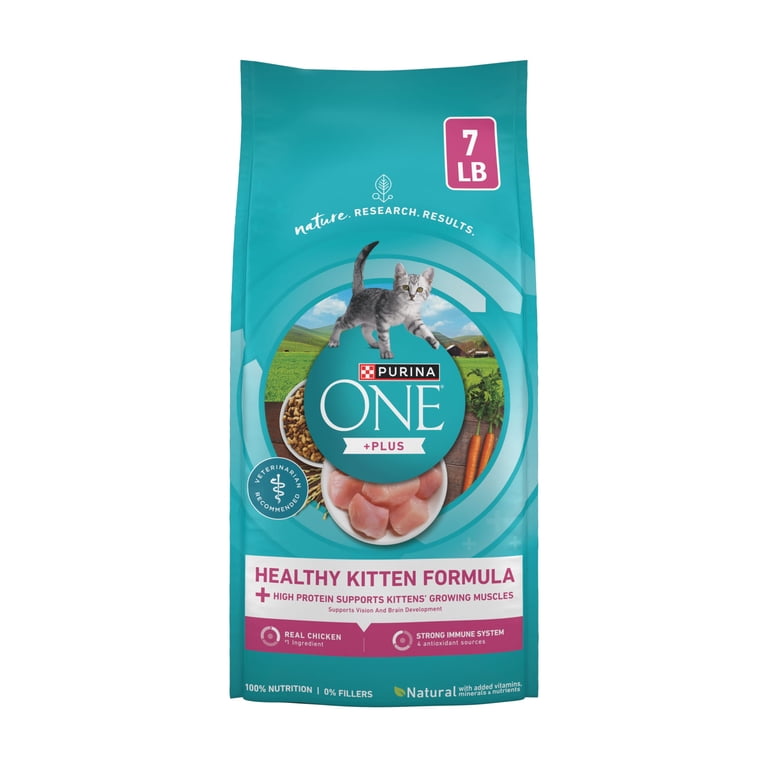
Kittens have a high rate of cell growth. Their muscles become larger, their bones lengthen, and their organs mature. Every one of these processes depends on amino acids.
Protein contains different amino acids. Some can be made by the body, but others must come from food. These are called essential amino acids.
Cats are true carnivores, so their bodies are especially adapted to use nutrients from animal tissues. Cats need certain amino acids in their diet, including taurine, arginine, methionine, and lysine.
Taurine is especially important. It supports normal vision, heart function, digestion, reproduction, and development. Cats cannot make enough taurine without dietary support, so a complete cat food must provide it.
Arginine also matters because it helps the body remove waste from protein metabolism. A lack of arginine can become dangerous very quickly in cats.
This explains more about why is kitten food higher in protein. A kitten needs not only more protein, but also the right balance of specific amino acids.
Protein Supports Brain and Nerve Development
A kitten’s brain and nervous system continue developing after birth. Protein and certain amino acids help form nerve tissue and support normal communication between cells.
This does not mean that feeding extra protein beyond a complete kitten diet will make a kitten smarter. More is not always better. The goal is enough high quality nutrition in the proper balance.
Protein Supports the Immune System
Young kittens have developing immune systems. Protein helps create antibodies and immune cells that defend the body.
Kittens also face stress from weaning, new homes, vaccinations, and exposure to new surroundings. A balanced diet helps support them during these changes, but it cannot replace veterinary care or vaccines.

Kitten Food Versus Adult Cat Food
Kitten food usually has more calories and protein per serving than adult maintenance food. It often contains more fat as well, because fat is a concentrated source of energy.
A kitten’s small stomach cannot hold large meals. Calorie dense food lets the kitten get more energy from a smaller portion.
Adult cat food is designed mainly to help a mature cat maintain a stable weight and body condition. It may not provide the ideal nutrient pattern for rapid growth.
This does not mean adult cat food is bad. It means the food is made for a different life stage.
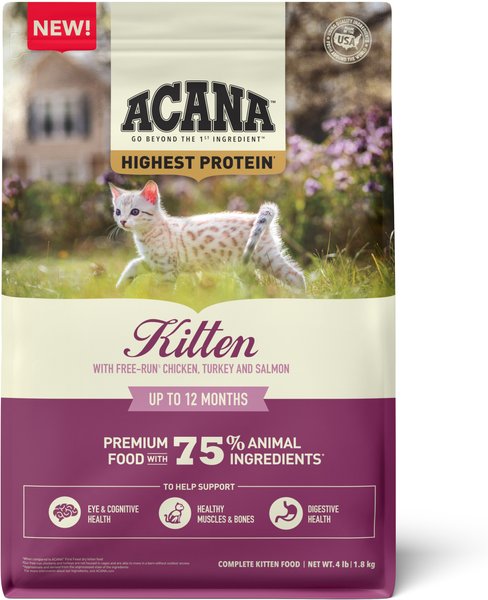
Look for these label details:
- “Complete and balanced for growth”
- “Complete and balanced for kittens”
- “Complete and balanced for all life stages”
- Feeding directions for kittens
- Clear manufacturer contact information
- A named animal protein source when possible
Avoid judging food by the ingredient list alone. Ingredients are listed by weight, and fresh meat contains water. A food with a meat ingredient near the top may still be poorly balanced if it does not meet recognized nutrient standards.
The guaranteed analysis also has limits. It shows minimum protein and fat levels, but it does not reveal protein quality, amino acid balance, digestibility, or the exact amount of each nutrient.

Is More Protein Always Better for Kittens?
More protein is not automatically better. Kittens need a complete diet that supplies enough protein, energy, fat, vitamins, and minerals in the right proportions.
A very high protein food may not be suitable if it is poorly balanced. For example, excessive or unbalanced minerals can affect developing bones. Too many calories can also lead to excess weight.
Healthy growth should be steady, not rushed. An overweight kitten may face a higher risk of joint strain and weight problems later in life.
Protein quality matters too. A digestible animal protein can be more useful than a large number on the label from less digestible sources. Still, plant ingredients are not automatically harmful. The full recipe and its nutrient profile matter most.
This is one reason why is kitten food higher in protein should not be reduced to “the highest number wins.” The better question is whether the food is complete, balanced, digestible, and suitable for the kitten’s life stage.
When High Protein May Need Veterinary Guidance
Some kittens have health conditions that change their nutritional needs. Examples include kidney disease, liver problems, digestive disorders, poor growth, or severe food intolerance.
Do not place a kitten on a restrictive or homemade diet without professional advice. Homemade diets can lack taurine, calcium, vitamin balance, or other essential nutrients.
A veterinarian may recommend a special diet, feeding schedule, supplement, or medical test. This advice should take priority over general feeding information.

Wet Food, Dry Food, and Protein Levels
Both wet and dry kitten foods can support healthy growth when they are complete and balanced for kittens.
Wet food contains more water. This can help increase daily fluid intake and may be easier for young kittens to chew. It also tends to have a strong smell, which can help encourage eating.
Dry food is convenient, easy to measure, and often less expensive per serving. Some kittens enjoy its texture. However, dry food does not replace fresh water.
When comparing protein in wet and dry foods, always check moisture. A lower protein number on a wet food label does not necessarily mean the food provides less protein after water is removed.
A mixed feeding plan can work well for many homes:
- Feed a complete kitten wet food for added moisture.
- Offer measured kitten dry food if it suits your routine.
- Follow the package guide and adjust based on body condition.
- Keep clean water available every day.
- Introduce changes slowly over about a week.
A practical example is a kitten that eats wet food at breakfast and dinner, with a measured amount of dry food offered during the day. The exact plan should fit the kitten’s weight, appetite, activity, and veterinary advice.

How Long Should Kittens Eat High Protein Food?
Most kittens should eat food made for growth until they reach adult size. Many cats transition around 9 to 12 months, but larger breeds may mature later.
Your veterinarian can help decide when to switch. Body size, growth rate, muscle condition, activity, and reproductive status all matter.
Make the change gradually:
- Feed about 75% kitten food and 25% adult food for two to three days.
- Move to a half and half mix for the next two to three days.
- Feed about 25% kitten food and 75% adult food for another two to three days.
- Serve only adult food when the kitten is comfortable with the change.
Some kittens need a slower transition. Watch for vomiting, diarrhea, poor appetite, or unusual tiredness. Contact a veterinarian if these signs are severe, last more than a short time, or occur in a very young kitten.
Neutering or spaying may also change calorie needs. The protein need for growth does not vanish overnight, but energy needs can shift. Ask your veterinarian how to adjust portions.
Feeding Mistakes to Avoid
Learning why is kitten food higher in protein is useful, but feeding habits matter just as much as the food choice.
Avoid these common mistakes:
- Feeding adult maintenance food as the main diet during early growth
- Offering unlimited food without checking body condition
- Changing food suddenly
- Giving too many treats
- Using dog food as a regular substitute
- Adding supplements to a complete diet without veterinary advice
- Feeding raw meat without understanding infection and nutrient risks
- Assuming a high protein number proves the food is complete
- Ignoring poor appetite, slow growth, or repeated digestive problems
Treats should make up only a small part of daily calories. Human foods can also be risky. Onions, garlic, chocolate, alcohol, grapes, raisins, and products containing xylitol should not be given to cats.
One mistake nutrition professionals often see is comparing foods only by the front of the package. Words such as “natural,” “premium,” or “high protein” do not replace the complete and balanced statement.
The safest habit is to check the life stage statement, follow feeding directions, monitor body condition, and seek veterinary help when something seems wrong.
Signs Your Kitten Is Getting Proper Nutrition
A well-fed kitten should show steady growth and normal energy. Kittens naturally sleep a lot, but they should become alert and playful when awake.
Positive signs include:
- A shiny, soft coat
- Clear eyes
- Normal stools
- Good interest in food
- Strong play behavior
- Gradual weight gain
- Healthy muscle development
- A body that feels lean but not bony
You should be able to feel the ribs with light pressure, but they should not be sharply visible. A round belly alone does not prove that a kitten is overweight or healthy.
Weighing a young kitten once or twice each week can help you notice trends. Use the same scale and record the results. Sudden weight loss, failure to gain, weakness, repeated diarrhea, or a loss of appetite needs prompt veterinary attention.
Kittens can become dehydrated or weak faster than adult cats. When in doubt, it is safer to call a veterinary clinic than to wait several days.
What Research and Veterinary Guidance Tell Us
Veterinary nutrition guidance consistently treats kitten feeding as a growth issue, not simply an adult cat diet with extra servings. Growth diets must meet specific requirements for amino acids, minerals, fatty acids, vitamins, and energy.
Nutrient profiles used in the pet food industry set different targets for growth and adult maintenance. These profiles help manufacturers create foods that support developing animals.
Research also shows that cats have unique dietary needs because of their evolutionary history as obligate carnivores. They rely on dietary sources of nutrients that many other mammals can produce from plant or animal ingredients.
Still, nutrition labels do not tell the entire story. Feeding trials, quality control, manufacturing practices, and the company’s nutrition expertise can also matter.
No diet can guarantee perfect health. Genetics, parasites, illness, stress, and environment all affect a kitten’s development. Good food is a foundation, not a substitute for regular veterinary care.
Frequently Asked Questions
Why is kitten food higher in protein than adult cat food?
Kitten food is higher in protein because kittens are building muscle, organs, skin, and other tissues as they grow. Adult cat food is mainly designed to maintain an already developed body.
Can adult cats eat kitten food?
A healthy adult cat can usually eat kitten food for a short time, but it is often richer in calories and fat. Long-term use may cause weight gain unless a veterinarian recommends it for a specific reason.
Can kittens eat only wet food?
Yes, kittens can eat only wet food if it is complete and balanced for growth. Wet food also adds moisture, but fresh drinking water should remain available.
How can I tell if kitten food has enough protein?
Check that the package says the food is complete and balanced for growth, kittens, or all life stages. The protein percentage is useful, but amino acid balance, digestibility, calories, and overall nutrient quality matter too.
When should I stop feeding kitten food?
Many kittens switch to adult food between 9 and 12 months, but larger breeds may need kitten food longer. Your veterinarian can recommend the best timing based on growth and body condition.
Is high protein bad for a kitten’s kidneys?
Healthy kittens generally need protein as part of a complete growth diet. However, a kitten with kidney disease or another medical condition may need a special feeding plan created with veterinary guidance.
Can I add protein supplements to kitten food?
Usually, no supplement is needed when the kitten eats a complete and balanced diet. Extra supplements can unbalance nutrients or provide too many calories, so ask a veterinarian before adding one.
Conclusion
Why is kitten food higher in protein? Because kittens are growing rapidly and need amino acids to build strong muscles, healthy organs, developing tissues, and a reliable immune system. They also need the right balance of calories, fat, vitamins, minerals, and essential amino acids.
Choose food labeled complete and balanced for kittens or growth. Compare wet and dry food on a dry matter basis, measure portions, monitor growth, and transition to adult food at the right time.
Your kitten’s food is one of the simplest ways to support a healthy start. Review the label, discuss concerns with your veterinarian, and share your feeding experience in the comments.