Why Does My Senior Cat Eat So Much: Causes And Solutions
Your senior cat may eat so much because aging can trigger diabetes, hyperthyroidism, poor nutrient absorption, or normal appetite changes.
If you are asking, “why does my senior cat eat so much,” you are right to look beyond simple hunger. Older cats can develop health problems that increase appetite while causing weight loss, thirst, or other quiet changes. This guide explains the most likely causes, warning signs, feeding tips, and the right time to call your veterinarian.

Why does my senior cat eat so much?
A senior cat may eat more because its body is not using food well. Some diseases speed up metabolism, raise blood sugar, or stop the intestines from absorbing nutrients. Your cat may feel hungry even after eating a full meal.
Age alone can also change eating habits. Some older cats become restless, vocal, or more focused on food. Yet a clear rise in appetite should not be dismissed as “just getting old.”
The key question is this: Is your cat gaining weight, losing weight, or staying about the same? Weight loss despite a strong appetite is more concerning than a cat that simply asks for a few extra treats.
A sudden change matters most. If your cat has always loved food but now begs all day, drinks more, urinates more, or looks thinner, arrange a veterinary check soon.

Common medical causes of increased appetite in senior cats
Several health conditions can explain why your senior cat eats so much. Many are treatable, especially when found early.
Hyperthyroidism
Hyperthyroidism is one of the most common diseases in older cats. It occurs when the thyroid gland produces too much thyroid hormone.
This hormone acts like a gas pedal for the body. It can increase metabolism, heart rate, and energy use. Your cat may eat eagerly but still lose weight because it burns calories too quickly.
Other signs may include:
• Weight loss
• Increased thirst
• More frequent urination
• Vomiting or diarrhea
• Restlessness or nervous behavior
• A fast heartbeat
• A rough or unkempt coat
Hyperthyroidism often affects cats over 10 years old, but younger cats can develop it too. A blood test can usually help identify the problem.
Diabetes mellitus
Diabetes develops when the body cannot use insulin properly. Without enough effective insulin, glucose stays in the blood instead of moving into the cells for energy.
The body then acts as if it is starving. This can make your cat hungry even after eating. At the same time, the kidneys remove extra glucose through urine, which causes increased thirst and urination.
Common signs include:
• Strong appetite
• Weight loss
• Drinking more water
• Larger urine clumps in the litter box
• Weakness in the back legs
• A dull or greasy coat
Diabetes can often be managed with insulin, diet changes, weight control, and regular monitoring. Early care gives your cat a better chance of feeling well.
Intestinal disease and poor nutrient absorption
Inflammatory bowel disease, intestinal cancer, parasites, and other digestive problems can stop the body from absorbing nutrients. Your cat may eat enough food but receive too little benefit from it.
This is similar to filling a leaky bucket. You keep adding food, but the body cannot hold on to all the nutrients.
Digestive disease may cause:
• Weight loss
• Soft stools or diarrhea
• Vomiting
• Gas
• A swollen belly
• Changes in stool size or color
Some cats show only weight loss and hunger. That is why a veterinary exam is important when appetite rises for more than a few days.
Exocrine pancreatic insufficiency
Exocrine pancreatic insufficiency, or EPI, is less common in cats. It happens when the pancreas does not make enough digestive enzymes.
The body cannot break down food properly. Affected cats may eat large amounts but remain thin. Their stools may become pale, loose, greasy, or unusually large.
Veterinarians can test for this condition. Treatment often includes digestive enzymes added to meals and support for any related nutrient problems.
Cancer
Some cancers can increase metabolism or affect digestion. Cancer may also cause weight loss, weakness, vomiting, or changes in appetite.
An increased appetite does not mean your cat has cancer. However, persistent hunger with weight loss deserves a full workup. Your veterinarian may suggest blood tests, urine testing, X-rays, ultrasound, or other tests based on the exam.
Medication side effects
Some medicines can increase hunger. Steroids, such as prednisolone, are a common example. They may also increase thirst and urination.
Never stop a prescribed medicine without asking your veterinarian. Instead, tell the clinic about every medication, supplement, flea product, and treat your cat receives.

Why does my senior cat eat so much but lose weight?
A senior cat that eats a lot and loses weight needs prompt medical attention. This pattern often points to hyperthyroidism, diabetes, intestinal disease, parasites, or poor digestion.
Weight loss can be easy to miss. Long-haired cats may hide a thin body under their coat. A cat may also lose muscle before its ribs become easy to see.
Watch for changes in:
• Waist shape
• Spine and hip bones
• Shoulder muscles
• Jumping ability
• Grooming habits
• Body weight
Weigh your cat every two to four weeks. Use a baby scale, a pet scale, or a bathroom scale while holding your cat. Record the number so small changes do not slip past you.
A gradual loss may still be serious. Cats often hide illness until a problem has been present for some time. If your cat loses about 10% of its body weight without trying, call your veterinarian.

When increased hunger may be less serious
Not every hungry senior cat is sick. Some explanations are simple, but they still deserve a careful look.
Your cat may eat more because:
• The food has fewer calories per cup
• You recently changed diets
• Another pet is stealing part of the meal
• Treats have replaced balanced food
• Your cat is more active
• The household routine has changed
• A new medicine has increased appetite
• Cold weather has briefly raised energy needs
Dental pain can also create confusing eating behavior. A cat may seem hungry but avoid hard food because chewing hurts. Another cat may eat soft food quickly and ask for more because it is less filling.
Stress can change appetite in either direction. Moving, a new pet, construction noise, or changes in your schedule may cause some cats to seek comfort through food.
Even when the cause seems harmless, measure meals and track body weight. That simple step can show whether your cat truly needs more calories.

How much should a senior cat eat?
There is no single correct portion for every senior cat. Calorie needs depend on body weight, activity, health, food type, and body condition.
Many adult cats need roughly 20 calories per pound of ideal body weight each day, but this is only a starting estimate. Older cats with disease may need more or fewer calories. Your veterinarian can set a safer target.
Check the food label for calories per can or cup. Do not rely only on the feeding chart, since those charts may overestimate or underestimate a cat’s needs.
A practical feeding plan includes:
-
Weigh your cat and ask your veterinarian about an ideal weight.
-
Measure each meal with a kitchen scale or proper measuring cup.
-
Count treats as part of the daily calories.
-
Divide food into two to four small meals.
-
Recheck body weight every two to four weeks.
-
Adjust portions only with a clear reason.
Wet food can help increase water intake and may be easier for cats with dental problems. Dry food is convenient and calorie-dense, but free feeding can lead to overeating. The best choice depends on your cat’s health and your veterinarian’s advice.

How to feed a senior cat that is always hungry
If your cat has been checked and no serious disease is found, you can make meals feel more satisfying without simply adding unlimited food.
Try these approaches:
• Offer smaller meals more often.
• Use a puzzle feeder for dry food.
• Hide small portions around a safe room.
• Add water to suitable wet food if your veterinarian agrees.
• Choose a complete and balanced diet for your cat’s life stage.
• Keep treats under about 10% of daily calories.
• Feed cats separately if one pet steals food.
• Use an automatic feeder for timed meals.
Puzzle feeders can slow eating and add gentle mental activity. Start with an easy feeder. A complex toy may frustrate an older cat with stiff joints or poor eyesight.
Do not make sudden diet changes. Change foods over about seven days by mixing a small amount of the new food with the old food. A sudden switch can cause vomiting, diarrhea, or food refusal.
Avoid filling the bowl every time your cat begs. Begging may mean hunger, but it can also mean boredom, habit, or a desire for attention. Try a short play session, brushing, or gentle contact first.
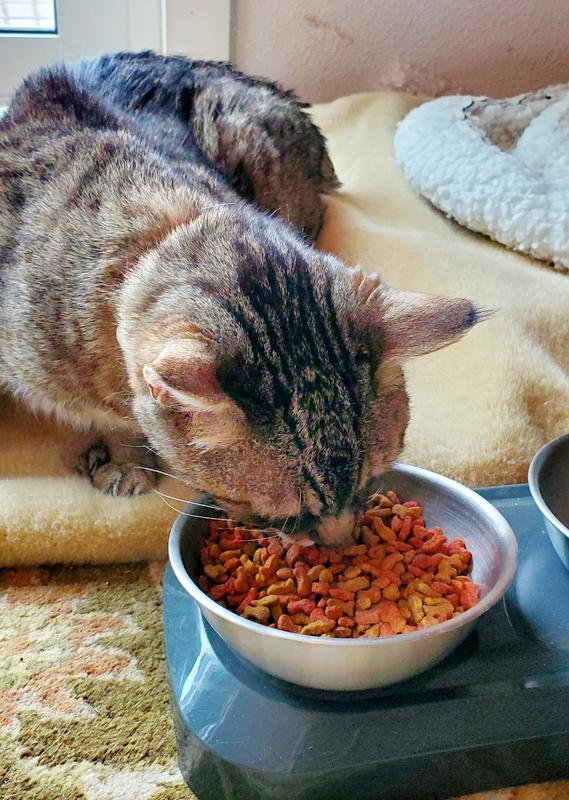
Health checks for a senior cat with increased appetite
A veterinary visit is the safest way to learn why your senior cat eats so much. The vet will ask about food, water, litter box habits, behavior, and weight changes.
A typical senior cat check may include:
• A full physical exam
• Body weight and body condition scoring
• Blood glucose testing
• Thyroid hormone testing
• A complete blood count
• Blood chemistry testing
• Urinalysis
• Fecal testing when needed
Additional tests may include blood pressure measurement, dental imaging, abdominal ultrasound, or other imaging.
Routine senior screening is valuable even when a cat seems well. Many cats hide early disease. Regular testing gives your veterinarian a baseline and can reveal small changes over time.
Bring useful details to the appointment:
• A list of all foods and treats
• Daily food amounts
• Medication names and doses
• Photos of vomit or stool if unusual
• A recent weight record
• Notes about thirst and urination
This information helps the vet see the whole pattern instead of one isolated symptom.
Warning signs that need urgent veterinary care
Some symptoms should not wait for a routine appointment. Seek urgent advice if your senior cat has increased hunger along with:
• Severe weakness or collapse
• Trouble breathing
• Repeated vomiting
• Bloody diarrhea
• Not eating after previously eating excessively
• Extreme thirst and frequent urination
• Sudden blindness or confusion
• A painful, swollen belly
• Yellow gums, eyes, or skin
• Severe dehydration
Cats with diabetes can become dangerously ill if blood sugar is not controlled. Cats with hyperthyroidism can also develop heart problems. These risks do not mean you should panic, but they do mean you should act promptly.
A common mistake is to wait for a cat to “look really sick.” Cats are masters at hiding illness. A quiet change in appetite, weight, or thirst may be the first visible clue.
A simple tracking plan for worried cat parents
Tracking your cat for one week can make the next veterinary visit much more useful. Write down food, water, behavior, and litter box changes.
Use this daily checklist:
• Food offered and food eaten
• Treats given
• Water bowl refills
• Urine clump size and number
• Stool quality
• Vomiting
• Activity and sleep
• Weight, when practical
Also take a short video if your cat walks oddly, vomits, coughs, or has trouble eating. Videos can help a veterinarian understand behavior that may not happen during the appointment.
In cases like this, the biggest lesson is to measure rather than guess. A bowl that looks full may contain very little food, while a few handfuls of treats can add many calories. Clear records reduce confusion and help prevent accidental overfeeding.
Mistakes to avoid when your senior cat eats too much
Well-meaning owners can make appetite changes harder to understand. Avoid these common mistakes:
• Giving unlimited food before checking body weight
• Assuming hunger always means a need for more calories
• Ignoring weight loss because the cat still eats
• Switching food suddenly
• Treating diabetes or thyroid disease with diet alone
• Using human medicine
• Stopping prescription medicine without veterinary advice
• Waiting several months to report a clear appetite change
Do not place a senior cat on a strict weight-loss diet without guidance. Older cats can lose muscle if calories drop too fast. Muscle loss can reduce strength and make daily life harder.
If weight loss is needed, your veterinarian can create a plan that protects muscle. The plan may include a modest calorie reduction, a high-quality protein source, portion control, and regular weigh-ins.
Frequently asked questions
Why does my senior cat eat so much but keep losing weight?
This pattern may result from hyperthyroidism, diabetes, intestinal disease, parasites, or poor nutrient absorption. Schedule a veterinary exam and blood work rather than increasing food without finding the cause.
Is it normal for older cats to become more hungry?
A mild appetite increase can happen, but a clear or lasting change is not something to ignore. It is especially important to investigate if your cat also drinks more, urinates more, vomits, or loses weight.
How can I tell if my senior cat is overweight?
Look for a wide back, a less visible waist, and ribs that are difficult to feel under a thick fat layer. Your veterinarian can score body condition and tell you your cat’s ideal weight more accurately.
Should I give my hungry senior cat more food?
Do not automatically add food until you know your cat’s weight, health status, and daily calorie intake. Measure current portions and speak with your veterinarian if hunger continues or weight changes.
Can thyroid disease make a cat eat more?
Yes. Hyperthyroidism often increases appetite while causing weight loss, thirst, urination, restlessness, vomiting, or a poor coat. A blood test can help confirm or rule out this condition.
Can diabetes cause increased hunger in senior cats?
Yes. Diabetes can make a cat feel hungry because glucose cannot enter cells normally for energy. Increased thirst, larger urine clumps, and weight loss often occur at the same time.
When should I take my cat to the vet for increased appetite?
Arrange an appointment if the appetite change lasts more than a few days, keeps getting stronger, or occurs with weight loss, increased thirst, vomiting, diarrhea, or behavior changes. Seek urgent care for severe weakness, repeated vomiting, collapse, or breathing trouble.
Conclusion
The answer to “why does my senior cat eat so much” may be simple, but it may also point to hyperthyroidism, diabetes, digestive disease, medication effects, or another health concern. Look at the full pattern, including weight, thirst, urination, stool, energy, and coat condition.
Measure food, record changes, and avoid treating increased hunger with unlimited meals. A timely veterinary exam can identify the cause and help your cat stay comfortable for many more healthy years. If your senior cat’s appetite has changed, start a food and weight log today and schedule a checkup.