How Big Is A Partridge Bird: Size Guide
In the United States, the word partridge can mean more than one bird. A true gray partridge is usually about 11 to 13 inches long, with a 20 to 22 inch wingspan and a weight of roughly 13 to 17 ounces. Other birds called partridges in the U.S., such as chukars and bobwhite quail, have different sizes.
Partridges are medium-sized, ground-dwelling game birds. They are larger than many sparrows but smaller and more compact than most ducks or pheasants.

How big is a gray partridge?
The gray partridge (Perdix perdix) is the bird most often meant by the general term “partridge.” In the United States, it lives mainly in open farmland, grassland, and prairie areas in the northern Great Plains and parts of the Pacific Northwest.
A typical adult gray partridge measures:
| Measurement | Typical size |
|---|---|
| Body length | 11–13 inches |
| Wingspan | 20–22 inches |
| Weight | 13–17 ounces |
| Approximate weight in pounds | 0.8–1.1 pounds |
The body is round and full, with a short tail and broad wings. This shape helps the bird move through grass and escape with a quick burst of flight.
The Cornell Lab of Ornithology describes the gray partridge as a plump, chicken-like bird. Its compact form can make it look heavier than it really is when it stands on the ground.
Size varies with sex, age, season, food supply, and local conditions. Males and females are close in size, so plumage and markings are often more useful than body size for identification.
How large are other birds called partridges in the United States?
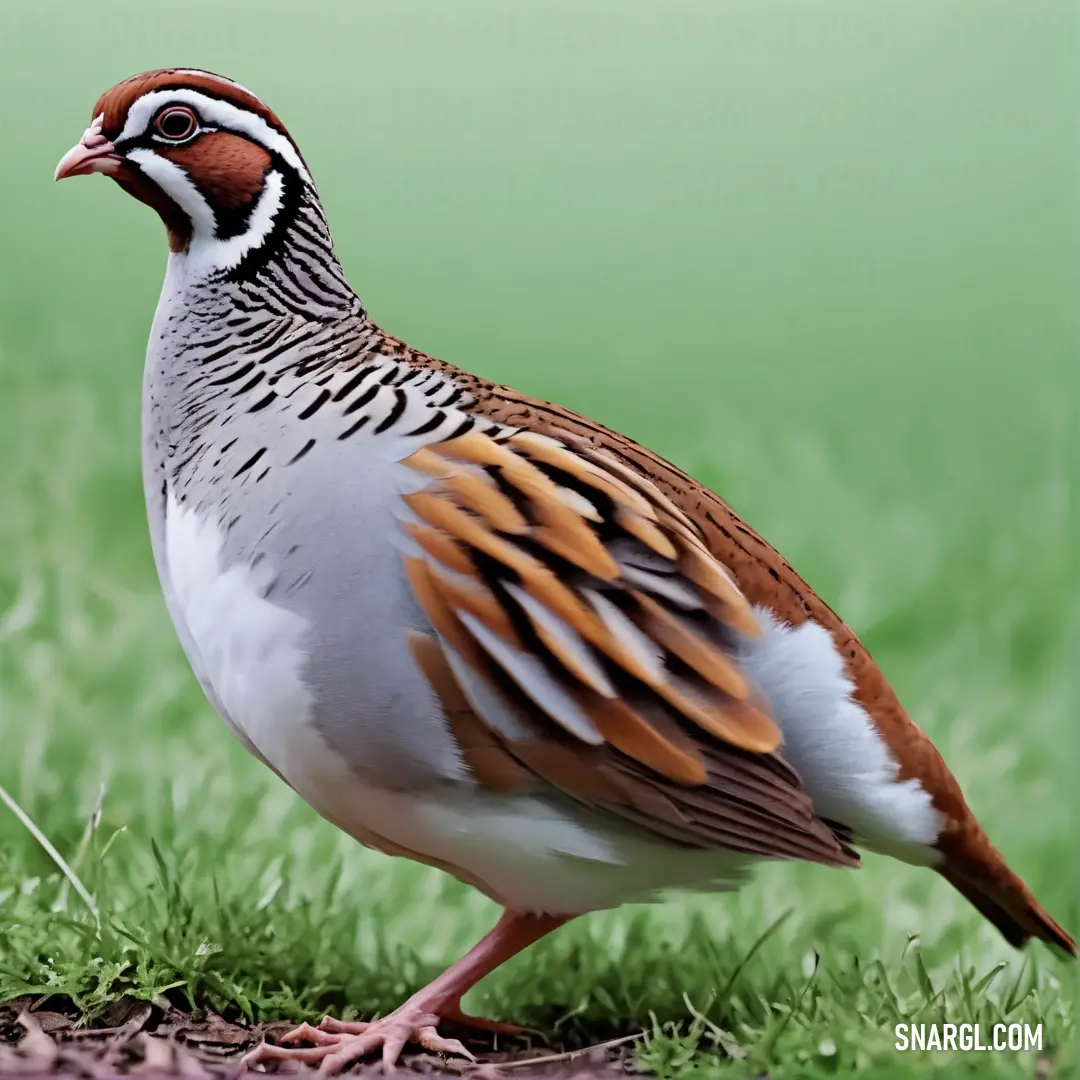
Not every bird called a “partridge” belongs to the same species or even the same genus. The name is often used for birds that look or behave like small ground chickens.
Chukar
The chukar (Alectoris chukar) is an introduced game bird found in dry, rocky parts of the western United States. It is often called a chukar partridge.
| Measurement | Typical size |
|---|---|
| Body length | 13–15 inches |
| Wingspan | About 20–22 inches |
| Weight | About 16–27 ounces |
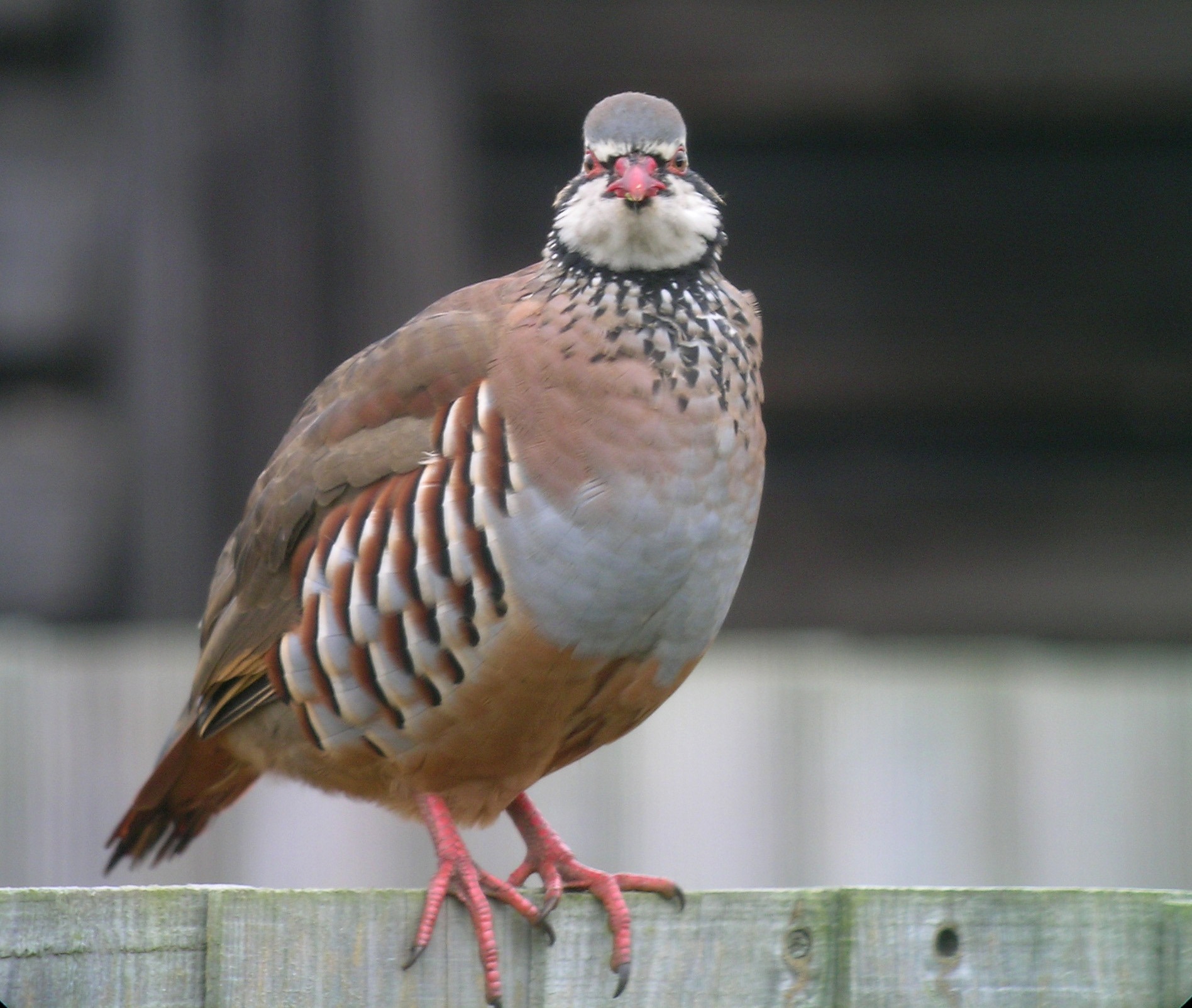
Chukars are usually longer and heavier than gray partridges. They have a bold black band across the face and throat, a gray back, and reddish legs.
Their large feet and sturdy bodies help them climb steep slopes. In many western landscapes, a chukar may look more substantial than a gray partridge because it has a heavier frame.
Gray partridge
The gray partridge is smaller and more rounded than the chukar.
| Measurement | Typical size |
|---|---|
| Body length | 11–13 inches |
| Wingspan | 20–22 inches |
| Weight | 13–17 ounces |
It usually has a gray body, orange-brown face, barred sides, and a chestnut patch on the belly in many adult males. The patch can be small or absent in some birds, especially females.
Bobwhite quail
The northern bobwhite is not a true partridge, but people in parts of the United States may use local names such as “partridge” or “Virginia partridge” for it.
| Measurement | Typical size |
|---|---|
| Body length | 9–11 inches |
| Wingspan | 14–16 inches |
| Weight | 5–7 ounces |
A bobwhite is notably smaller than a gray partridge. Its short, rounded body and distinctive head pattern can help separate it from true partridges.
California quail
The California quail is also not a true partridge. It is sometimes grouped with partridge-like game birds because it lives on the ground and has a rounded body.
| Measurement | Typical size |
|---|---|
| Body length | 9–11 inches |
| Wingspan | 12–14 inches |
| Weight | 5–8 ounces |
Its forward-curving head plume is an easy field mark. A California quail is much smaller than a chukar or gray partridge.

Partridge size compared with common backyard birds
A partridge is larger than most familiar songbirds but smaller than a typical chicken. Comparing it with known birds can make its size easier to picture.
| Bird | Approximate body length | General comparison |
|---|---|---|
| House sparrow | 6 inches | Much smaller |
| American robin | 10 inches | Similar in length but slimmer |
| Northern bobwhite | 9–11 inches | Smaller and lighter |
| Gray partridge | 11–13 inches | Medium-sized game bird |
| Chukar | 13–15 inches | Larger and heavier |
| Rock pigeon | 12–14 inches | Similar length, different shape |
| Ring-necked pheasant | 21–36 inches | Much longer, mainly because of its tail |
| Domestic chicken | 16–20 inches | Usually larger and heavier |
Body length can be misleading. A pheasant may look far larger because of its long tail, while a partridge has a short tail and compact body.
A gray partridge standing on the ground may appear about the size of a small chicken. It usually weighs less than a common adult chicken, however.

What affects a partridge’s size?
A partridge’s measured size depends on more than species. Several factors can change the bird’s weight and apparent body size.
Age
Young birds are smaller and lighter than adults. Juveniles may have nearly adult-looking feathers before they reach full adult weight, so plumage alone does not always show age.
Sex
Male and female gray partridges are close in size. In some populations, males may average slightly heavier, but the difference is not large enough to identify sex reliably from size alone.
Season
Weight can rise before winter or during periods when food is plentiful. It can fall after harsh weather, migration-like movements, breeding, or poor feeding conditions.
Gray partridges do not make long seasonal migrations like many waterfowl. Even so, their body condition can change through the year.
Habitat and food
Birds living in productive farmland may find more seeds, grains, insects, and green plant matter. Good food can support larger body mass and stronger condition.
Poor habitat can lead to lower average weight. This does not necessarily mean the birds are a different species.

How to identify a partridge by size and appearance
Size helps with identification, but it should not be used alone. Start with location, habitat, shape, and markings.
Use these clues:
- Check the habitat. Gray partridges favor open fields, grain areas, brushy edges, and grassland. Chukars are strongly linked with dry, rocky hills and mountain slopes.
- Look at the body shape. Partridges have round bodies, short tails, and fairly broad wings.
- Estimate size beside a known object. A fence post, pigeon, robin, or chicken can provide a useful comparison.
- Study the face and sides. Chukars have a strong black facial and throat band. Gray partridges have barred flanks and a warm brown face.
- Listen for the call. The chukar’s repeated call is often easier to notice than its size.
- Avoid close approach. Use binoculars or a camera with a zoom lens rather than trying to catch or corner the bird.
A bird that looks like a partridge but has a prominent head plume may be a California quail. A bird with a long tail is more likely to be a pheasant than a partridge.

How much does a partridge weigh?
A gray partridge generally weighs about 13 to 17 ounces, or 0.8 to 1.1 pounds. Chukars often weigh more, commonly around 16 to 27 ounces.
Weight is less reliable than length because it changes with:
- Age
- Sex
- Season
- Recent feeding
- Health
- Weather
- Local habitat
For a wild bird, do not try to weigh it unless you are trained and legally authorized to handle wildlife. Handling can cause stress, injury, or exposure to disease. In the United States, wildlife laws vary by state, and game birds may be protected outside approved hunting seasons.

Is a partridge bigger than a quail?
A gray partridge is usually larger and heavier than a northern bobwhite or California quail. A chukar is larger still.
The word “quail” covers several species, so the comparison depends on which quail is meant. In general:
- Bobwhite quail: about 5–7 ounces
- California quail: about 5–8 ounces
- Gray partridge: about 13–17 ounces
- Chukar: about 16–27 ounces
Some quail species outside the United States can be close in size to small partridges. For American bird identification, the species and location matter more than the common name.
Frequently asked questions
Is a partridge the same as a grouse?
No. Partridges and grouse are different groups of game birds, although both live mainly on the ground. Grouse species found in the United States vary widely in size. A ruffed grouse, for example, is generally heavier than a gray partridge.
Is a partridge bigger than a pheasant?
Usually not. Most pheasants are heavier, and male pheasants are much longer because of their long tails. A female pheasant may look closer to a large partridge in body size, but it is generally still heavier.
Can a partridge fly?
Yes. Partridges can fly strongly for short distances, especially when startled. They often prefer to run or hide in vegetation, then burst into flight with rapid wingbeats.
How tall is a partridge?
A standing gray partridge is roughly 8 to 10 inches tall, although exact height depends on posture and how it is measured. Birds crouch low when alert or feeding, so height can be hard to judge in the field.
What is the largest partridge?
The answer depends on which bird group and classification system are used. Chukars are among the larger partridge-like birds commonly seen in the United States. The term “partridge” includes several species, so there is no single size for all partridges.
Conclusion
A typical gray partridge in the United States is 11 to 13 inches long, weighs 13 to 17 ounces, and has a 20 to 22 inch wingspan. Chukars are larger, while bobwhite and California quail are smaller.
For a reliable identification, combine size with habitat, body shape, markings, and location. The best next step is to compare the bird with a regional field guide, such as resources from the Cornell Lab of Ornithology or the U.S. Fish and Wildlife Service.