How Much Energy Do Birds Use To Fly: Flight Facts
Birds use far more energy in flight than when they sit, stand, or rest. A small songbird may use a few watts while flying, while a larger bird may need tens of watts. The exact cost depends on body mass, wing shape, speed, wind, altitude, and whether the bird is flapping, gliding, or hovering.
For a useful comparison, a bird that uses 10 watts for one hour expends 10 watt-hours of energy, equal to 36 kilojoules. That is the energy used by the bird’s body, not necessarily the same amount of mechanical energy seen in its wing beats.
Flight is costly because the bird must support its body weight, overcome air resistance, and move its wings many times each second. Hovering and takeoff are usually among the most demanding forms of flight.

What does “energy used to fly” mean?
“Energy used to fly” can refer to several related measurements:
- Metabolic energy: Chemical energy released from food inside the bird’s body.
- Mechanical power: Energy transferred to the wings and air.
- Flight cost: Energy used per unit of time, distance, or body mass.
- Energy expenditure: The total energy used during a complete flight.
Researchers often report flight energy as watts, joules, or kilojoules.
One watt equals one joule per second. Therefore:
- 1 watt for 1 minute = 60 joules
- 1 watt for 1 hour = 3,600 joules
- 10 watts for 1 hour = 36,000 joules, or 36 kilojoules
A bird’s metabolic cost is higher than the mechanical work delivered to the air. Muscles are not perfectly efficient. Some chemical energy becomes heat rather than useful movement.
Why flight costs so much
A flying bird must perform several tasks at once:
- Support its weight. The wings must create enough lift to balance gravity.
- Push air backward. This creates forward thrust.
- Overcome drag. Air resistance slows the bird.
- Move the wings. The bird must accelerate and reverse the wings during each stroke.
- Control the body. Small changes keep the bird stable and on course.
The energy cost is especially high during takeoff because the bird must gain speed and height. Once airborne, a bird may reduce its cost by gliding, riding rising air, or flying at a speed that minimizes power use.
The basic physics is well established, but exact values vary among species and conditions. Flight studies use methods such as oxygen consumption, carbon dioxide production, heart rate, acceleration, and wind-tunnel measurements. The Smithsonian National Zoo and Cornell Lab of Ornithology provide accessible explanations of lift, thrust, and wing movement.

How many watts does a bird use while flying?
A bird’s flight power often falls somewhere from a few watts for a small bird to several tens of watts for a large bird, but there is no single value for all birds.
The table below gives broad, illustrative ranges. These are not universal species measurements. They show how body size and flight style affect energy demand.
| Bird type | Approximate mass | Typical flight mode | Illustrative metabolic power |
|---|---|---|---|
| Small songbird | 10–30 g | Flapping flight | About 1–5 W |
| Medium songbird or pigeon | 100–400 g | Flapping flight | About 5–20 W |
| Hummingbird | 2–8 g | Hovering or rapid flapping | Often several watts despite its small mass |
| Duck-sized bird | 0.7–1.5 kg | Flapping flight | About 15–50 W |
| Large goose or similar bird | 2–5 kg | Sustained flapping flight | Several tens of watts or more |
These values should be read as order-of-magnitude estimates, not as a field guide. A bird’s power can change sharply with speed, wind, wingbeat pattern, and behavior.
Why a hummingbird can use more power per gram
Hummingbirds are small, but hovering is expensive. A hummingbird must create lift while remaining in one place. Its wings move in a rapid figure-eight pattern and produce lift during both parts of the stroke.
A larger bird may glide or use forward motion to generate lift more efficiently. A hummingbird cannot rely on that method while it feeds from a flower. As a result, hummingbirds can have a very high flight cost per gram of body mass, even though their total power output is lower than that of a goose.
Research on hummingbird flight, including work published in the Journal of Experimental Biology, shows that hovering requires a large increase in energy use compared with resting. The exact cost differs among hummingbird species and depends on temperature, feeding state, and whether the bird is hovering in still air or moving forward.
Why larger birds do not always use more energy per gram
Large birds usually need more total power than small birds. However, their power use does not rise in direct proportion to body mass.
Larger birds often have:
- Lower wingbeat frequencies
- Longer, broader wings
- Greater ability to glide
- More efficient use of forward motion
- More stored energy in each wing stroke
This creates a scaling effect. A large bird may use more watts in total but fewer watts per gram than a tiny bird.

How much energy does a bird use per mile?
Energy per mile depends on both power and speed. A bird that uses more power but flies much faster may use a similar amount of energy per mile as a slower bird.
The calculation is:
[
\text{Energy per distance}=\frac{\text{Power} \times \text{Time}}{\text{Distance}}
]
Hypothetical example
Suppose a 100-gram bird:
- Uses 8 watts during level flight
- Flies at 10 meters per second
- Covers 36 kilometers in one hour
In one hour, the bird uses:
[
8\text{ W} \times 3,600\text{ seconds}=28,800\text{ joules}
]
That equals 28.8 kilojoules for 36 kilometers, or:
[
0.8\text{ kJ per kilometer}
]
This is a simplified example. It treats the 8-watt figure as total metabolic power and assumes steady flight. Real birds face wind, turns, climbs, descents, turbulence, and changes in speed.
The best speed is not always the fastest speed
Birds often have different speeds for different goals:
- Minimum-power speed: Uses the least energy per unit of time.
- Maximum-range speed: Uses the least energy per unit of distance.
- Maximum-speed flight: Covers ground quickly but usually costs more energy.
- Climbing speed: Requires extra energy to gain height.
A migrating bird may choose a speed that balances food reserves, wind, predators, and travel time. The best speed in still air may not be the best speed when a strong tailwind or headwind is present.
Wind changes the energy cost
A tailwind can reduce the time needed to cover a distance. A headwind usually increases the effort needed to maintain progress over the ground.
Birds can also save energy by:
- Flying in favorable winds
- Using thermals
- Following ridgelines
- Gliding between powered flight periods
- Flying in groups that reduce aerodynamic cost
These strategies explain why a bird’s energy use cannot be calculated from distance alone.

How much energy does flapping, gliding, and hovering use?
The flight mode often matters as much as body size. Hovering is usually the most demanding, gliding is usually the least demanding, and steady flapping falls between them.
Flapping flight
During flapping flight, the wings produce both lift and thrust. The bird must repeatedly accelerate the wings, reverse their motion, and create airflow around them.
Flapping costs more when the bird:
- Flies slowly
- Climbs
- Carries extra mass
- Faces a headwind
- Makes frequent turns
- Uses a high wingbeat rate
A bird may reduce the cost by using a steady flight path and a speed near its efficient range.
Hovering
Hovering demands continuous lift without the benefit of forward motion. Hummingbirds are the best-known hovering birds, but some insects and other birds also hover briefly.
Hovering tends to require high power because:
- The wings must support the full body weight
- The bird cannot glide between wingbeats
- The wings must create strong downward airflow
- Wing motion must remain precise and rapid
A hummingbird feeding at a flower may hover for only a short time before moving to a perch. This behavior helps limit its energy bill.
Gliding
Gliding uses gravity, forward motion, and air currents rather than constant powered wingbeats. A bird still loses energy to drag, but it can travel with much lower muscle effort.
Gliding birds include:
- Turkey vultures
- Hawks
- Eagles
- Albatrosses
- Pelicans
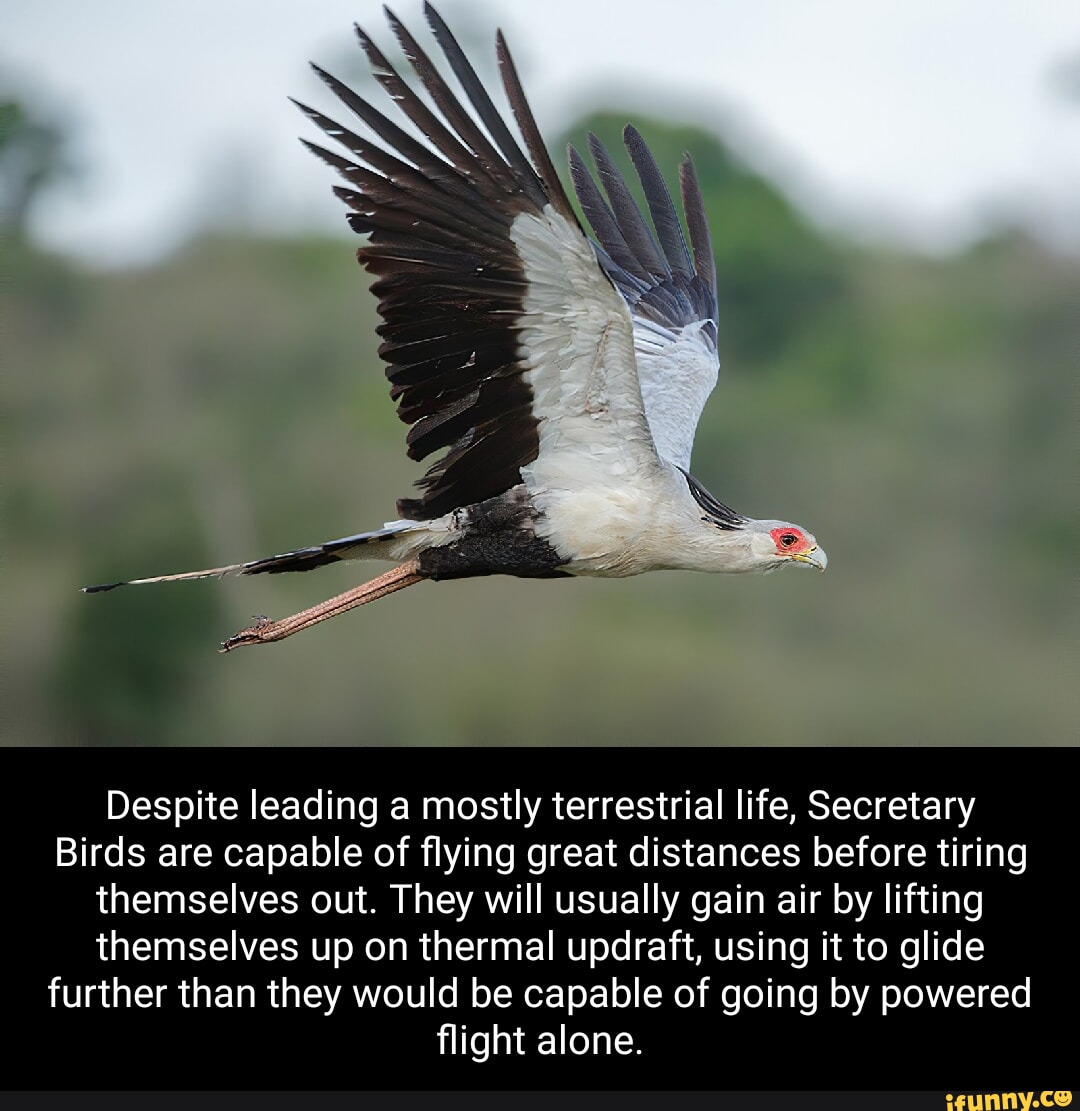
Some soaring birds use thermals, which are columns of rising warm air. By circling within a thermal, they can gain height with little or no flapping.
Takeoff and landing
Takeoff is often more demanding than level flight because the bird must create lift, accelerate, and sometimes climb at the same time. Birds may jump, run, spread their wings, or launch from a branch to reduce the initial effort.
Landing usually requires less sustained power than takeoff, but braking and control still require muscle work. A steep landing, sudden stop, or repeated takeoff can raise the total energy cost.
How do birds get enough energy to fly?
Birds meet flight demands through food, stored fat, and changes in behavior. Before migration, many birds increase body mass by storing fat. Fat contains much more usable energy per gram than carbohydrates or protein, which makes it an effective fuel for long flights.
A migrating bird may:
- Eat more before departure
- Stop at feeding sites along the route
- Select foods rich in fat
- Reduce unnecessary movement
- Use favorable winds
- Rest after long flight periods
The U.S. Geological Survey and the U.S. Fish and Wildlife Service describe the major challenges migratory birds face, including the need to find food and safe stopover habitat.
A simple food-energy estimate
Food energy is often listed in kilocalories. One kilocalorie equals 4.184 kilojoules.
If a bird’s flight required 100 kilojoules of metabolic energy, the food-energy equivalent would be:
[
100 \div 4.184 \approx 24\text{ kilocalories}
]
This does not mean the bird eats one exact food item containing 24 kilocalories. Digestion is not perfectly efficient, and the bird also needs energy for body temperature, digestion, alertness, growth, and repair.
Flight is only one part of a bird’s daily energy budget. A bird may spend substantial energy staying warm, finding food, defending territory, caring for young, and avoiding predators.
Why cold weather raises the total cost
Birds are warm-blooded animals. In cold conditions, they need more energy to maintain body temperature. If cold weather also creates strong winds or reduces food access, the combined pressure can become severe.
This is why habitat loss near migration routes can matter. A bird may need a safe place to rest and feed before it can continue. If a stopover site disappears, the bird may have to fly farther on the same fuel reserve.

What changes a bird’s flight energy use?
The main variables are body size, wing design, speed, air conditions, and behavior.
| Variable | Effect on energy use |
|---|---|
| Body mass | Heavier birds usually need more total power |
| Wing loading | High wing loading often raises takeoff and slow-flight demands |
| Wing shape | Long, narrow wings favor efficient gliding and soaring |
| Wingbeat rate | Faster wingbeats usually increase power use |
| Flight speed | Very slow and very fast flight can both be costly |
| Wind | Headwinds usually raise effort; tailwinds can reduce travel time |
| Altitude | Thin air may require faster flight or greater effort |
| Climbing | Adds the energy needed to gain height |
| Turning | Requires extra control and acceleration |
| Hovering | Usually has a high power demand |
| Gliding | Can greatly reduce flapping effort |
| Body condition | Stored fat adds mass but supplies fuel |
The role of wing loading
Wing loading is the bird’s weight compared with the area of its wings. A bird with high wing loading must fly faster to create enough lift. Such birds can be fast and efficient in open air, but they may struggle more with slow flight and takeoff.
A bird with low wing loading can often fly slowly and maneuver well. This helps in forests or near vegetation, but the bird may have a different cost during long-distance travel.
Why published estimates differ
Two studies may report different flight costs for the same general type of bird because they use different:
- Wind speeds
- Flight speeds
- Temperatures
- Measurement methods
- Body masses
- Flight conditions
- Definitions of metabolic or mechanical power
A value from a wind tunnel should not be treated as a direct measurement of every wild bird. Laboratory studies are useful because they control conditions, while field studies capture real wind, terrain, and behavior.

How can researchers measure the energy cost of flight?
Researchers usually estimate flight energy rather than placing a tiny energy meter on a bird. Several methods are common.
Respirometry
Respirometry measures oxygen use and carbon dioxide output. Since aerobic muscle work requires oxygen, gas exchange can be used to estimate metabolic energy.
This method can be precise, but birds may change their behavior when placed in a chamber or wind tunnel.
Doubly labeled water
Doubly labeled water can estimate energy expenditure in free-ranging animals. The method tracks how quickly special forms of hydrogen and oxygen leave the body.
It is useful for measuring total energy use over longer periods, but it does not directly show how much energy was spent on one specific flight.
Heart rate
Heart rate often rises when a bird flies. Researchers can calibrate heart rate against oxygen use, then estimate energy expenditure in the wild.
The relationship is not always simple. Stress, temperature, digestion, and excitement can also change heart rate.
Motion sensors
Small devices can record acceleration, wingbeats, altitude, and location. These data can reveal when a bird flies, glides, climbs, or rests.
Motion data alone do not measure calories. Researchers must connect movement patterns to physiological or aerodynamic measurements.
Aerodynamic models
Models use body mass, wing area, wing length, speed, air density, and wingbeat patterns to estimate power. Models can compare species and flight styles, but results depend on the assumptions used.
The strongest studies often combine more than one method.
Common mistakes when estimating bird flight energy
A quick calculation can be useful, but several mistakes lead to misleading answers.
Mistake 1: Treating watts as calories
Watts measure energy per second. Calories measure energy. To convert between them, multiply power by time, then convert joules to kilocalories.
Mistake 2: Using body mass alone
Two birds with the same mass can have very different costs because of wing shape, speed, and flight style.
Mistake 3: Assuming all flight is flapping
A soaring eagle and a hovering hummingbird may cover the same distance with very different energy demands.
Mistake 4: Ignoring metabolic efficiency
Mechanical work and food energy are not equal. Muscle loses part of the chemical energy as heat.
Mistake 5: Applying a laboratory value to every wild bird
A controlled study may use a particular speed, temperature, and wind condition. Those limits should stay attached to the number.
Mistake 6: Confusing total daily energy with flight energy
A bird’s daily food requirement includes resting, thermoregulation, digestion, movement, reproduction, and flight. It is not a direct measure of flight cost.

Frequently asked questions
Do birds use more energy flying or walking?
For most birds, powered flight uses more energy per unit time than walking or resting. The comparison depends on the species. A penguin, ostrich, or other flightless bird has different movement costs from a flying songbird.
Does flying make birds lose weight?
Long flights can reduce body mass when the bird burns stored fat. However, birds may replace that mass during stopovers. Weight loss is not always a sign of illness, especially during migration, but a wild bird that appears weak or injured should be handled through a licensed wildlife rehabilitator.
Is flying uphill more expensive for birds?
Yes. Climbing requires energy to gain gravitational potential energy in addition to the energy needed for forward flight. Birds may reduce this cost by using thermals, ridge lift, or updrafts.
Do birds save energy by flying in formation?
Some birds may reduce aerodynamic effort when flying in a suitable formation, especially during long flights. The benefit depends on spacing, timing, wind, and the species’ wing and body design. Formation flight is not automatically more efficient in every situation.
Which birds are the most energy-efficient flyers?
There is no single winner because “efficient” can mean different things. Albatrosses and other soaring birds can travel long distances with little flapping, while hummingbirds are highly specialized for hovering and rapid maneuvering. Efficiency must be compared under the same conditions.

Key takeaways
- Birds use a few watts to several tens of watts during flight, depending mainly on body size and flight style.
- A hypothetical 10-watt flight lasting one hour uses 36 kilojoules.
- Hovering usually costs more than steady level flight.
- Gliding and soaring can sharply reduce powered flight effort.
- Energy per mile depends on power, speed, wind, altitude, and route.
- Researchers measure flight cost with oxygen use, heart rate, motion sensors, field tracking, and aerodynamic models.
- A flight-energy estimate is meaningful only when its units, conditions, and measurement method are clear.
Conclusion
Bird flight is an energy trade-off. Wings make movement possible, but each wingbeat requires muscle work, and that work must come from food or stored fuel. Small birds may have modest total power needs but high costs per gram. Large birds use more energy overall, yet their wings and soaring skills can make long-distance travel efficient.
To estimate the energy used by a particular bird, start with four details: body mass, flight mode, speed, and flight duration. Then convert power in watts into joules or kilojoules and keep the study conditions attached to the result. That approach gives a more honest answer than quoting one number for all birds.