How Long Does It Take A Bird To Fly South: Flight Times
For birds in the United States, flying south for migration can take a few hours, several days, or many weeks. The time depends on the species, travel distance, weather, food supply, and how often the bird stops to rest.
A small songbird may cover a migration route in one to four weeks. Some birds make long flights across the Gulf of Mexico in less than one day. Others move in short stages and take two months or more to reach their winter range.
The key point is this: birds do not usually fly south nonstop. They fly, rest, feed, and wait for safe weather along the way.

The Short Answer: Most Birds Take Days to Weeks
Most migrating birds in North America take several days to several weeks to fly south. A bird may spend only part of each day in the air, then stop at wetlands, forests, fields, or coastal areas.
A bird’s total travel time includes more than flight time. It also includes:
- Resting during the night
- Feeding and rebuilding body fat
- Waiting for good wind
- Avoiding storms
- Crossing large bodies of water
- Staying in one place during a stopover
For example, a bird may fly 200 miles in one night but remain in a good feeding area for three days. Its actual flight time is short, but its full migration time is longer.
Flight time versus migration time
These two terms describe different things:
- Flight time: The hours a bird spends in the air.
- Migration time: The full period from departure to arrival, including rest and stopovers.
A bird flying at 30 miles per hour could cover 300 miles in about 10 hours of flight. In real life, it may take several days because it does not fly for 10 hours every day.
How Far Do Birds Fly South in the United States?
The distance varies widely. Some birds move a few hundred miles from the northern United States into the Southeast. Others travel from Alaska or Canada to Central or South America.
Common migration distances include:
| Bird movement | Approximate distance | Possible travel time |
|---|---|---|
| Northern states to the southern United States | 500–1,500 miles | Several days to a few weeks |
| Canada to the Gulf Coast | 1,000–2,000 miles | One to four weeks |
| Eastern United States to Central America | 2,000–4,000 miles | Several weeks |
| Alaska or northern Canada to South America | 4,000–10,000 miles or more | Several weeks to a few months |
These are broad estimates, not fixed schedules. The same species may travel at different speeds in different years.
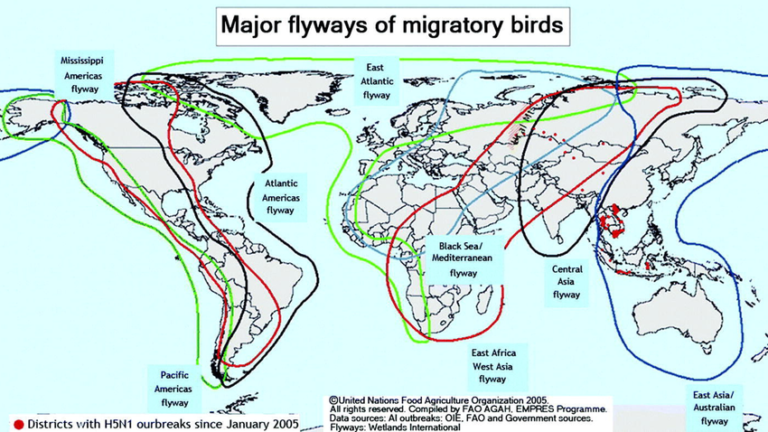
The U.S. Fish and Wildlife Service explains that migration routes differ by species, population, and season. Some birds follow the Atlantic, Mississippi, Central, or Pacific flyways. Others use local routes that do not fit neatly into one corridor.
Why distance alone does not give the answer
A 1,000-mile trip is not always faster than a 2,000-mile trip. A shorter route with strong headwinds, few food sites, or a major water crossing may take longer.
A longer route can be efficient if it has:
- Strong tailwinds
– Reliable food - Safe wetlands or forests
- Fewer natural barriers
- Good daylight and temperature conditions
Migration is less like a nonstop road trip and more like a series of planned stops.

How Fast Can a Bird Fly?
Most migrating birds fly at roughly 20 to 40 miles per hour, although speed differs by body size, wing shape, wind, and species.
A strong tailwind can help a bird travel much farther without using as much energy. A headwind has the opposite effect. Birds may also change altitude to find better wind conditions.
Some birds migrate mainly at night. Many songbirds leave after sunset and travel for several hours before landing near dawn. Hawks and other soaring birds often migrate during the day because they use rising warm air to save energy.
A simple estimate is:
Flight time = distance ÷ average speed
For a hypothetical 600-mile journey:
- At 30 miles per hour, nonstop flight would take about 20 hours.
- If the bird flies 8 hours each night, the flight would take about 2.5 nights.
- With feeding stops and poor weather, the full trip could take a week or longer.
This calculation shows why flight speed cannot predict the arrival date by itself.
Examples of Birds That Fly South
Different birds use different migration plans. The examples below show why there is no single answer to the question.
Ruby-throated hummingbirds
Many ruby-throated hummingbirds migrate from the eastern United States to Mexico or Central America. Some cross the Gulf of Mexico in a nonstop flight of roughly 500 miles.
That crossing may take about 18 to 24 hours, depending on wind and the bird’s condition. Other hummingbirds avoid the open Gulf and travel around its coast. Their full migration takes longer because they make repeated stops.
The National Audubon Society notes that hummingbirds build fat reserves before migration. This stored energy helps them survive long flights, especially over water.
American robins
American robins do not all migrate the same way. Some northern robins move south, while many robins farther south remain in the same region year-round.
A migrating robin may travel in stages through the United States. Because it feeds along the way and may stop often, its journey can take days or weeks, rather than one nonstop flight.
Monarch butterflies versus birds
Monarch butterflies also migrate south, but they are not birds and should not be used as a direct comparison. Their movement follows different biological rules, and several generations may take part in the annual cycle.
This distinction matters because the phrase “fly south” can refer to many flying animals, but bird migration has its own patterns and energy needs.
Arctic terns
Arctic terns travel between the Arctic and Antarctic regions. Their full annual route is among the longest migrations known in the animal world.
They do not simply fly south in one continuous journey. They make a long seasonal movement with stops and changing routes. Their migration can span several months when the entire trip and stopovers are considered.
Shorebirds
Some shorebirds make very long nonstop flights between breeding and wintering areas. Birds such as godwits, sandpipers, and other shorebirds may cross oceans or large regions with few places to land.
These birds often gain substantial body fat before departure. Even so, their entire migration is longer than their longest single flight because they rest and feed at key stopover sites.

What Makes a Bird’s Southbound Trip Faster or Slower?
The main factors are weather, food, distance, age, body condition, and the bird’s migration strategy.
Weather and wind
Wind can change migration time by many hours or days. Tailwinds push a bird toward its destination. Headwinds force it to use more energy and may cause it to stop.
Storms can delay migration. Birds may wait for safer conditions rather than fly into heavy rain or strong winds.
Food and body fat
Birds need fuel for migration. Insects, berries, seeds, nectar, and other foods help them build fat reserves.
A bird that finds abundant food may remain at a stopover site for several days. That delay is useful because it can improve the bird’s condition for the next flight.
Day length
Changing daylight helps trigger migration in many species. As days shorten in late summer and fall, birds may begin preparing for southbound travel.
Day length is not the only signal. Temperature, weather, food levels, and internal biological rhythms also affect departure.
Age and experience
Young birds may take different routes from older birds. Some species migrate with adults, while others travel independently.
Experienced birds may know important stopover locations. Young birds often rely more on inherited direction cues, stars, the Sun, Earth’s magnetic field, and landscape features.
Geography
Mountains, deserts, coastlines, and large bodies of water shape migration routes. A bird may take a longer path to find food or avoid difficult terrain.
For instance, a bird traveling along the Atlantic Flyway may move through coastal marshes and wetlands. A bird using the Pacific Flyway may depend on different habitats and weather systems.
Species and wing design
Birds with long, narrow wings often fly efficiently over long distances. Birds that soar may depend on rising air instead of constant flapping.
Small songbirds, ducks, hawks, geese, and shorebirds all have different flight styles. Their migration times cannot be compared fairly without considering these differences.

How Long Does It Take Birds to Cross the United States?
A bird crossing the United States may take one to several weeks, depending on its route and stopping pattern.
A hypothetical 2,000-mile journey illustrates the difference between nonstop flight and real migration:
- At 30 miles per hour, nonstop flight would take about 67 hours.
- At 8 hours of flight per day, the bird would need about 8 to 9 flight days.
- With food stops, storms, and rest days, the full trip might take two to four weeks.
Some birds move faster than this estimate. Others take longer.
A bird that migrates in short daily stages may cover only 50 to 150 miles per day. A bird taking long overnight flights may travel several hundred miles in one night, then rest for a day or more.
Do All Birds Fly South for the Winter?
No. Not all birds fly south, and not all birds migrate in the same direction.
Some birds:
- Remain in the same area all year
- Move only a short distance
- Travel east or west instead of south
- Move to higher or lower elevations
- Follow food rather than a fixed compass direction
- Migrate only when weather or food conditions change
Even within one species, some birds migrate while others stay year-round. This pattern is common when a species lives across a large range.
“South” is a useful general description for many North American fall migrations, but it is not a rule for every bird.

When Do Birds Fly South in the United States?
Many birds begin southbound migration from late summer through fall. The exact timing depends on the species and location.
A general pattern looks like this:
- July and August: Some shorebirds and early migrants begin moving.
- September and October: Many songbirds, raptors, and waterfowl migrate.
- November: Later migrants continue through the southern United States.
- December and later: Some species still move, but most have reached winter areas.
Bird migration is not controlled by the calendar alone. A cold front, strong north wind, or sudden food shortage can cause many birds to move at once.
Spring migration usually reverses the pattern. Birds travel north when breeding conditions improve and food becomes more available.
To check local activity, birders can use eBird sightings and migration reports from the National Audubon Society. These tools can show when species are being observed in a region, but they do not provide a precise arrival date for every individual bird.

How Can You Tell Whether a Bird Is Migrating?
You may notice several signs of migration:
- Many birds appear in a yard for only one or two days.
- Birds feed heavily before moving on.
- Flocks gather in trees, fields, wetlands, or shorelines.
- Hawks circle on rising air during the day.
- Songbirds call or fly overhead at night.
- The number of birds changes after a cold front.
- Familiar summer birds disappear while new species arrive.
A single bird is not always proof of migration. Local birds may move because of food, temperature, predators, or habitat changes.
The best way to confirm a pattern is to record the species, date, location, behavior, and weather. Comparing those notes with eBird records or local bird counts can help show whether the bird is part of a seasonal movement.

Common Misconceptions About Southbound Bird Migration
Birds fly south in one nonstop trip
Most birds do not fly nonstop from their breeding range to their winter range. They usually make repeated flights with rest and feeding periods.
Every bird leaves when the weather turns cold
Cold weather can influence movement, but many birds begin migration before severe cold arrives. Day length, hormones, food, and inherited behavior also play major roles.
Birds fly directly south
Many birds follow routes that curve east or west. They may follow coastlines, rivers, mountain passes, or areas with better food.
All birds use the same speed
Flight speed varies by species and conditions. A soaring hawk and a flapping songbird use different methods and cannot be measured by the same simple rule.
A bird seen in winter must have migrated from far away
Some birds stay year-round. Others move only a short distance. A winter bird may be local, a regional migrant, or a long-distance traveler.
How to Help Migrating Birds in Your Yard
You can make a yard safer for migrating birds with a few practical steps:
- Keep cats indoors. Outdoor cats are a major danger to birds.
- Use window markers. Place decals, screens, or other visible patterns on windows where birds may strike.
- Provide native plants. Native flowers, shrubs, and trees can offer insects, berries, seeds, and shelter.
- Reduce bright lights at night. Artificial light can disorient nocturnal migrants.
- Clean bird feeders and baths. Regular cleaning lowers the risk of disease.
- Avoid pesticides when possible. Insects are vital food for many migrating birds.
- Keep water fresh. A shallow, clean birdbath can help during hot or dry weather.
Do not try to capture, feed, or handle a wild bird unless it is clearly injured and you have guidance from a licensed wildlife rehabilitator. In the United States, many native migratory birds are protected under the Migratory Bird Treaty Act. Rules can vary by species and situation.

Key Takeaways
- Most birds take days to weeks to fly south.
- The full migration time includes flight, feeding, rest, and weather delays.
- Some birds cross the Gulf of Mexico in about 18 to 24 hours.
- Other birds take several weeks or months to complete long seasonal routes.
- Flight speed is often around 20 to 40 miles per hour, but wind and species can change it.
- Not every bird migrates south, and some birds remain in the same region all year.
- The most useful estimate comes from the bird’s species, distance, route, and stopover behavior.
Frequently Asked Questions
How far can a bird fly in one day?
A migrating bird may travel anywhere from a few dozen miles to several hundred miles in one day. The distance depends on flight speed, hours in the air, wind, and whether the bird stops to feed.
Can a bird fly all night?
Yes. Many songbirds migrate at night. Flying after dark can reduce exposure to daytime heat and predators, but birds still need suitable weather and enough energy.
Do birds sleep while flying south?
Most birds need regular rest, but some species can remain airborne for long periods. The details vary by species. Birds that make long ocean crossings use specialized strategies, while most land birds stop to rest.
Why do birds fly south instead of staying in the north?
Many birds leave because winter reduces access to insects, nectar, open water, or other food. Southbound areas may offer warmer weather and more reliable food. Birds still return north because breeding conditions and food supplies are often better there during spring and summer.
What is the fastest way to find out when birds migrate near me?
Use local eBird observations, bird counts, nature center reports, and field guides for your region. Record the date and location of sightings, since migration timing can shift with weather and food conditions.
Conclusion
A bird may take hours to weeks to fly south, while an entire long-distance migration can take months. The answer depends on whether you mean time in the air or the full journey from breeding grounds to winter habitat.
For most birds in the United States, the best general estimate is several days to several weeks. The bird’s species, route, weather, food, and stopover sites matter more than distance alone.