How The Birds Got Their Colours Story: Folktale
The “How the Birds Got Their Colors” story is a traditional-style bird origin tale in which birds begin with plain feathers and later receive bright colors. In many retellings, a creator or spirit offers the birds colors, and each bird chooses a shade that matches its nature.
There is no single official version of this story. Details change by storyteller, region, and cultural tradition. Some versions feature a rainbow, while others describe paint, flowers, sunlight, or a gift from the Creator. The common message is simple: the birds’ colors show beauty, choice, character, and the special place of every living thing.

The Story of How the Birds Got Their Colors
Here is a short, original retelling based on common versions of the tale. It is not a translation of one specific tribal story.
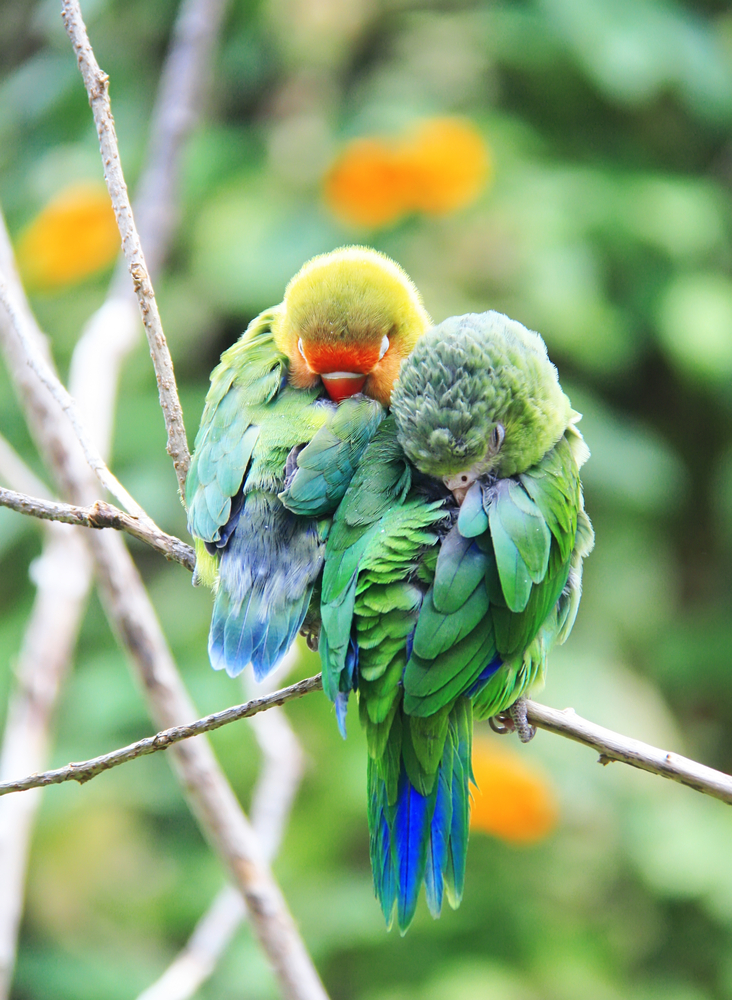
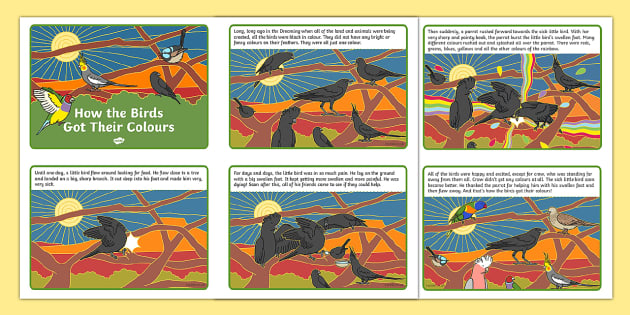
Long ago, the birds had no bright colors. Their feathers were gray, brown, or white. They could fly across the sky, sing in the trees, and build nests, but they did not shine like flowers or sunsets.
One morning, the birds heard that beautiful colors had appeared in the world. The sky held blue. The sun carried gold. Red flowers opened beside the path, and green leaves covered the trees.
The birds gathered to ask the Creator for colors of their own.
The Creator placed many colors before them. There was red like a warm flame, blue like the wide summer sky, yellow like sunlight, green like new leaves, and purple like evening clouds.
Each bird was told to choose with care.
The cardinal chose red. Its feathers became bright and strong, like berries and fire.
The blue jay chose blue. Its wings took on the color of the open sky.
The goldfinch chose yellow. Its feathers gleamed like sunlight on a summer morning.
The green bird chose the color of leaves and moss. It could hide among the branches and stay safe from danger.
Some birds chose more than one color. Others kept soft brown, gray, or black feathers. These colors helped them blend into tree bark, soil, and shadow.
One bird wanted every color at once. Another bird chose a color that helped it find a mate. A quiet bird chose colors that would keep it hidden. Each choice had a purpose.
When the birds looked at one another, they saw that no two birds were exactly alike. The Creator told them that beauty did not come from having the brightest feathers. Beauty came from using each gift well.
From that day forward, the birds carried their colors through the forests, fields, and skies. Their feathers reminded people that the world is made richer by many kinds of beauty.
What Is the Meaning of the Bird Color Story?
The story explains bird colors through imagination rather than biology. Its deeper meaning centers on identity, difference, choice, and belonging.
Children often understand the story as a lesson about being unique. A cardinal does not need to look like a blue jay. A crow does not need bright feathers to have value. Every bird has a role, and every color adds something to the living world.
The tale also teaches that appearance can serve a purpose. Bright feathers may help birds attract mates or recognize their own kind. Brown and gray feathers may help birds hide from predators. The story turns these real differences into a gentle moral lesson.
Main lessons in the story
- Every creature has its own beauty.
- Differences make the world more interesting.
- A gift should be used wisely.
- Being bright is not the same as being better.
- The right quality depends on the need.
- Nature works through many forms, colors, and voices.
The story can also teach children to avoid judging others by appearance. A bird with plain feathers may still be clever, brave, fast, or helpful.
Is “How the Birds Got Their Colors” a Native American Story?
Some versions are presented as Native American legends, but readers should be careful with that label. Native American nations have distinct languages, histories, beliefs, and storytelling traditions. A story described only as “Native American” may combine details from different sources or leave out the name of the nation that told it.
The title appears in many modern children’s retellings and folklore collections. However, similar bird-origin stories can have different cultural roots. A responsible retelling should identify a specific nation or source when that information is known.
It should not claim that one version represents all Indigenous peoples in the United States.
The safest way to describe the story is this:
“How the Birds Got Their Colors” is a widely circulated bird-origin tale with many versions. Some retellings connect it to Native American folklore, but the details and cultural source should be checked for each edition.
The Smithsonian’s National Museum of the American Indian explains why Native stories should be understood in their cultural context. A story may belong to a particular community, family, language, or ceremony. Removing it from that setting can change its meaning.
When sharing the story in a classroom or online, name the author, book, nation, or collection when available. Do not invent a tribal origin to make the story sound more authentic.
Why Do Birds Really Have Different Colors?
Bird colors come from feathers, light, diet, genes, and natural selection. The story gives a symbolic answer, while science explains the physical process.
Feathers contain tiny structures and chemical compounds that create color. The main sources include melanin, carotenoids, and structural color.
Melanin
Melanin creates many black, brown, gray, and reddish-brown shades. It can also make feathers stronger and more resistant to wear.
For example, dark feather tips may resist damage during flight. Melanin can also help a bird blend into bark, soil, or shadow.
Carotenoids
Carotenoids are yellow, orange, and red compounds that birds often get from food. Plants, seeds, fruits, and insects can provide these pigments.
Northern cardinals, for example, use carotenoid pigments to produce much of their red color. A bird’s diet and health can affect how strongly some colors appear.
Structural color
Blue feathers often do not contain a simple blue pigment. Instead, tiny structures in the feather scatter light in a way that appears blue to the human eye.
Blue jays are a well-known example. Their blue appearance comes largely from feather structure. If the feather structure is damaged, the color can look different.
Iridescence
Some birds appear to change color as they move. This effect is called iridescence. It comes from the way light reflects from layered feather structures.
Hummingbirds often show iridescent throat feathers. The color may look red, orange, green, or purple depending on the angle of the light.
The science does not replace the story. The story explains what colors can mean to people, while biology explains how feathers produce those colors.
Common Versions of the Story
The main idea stays similar, but the details can change.
The rainbow version
In this version, the colors come from a rainbow. Birds fly through the rainbow or collect colors from it. Each bird receives a different shade.
This version connects birds with the sky and makes the rainbow a bridge between the earth and the spirit world.
The paint or color bowl version
Here, a creator places colors in bowls, shells, leaves, or natural containers. The birds choose colors or ask to be painted.
This version makes each bird’s decision part of the lesson. A bird may choose a bright color for display, while another chooses a dull color for protection.
The late-arriving bird version
Some retellings include a bird that arrives after the other birds have chosen. The bird may receive the color that remains or may be given a special combination of colors.
This plot can explain why one bird looks unusual. It may also teach that being last does not mean being forgotten.
The contest version
In another type of story, birds compete to reach the sky, sun, or highest branch. Their actions during the contest affect their colors.
These stories are related in theme but may not be versions of the same tale. A title can be reused for different bird legends.

How to Explain the Story to Children
Start with the story’s central idea: birds have different colors because each one is special in its own way.
Then explain that the tale is a traditional-style explanation, not a scientific account. Children can enjoy both answers without treating one as a replacement for the other.
A simple explanation might be:
“The story says that birds received their colors as gifts. Science says that feathers get color from pigments, feather structures, genes, and food. The story teaches a lesson about beauty and difference, while science explains how color forms.”
Ask children questions that connect the story to observation:
- Which birds near you have red feathers?
- Which birds are mostly brown or gray?
- Why might a bird need to blend into its surroundings?
- Do all birds of the same kind look exactly alike?
- What color would you choose, and why?
- Can a bird be beautiful without bright feathers?
For a classroom activity, children can draw a bird and give it colors with a purpose. One color might help it hide. Another might help it find a mate. A third might help other birds recognize it.
Avoid telling children that a particular tribal nation created the story unless the source confirms it. Cultural accuracy matters, especially when presenting Indigenous stories.
How the Story Differs From Real Bird Biology
The story uses personification. That means birds think, speak, and make choices like people. This is common in folktales and helps children understand abstract ideas.
Real birds do not choose their colors from a palette. Feather color develops through inherited traits, feather structure, hormones, diet, age, wear, and environmental conditions.
| Story element | Symbolic meaning | Scientific explanation |
|---|---|---|
| A bird receives red feathers | Strength, warmth, or courage | Carotenoid pigments create red shades |
| A bird receives blue feathers | Sky, freedom, or distance | Feather structures scatter light |
| A bird keeps brown feathers | Humility or protection | Melanin and camouflage affect feather color |
| A bird has many colors | Individual identity | Multiple pigments and feather structures combine |
| Colors fade or change | Time and change | Wear, molt, age, light, and diet can affect appearance |
The story should not be used to teach that birds literally received colors in one shared event. It works best as folklore, literary symbolism, or a creative explanation of nature.
Common Mistakes When Sharing the Story
Several mistakes can weaken an otherwise thoughtful retelling.
Treating one retelling as the original
Many versions exist. Calling one version “the original” without evidence can mislead readers.
Better approach: identify the book, author, nation, or collection. If the source is unknown, say that the story has several versions.
Using “Native American” as a complete source
The term covers many distinct nations. It does not tell readers where a story came from.
Better approach: give the specific cultural source when documented. If it is not documented, use neutral wording.
Mixing unrelated legends
Bird color stories, bird creation stories, and stories about how birds gained flight may have different origins.
Better approach: keep each tale separate unless a reliable source connects them.
Presenting symbolism as biology
A cardinal’s red feathers may symbolize courage in a story, but the actual color comes from feather pigments.
Better approach: explain the literary lesson and the scientific process as two different kinds of knowledge.
Making one color “better” than another
Bright feathers often receive the most attention, but dull colors can help birds hide and survive.
Better approach: show that every color has value and purpose.
Frequently Asked Questions
What is the main idea of “How the Birds Got Their Colors”?
The main idea is that birds received different colors, and each color reflects beauty, identity, or purpose. The story teaches that differences should be respected.
Who wrote “How the Birds Got Their Colors”?
There is no single author for all versions. The title is used for different retellings, children’s books, and folklore adaptations. Check the edition for its author and stated source.
Is the story based on a real Native American legend?
Some editions describe the story as Native American, but the claim depends on the specific version. Readers should look for the named nation, source, translator, or collection.
Why are cardinals red and blue jays blue?
Cardinals get much of their red color from carotenoid pigments. Blue jays appear blue mainly because of the way tiny feather structures scatter light.
Can I use this story in a classroom?
Yes, but teach it with context. Explain that it is a folktale or retelling, name the source, and avoid presenting an unnamed version as a complete representation of Native American culture.
Conclusion: The Lasting Lesson of the Bird Color Story
“How the Birds Got Their Colors” remains popular because it gives a warm, memorable answer to a child’s question about nature. Its birds do more than wear bright feathers. They show that every creature can have a distinct role and kind of beauty.
The most accurate way to share the story is to separate folklore from science. Folklore gives the colors meaning. Biology explains how feathers create them. Together, they can encourage curiosity, respect for cultural sources, and closer attention to the birds of the United States.