Why Can’t Kittens Eat Adult Cat Food: Feeding Guide
Kittens can't rely on adult cat food because they need more calories, protein, vitamins, and minerals for rapid growth.
Understanding why can't kittens eat adult cat food helps you choose meals that support strong bones, healthy organs, brain development, and steady growth. Adult cat food is made for maintenance, while kittens need a carefully balanced diet for one of the fastest growth stages in a cat’s life. This guide explains the key differences, short-term risks, safe feeding tips, and when to ask a veterinarian for help.

Why can't kittens eat adult cat food?
The main reason why can't kittens eat adult cat food is that adult formulas may not provide enough nutrients for growth. Kittens are not simply small adult cats. Their bodies develop quickly, so they need more fuel per pound than mature cats.
A kitten’s diet must support:
• Rapid muscle growth
• Bone and tooth development
• Brain and eye health
• A strong immune system
• Healthy skin and coat
• Normal organ development
• High daily activity levels
Adult cat food is usually designed to maintain an adult cat’s body weight and health. It may meet the needs of a fully grown cat, but it may fall short for a growing kitten.
This does not mean adult cat food is poisonous. A healthy kitten that eats a small amount once will usually not become sick from it. The concern is regular feeding over days or weeks, especially when the food is labeled only for adult maintenance.
Think of it like building a house. An adult cat needs supplies for basic repairs and upkeep. A kitten needs extra supplies because its body is still building the structure.
How kitten food differs from adult cat food
Kitten food and adult cat food can look similar, but their nutrition profiles are often different. The most important differences involve calories, protein, fat, minerals, and certain fatty acids.
More calories for fast growth
Kittens use a great deal of energy. They play, explore, learn, and grow at the same time. Their small stomachs also limit how much they can eat at one sitting.
Kitten food is often more calorie-dense. This lets a kitten get more energy from a smaller meal. Adult food may leave a kitten full before it has consumed enough calories.
Higher levels of protein
Protein supplies the amino acids needed to build muscle, skin, organs, enzymes, and immune cells. Kittens usually need more protein than adult cats because their bodies are creating new tissue every day.
Cats also require specific amino acids, such as taurine and arginine. Complete kitten diets are formulated to provide these nutrients in suitable amounts.
More fat and essential fatty acids
Fat is a concentrated source of energy. It also helps the body absorb vitamins and supports healthy skin and fur.
Growing kittens need key fatty acids, including omega 3 fats such as DHA. DHA supports brain and eye development. Not every adult cat food provides the same amount needed for a growing kitten.
Carefully balanced calcium and phosphorus
Calcium and phosphorus help form bones and teeth. However, the amount and balance matter. Too little, too much, or an unsuitable ratio can interfere with normal skeletal development.
This is one reason homemade diets can be risky for kittens. Meat alone does not provide a complete balance of calcium, phosphorus, vitamins, and other nutrients.
Added vitamins and minerals
Kitten diets are designed to meet growth needs. They may contain adjusted levels of vitamin D, vitamin A, zinc, iron, and other nutrients.
The exact formula differs by brand. That is why checking the nutritional statement on the package is more useful than judging food by its ingredient list alone.

What can happen if kittens eat adult cat food?
The effects depend on the kitten’s age, health, diet, and how long it eats adult food. One small meal is usually not a major concern. Long-term use can create nutritional problems.
Possible concerns include:
• Slow or uneven growth
• Poor weight gain
• Low energy
• Weak muscle development
• Poor bone development
• A dull coat or dry skin
• Reduced immune support
• Digestive upset
• Nutrient deficiencies
A kitten may seem fine at first. Nutrition problems can develop quietly, especially when the kitten eats enough food to feel full but does not receive enough calories or growth nutrients.
This is another important part of why can't kittens eat adult cat food. The issue is not always an immediate stomach reaction. The bigger issue is that the diet may not meet the kitten’s needs over time.
Very young kittens are more vulnerable. Orphaned kittens, underweight kittens, and kittens with illness may need special formulas and feeding plans. These kittens should be guided by a veterinarian.
Is adult cat food ever safe for kittens?
Yes, but only when the label says it is complete and balanced for kittens, growth, or all life stages. Some foods are made for “all life stages,” which means they meet nutrient standards for both growth and adult maintenance.
Look for a nutritional statement that says the food is:
• Complete and balanced for growth
• Complete and balanced for kittens
• Complete and balanced for all life stages
A food labeled only for “adult maintenance” is not the best main diet for a kitten. It may be safe as a rare bite, but it should not replace kitten food.
The label matters more than words such as “premium,” “natural,” or “healthy.” Marketing terms do not prove that a food meets kitten growth requirements.
If you are unsure, take a photo of the package and ask your veterinarian. A veterinary nutrition professional can also help when a kitten has special health needs.

When can kittens switch to adult cat food?
Most cats can move to adult food around 12 months of age. Some large breeds mature more slowly and may benefit from kitten food for longer. Your veterinarian can help you choose the right timing based on body size, growth, and health.
A general guide looks like this:
• Birth to about 4 weeks: Mother’s milk or approved kitten milk replacer
• About 4 to 8 weeks: Gradual weaning onto wet or moistened kitten food
• About 8 weeks to 12 months: Complete kitten food
• Around 12 months: Gradual change to adult maintenance food
This schedule is not exact for every cat. A Maine Coon, for example, may continue growing well beyond its first birthday. A small cat may reach adult size sooner.
Do not switch food simply because your kitten looks grown. Cats can appear mature on the outside while their bones, muscles, and internal systems are still developing.
How much should a kitten eat?
The right amount depends on age, weight, activity, body condition, and the calorie level of the food. Kittens often need several small meals because they have small stomachs and high energy needs.
Many kittens do well with:
• Three to four meals each day when they are young
• Two to three meals each day as they approach adulthood
• Fresh water available at all times
Follow the feeding chart on the kitten food package as a starting point. Then watch body condition rather than relying on a number alone.
A healthy kitten should gain weight steadily. You should be able to feel the ribs with light pressure, but they should not be sharply visible. A very round belly, visible ribs, weakness, or poor appetite may signal a problem.
Never restrict a growing kitten’s food without professional advice. Weight control matters, but aggressive food restriction can harm development.

Wet food, dry food, or both?
Both wet and dry kitten food can work when the product is complete and balanced for growth. The best choice often depends on the kitten’s preference, health, and your routine.
Wet food offers more moisture. This can support hydration and may be easier for young kittens to chew. Dry food is convenient, easy to measure, and useful for some feeding routines.
A mixed plan can work well:
- Choose food labeled for kitten growth or all life stages.
- Measure the daily amount.
- Divide it into several meals.
- Keep fresh water nearby.
- Watch weight, stool quality, appetite, and energy.
Dry food is not automatically better for teeth. Regular kibble may provide limited dental benefit, but it does not replace dental care or veterinary teeth cleaning.
The same rule applies here: why can't kittens eat adult cat food is not about whether the food is wet or dry. It is about whether the nutrients meet growth needs.
What if a kitten accidentally eats adult cat food?
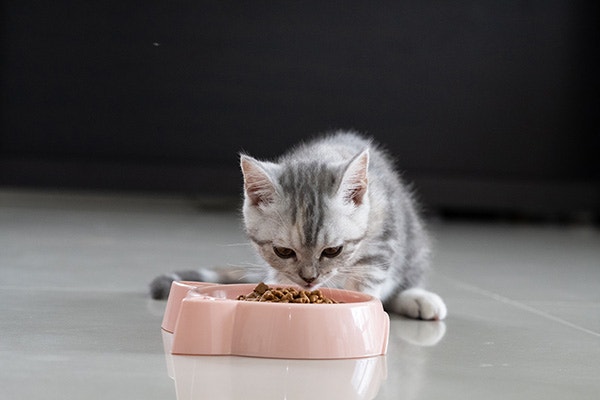
Do not panic if your kitten steals a few bites from an adult cat’s bowl. Most healthy kittens will be fine after a small amount.
Take these steps:
• Remove the adult food if possible.
• Offer the kitten’s normal food at the next meal.
• Provide clean water.
• Watch for vomiting, diarrhea, weakness, or loss of appetite.
• Call your veterinarian if symptoms are severe or continue.
Do not force the kitten to vomit. Also, do not give human medicine unless a veterinarian tells you to do so.
If the kitten eats adult food for several days, switch back to a complete kitten diet. A gradual change over about seven days can reduce stomach upset, although a faster change may be reasonable if the current food is clearly unsuitable.
A common household example is a kitten that climbs into an adult cat’s bowl. This is normal behavior. The practical solution is to feed pets in separate areas or use scheduled meals instead of leaving food out all day.
How to change a kitten’s food safely
A sudden food change can cause loose stool, gas, or vomiting. Kittens have sensitive digestive systems, so a slow transition is usually best.
Try this seven-day plan:
- Days 1 and 2: Feed about 75% of the old food and 25% of the new kitten food.
- Days 3 and 4: Use equal portions of both foods.
- Days 5 and 6: Feed about 25% old food and 75% new food.
- Day 7: Feed the new food only.
If your kitten develops repeated vomiting, severe diarrhea, refuses food, or becomes unusually quiet, contact a veterinarian. Very young kittens can become dehydrated or weak quickly.
A kitten that refuses all food for several hours deserves close attention. The younger and smaller the kitten, the sooner you should seek professional advice.
Common mistakes to avoid
Many feeding problems come from good intentions. People may share food, follow a label without reading its purpose, or assume a full bowl means a kitten is well nourished.
Avoid these mistakes:
• Feeding adult maintenance food as the main diet
• Giving cow’s milk to a weaned kitten
• Feeding meat alone without a balanced recipe
• Using dog food as a regular substitute
• Restricting food to prevent future weight gain
• Changing foods suddenly
• Ignoring poor growth or ongoing diarrhea
• Trusting marketing claims instead of the nutrition statement
Another mistake is assuming that expensive food is always better. Price can reflect ingredients, packaging, or brand costs. It does not guarantee that the food is right for a kitten.
Look for a reputable manufacturer, clear feeding directions, quality control information, and a complete-and-balanced statement for growth.
When to call a veterinarian
Contact a veterinarian if your kitten has any of these signs:
• Little or no weight gain
• Repeated vomiting
• Ongoing diarrhea
• Bloated or painful abdomen
• Weakness or unusual sleepiness
• Trouble chewing or swallowing
• Poor appetite
• Pale gums
• A dull coat
• Sudden changes in behavior
A veterinarian may check weight, hydration, teeth, stool, parasites, and overall development. Kittens commonly have intestinal parasites, and poor growth is not always caused by food.
Professional advice is especially important for premature kittens, orphaned kittens, kittens with chronic illness, and kittens recovering from infection or surgery.
Nutrition labels provide useful guidance, but they cannot diagnose a health problem. Food is one part of kitten care, along with vaccines, parasite prevention, safe housing, and regular health checks.
What experts recommend about kitten nutrition
Veterinary nutrition standards separate food for growth from food for adult maintenance. Organizations that set pet food nutrition guidelines recognize that kittens have different nutrient needs from mature cats.
Research and veterinary guidance support several basic points:
• Kittens need a complete and balanced growth diet.
• Energy needs are high during early development.
• Protein supports tissue growth and repair.
• Calcium and phosphorus must be properly balanced.
• DHA supports early brain and eye development.
• Feeding amounts should be adjusted as the kitten grows.
No single brand is perfect for every kitten. A food can be complete and balanced yet still fail to suit an individual cat’s taste or digestion. That is why monitoring the kitten is as important as reading the package.
For the most reliable advice, use guidance from your veterinarian and recognized pet nutrition standards. Be cautious with online claims that promise perfect results from one ingredient or feeding style.
Frequently asked questions
Why can't kittens eat adult cat food every day?
Adult cat food may not contain enough calories, protein, fat, and growth-focused nutrients for a developing kitten. A few bites are usually harmless, but adult maintenance food should not be the kitten’s regular diet.
Can kittens eat adult cat food in an emergency?
A healthy kitten can usually eat adult cat food for a short time if no kitten food is available. Replace it with a complete kitten or all-life-stages food as soon as possible, and contact a veterinarian if the kitten is very young, ill, or underweight.
Is all-life-stages cat food safe for kittens?
Yes, a food labeled complete and balanced for all life stages is generally made to meet kitten growth needs. Follow the feeding directions because kittens often need more food per pound than adult cats.
What age should kittens stop eating kitten food?
Many kittens switch to adult food at about 12 months. Large breeds or cats with special needs may need kitten food longer, so ask your veterinarian about the best timing.
Can adult cat food make a kitten sick?
A small amount usually does not make a healthy kitten sick. Regular feeding may lead to poor growth or nutrient problems, while sudden changes can cause vomiting or diarrhea.
Can kittens eat adult wet cat food?
Kittens can eat adult wet food occasionally, but it should not be their main diet unless the label also says it is suitable for growth or all life stages. Choose wet kitten food for regular meals.
Conclusion
Why can't kittens eat adult cat food? The simple answer is that kittens are growing rapidly and need more energy and carefully balanced nutrients than adult cats. Adult maintenance food is made for upkeep, not for building bones, muscles, organs, and a strong immune system.
Choose food labeled complete and balanced for kittens, growth, or all life stages. Feed small meals, monitor steady weight gain, and change foods slowly. If your kitten has poor appetite, vomiting, diarrhea, or low energy, contact a veterinarian promptly.
Give your kitten the best start by checking the nutrition statement, measuring meals, and scheduling regular health visits. Share your kitten-feeding questions or explore more trusted pet-care resources to make each meal count.