How Do Birds Migrate Over Oceans: Ocean Journey Explained
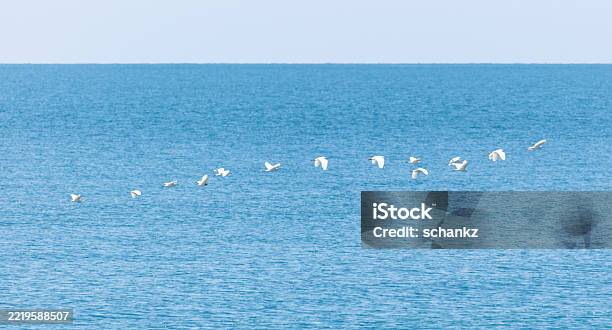
Birds migrate over oceans by combining stored body fat, strong flight muscles, favorable winds, and several navigation systems. Some birds fly nonstop for thousands of miles. Others follow coastlines, stop on islands, or pause on ships and offshore rocks. Along the U.S. coast, species such as ruby-throated hummingbirds, blackpoll warblers, and shorebirds cross parts of the Atlantic, Gulf of Mexico, and Pacific during migration.
The key to ocean migration is preparation. Before departure, birds eat more, gain fat, adjust their muscles, and wait for useful weather. During flight, they use the stars, the sun, Earth’s magnetic field, wind patterns, and learned landmarks to stay on course.

Why Do Birds Fly Across Oceans?
Birds cross oceans because the route can be safer, faster, or more efficient than traveling over land. A bird may avoid mountains, deserts, predators, cities, and other barriers by taking a direct ocean route.
Migration also helps birds reach areas with more food and better nesting conditions. For example, many birds that breed in Alaska and northern Canada travel south to Central America, South America, the Caribbean, or the southern United States. Returning north allows them to use long summer days and seasonal insect blooms.
Ocean crossings often form part of a larger annual route. A bird may cross the Gulf of Mexico in one flight, rest in the United States, and then continue north. Another species may travel along the Atlantic coast and use islands or coastal wetlands as stopover sites.
The main reasons include:
- Food: Insects, fish, nectar, seeds, and other foods may be more available at the destination.
- Breeding conditions: Northern summers offer long daylight and abundant food for raising young.
- Avoiding barriers: A direct route can sometimes reduce the distance around a large body of water.
- Seasonal survival: Birds leave areas when cold weather or food shortages make survival harder.
- Competition: Moving between regions can reduce competition for nesting sites and food.
Not every bird migrates in the same way. Some seabirds spend most of their lives over open water. Many songbirds cross only one major body of water. Other birds stay near land and make short flights between islands.
How Do Birds Prepare for an Ocean Crossing?
Birds prepare by building energy reserves, improving flight capacity, and timing departure with weather. The most important fuel is stored fat because fat provides more energy per unit of weight than protein or carbohydrates.
Before migration, many birds enter a period called hyperphagia, which means intense feeding. A bird may eat far more than usual and gain a large amount of body mass. The extra weight is not waste. It is fuel for flight.
A migrating bird may also change its body in other ways:
- Flight muscles can become larger and stronger.
- Some digestive organs can change in size as feeding needs change.
- Birds may reduce energy use during flight.
- Hormonal changes can trigger migratory restlessness.
- Birds may select foods with high energy value, such as berries, insects, or nectar.
Fat is the main fuel
Fat stores support wingbeats for long periods. They also help birds survive when wind slows progress or when the trip takes longer than expected.
The ruby-throated hummingbird is a well-known example. Some ruby-throated hummingbirds cross the Gulf of Mexico in a nonstop flight of roughly 500 miles. Many birds add about 25% to 40% of their body mass as fat before this trip, although the exact amount varies with wind, route, and individual condition.
A bird cannot simply keep adding weight without limits. More fat gives more energy, but it also makes flight harder. The bird must balance fuel against the extra effort needed to carry that fuel.
Weather helps set the departure time
Birds often wait for winds that support their direction of travel. A tailwind can reduce the energy needed for flight and shorten the crossing. A headwind can increase the cost and force a bird to land early or change course.
Weather affects more than wind. Birds also respond to storms, visibility, temperature, pressure patterns, and rain. A calm day is not always the best day. A steady tailwind may be more useful than still air.
Researchers use weather records and tracking data to study these choices. The data show that many migrating birds adjust departure time to use favorable winds, but birds do not always make perfect choices. Weather can change quickly over the ocean.
How Do Birds Navigate Over Open Water?
Birds use several navigation tools at once. No single system explains every ocean crossing. The importance of each cue depends on the species, age, route, weather, and stage of migration.
The sun helps birds keep direction
During daylight, birds can use the sun as a compass. Because the sun moves across the sky, birds need an internal time system to use it correctly. Experiments with migratory birds have shown that changing the light-dark cycle can shift their directional choices.
The sun may help a bird maintain a broad heading. It does not provide a complete map of the bird’s location.
Stars guide nighttime migrants
Many small songbirds migrate at night. On clear nights, they can use star patterns to orient themselves. Young birds learn the general pattern of the night sky during an early learning period.
The North Star can provide a stable reference in the Northern Hemisphere. Birds do not need to identify stars in the same way a human stargazer does. They can learn the rotation pattern of the sky and use it as a directional guide.
Cloud cover can block the stars. When that happens, birds may shift to other cues, such as Earth’s magnetic field.
Earth’s magnetic field acts like a compass
Birds can sense aspects of Earth’s magnetic field. This ability, called magnetoreception, can help them maintain a direction when clouds hide the sun or stars.
Research suggests that birds may use more than one magnetic mechanism. Some evidence links magnetic sensing to light-sensitive proteins in the eye. Other research points to magnetic particles in tissues. The exact process may differ among species and remains an active research topic.
Magnetic sensing is best understood as one part of a larger navigation system. It does not mean that a bird has a simple internal GPS unit. A bird’s course can change when magnetic conditions, wind, landmarks, or learned cues change.
Smells and landmarks may provide a map
Some birds appear to use odors to recognize regions and help determine where they are. Wind can carry chemical information from land and vegetation over water. Birds may learn odor patterns near their breeding or wintering areas.
Landmarks also matter when they are visible. Coastlines, islands, river mouths, and mountain ranges can guide birds near shore. Over the middle of an ocean, however, visual landmarks may disappear for hours or days.
Young birds have both inherited and learned information
Some migratory behavior is inherited. A young bird may know a general direction and season without following an experienced adult.
Other details are learned. Older birds can improve route choices, stopover timing, and responses to weather. In species that migrate in family groups, young birds may benefit from traveling with adults. In other species, young birds make long journeys alone.
Do Birds Fly Nonstop Across Oceans?
Yes. Some birds fly nonstop across oceans, but many do not. The route depends on the species, body size, wing shape, fuel stores, wind, and available places to rest.
The bar-tailed godwit is one of the best-documented long-distance flyers. Birds from Alaska have been tracked flying nonstop to New Zealand, a journey of about 7,000 miles, or roughly 11,000 kilometers. The trip can take around a week, depending on conditions.
The bird completes this journey by carrying large fat stores and using favorable winds. During the flight, it cannot stop to feed or drink. This makes the crossing a demanding test of energy use and weather planning.
Some blackpoll warblers also cross the Atlantic during fall migration. Tracking and isotope research support long ocean journeys from northeastern North America toward the Caribbean and northern South America. The exact route can vary, and not every individual takes the same path.
Other birds use shorter crossings:
- Ruby-throated hummingbirds may cross the Gulf of Mexico nonstop.
- Shorebirds may fly from the Atlantic coast to the Caribbean or South America.
- Seabirds may spend months over open water and use islands or remote coasts to rest.
- Waterfowl may cross bays, gulfs, and sections of ocean while using coastal wetlands between flights.
A bird’s body size does not tell the whole story. A small bird with a high fat load and efficient flight can travel farther than expected. Wing shape also matters. Long, narrow wings are common in birds adapted to efficient soaring or sustained flight.
How Do Birds Breathe, Sleep, and Rest During Ocean Flights?
Birds breathe continuously during flight with the help of lungs and air sacs. Their respiratory system moves air through the lungs in a highly efficient pattern. This allows birds to extract oxygen during both inhalation and exhalation.
A bird cannot breathe underwater, so it must remain airborne or land on a safe surface. Most nonstop migrants do not feed or drink during the longest part of an ocean crossing. They rely on stored fuel and water produced during metabolism.
Some birds may sleep briefly while flying, especially seabirds and birds that travel long distances. Research on frigatebirds found that they can sleep for short periods during flight, including brief sleep in one brain hemisphere. This does not mean all migrating birds use the same sleep pattern.
Many birds avoid the need for long ocean flights by using stopover sites. Islands, coastal marshes, beaches, mudflats, and estuaries provide food and rest. Losing these places can make migration much harder even when the open-water part of the route remains unchanged.
A ship is not a dependable stopover. Birds may land on vessels during bad weather, but ships move, offer little food, and can expose birds to exhaustion or collision. A bird landing on a boat may be resting because it is stressed or depleted rather than because it has found a planned stop.

How Do Wind and Weather Change Migration Routes?
Wind can determine whether an ocean crossing is possible, efficient, or dangerous. Birds tend to benefit from tailwinds that push them toward their destination. They may delay departure when strong headwinds or storms are likely.
A bird does not always fly in a straight line over water. It may choose a route that looks longer on a map but offers better winds. This is called an energy-saving or wind-assisted strategy.
Common weather effects
| Condition | Likely effect on migration |
|---|---|
| Tailwind | Increases ground speed and reduces energy cost |
| Headwind | Slows progress and increases energy use |
| Crosswind | Pushes birds off course; birds may correct their heading |
| Heavy rain | Reduces visibility and can wet feathers |
| Storms | May force detours, delays, or emergency landings |
| Fog or low cloud | Can hide landmarks and disrupt visual navigation |
| Calm air | May require more powered flight |
Birds can sometimes use rising air near weather systems or coastlines. Seabirds often rely on wind and wave patterns to reduce the cost of flight. Some species soar for long periods instead of flapping continuously.
Climate and weather change can affect migration timing. A shift in wind patterns, storms, ocean conditions, or food availability may change the best departure date. Long-term effects differ by species and route, so one result should not be applied to every bird.
What Happens When Birds Run Out of Energy?
A bird that runs out of energy over open water may be unable to continue flying. It may land on the water, where many land birds cannot survive for long. Rough seas, cold temperatures, predators, and wet feathers can quickly become dangerous.
Birds reduce this risk in several ways:
- They build fat stores before departure.
- They wait for useful winds.
- They choose routes that include islands or coastal stopovers when possible.
- They adjust their speed and direction during the flight.
- They use efficient flight styles, including gliding or soaring.
- They may delay migration if conditions are poor.
Migration is still risky. Young birds often face higher risks because they have less route experience. Storms can push birds off course, and artificial lights near coasts can attract nocturnal migrants into dangerous areas.
For people in the United States, practical help is simple. During spring and fall migration, turning off unnecessary outdoor lights at night can reduce attraction and collision risk. Window treatments, bird-safe glass patterns, and keeping cats indoors also reduce hazards near migration routes.
Which Birds Migrate Over Oceans?
Many bird groups cross oceans or large sections of open water. The species below show different strategies rather than one standard method.
| Bird or group | Ocean route or behavior | Main strategy |
|---|---|---|
| Bar-tailed godwit | Alaska to New Zealand | Long nonstop flight |
| Ruby-throated hummingbird | Across the Gulf of Mexico | Small bird with high fuel reserves |
| Blackpoll warbler | North America toward the Caribbean and South America | Long transoceanic migration by some birds |
| Arctic tern | Between Arctic and Antarctic regions | Very long annual route with many marine segments |
| Shearwaters and albatrosses | Large areas of the Pacific or Atlantic | Soaring and wind use over open water |
| Shorebirds | Atlantic coast, Caribbean, and South America | Long flights linked to coastal stopovers |
| Waterfowl | Bays, gulfs, and coastal waters | Mixed land-and-water routes |
These examples should not be treated as fixed rules. Populations within one species may use different routes. Individual birds can also change routes from year to year in response to age, wind, food, body condition, and storms.
How Do Scientists Know Where Birds Go?
Researchers track migration with several methods. Each method answers different questions and has limits.
Tracking devices
Light-level geolocators estimate location from sunrise and sunset times. They are small enough for some birds to carry, but they usually must be recovered before researchers can download the data.
GPS and satellite transmitters can provide more direct location data. They are useful for larger birds, seabirds, and species that can carry the device safely. Device weight, attachment method, battery life, and sample size affect the results.
Radar
Weather radar can detect large movements of birds at night. Radar helps researchers estimate migration intensity, direction, altitude, and timing across broad areas.
Radar cannot always identify the species involved. A radar signal may represent many birds moving together, so researchers often combine radar with field surveys and tracking data.
Stable isotopes and genetic evidence
Stable isotopes in feathers can provide clues about where a bird lived when the feather grew. Genetic studies can help connect populations with breeding and wintering regions.
These methods are valuable, but they are not always precise enough to identify an exact route for one bird. Researchers usually gain the strongest picture by combining several types of evidence.
Direct observation and recovery records
Bird banding, sightings, and recovered bands have helped document migration for more than a century. These records remain useful, especially when combined with modern tracking.
No method is perfect. A tracking study may involve only a small number of birds. A route found in one population may not apply to another population of the same species.
What Threatens Birds During Ocean Migration?
The greatest risks often occur at departure and arrival points, not only over the middle of the ocean. Birds need healthy wetlands, beaches, forests, grasslands, islands, and coastal habitats to rest and feed.
Major threats include:
- Storms and extreme weather
- Habitat loss at stopover sites
- Artificial light at night
- Collisions with windows, towers, and other structures
- Offshore development in important flight areas
- Oil pollution and plastic pollution
- Predators near exhausted birds
- Climate-driven changes in food and weather timing
- Invasive predators on nesting or stopover islands
Birds that migrate across oceans may be especially dependent on a few key locations. If one coastal wetland or island disappears, the loss can affect thousands of birds that use the same route.
People can reduce local risks by keeping cats indoors, making windows visible to birds, using outdoor lights only when needed, and protecting native plants that provide food. During migration seasons, these steps can help birds before and after the most difficult part of the journey.
Common Misconceptions About Ocean Migration
“All birds fly in a straight line.”
They do not. Birds may follow wind, coastlines, islands, food areas, or inherited routes. The most efficient path is not always the shortest path on a map.
“Birds always migrate in large flocks.”
Some do, but many migrate alone or in small groups. Several songbirds cross open water alone at night. Large flocks are common in some waterfowl and shorebirds but not universal.
“Birds can always stop on an island.”
Many routes have few safe landing places. Some islands lack food, fresh water, or shelter. A bird may pass an island if landing there would not provide enough benefit.
“A bird that lands on a ship has chosen a safe rest stop.”
A ship can offer a temporary surface, but it is not a natural stopover. Birds may land because they are exhausted or caught in bad weather.
“Magnetic navigation works like GPS.”
Birds can sense magnetic information, but the system is not the same as a human navigation device. Birds combine magnetic cues with the sun, stars, smells, landmarks, wind, and memory.
Key Takeaways
- Birds migrate over oceans by combining fat reserves, strong flight muscles, efficient movement, and favorable weather.
- Some species fly nonstop for thousands of miles, while others use islands and coastal stopovers.
- Birds navigate with the sun, stars, Earth’s magnetic field, odors, landmarks, memory, and wind.
- Bar-tailed godwits, ruby-throated hummingbirds, blackpoll warblers, and seabirds show different ocean-crossing strategies.
- Weather can change the timing, direction, and energy cost of a migration.
- Healthy wetlands, islands, beaches, and coastal forests are essential to successful migration.
- Turning off unnecessary lights and reducing window collisions can help migrating birds in the United States.
Frequently Asked Questions
Can birds fly across the Atlantic Ocean?
Yes. Some birds cross the Atlantic during migration. Blackpoll warblers, shorebirds, seabirds, and other species may travel between North America, the Caribbean, South America, Europe, or Africa. Routes vary by species and population.
Do birds drink water while flying over the ocean?
Most land birds on nonstop ocean crossings do not stop to drink. They rely on water produced during metabolism and on body reserves. Seabirds may drink seawater because special salt glands help remove excess salt, but land birds generally cannot use seawater safely.
How long can a bird fly without stopping?
The time varies widely. Some birds fly for a few hours, while bar-tailed godwits have been tracked flying for about a week during long nonstop journeys. Wind, body size, fat stores, wing shape, and weather all affect flight time.
Do baby birds know how to migrate?
Some migratory direction and timing are inherited. Other skills develop through experience. In species where young birds travel alone, they may use inherited compass information and environmental cues. In species that travel with adults, young birds can learn parts of the route from older birds.
Can birds get lost over the ocean?
Yes. Storms, strong crosswinds, artificial lights, poor visibility, and inexperience can push birds off course. Many can correct their direction, but some arrive at the wrong coast or become too exhausted to continue.
How can people help migrating birds?
Use window markers, turn off unnecessary outdoor lights at night, keep cats indoors, protect native plants, and support wetlands and coastal habitats. During migration, reducing light and glass hazards near homes and buildings can make a direct difference.
Sources and Further Reading
- Cornell Lab of Ornithology: Migration
- U.S. Geological Survey: Bird Migration
- National Park Service: Migratory Birds
- Smithsonian’s National Zoo: Migratory Birds
- NOAA: Weather and Bird Migration
- Gill et al., “Extreme endurance flights by landbirds crossing the Pacific Ocean”
- Egevang et al., tracking long-distance migration in Arctic terns
Conclusion
Birds cross oceans through a careful balance of fuel, flight skill, navigation, and weather. Some complete remarkable nonstop journeys, while others depend on islands, ships only in emergencies, and coastal wetlands for rest. Their routes are not simple lines across a map. They are flexible decisions shaped by wind, energy, memory, and survival.
For readers in the United States, protecting coastal habitat and reducing nighttime light and window hazards can help birds complete these journeys. A safe migration begins long before a bird reaches the open ocean.