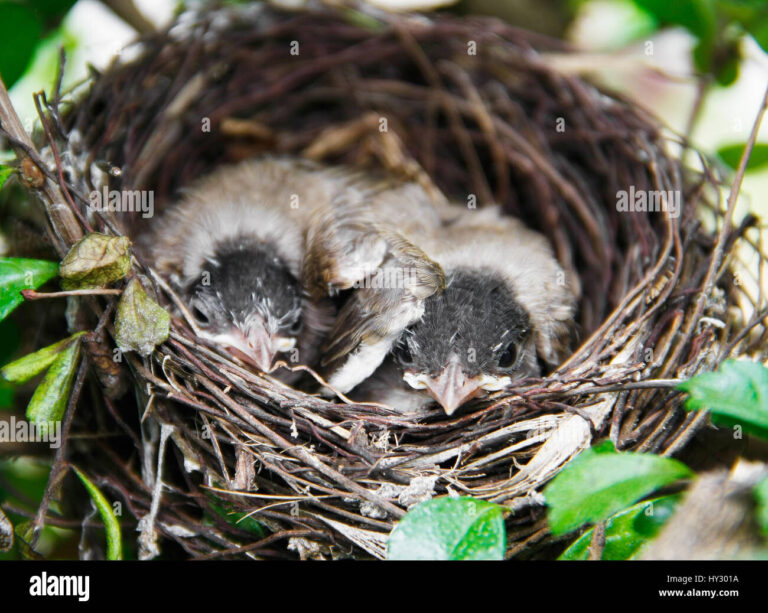
How Do Migrating Birds Know Where To Go: Navigation Secrets
Migrating birds find their way by using several systems at once: an inherited sense of direction, the Sun and stars, Earth’s magnetic field, landmarks, smells, weather patterns, and memory. Young birds may begin with a built-in travel program. Older birds improve their routes through experience and social learning.
Introduction
Each year, birds across the United States make journeys that can span a few miles or thousands of miles. A Ruby-throated Hummingbird may cross the Gulf of Mexico. Arctic Terns seen in North America may travel between the Arctic and Antarctica. Even a small warbler can cross forests, deserts, and open water during migration.
These birds do not use a map, road signs, or a single “compass.” Instead, they combine many clues. Their brains and senses help them choose a direction, stay on course, recognize places, and adjust when wind or weather changes.
The full process is still being studied. Scientists understand many parts of bird navigation, but some details—especially how birds sense magnetic fields—remain under active research.

The Short Answer: Birds Use a Built-In Compass and Learned Maps
Bird migration depends on two related skills:
- Compass sense: knowing which direction to travel.
- Navigation: knowing where the bird is and how to reach a specific destination.
A young bird may know to fly generally south in fall without knowing the exact location of its winter range. As it ages, it can learn landmarks, stopover sites, smells, wind patterns, and other details that make its route more precise.
Birds often combine these tools:
| Navigation clue | What it helps birds do |
|---|---|
| Earth’s magnetic field | Set a general direction and possibly estimate location |
| Sun | Maintain a compass direction during the day |
| Stars | Navigate at night |
| Landmarks | Recognize coastlines, rivers, mountains, and other features |
| Smells | Identify areas and possibly guide long-distance travel |
| Weather and wind | Save energy and adjust the route |
| Memory and social learning | Repeat successful routes and stopovers |
This layered system helps explain why a bird can continue traveling even when clouds hide the Sun or when familiar landmarks disappear.

How Birds Sense Earth’s Magnetic Field
Birds can detect Earth’s magnetic field and use it as a compass. This ability is called magnetoreception. It helps many migratory birds maintain a direction when they cannot see the ground or sky clearly.
Earth’s magnetic field varies across the planet. Its lines are generally stronger in some places and weaker in others. The field also changes in angle as it reaches Earth’s surface. Birds may use these changes as part of a broad “map sense.”
Scientists have found that birds can respond to changes in magnetic conditions. However, the exact biological system is not fully settled. Research has focused on two leading ideas:
-
Light-sensitive proteins in the eye
Proteins called cryptochromes may help birds detect magnetic direction through light-dependent chemical reactions. This could give birds a visual sense of magnetic fields. -
Tiny magnetic particles in the body
Some studies have examined iron-containing particles that might respond to magnetic fields. Their precise role in bird navigation remains under investigation.
The magnetic compass used by many birds also appears to be different from a normal compass. It is often based on the angle of magnetic field lines, not simply on magnetic north and south. This type of compass is called an inclination compass.
Why the magnetic compass matters
A magnetic compass works when the landscape is hidden. It can help a bird travel over:
- The Atlantic Ocean
- The Gulf of Mexico
- Large forests
- Snow-covered ground
- Cloudy regions
- Areas altered by storms or wildfires
The compass may provide direction, but it does not always tell the bird the exact route. Birds still need other clues to reach a particular breeding or wintering site.

How the Sun Helps Birds Stay on Course
Many birds use the Sun as a compass. The challenge is that the Sun appears to move across the sky during the day. A bird must account for this movement or its direction would slowly drift.
Birds solve this problem with a time-compensated sun compass. Their internal body clock helps them understand the Sun’s position at different times of day. For example, the Sun’s position in the morning means something different from its position in the afternoon.
This system has been demonstrated in controlled studies of migratory birds. When researchers shift a bird’s light-dark schedule, the bird may change its chosen direction. That result shows that the bird uses both sunlight and time.
Birds may also use:
- The pattern of light near sunrise and sunset
- The direction of shadows
- Polarized light, which remains visible when the Sun is low or partly hidden
- Changes in light color across the sky
The Sun compass is useful during daylight, but it has limits. Clouds, storms, forests, and nighttime travel can block direct sunlight. That is why birds use several navigation systems instead of relying on one clue.

How Birds Navigate at Night by Using the Stars
Many songbirds migrate at night. Night travel can reduce heat stress and help birds avoid some daytime predators. It also creates a navigation problem: birds cannot use daytime landmarks and may have limited visibility below them.
The stars provide a solution. Young birds can learn star patterns while they are still developing their migration skills. The rotation of the night sky gives them a stable reference for direction.
The North Star, or Polaris, is especially useful in the Northern Hemisphere because it appears close to true north. Birds do not need to identify many individual stars. They can learn the pattern of the night sky and use the movement of stars around the celestial pole.
Research on migratory birds has shown that:
- Birds can orient under artificial star patterns.
- Young birds need exposure to a natural night sky to learn celestial direction.
- Cloud cover can force birds to switch to other cues, such as Earth’s magnetic field.
Light pollution can interfere with this system. Bright city lights may attract or disorient migrating birds, especially during low clouds or fog. This is one reason programs such as Lights Out encourage buildings to reduce unnecessary lights during peak migration periods.
How Landmarks and Memory Guide Migrating Birds
Landmarks help birds move from a broad direction to a specific destination. A bird may recognize a coastline, river, mountain range, island, valley, or forest edge. These features act like visible lines on a natural map.
Older birds often navigate more accurately than first-time migrants because they have learned the landscape. A bird that has already used a route may remember:
- Productive feeding sites
- Safe resting areas
- Water sources
- Mountain passes
- Coastlines
- Nesting territories
- Places where storms often develop
This experience can be especially important during spring migration. Many birds return to the same breeding region, and some return to the same territory or nest area.
Young birds, however, can travel successfully without a parent guiding them. In many species, juveniles migrate alone. Their first journey depends more on inherited direction, timing, and distance rules. They gain more detailed route knowledge during later migrations.
This creates a useful division:
- Inherited behavior helps a young bird begin the journey.
- Learning and memory help an older bird refine the journey.

How Smell May Help Birds Find Their Route
Smell plays a larger role in bird navigation than many people once thought. Birds can detect and remember complex odors in the air. These odors may come from plants, soil, water, forests, or ocean environments.
Some researchers propose that birds build an olfactory map. In this model, a bird learns the smell pattern of different regions. When wind carries those odors, the bird can use them to estimate where it is.
This idea may help explain how some birds navigate over open water, where few visual landmarks exist. Ocean regions have different chemical and biological smells. Coastal birds may also use familiar scents to identify shorelines and home areas.
The role of smell varies by species. It is not proven to be the main navigation tool for every migrating bird. Still, experiments show that blocking or changing a bird’s sense of smell can affect its orientation in some situations.
Smell is best viewed as one part of a larger system. Birds can combine odor with magnetic information, wind direction, visual cues, and memory.
How Birds Learn Migration Routes
Bird migration comes from both genes and experience. The balance differs among species.
Some migration traits are strongly inherited:
- The season when migration begins
- The general direction
- The distance to travel
- The time spent migrating
- The tendency to fly at night or during the day
Scientists often study this behavior through zugunruhe, a German term for the restless activity migratory birds show before travel. In captivity, birds may hop or flutter in the direction they would normally migrate.
Other traits are learned:
- The best stopover sites
- Local landmarks
- Weather patterns
- Food sources
- The exact route to a breeding territory
- Avoidance of dangerous areas
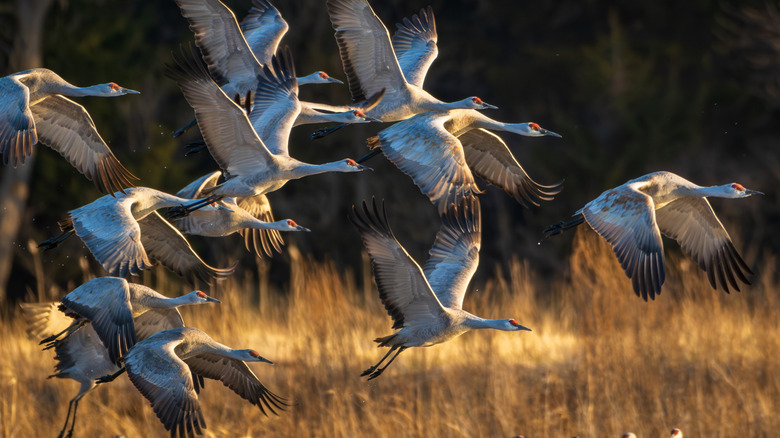
Social learning can also matter. In species that migrate in family groups, young birds may follow older birds. Cranes, geese, swans, and some seabirds can gain route information from experienced members of the group.
Still, not all migration is taught. A young bird that leaves alone is not simply guessing. Its genes provide a starting plan, while later experience improves accuracy.
How Weather and Wind Change a Bird’s Route
Migration is not a straight line drawn across a map. Birds adjust their route to match wind, storms, temperature, and food supply.
A tailwind can reduce the energy needed for flight. A headwind can slow a bird and increase energy use. Birds may wait for favorable conditions, change altitude, or take a longer route to avoid severe weather.
Some birds use weather systems to travel farther with less effort. Large soaring birds may rely on rising warm air over land. Small songbirds may take advantage of winds that carry them across parts of the Gulf of Mexico.
Weather also affects migration timing. Birds may delay departure when:
- Strong headwinds are present
- Heavy rain is expected
- Temperatures are unusually low
- Food is scarce at the next stop
- A storm blocks the route
Migration forecasts, such as those produced by weather and bird monitoring groups, can show how wind affects movements across the United States. These forecasts help researchers and birders understand why large numbers of birds may appear in one area after a weather front.
Why Birds Return to the Same Places
Many birds show site fidelity, which means they return to the same breeding or wintering areas each year. Some species also return to the same territory or nesting site.
Several factors may support this behavior:
- A reliable food supply
- Familiar shelter
- A suitable nest site
- Successful breeding in a past year
- Memory of the route
- An inherited tendency to return to a region
For example, a bird that survived and raised young in a certain wetland has a strong reason to return there. Returning to a known site may be safer than searching for a new one.
But birds do not always return to exactly the same place. Young birds may explore. Habitat loss, drought, wildfire, storms, and changes in food can also force birds to adjust their route or destination.
Migration is therefore both stable and flexible. The basic route may remain consistent, but the bird can respond to changing conditions.
Can Birds Get Lost During Migration?
Yes. Birds can become disoriented or take a less efficient route. This does not mean their navigation system has failed completely.
- Heavy storms
- Strong crosswinds
- Fog
- Artificial light
- Magnetic disturbances
- Habitat destruction
- Loss of familiar landmarks
- Extreme heat or cold
- Exhaustion or lack of food
A bird may arrive outside its normal range after being pushed by wind. This is called vagrancy when the bird appears far from its usual range. Such sightings can attract birdwatchers, but the event may be stressful or dangerous for the bird.
Young birds are often more vulnerable because they have less route experience. Adults may also make errors when conditions change quickly.
Birds can often correct their course. They may use magnetic cues, the Sun, stars, landmarks, smell, or wind to return toward the proper route. The more clues available, the better their chance of recovery.
Why City Lights and Buildings Can Harm Migrating Birds
Artificial light can disrupt nocturnal migration. Bright lights may draw birds toward cities or cause them to circle buildings. Fog and low clouds can make the problem worse by reflecting light into the flight path.
Birds that become trapped in a lighted area may:
- Lose energy while circling
- Strike windows
- Delay migration
- Become exposed to predators
- Die from collisions or exhaustion
Bird-friendly steps can reduce these risks in the United States:
- Turn off unnecessary lights during migration seasons.
- Close blinds at night.
- Use exterior lights only when needed.
- Point lights downward.
- Add window patterns that birds can see.
- Keep indoor plants away from bright windows.
- Support local Lights Out programs.
The exact migration season varies by region. In much of the United States, spring and fall are the key periods, but coastal and southern areas may see migration at different times.
A Simple Example: How a Bird Might Navigate Across the United States
Consider a hypothetical songbird traveling from the northeastern United States to Central America.
- Inherited direction: The bird begins with a seasonal urge to fly generally south.
- Magnetic compass: It maintains a broad heading when clouds hide the ground.
- Sun or stars: It checks direction during the day or night.
- Wind: It changes altitude or angle to reduce the effect of crosswinds.
- Landmarks: It follows coastlines, rivers, or mountain features when visible.
- Smell: It may detect regional odors from forests, wetlands, or shorelines.
- Memory: An adult recognizes productive stopover areas from past journeys.
- Adjustment: It pauses or changes course when storms or food shortages create danger.
This example does not mean every species uses each cue in the same way. Navigation systems differ among birds, and scientists continue to study those differences.
What Scientists Still Do Not Know
Scientists have strong evidence that birds use magnetic, solar, celestial, visual, chemical, and social information. But several questions remain open.
Researchers are still working to explain:
- The exact organs or cells that detect magnetic fields
- How magnetic information is processed in the brain
- How birds combine conflicting clues
- How much each sense matters for different species
- How climate change will alter traditional routes
- How young birds learn precise destinations
- Why some species adapt quickly while others decline
The phrase “bird navigation” can sound like one simple ability. In reality, it is a group of related skills. A bird must choose when to leave, set a direction, estimate its position, manage energy, find food, and recognize a safe destination.
Common Misconceptions About Bird Migration
Birds follow one permanent road
Most birds do not follow a single narrow route. They use broad migration corridors and can shift their path because of weather, food, or landscape changes.
Birds always follow older birds
Some young birds migrate with adults, but many species migrate alone. In those cases, inherited behavior provides much of the first route.
Birds only use the Sun
Birds can use sunlight, but they also rely on Earth’s magnetic field, stars, landmarks, smell, wind, and memory.
A bird’s magnetic sense is fully understood
Scientists agree that magnetic information affects bird orientation. The exact biological mechanism is still being studied.
Migration is only about instinct
Instinct starts the process, but learning and memory can strongly improve route choice and destination accuracy.
How to Help Migrating Birds in Your Area
You can support migration without handling or interfering with wild birds.
Practical steps include:
- Keep cats indoors, especially during migration.
- Make windows visible with exterior screens, decals, or closely spaced patterns.
- Turn off unnecessary lights at night.
- Plant native trees, shrubs, and flowers.
- Avoid pesticides when safer alternatives are available.
- Provide clean water in a safe location.
- Keep bird feeders clean to reduce disease spread.
- Report unusual bird sightings through a reliable bird-monitoring program.
Never chase, capture, feed, or move a wild migratory bird unless a licensed wildlife professional tells you to do so. If you find an injured bird, contact a permitted wildlife rehabilitator.
Frequently Asked Questions
Do birds know where they are going before they hatch?
Some migration traits are inherited, including direction, timing, and distance. A young bird may not have a detailed map before its first journey, but its genes can provide a basic travel program.
How do birds migrate over the ocean?
They may use Earth’s magnetic field, the Sun, stars, wind, smell, and memory. Some birds also rest on islands, ships, or coastal areas when those locations are available.
Do birds migrate in a straight line?
Usually not. Wind, storms, mountains, coastlines, food, and safe resting sites can make the route curve or change.
Can birds use GPS?
Birds do not use human-made GPS satellites in the way people do. Their navigation comes from natural signals, including magnetic fields, sunlight, stars, odors, landmarks, and memory.
How do birds know when to migrate?
Day length is a major seasonal signal for many species. Temperature, food availability, hormones, weather, and internal biological rhythms also affect migration timing.
Why do birds fly south in the fall?
Many North American birds fly south because winter reduces access to insects, seeds, fruit, or open water in their breeding areas. They return north in spring when food and nesting conditions improve.
Key Takeaways
- Birds use several navigation systems rather than one guide.
- Earth’s magnetic field may provide both compass and map information.
- The Sun and stars help birds maintain direction.
- Landmarks, smell, weather, and memory improve route accuracy.
- Young birds often begin with inherited directions.
- Adults can refine routes through experience and social learning.
- Storms, city lights, habitat loss, and window collisions can disrupt migration.
- Bird navigation is well documented, but the exact magnetic-sensing mechanism remains under study.
Conclusion
Migrating birds know where to go through a remarkable mix of inherited behavior, sensory cues, memory, and adjustment. A young bird may start with a simple seasonal direction, while an older bird can use a rich mental map of winds, smells, landmarks, and safe stopover sites.
The best answer is not that birds use one compass. They use a flexible system that works across forests, cities, coastlines, deserts, and open water. Protecting dark skies, safe windows, native habitat, and food-rich stopover sites helps that system continue to work for birds across the United States.