How Do Birds Travel: Migration And Flight Explained
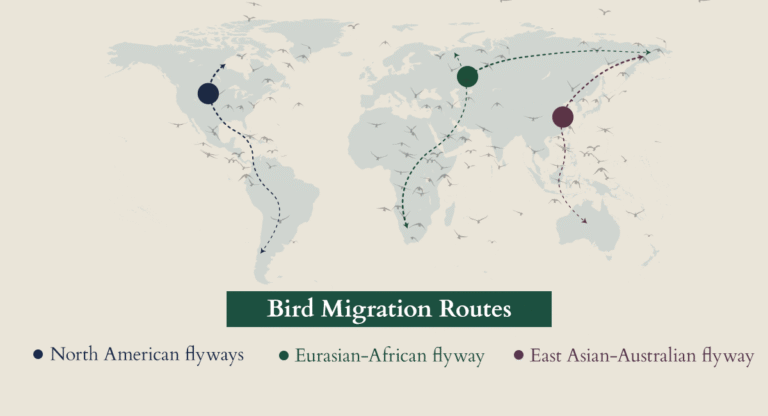
Birds in the United States travel in several ways. Most move by flying, but birds also walk, run, hop, swim, climb, and glide. Some travel only a few yards to find food, while migratory birds may cross the country or fly between North America and Central or South America.
Bird travel depends on the species, season, habitat, weather, food supply, and stage of life. Birds use wings for powered flight, air currents for gliding, and several natural signals to find their way. Their travel is not random. It is shaped by instinct, learned behavior, body design, and changing environmental conditions.

How Do Birds Travel?
Birds travel through the air with powered flight, gliding, soaring, or hovering. On land and water, they use walking, running, hopping, swimming, and diving. A bird may use more than one method during the same trip.
For example, a Canada goose may fly from a feeding field to a nearby pond, walk along the shore, and swim across the water. A ruby-throated hummingbird may hover while feeding, then fly hundreds of miles during migration. A peregrine falcon may flap to gain height and then dive at high speed.
The main forms of bird travel are:
- Flapping flight: The bird beats its wings to create lift and thrust.
- Gliding: The bird holds its wings out and loses height slowly.
- Soaring: The bird uses rising air to gain or maintain height with little flapping.
- Hovering: The bird stays in one place in the air by producing lift with rapid wing movements.
- Walking and running: Common among ground-feeding and flightless birds.
- Hopping: Used by many small perching birds.
- Swimming and diving: Used by ducks, loons, grebes, penguins, and other water birds.
- Climbing: Used by birds such as woodpeckers and nuthatches as they move along tree trunks and branches.
The method a bird chooses saves energy and fits its body. A turkey vulture can soar on warm air currents. A duck can swim well but usually needs more effort to fly. A hummingbird can hover, but hovering uses a great deal of energy.
How Bird Flight Works
Birds fly because their wings create lift while their muscles provide thrust. The wing pushes air downward and backward. In response, the air pushes the bird upward and forward.
A bird’s wing has a curved shape called an airfoil. Air moves at different speeds around the upper and lower surfaces of the wing. This difference helps create lift. The bird changes its wing angle, speed, and shape to control movement.
Four forces affect a flying bird:
| Force | What it does |
|---|---|
| Lift | Holds the bird in the air |
| Thrust | Moves the bird forward |
| Drag | Slows the bird down |
| Weight | Pulls the bird toward Earth |
Birds adjust these forces with their wings, tail, body position, and flight speed. The tail helps with steering, braking, balance, and climbing.
Flapping flight
Flapping flight is the most common form of bird flight. During the downstroke, the wing produces much of the lift and forward motion. During the upstroke, the bird may fold or twist its wing to reduce drag.
Large birds often flap slowly with broad wings. Small birds may flap much faster. Wing shape also matters:
- Long, narrow wings help birds such as albatrosses and terns glide over long distances.
- Broad wings help eagles, hawks, and vultures soar.
- Short, rounded wings help forest birds turn quickly through trees.
- Pointed wings help many falcons, swallows, and shorebirds fly fast.
Gliding and soaring
Gliding means flying with little or no wing flapping while gradually losing height. Soaring uses rising air to maintain or gain height.
Birds can soar in several types of rising air:
- Thermals: Warm air rises from heated ground.
- Ridge lift: Wind rises when it meets a hill, cliff, or mountain.
- Updrafts: Air rises along slopes or above ocean waves.
- Weather systems: Large air movements can support long-distance travel.
Turkey vultures, bald eagles, hawks, and pelicans often use these air currents. Soaring lowers the energy cost of travel, but it works best in the right weather and landscape.
Hovering
Hovering is a special form of flight. Hummingbirds can hover by moving their wings in a figure-eight pattern. This lets them feed from flowers while staying in place.
Some insects and nectar-feeding birds can hover briefly, but true hovering is costly. It requires rapid wing movement and high energy use. Hummingbirds meet this demand by eating often and using energy-rich nectar and insects.

Why Do Birds Migrate?
Birds migrate to reach better conditions for feeding, breeding, raising young, or surviving winter. Migration is a regular movement between areas during a bird’s yearly life cycle.
In the United States, many birds move north in spring to breed and south in fall to find food and warmer conditions. Some birds travel only between nearby states. Others cross the Gulf of Mexico or continue to Central and South America.
Birds migrate because resources change with the seasons. Insects may become scarce in northern winters. Flowers may bloom only for a short time. Wetlands may fill or dry. Day length, temperature, food, and inherited biological rhythms help trigger movement.
Not every bird in a species migrates in the same way. Some populations migrate long distances. Others remain in the same region year-round. This behavior is called partial migration.
Common types of migration
- Complete migration: Nearly all members of a population travel seasonally.
- Partial migration: Some birds migrate while others stay in place.
- Short-distance migration: Birds move between nearby habitats or elevations.
- Long-distance migration: Birds travel across large regions or continents.
- Altitudinal migration: Birds move up or down a mountain rather than north or south.
- Irruptive movement: Birds travel unpredictably when food supplies change sharply.
A bird’s route may also change from year to year. Drought, storms, wildfire, ice, habitat loss, and food shortages can alter where birds stop and how long they stay.
Examples from the United States
Several well-known birds show the range of migration patterns:
- Arctic terns pass through North America during one of the longest migrations in the animal world.
- Ruby-throated hummingbirds breed across much of the eastern United States and migrate to wintering areas in Mexico and Central America.
- Bar-tailed and other shorebirds use coastal wetlands and inland stopover sites to rest and feed.
- Canada geese may migrate long distances, but some populations remain year-round where food and open water are available.
- Monarch butterflies are not birds, but their migration is sometimes confused with bird migration. Their travel system is different and should not be used as a bird example.
The U.S. Fish and Wildlife Service manages information and conservation programs for migratory birds in the United States. The Cornell Lab of Ornithology also explains bird movement, migration, and navigation for the public.

How Do Birds Know Where to Go?
Birds navigate with a combination of inherited ability, memory, environmental clues, and social learning. No single system explains every species or every journey.
Birds may use:
- The position of the Sun
- The stars
- Earth’s magnetic field
- Landmarks and coastlines
- Smells and chemical signals
- Wind direction
- Memory of feeding and nesting sites
- Calls and movement from other birds
Young birds may inherit a general migration direction and timing. They can then improve their route by learning local landmarks, weather patterns, and stopover sites.
The Sun and stars
Birds can use the Sun as a compass. They must also account for the Sun’s movement across the sky. Research indicates that some birds use an internal clock to correct for the changing position of the Sun during the day.
At night, some migratory birds use the stars. Young birds can learn patterns in the night sky during early life. This ability may help them maintain a general direction when landmarks are not visible.
Earth’s magnetic field
Many birds can sense Earth’s magnetic field. This gives them a directional cue, especially when clouds, darkness, or long stretches of ocean hide visual landmarks.
The magnetic field does not act like a road map with a marked destination. It is better understood as one part of a navigation system. Birds may combine magnetic information with the Sun, stars, smells, and familiar landscape features.
Landmarks and memory
Birds can recognize rivers, shorelines, mountain ranges, forests, cities, and other large features. Experienced birds may remember feeding locations and safe resting areas.
This is especially useful during repeat migrations. A bird that has used the same route before may know where food, shelter, and water are available. Young birds often have less local knowledge and may face greater risks during their first journey.
Smell and other environmental signals
Some birds use odors in the environment to help identify geographic areas. Smell may be especially useful near coastlines, forests, and other habitats with distinct chemical patterns.
Birds also respond to weather and wind. A favorable tailwind can speed travel and reduce energy use. Strong headwinds can delay migration, increase energy demands, or force birds to land.

Do Birds Travel Alone or in Groups?
Birds may travel alone, in pairs, or in groups. The choice depends on the species, season, food supply, age, and type of movement.
Flocks can provide several benefits:
- More birds can watch for predators.
- Young birds may learn routes from older birds.
- Birds can share information about food and water.
- Flying in formation may reduce air resistance for some species.
- Social calls can help birds remain together.
Geese often fly in a V formation. The bird in front creates air movement that may help birds behind it. Birds can change positions so one bird does not lead for the entire flight.
Not all group travel saves energy. Large flocks may compete for food and attract predators. Some birds, including many raptors, migrate alone because they depend on individual soaring routes and hunting conditions.
How Far and How Fast Do Birds Travel?
Bird travel distance and speed vary widely. Body size, wing shape, wind, temperature, altitude, and the need to feed all affect the result.
A small songbird may move a few miles between feeding areas. A migratory shorebird may travel thousands of miles between breeding and wintering grounds. A seabird may spend much of its life moving over open ocean.
A bird’s travel speed is not the same as its average journey speed. The bird may fly quickly during active travel but spend hours or days resting and feeding.
| Travel factor | Effect on movement |
|---|---|
| Tailwind | Often increases ground speed and reduces effort |
| Headwind | Slows travel and raises energy demands |
| Larger wings | Often improve gliding or soaring |
| Short, rounded wings | Improve quick turns but may use more energy over distance |
| Cold conditions | Can increase energy needs |
| Food availability | Determines where birds stop |
| Habitat loss | Can remove safe rest and feeding sites |
| Storms | May delay, redirect, or exhaust birds |
Birds often stop during migration. These stopover sites are not optional luxuries. They provide food and shelter that help birds rebuild energy before continuing.
How Do Birds Travel at Night?
Many birds migrate at night. Night travel can reduce exposure to some predators, avoid daytime heat, and allow birds to use calmer air. Cooler conditions may also reduce water loss.
Migrating birds may call while flying. These calls can help family members and flock mates stay together. Artificial light can confuse nocturnal migrants, especially near bright buildings and city skylines.
The Lights Out program from the National Audubon Society encourages people and building managers to reduce unnecessary lighting during peak migration periods. Turning off nonessential lights near windows can reduce collision risk.
Birds may also strike windows during daytime travel. Window reflections can make glass look like open sky or habitat. Homeowners can reduce risk with exterior screens, closely spaced visual markers, or other bird-safe window treatments. Placing a feeder close to a window or far from it may also reduce dangerous high-speed approaches, but no single setup prevents every collision.

How Do Weather and Wind Affect Bird Travel?
Weather can help or hinder bird travel. Birds often wait for favorable winds before beginning long journeys, but they cannot avoid every storm.
Tailwinds push birds toward their destination. Headwinds make flight harder. Crosswinds can force birds to adjust their direction. Heavy rain, fog, snow, and strong storms can reduce visibility and increase the risk of exhaustion.
Some birds respond by:
- Delaying departure
- Flying at a different altitude
- Changing direction
- Landing sooner than planned
- Using sheltered coastlines or valleys
- Traveling with a different group
- Saving energy by gliding or soaring
Weather can also create unusual bird sightings. A storm may push birds far from their normal route. A rare bird found in the United States may be a genuine vagrant rather than a species that has established a new migration pattern.
How Do Birds Save Energy While Traveling?
Birds save energy by choosing efficient flight methods and stopping in productive habitats. Their bodies also change before migration.
Many migratory birds increase food intake before departure. Some build fat reserves that provide fuel during long flights. Birds may also reduce nonessential activity and choose routes with dependable food and shelter.
Energy-saving strategies include:
- Soaring on thermals
- Flying with favorable winds
- Traveling in groups
- Using protected valleys and coastlines
- Stopping at wetlands, forests, beaches, and grasslands
- Adjusting the timing of departure
- Resting after difficult weather
A bird cannot simply fly nonstop until it reaches its destination. Even strong fliers need fuel and recovery. Habitat protection along the full route is therefore as important as protection of the breeding and wintering grounds.

Why Do Some Birds Not Fly?
Some birds do not fly because their bodies and lifestyles favor other forms of movement. Flight requires light bones, strong flight muscles, and a body shaped for air travel. When a species faces few predators or finds enough food on the ground or in water, natural selection may favor running or swimming instead.
Examples include:
- Ostriches: Fast-running birds with reduced flight ability.
- Emus: Large running birds native to Australia.
- Penguins: Birds adapted for underwater swimming.
- Kiwis: Ground-dwelling birds with very small wings.
- Rails and other island birds: Some species have lost much of their flight ability where predators were historically scarce.
In the United States, the American ostrich is not a native wild bird, but people may see ostriches in zoos, farms, or wildlife parks. Native North American birds such as wild turkeys, quail, and grouse can fly, though they often spend much of their time on the ground.
Common Misconceptions About Bird Travel
“All birds migrate south in winter.”
Many birds do not migrate. Others move west, east, uphill, or only a short distance. Some populations migrate while nearby populations remain in the same area.
“Birds always fly in a straight line.”
Birds change course to follow coastlines, avoid weather, find food, and respond to wind. Their route may look direct on a map but can include many turns and stops.
“A flock always has one permanent leader.”
In many formations, birds change positions. The lead position can require more effort, so sharing it may reduce the burden on one bird.
“Birds migrate because they are cold.”
Temperature matters, but food supply, daylight, breeding conditions, water levels, and inherited seasonal rhythms are also important. A bird may leave an area even when the weather still seems mild.
“Birds fly nonstop during migration.”
Some birds can make very long flights, but most migration includes rest and feeding periods. Stopover habitat is a key part of the journey.

How to Watch Traveling Birds Safely in the United States
You can observe bird travel without disturbing the birds.
- Use binoculars instead of approaching nests or roosts.
- Keep a respectful distance from resting and feeding birds.
- Do not play bird calls near migrating birds for long periods.
- Keep dogs leashed where local rules require it.
- Avoid entering closed nesting areas or sensitive wetlands.
- Record the location and behavior without chasing the bird.
- Report unusual sightings through a trusted birding database or local bird organization.
- Reduce unnecessary outdoor lighting during migration.
- Make windows more visible if birds repeatedly strike them.
- Clean feeders and birdbaths regularly to reduce disease risk.
If you find an injured bird, do not try to force it to fly or give it food and water. Contact a licensed wildlife rehabilitator or a local wildlife agency. In the United States, the U.S. Fish and Wildlife Service provides federal wildlife information, while state wildlife agencies handle many local questions.
Frequently Asked Questions About How Birds Travel
Do birds travel farther than other animals?
Some birds travel farther than most land animals during annual migration. The exact distance depends on the species and population. Seabirds and certain shorebirds are especially capable of long-distance travel.
How do birds find their way when they migrate for the first time?
Young birds may inherit a general direction and migration timing. They can also use the Sun, stars, magnetic cues, weather, and landscape features. In some species, young birds learn additional route details from older birds.
Can birds get lost during migration?
Yes. Storms, strong winds, artificial light, habitat loss, illness, and human structures can disrupt travel. A bird that appears outside its normal range may have been blown off course, or it may be exploring a new route.
Do birds sleep while flying?
Some birds may rest parts of their brains during flight, but this ability is not established for all birds. Sleep behavior differs by species and situation. Most birds still need safe periods of rest during migration.
Why do birds fly in a V shape?
A V formation may help some birds use air movement created by the bird ahead. It also helps the flock maintain visual contact. The energy benefit depends on spacing, wind, species, and flight conditions.
What should I do if I see a bird migrating in an unusual place?
Observe it from a distance and note the date, location, appearance, behavior, and habitat. Use a reliable field guide or bird identification app, then submit the record to a recognized birding database if you are confident in the identification.
Key Takeaways
- Birds travel by flying, gliding, soaring, walking, running, hopping, swimming, and diving.
- Flight works through the interaction of lift, thrust, drag, and weight.
- Migration helps birds reach seasonal food, breeding areas, and safer habitats.
- Birds navigate with the Sun, stars, magnetic signals, landmarks, smells, weather, memory, and social cues.
- Wind and weather can change a bird’s speed, route, and departure time.
- Stopover habitats are essential because birds need food and rest during long journeys.
- Reducing artificial light and making windows visible can help protect migrating birds in the United States.
Conclusion
Birds travel with a flexible system built from wings, muscle, instinct, memory, and environmental signals. Some journeys take minutes, while others span continents and oceans. The route a bird follows is shaped not only by its body but also by wind, food, weather, daylight, and safe places to rest.
For people in the United States, the best way to support traveling birds is to protect habitat, reduce window collisions, limit unnecessary night lighting, and watch wildlife without disturbing it. A bird’s journey may look simple from the ground, but each flight depends on many precise choices and natural conditions.