How To Describe Birds Flying: Words For Vivid Writing
Introduction
Whether you are writing about a bald eagle over an Arizona canyon, a gull above a New England beach, or a cardinal leaving a backyard feeder in Ohio, the best description shows how the bird moves, where it moves, and what the motion feels like. A strong sentence does more than say, “The bird flew.” It helps the reader see the wings, sense the speed, and feel the mood.
To describe birds flying in English, choose a clear flight verb, add details about wing movement and direction, and use a comparison only when it adds meaning. The goal is not to use the most complex word. The goal is to make the movement easy to picture.

The Best Words for Describing Birds in Flight
The most useful words fall into four groups: flight verbs, wing actions, direction words, and sensory details. Combining one word from each group can create a vivid sentence without making it hard to read.
Common flight verbs
| Verb | Meaning | Example |
|---|---|---|
| Fly | Move through the air | The sparrow flew across the yard. |
| Soar | Rise or travel smoothly, often with little wing movement | The hawk soared above the field. |
| Glide | Move smoothly through the air with few or no wingbeats | The heron glided over the marsh. |
| Flap | Move the wings up and down | The pigeon flapped toward the roof. |
| Hover | Stay in one place in the air | The hummingbird hovered near the flower. |
| Swoop | Move quickly down and often back up | The osprey swooped toward the water. |
| Dive | Move steeply downward | The falcon dived after its prey. |
| Soar upward | Rise high through the air | The eagle soared upward on a warm current. |
| Circle | Fly in a round path | Three vultures circled above the ridge. |
| ** dart** | Move suddenly and quickly | The swallow darted through the open barn door. |
| Drift | Move slowly with the wind | The gull drifted over the waves. |
| Wheel | Turn in a wide, sweeping circle | The flock wheeled above the lake. |
| Skim | Pass very close to a surface | The tern skimmed the water. |
| Alight | Land on a branch, roof, or other place | The blue jay alighted on the fence. |
“Fly” is the general choice. The other verbs add information about speed, effort, height, or direction.
For example:
- The eagle flew over the canyon. This is correct but plain.
- The eagle soared over the canyon. This suggests smooth, high flight.
- The eagle glided over the canyon. This focuses on quiet movement and still wings.
- The eagle swooped into the canyon. This shows a fast downward movement.
Words for wing movement
Use these words when the wings matter:
- Flap
- Beat
- Pump
- Spread
- Stretch
- Fold
- Arch
- Sweep
- Flick
- Quiver
- Fan
- Rustle
Examples:
- The crow beat its wings in short, hard strokes.
- The goose spread its broad wings before landing.
- The hawk held its wings wide as it rode the rising air.
- The hummingbird’s wings quivered beside the feeder.
- The swan pumped its wings as it lifted from the lake.
“Wingbeat” is a useful noun when you want to describe rhythm:
Each wingbeat carried the pelican closer to shore.
You can also describe the sound:
The goose rose from the pond with a loud rush of wings.
Words for direction and position
Direction words make a sentence more exact:
- Above
- Below
- Overhead
- Across
- Beyond
- Between
- Through
- Toward
- Away from
- Into
- Out of
- Along
- Past
- Around
- Beneath
Examples:
- The hawk circled above the pasture.
- The finch darted through the hedge.
- The gull flew along the shoreline.
- The raven passed overhead.
- The swallow swept between the trees.
End the description with a strong place or path. “The bird flew quickly” tells the reader little. “The bird darted between the porch posts” gives the motion a clear shape.
How to Describe Different Types of Bird Flight
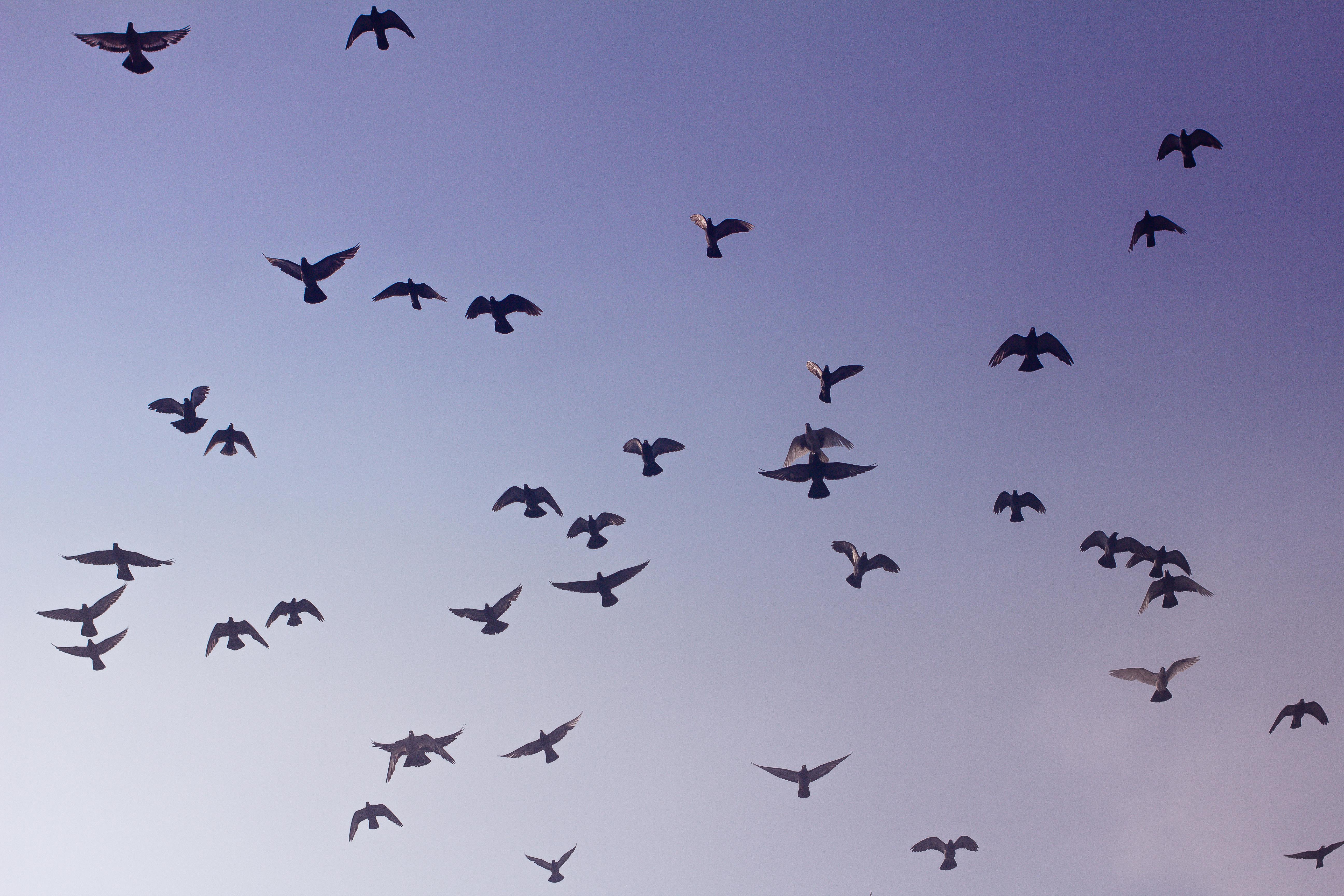
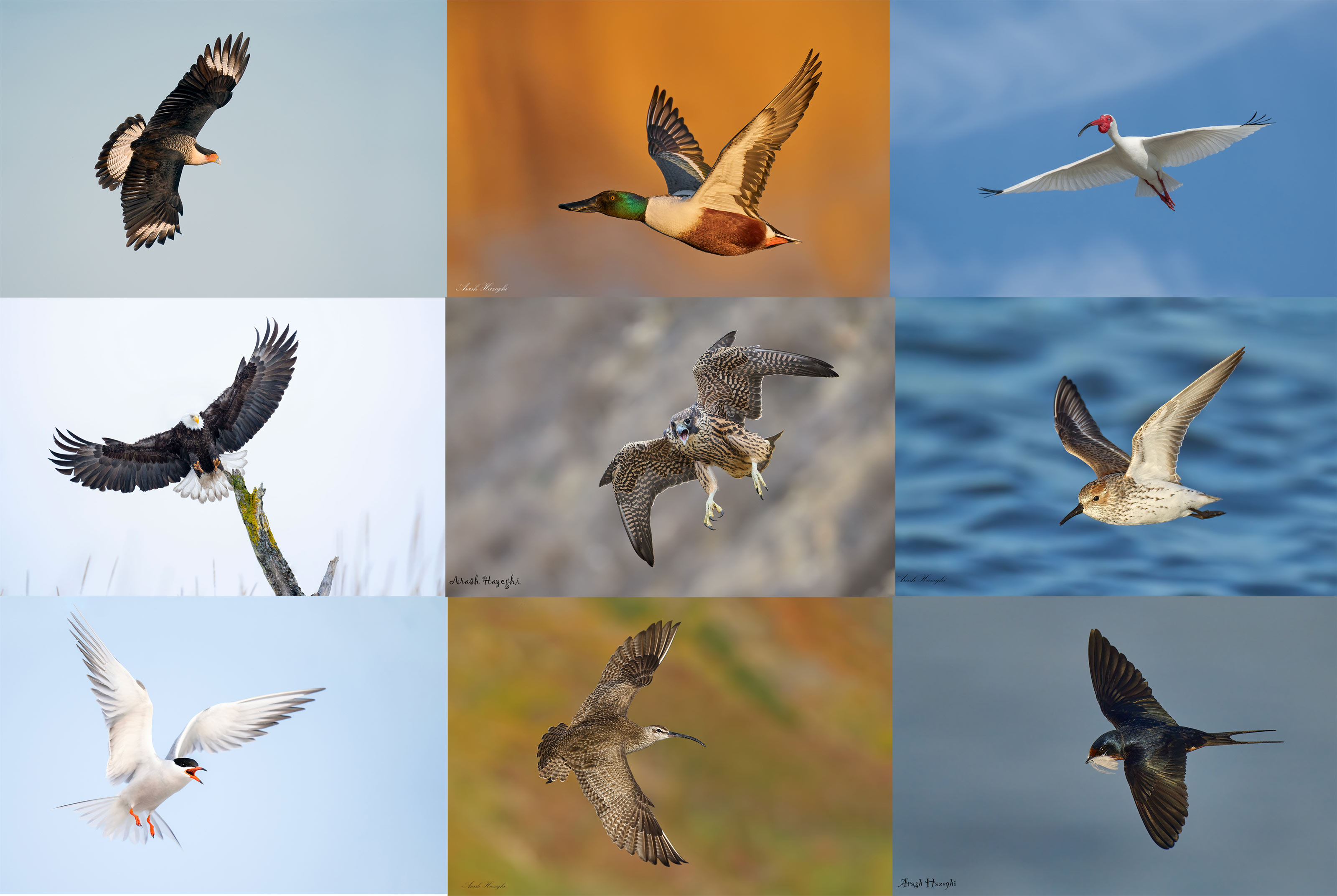
Birds do not all fly in the same way. A hummingbird, goose, eagle, and owl create very different images. Choose language that matches the bird and its known behavior.
Flapping flight
Flapping flight shows active wing movement. It often suggests effort, speed, or a short burst of travel.
Useful words include:
- Beat
- Flap
- Pump
- Pound
- Thrash
- Paddle
- Drive
Examples:
- The duck flapped hard to escape the dog.
- The crow beat its wings and climbed above the trees.
- The young robin pumped its wings as it crossed the lawn.
- The goose pounded the air during takeoff.
Avoid using “thrashed” for calm flight. The word suggests disorder or struggle.
Soaring flight
Soaring usually describes high, smooth flight. Large birds may use rising air currents to gain height or stay aloft with limited flapping. The Cornell Lab of Ornithology explains that birds use different flight modes, including flapping, gliding, and soaring, depending on their body shape and conditions.
Useful words include:
- Rise
- Climb
- Circle
- Ride
- Wheel
- Hang
- Float
- Sweep
Examples:
- The bald eagle soared above the river.
- The hawk circled in the warm afternoon air.
- Vultures wheeled over the open field.
- The condor rose on the updraft.
“Ride the wind” is a common poetic phrase. In a factual description, “rose on an updraft” is more precise.
Gliding flight
Gliding focuses on smooth movement with little visible wing motion. The bird may hold its wings open while losing height or moving forward.
Examples:
- The osprey glided toward the lake.
- The heron slid through the air with its legs trailing behind.
- The gull held its wings steady as it moved above the beach.
- The eagle glided silently over the pines.
“Glided” does not always mean the bird was perfectly level. It can move downward, forward, or across the sky without active flapping.
Hovering flight
Hovering means staying nearly in one place while in the air. hummingbirds are especially well known for hovering near flowers, but some other birds can hover briefly in particular conditions.
Examples:
- The hummingbird hovered beside the red feeder.
- Its wings blurred as it held its place in the air.
- The bird hung motionless above the flower, except for its fast wings.
The phrase “hung in the air” is vivid, but it is a metaphor. Use it in creative writing, not as a literal claim that the bird stopped moving.
Diving and swooping
A dive is usually steep and fast. A swoop often describes a quick downward movement followed by a turn or rise.
Examples:
- The falcon dived from the cliff.
- The osprey plunged toward the water.
- The swallow swooped under the bridge.
- The hawk dropped like a stone, then pulled up above the grass.
“Dropped like a stone” is a simile. It creates a strong image, but it may exaggerate the bird’s actual speed. Use it when the writing calls for drama.
Takeoff and landing
Takeoff and landing often need different verbs from ordinary flight.
For takeoff:
- Launch
- Lift off
- Rise
- Spring
- Burst upward
- Climb
- Become airborne
For landing:
- Land
- Touch down
- Settle
- Drop onto
- Perch
- Alight
- Come to rest
Examples:
- The heron lifted off from the marsh, its long legs trailing behind.
- The sparrow sprang from the fence and vanished into the hedge.
- The raven settled on the chimney.
- The pigeon touched down on the courthouse roof.
- The owl alighted on a low branch without a sound.
“Alight” is formal and often works well in nature writing. “Land” is simpler and more common.
How to Describe a Bird’s Speed, Height, and Rhythm
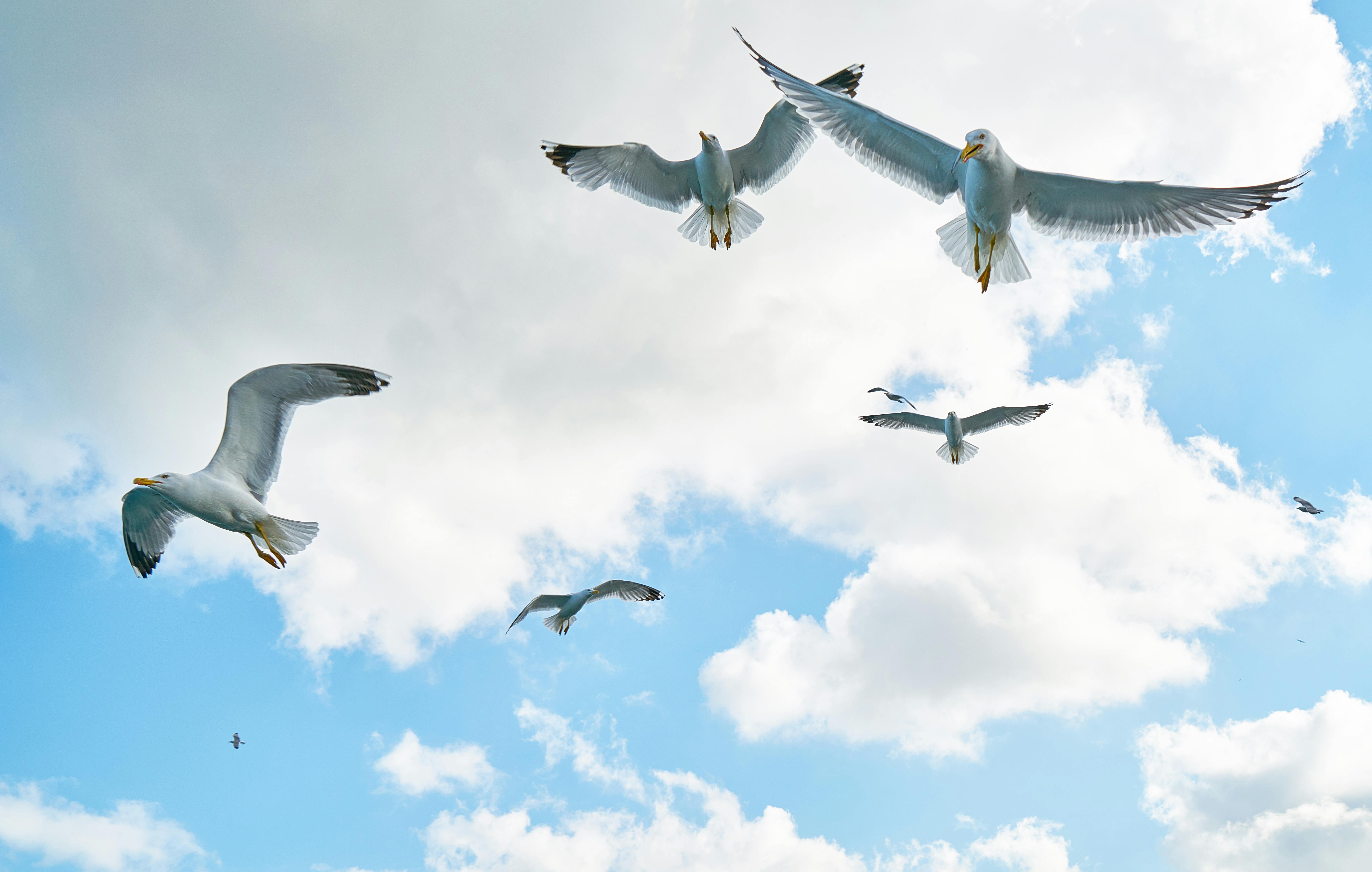
A complete description often answers three questions:
- How fast is the bird moving?
- How high or low is it flying?
- What rhythm does its flight have?
Describing speed
For slow or gentle movement:
- Drift
- Float
- Glide
- Coast
- Ease
- Sail
For moderate movement:
- Travel
- Move
- Cross
- Sweep
- Cruise
For fast movement:
- Dart
- Rush
- Flash
- Shoot
- Streak
- Bolt
- Zip
- Hurtle
Examples:
- The gull drifted above the gray water.
- The swan moved steadily across the lake.
- The swallow flashed past the window.
- The kestrel hovered, then shot toward the field.
Use “streaked” or “shot” only when the movement is sudden or fast. These words can make a calm scene sound violent or urgent.
Describing height
Low flight:
- Close to the ground
- Just above the grass
- Near the water
- Beneath the branches
- At eye level
Medium-height flight:
- Above the meadow
- Over the rooftops
- Between the trees
- Across the valley
High flight:
- High overhead
- Against the clouds
- Above the ridge
- In the upper sky
- Far above the fields
Examples:
- The kestrel hovered just above the grass.
- A flock of geese flew high overhead.
- The raven crossed the valley below the cloud line.
- The gulls moved low over the surf.
Describing rhythm and pattern
Flight can be steady, uneven, graceful, or erratic.
Useful adjectives include:
- Steady
- Smooth
- Level
- Rhythmic
- Uneven
- Jerky
- Erratic
- Wobbly
- Direct
- Meandering
- Spiraling
- Swooping
Examples:
- The geese flew in a steady V formation.
- The finch made a quick, uneven flight between the bushes.
- The hawk followed a slow, spiraling path.
- The swallow moved in sharp, looping turns.
A flock may:
- Gather
- Scatter
- Swirl
- Turn
- Wheel
- Shift
- Stream
- Fan out
- Close ranks
- Break apart
Example:
The starlings swirled above the field, turning as one dark shape before scattering toward the trees.

How to Describe a Flock of Birds Flying
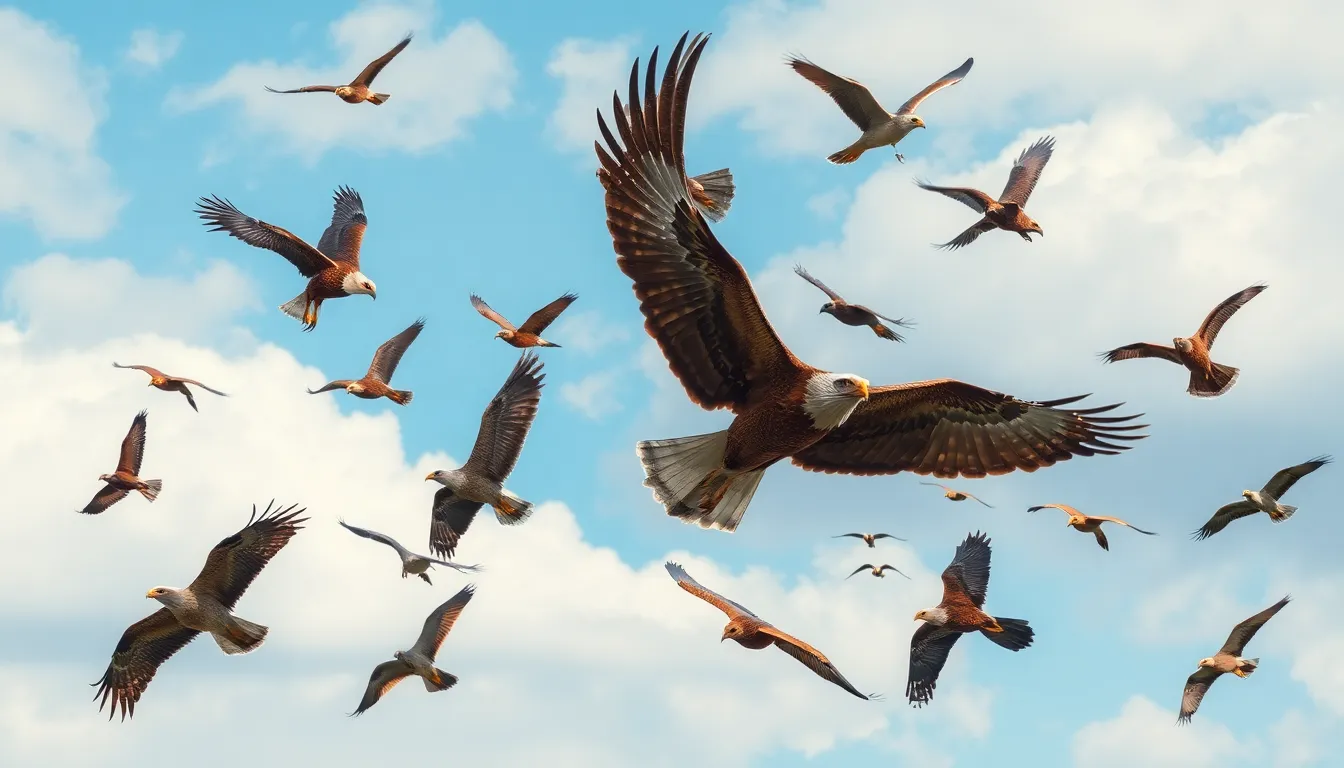
A flock description should show both the group and its pattern. Mention the number only when it matters. Otherwise, focus on shape, spacing, sound, or coordinated movement.
Useful nouns for groups
- Flock
- Flight
- Group
- Cloud
- Line
- V
- Formation
- Stream
- Cluster
- Swarm-like mass
“Flock” is the safest general word. “Flight” can describe a group of birds moving together, especially in phrases such as “a flight of geese.”
Examples:
- A flock of sparrows rose from the lawn.
- A line of pelicans flew along the coast.
- A V of geese crossed the evening sky.
- A dark cloud of starlings turned above the field.
“Cloud” is a metaphor. It works well when the group is large, dense, or constantly changing shape.
Examples of flock movement
- The flock rose in a sudden burst.
- The birds spread across the sky.
- The geese held a clean V formation.
- The starlings twisted and turned as one.
- The gulls scattered when the boat approached.
- The swallows streamed toward the barn.
Keep the verb connected to the subject. A single bird “flaps” or “glides.” A flock “swirls,” “spreads,” “gathers,” or “wheels.”

How to Use Sound, Color, and Light
Flight descriptions become stronger when they use more than sight. Add sound, color, or light when those details support the scene.
Sound
Birds may create sound with their calls, wings, or contact with the air.
Examples:
- The pigeon’s wings whistled as it took off.
- The geese rose with a loud rush of feathers.
- The owl flew in near silence.
- The swans beat their wings with a deep, heavy thrum.
- The flock passed overhead, calling to one another.
Do not assume every bird makes a loud sound in flight. Bird flight can be nearly silent, especially in species with specialized feather structures, such as owls.
Color
Use color to help the reader track the bird:
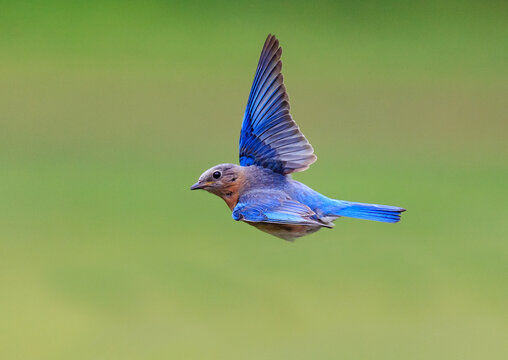
- A blue flash crossed the creek.
- White wings gleamed above the marsh.
- The hawk showed a rust-colored tail as it turned.
- The blackbirds formed a dark ribbon against the sunset.
A color detail works best when the bird changes position or catches the light.
Light and weather
Weather can change the way flight looks:
- The gulls rocked in the wind.
- The hawk rose on warm air above the field.
- Rain darkened the swallow’s feathers.
- The birds vanished into the mist.
- Sunlight flashed along the pelican’s wings.
Use weather as a cause, not just decoration. Wind may push, lift, slow, or redirect a bird. Fog may hide its shape. Rain may make the feathers appear darker.

Sentence Patterns for Describing Birds Flying
Use a simple pattern when you need a clear sentence:
Bird + verb + direction or place.
- The hawk soared above the field.
- The gull skimmed the waves.
- The sparrow darted into the hedge.
Add a detail about the wings:
Bird + verb + wing detail + place.
- The eagle glided with its wings spread wide.
- The goose flapped hard as it rose from the pond.
- The hummingbird hovered, its wings beating too fast to see.
Add a comparison when you want a literary effect:
Bird + verb + like/as + comparison.
- The swallow moved like a thrown arrow.
- The flock turned as one, like a dark ribbon in the sky.
- The owl passed as quietly as falling snow.
Use comparisons with care. A comparison should explain speed, shape, silence, or mood. Avoid adding one merely to make the sentence sound dramatic.
Plain description versus vivid description
| Plain sentence | More vivid sentence |
|---|---|
| The bird flew away. | The wren darted into the hedge. |
| The eagle flew high. | The eagle circled high above the canyon. |
| The birds flew together. | The geese crossed the sky in a loose V. |
| The gull flew over the beach. | The gull glided low over the wet sand. |
| The owl flew at night. | The owl slipped through the darkness without a sound. |
The vivid version is not always better. A plain sentence may be right when the action is not important. Choose detail based on the purpose of the scene.
Examples for Stories, Essays, and Nature Writing
Simple examples
- The robin flew from the fence to the maple tree.
- A crow flapped across the road.
- The hawk circled above the pasture.
- Three gulls glided over the beach.
- The hummingbird hovered near the feeder.
Descriptive examples
- The red-tailed hawk rose above the Kansas field, its broad wings steady in the warm air.
- A flock of snow geese lifted from the marsh and crossed the pale morning sky.
- The barn swallow darted beneath the porch roof, turned sharply, and vanished into the open barn.
- The owl moved between the trees, its rounded wings making almost no sound.
- The bald eagle spread its wings and climbed above the river gorge.
Poetic examples
- The swallows stitched quick black lines through the evening air.
- The gulls floated like scraps of white paper above the harbor.
- The flock folded and opened across the sky.
- The hawk hung over the field, a dark mark against the sun.
- The geese called as they passed, their voices fading toward the south.
Poetic language should still fit the scene. “Stitched” suggests quick, repeated movement. “Floated” suggests ease. “Folded and opened” suggests a flock changing shape.
Common Mistakes When Describing Bird Flight
Using “flew” for every movement
“Flew” is correct, but repeated use can make the writing flat. Replace it only when the new verb gives useful information.
Weak:
The bird flew over the tree. Then it flew across the yard and flew onto the roof.
Clearer:
The bird flew over the tree, crossed the yard, and landed on the roof.
More vivid:
The bird soared over the tree, darted across the yard, and settled on the roof.
Choosing a verb that does not fit
A large eagle may soar or glide, but “flutter” usually suggests small, light, or uncertain movement. A hummingbird may hover, but “soar” does not normally describe its typical flight.
Check three things:
- Does the verb match the bird?
- Does it match the speed?
- Does it match the direction?
Confusing “soar” and “glide”
Both words suggest smooth flight, but they are not identical.
- Soar often emphasizes height, rising air, or broad circular movement.
- Glide emphasizes smooth forward movement with little visible wing motion.
A bird can glide downward without soaring. It can soar upward by using rising air.
Overusing dramatic comparisons
Descriptions such as “like a bullet,” “like a missile,” or “like a fighter jet” create a harsh mood. They may not suit a peaceful nature scene.
Choose a comparison that matches the tone:
- Peaceful: like a leaf on the wind
- Fast: like an arrow
- Quiet: like a shadow
- Coordinated: like a single ribbon
- Unsteady: like a scrap of paper in a gust
Ignoring the bird’s body
Birds look different in flight. Mention a long neck, trailing legs, broad wings, short wings, a forked tail, or a changing silhouette when that detail helps identify the motion.
Examples:
- The heron flew with its long legs trailing behind.
- The duck tucked its feet beneath its body.
- The hawk opened its fan-shaped tail as it turned.
- The pelican moved in a long, steady line above the water.
Making the sentence too crowded
Do not attach five adjectives and three comparisons to one verb. Start with the main motion, then add one or two details.
Overloaded:
The enormous, graceful, swift, silent, dark eagle soared majestically and beautifully like a giant arrow across the vast, bright, blue sky.
Better:
The dark eagle soared across the blue sky, its broad wings barely moving.

A Quick Method for Writing Your Own Description
Use this five-step method:
-
Name the bird.
Write “hawk,” “gull,” “crow,” or “hummingbird” instead of only “bird” when you know the species. -
Choose the main flight verb.
Decide whether it flaps, glides, soars, hovers, dives, or darts. -
Add the path.
Say where it goes: over the lake, through the trees, along the roofline, or toward the horizon. -
Add one physical detail.
Describe the wings, tail, body, sound, or shadow. -
Check the mood.
Use calm words for a peaceful scene and sharp words for danger or speed.
For example:
- Bird: red-tailed hawk
- Main verb: soared
- Path: above the open field
- Physical detail: its wings held wide
- Mood: calm
Final sentence:
The red-tailed hawk soared above the open field, its wings held wide in the warm air.
If the first version feels weak, change the verb before adding more adjectives. A precise verb often improves a sentence more than several descriptive words.
Key Takeaways
- Use fly as the general verb.
- Use soar for high, smooth flight and glide for smooth movement with little wing motion.
- Use flap, beat, or pump to show active wing movement.
- Use hover for staying nearly in one place.
- Use dive, swoop, or dart for fast, sudden movement.
- Add direction, height, wing action, sound, or light to make the image clear.
- Match the verb to the bird and the mood.
- A strong description needs one precise verb more than many fancy adjectives.
Frequently Asked Questions
What is another way to say “a bird is flying”?
You can say that the bird is soaring, gliding, flapping, hovering, circling, drifting, swooping, diving, darting, skimming, or wheeling. The best choice depends on the bird’s speed, height, wing movement, and path.
How do you describe a bird flying quickly?
Use verbs such as darted, streaked, shot, flashed, rushed, or bolted. Add a clear path:
The swallow streaked across the porch and vanished into the trees.
How do you describe a bird flying slowly?
Use drifted, floated, glided, coasted, or sailed. These words suggest calm or smooth movement:
The gull drifted above the quiet harbor.
How do you describe birds flying together?
Use phrases such as a flock crossed the sky, the birds flew in formation, the geese formed a V, or the starlings wheeled and swirled. Describe how the group changes shape when that movement matters.
What is the difference between “flew,” “flown,” and “flown”?
Flew is the past tense of “fly”:
The eagle flew over the ridge.
Flown is the past participle and usually follows “has,” “have,” “had,” or “is” in passive structures:
The eagle has flown over the ridge.
The birds had flown south.
The route was flown by the flock.
Conclusion
To describe birds flying well in English, begin with the movement you can see. Choose a verb that shows the action, then add the bird’s path, wing motion, height, sound, or mood. A sentence such as “The hawk soared above the field, its wings steady in the warm air” is clear because every detail supports the main image.
When in doubt, use this pattern:
Bird + precise flight verb + direction or place + one vivid detail.
That simple structure works for school assignments, fiction, poetry, nature writing, and everyday conversation.