How Do Birds Survive Freezing Temperatures: Bird Facts
Across the United States, birds face ice, snow, wind, and nights below 0°F (-18°C). Yet many birds stay active through winter. Chickadees search for food in snowy forests. Ducks swim in icy ponds. Bald eagles perch above frozen rivers.
Birds survive freezing temperatures through a mix of warm feathers, fast metabolism, stored fat, heat-saving blood flow, and smart behavior. They also choose safe shelter, change their diet, and lower heat loss from their feet and legs.

How birds keep their bodies warm
Birds are warm-blooded, or endothermic. This means they make heat inside their bodies and control their body temperature. Most small birds keep a body temperature near 104°F to 108°F (40°C to 42°C), though the exact range varies by species and condition.
Their main winter tools are:
- Insulating feathers
- High food intake
- Muscle activity
- Heat-saving blood flow
- Safe roost sites
- Seasonal changes in behavior and body size
Birds do not stay warm in just one way. They use several methods at once. This matters because cold weather creates two problems: the bird must make more heat, and it must stop that heat from escaping.
Feathers act like a winter coat
Feathers trap a layer of still air near the skin. Air is a poor conductor of heat, so this trapped layer slows heat loss.
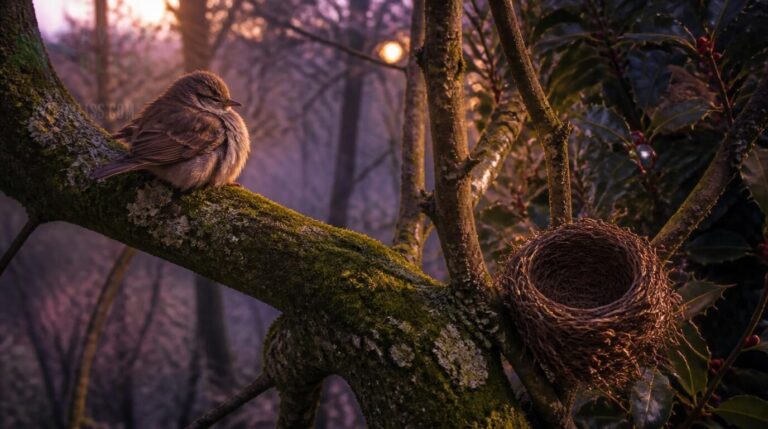
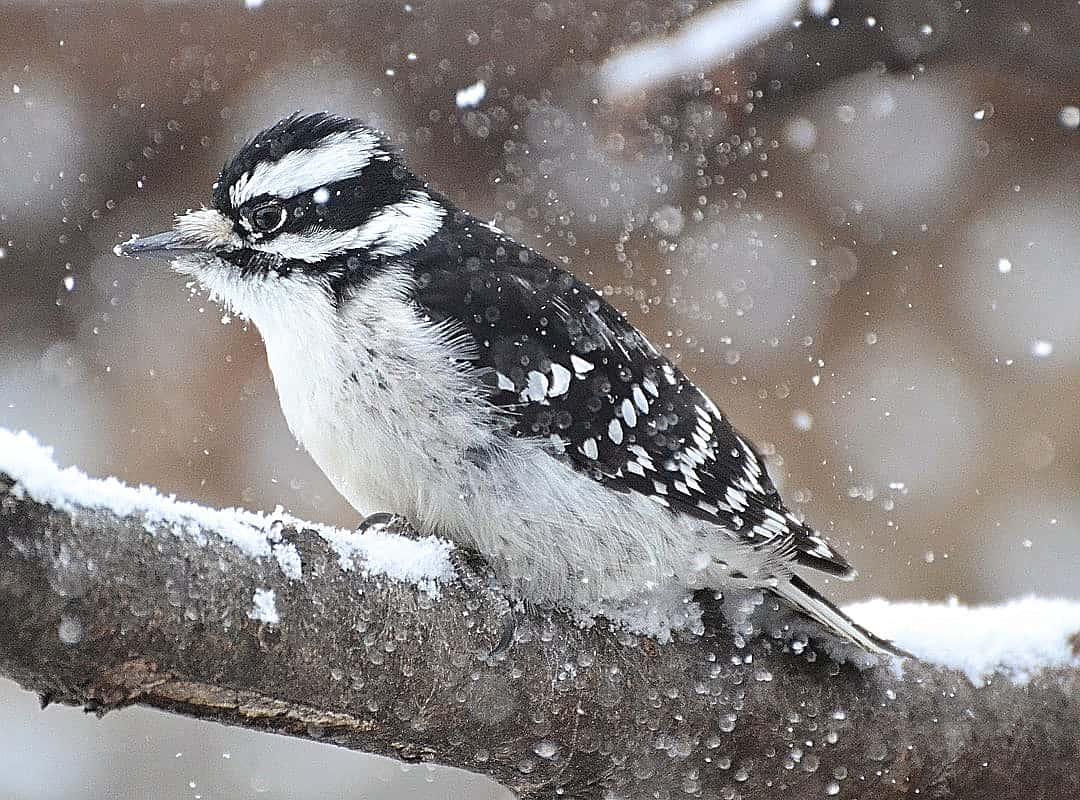
Birds also fluff their feathers in cold weather. Fluffing lifts the feathers away from the skin and makes the insulating air layer thicker. A round, puffed-up bird is often using this method.
Down feathers provide much of the insulation. They are soft and close to the body. Outer feathers help block wind and moisture. Birds spread oil from a gland near the tail over their feathers during grooming. This helps many species keep water from reaching the skin.
Feathers work best when they stay dry and clean. Wet feathers can lose much of their insulating power. Strong wind can also push through the feather layer and carry body heat away.
Birds shiver to make heat
Birds can shiver by rapidly moving their flight muscles. These small muscle movements create heat without producing useful movement.
Shivering costs energy. A bird must eat enough food to replace that energy. This is why winter feeding is not only about surviving a cold night. It is also about gaining enough fuel for the next night.
Birds may also increase other forms of muscle activity. Hopping, flying, and moving between sheltered places can help them stay warm, but movement also uses calories. A bird must balance warmth, food, and safety.
Birds burn more fuel in cold weather
Food supplies the energy birds need to maintain body heat. In winter, many birds eat foods rich in fat, such as:
- Sunflower seeds
- Nuts
- Suet
- Insects
- Berries
- Small fish
- Rodents and other prey
Fat stores more energy per gram than protein or carbohydrates. A bird can build a layer of body fat before a cold period, then use that fat during the night.
According to the Cornell Lab of Ornithology, winter birds may need to eat often because small bodies lose heat quickly. A tiny bird has a high surface-area-to-volume ratio. In simple terms, it has more skin area through which heat can escape compared with its total body mass.
That is why small birds may spend much of the short winter day looking for food.
Blood flow helps protect the feet
A bird’s feet and legs often touch cold surfaces. They also have little insulation compared with the body. Many birds protect these areas through a heat-exchange system called countercurrent heat exchange.
Warm blood moving down the leg passes close to cold blood moving back toward the body. Heat transfers from the warmer blood to the colder blood before the blood reaches the foot. This keeps the foot cooler while reducing heat loss from the body.
Some birds can also reduce blood flow to their feet. Their feet may become very cold, but the bird’s core remains warm. Ducks, gulls, geese, and many shorebirds use this general strategy.
A bird’s feet do not need to stay as warm as its heart, lungs, or brain. Keeping the core warm is the first priority.

What birds do during a freezing night
Birds often survive the coldest part of winter by changing where and how they rest. A good roost can reduce wind, moisture, and heat loss.
Birds choose protected roosts
Common winter roost sites include:
- Dense evergreen trees
- Hollow tree cavities
- Thick shrubs
- Rock cracks
- Barns and other structures
- Snow tunnels
- Reeds and marsh plants
- Bridges and sheltered ledges
Evergreen branches can block wind. Tree cavities can hold warmer air than exposed branches. Small birds may shelter close to a trunk or deep inside a shrub.
Some birds use old woodpecker holes or natural tree cavities. Others may use nest boxes for winter shelter, although not every bird will choose an artificial box.
Some birds roost together
Birds may gather in groups during cold weather. A group can help individuals find food, locate shelter, and detect predators. In some species, birds may also share body heat.
Black-capped Chickadees, for example, may join winter flocks with other small birds. Birds in these groups still need enough personal space to breathe, move, and avoid conflict. Group living is not a guarantee of warmth, but it can improve access to food and safe shelter.
Some species roost in large numbers. American Crows may gather in winter roosts. Purple Martins and other birds may crowd into sheltered spaces during certain seasons. The benefit depends on the species, the site, and the weather.
Birds tuck in their bills and feet
A bird may turn its head and place its bill under its shoulder feathers. This reduces heat loss from the face and bill.
Birds may also stand on one foot and pull the other leg into their feathers. They switch legs from time to time. This limits the amount of exposed skin touching cold air or ice.
A bird that looks still and puffed up is not always sick. It may be using a normal cold-weather posture. However, a bird that remains on the ground, cannot fly, or shows weakness may need help.
Some birds use controlled torpor
Torpor is a short-term drop in body temperature and metabolism. It allows an animal to use less energy during a cold night or when food is scarce.
Some North American birds, including certain hummingbirds, chickadees, and swifts, can use torpor. The best-known example is the hummingbird. A hummingbird may enter torpor at night and lower its body temperature and heart rate.
Torpor saves energy, but it has limits. A bird must warm itself again before normal activity. Waking can take time and energy. Birds use this strategy only when the benefit is greater than the risk.

How winter adaptations differ among birds
Not all birds solve cold weather in the same way. A duck faces different risks from a chickadee. A seabird faces different conditions from a bird in a dry western desert.
Small birds face fast heat loss
Small birds lose heat quickly because they have a large body surface compared with their body mass. They often need to:
- Eat soon after sunrise
- Feed throughout the day
- Roost in dense cover
- Puff their feathers
- Use torpor when available
- Avoid open, windy perches
Black-capped Chickadees are a useful example. They can store food, find shelter in cavities, and use short periods of nighttime torpor. Their winter survival depends on many small advantages working together.
Waterfowl protect their core while using cold water
Ducks, geese, and other water birds may swim in water near freezing. Their feathers provide strong insulation when they remain in good condition. Their feet use heat exchange to limit heat loss.
Waterfowl also have a layer of body fat and, in many species, dense down. They may rest on land, ice, or sheltered water to reduce exposure to wind.
Cold water still creates a risk. A bird with damaged, wet, or oily feathers may lose heat much faster. Birds affected by pollution, illness, or injury may not be able to maintain their normal insulation.
Birds of prey use food and shelter
Hawks, owls, eagles, and falcons have large bodies compared with many songbirds. This can help them retain heat. They also have feathers that insulate the body and legs.
Birds of prey must still find enough food. Snow and ice can hide small mammals. Frozen water can reduce access to fish and waterfowl. A healthy raptor may move to another area when prey becomes scarce.
Owls often use sheltered roosts during the day. Their soft feathers also help with silent flight, but those feathers provide insulation as well.
Birds in cold regions may have seasonal body changes
Some birds grow more feathers before winter. Others gain body mass or change the amount of fat they carry. Seasonal changes can also affect behavior, food choice, and migration.
The Black-capped Chickadee is known for seasonal changes in its brain that support food-caching behavior. This does not mean every chickadee stores food in the same way or depends on one food source. It shows how winter survival can involve changes beyond feathers and fat.
Migration avoids the hardest conditions
Migration is another way birds survive winter. Many birds leave cold northern breeding areas before food and water become scarce. They may move to the southern United States, Mexico, Central America, or South America.
Migration does not mean those birds cannot tolerate cold. It often means that food is easier to find in another region. Some birds remain in the United States all winter, while others move only a short distance.
For example, a bird may leave northern forests for a nearby valley, coast, or city. This is called partial migration when some members of a species migrate and others stay.

What happens when temperatures drop below zero?
Birds can survive below-zero temperatures, but survival depends on more than the air temperature. Wind, moisture, food, shelter, body size, age, and health all matter.
Wind can be as dangerous as cold air
Wind strips away the warm air trapped by feathers. This is called wind chill. A calm night at 0°F may be less stressful than a windy night at 15°F.
Birds respond by moving into dense cover, lowering their activity, and increasing food intake when possible. A bird on an exposed branch loses heat faster than one inside a thick evergreen.
Ice and snow reduce food access
Cold does not always kill birds directly. Lack of food can be the larger danger.
Snow may hide seeds and insects. Ice can prevent birds from reaching water or prey. Storms may stop birds from feeding for many hours. A bird that enters a cold night with low fat reserves has less energy available for shivering and metabolism.
This is why winter storms can cause sudden losses even among species that normally handle cold well.
Wet feathers raise the risk
Rain, freezing rain, and melting snow can soak the feather layer. Wet feathers conduct heat away from the body more quickly than dry feathers.
Birds can groom and restore feather condition, but this takes time and energy. If a bird is injured or covered in oil, it may lose the ability to maintain its insulation.
Young, old, and injured birds face greater stress
A healthy adult bird may survive a cold spell that kills a weak or injured bird. Young birds may have less experience finding food and shelter. An injured wing can prevent a bird from reaching a safe roost.
Signs of a bird in serious trouble include:
- Sitting on the ground for a long time
- Failing to fly when approached
- Lying on its side
- Closed eyes and weak movement
- A drooping wing
- Heavy breathing
- Feathers that stay wet or matted
- Collision with a window
- Visible bleeding
Do not handle a wild bird unless necessary. Keep pets away and contact a licensed wildlife rehabilitator through your state wildlife agency or the U.S. Fish and Wildlife Service.
How people can help birds during cold weather
The best help is usually simple: provide safe food, clean water, and natural shelter.
Offer suitable food
A bird feeder can help during snow and ice, but it does not replace natural habitat. Good options include:
- Black-oil sunflower seed
- Hulled sunflower seed
- Safflower seed
- Peanuts made for wildlife
- Plain suet
- Nyjer seed for finches
Avoid moldy, wet, or spoiled food. Do not offer salty foods, chocolate, alcohol, or heavily seasoned leftovers. Bread has little nutritional value and should not be a main food.
Place feeders where birds have cover nearby but cannot be easily ambushed by cats. The Cornell Lab of Ornithology recommends keeping cats indoors and maintaining clean feeding areas.
Keep feeders clean
Dirty feeders can spread disease. Clean them on a regular schedule and remove wet seed from the ground. If you see several sick or dead birds near a feeder, stop feeding for a short time, clean the area, and follow current guidance from your state wildlife agency or local wildlife health authority.
Use more than one feeder if possible. Spreading birds out can reduce crowding.
Provide water without creating hazards
Birds need water in winter. A shallow birdbath can help when natural water is frozen.
Follow these precautions:
- Keep the water shallow.
- Change it often.
- Clean the basin.
- Place it where cats cannot hide nearby.
- Use a safe heater made for birdbaths if needed.
- Never add antifreeze, salt, or chemicals.
A heater must be used according to its instructions and kept away from damaged cords and standing electrical hazards.
Preserve natural cover
Dense native shrubs, evergreen trees, brush piles, and mature trees provide food and shelter. Leave seed-bearing plants standing when practical. Avoid removing every dead tree because cavities can serve as winter roosts and nest sites.
Do not seal a tree cavity if birds are using it. If a bird enters a vent, chimney, or building opening, use humane wildlife guidance rather than blocking the opening immediately.

Common myths about birds and winter
“Birds’ feet should freeze to the ice”
Healthy birds do not normally freeze to ice. Their feet can become very cold, and heat exchange helps protect the body. But wet feathers, injury, pollution, and extreme exposure can still cause frostbite or other harm.
“A bird puffed up on a branch is always sick”
Fluffed feathers often show that a bird is conserving heat. This is normal in cold weather. Concern is greater when the bird also sits on the ground, cannot fly, falls over, or shows clear injury.
“Birds will stop finding natural food if I use a feeder”
Feeders can change where birds gather, but they do not usually make birds forget how to find natural food. Still, feeders should be an extra food source, not the only source. Native plants and healthy habitat are more reliable over the long term.
“Birds need a heated birdhouse”
Most birds do not need a heated birdhouse. Heat sources can create fire, burn, or disease risks if poorly designed. Natural cavities, dense plants, and clean nest boxes are safer choices for many species.
“Birds cannot survive a single freezing night”
Many birds can survive severe cold for one night if they are healthy, well fed, and sheltered. Repeated storms, long food shortages, wet weather, and strong wind create greater risks.

Key takeaways
- Birds survive freezing temperatures by combining insulation, food, behavior, and body functions.
- Feathers trap warm air and block wind when they stay dry.
- Birds burn more energy in cold weather and need frequent access to food.
- Heat exchange helps birds keep their bodies warm while their feet stay cold.
- Roosts in tree cavities, shrubs, evergreens, and other sheltered places reduce heat loss.
- Some birds use torpor to save energy during cold nights.
- Migration helps many species avoid areas where winter food is scarce.
- People can help with clean food, safe water, natural cover, and fewer outdoor cats.
- A grounded, weak, injured, or flightless bird may need a licensed wildlife rehabilitator.
Frequently asked questions
How cold is too cold for birds?
There is no single temperature that is too cold for every bird. Species, body size, health, wind, moisture, shelter, and food supply all change the risk. A healthy bird may handle temperatures below 0°F, while a wet or injured bird may struggle at much warmer temperatures.
Do birds sleep at night in winter?
Yes. Most birds sleep or rest at night. They choose sheltered roosts, fluff their feathers, tuck in their bills, and may pull one foot into their feathers. Some species enter torpor to reduce energy use.
Do birds feel cold in their feet?
Bird feet can become very cold. Their blood vessels and heat-exchange system limit how much heat leaves the body. This keeps the core warm, even though the feet may be close to the surrounding air or water temperature.
Should I bring a wild bird inside during a freeze?
Usually, no. A wild bird may be healthy while resting in a normal winter posture. Bring a bird indoors only when it is clearly injured, unable to fly, or in immediate danger. Place it in a ventilated box in a dark, quiet, warm room and contact a licensed wildlife rehabilitator. Do not give food or water unless the rehabilitator tells you to do so.
Do birds migrate because they cannot survive cold weather?
Not always. Many birds could tolerate cold air but cannot find enough food when insects, seeds, fish, or small mammals become hard to reach. Migration helps them move to places with better food and shelter. Some species migrate fully, while others migrate only part of the population or move short distances.
Conclusion
Birds survive freezing temperatures through a careful balance of heat production and heat conservation. Their feathers insulate them. Their muscles and metabolism create warmth. Their blood flow protects the core. Their behavior helps them find food and shelter before the cold becomes severe.
For people in the United States, the most useful support is practical: keep feeders clean, offer safe food, provide unfrozen water without chemicals, protect birds from cats, and preserve dense natural cover. When a bird shows injury or severe weakness, contact a licensed wildlife rehabilitator rather than trying to treat it at home.