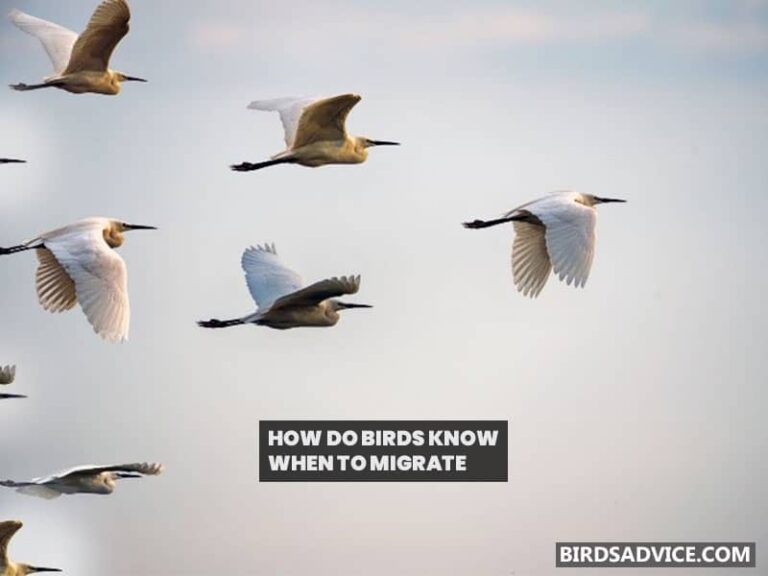
How Do Birds Navigate During Migration: Bird Navigation
Birds in the United States navigate migration routes by combining several cues, not by using one built-in “map.” They can sense Earth’s magnetic field, follow the sun and stars, recognize landforms, detect smells, and adjust their course when winds push them off track. Young birds may begin with inherited directions, while older birds improve their routes through memory and experience.
For example, a bird flying from the northern United States to Central or South America may use a broad seasonal program, magnetic cues, coastal lines, rivers, mountain ranges, weather patterns, and familiar stopover sites. These tools work together like a backup system: when one cue is weak, another can help.

The short answer: birds use several navigation systems
Bird migration is guided by a mix of compass systems and map systems.
A compass tells a bird which way to travel. A map helps it determine where it is and how far it must go. Birds may use the following tools:
- Earth’s magnetic field for direction and, in some cases, position
- The sun as a daytime compass
- Stars as a nighttime compass
- Landmarks such as rivers, coastlines, and mountain ranges
- Smell to identify regions and routes
- Wind and weather to save energy and correct drift
- Memory and learning to improve future journeys
- Inherited instructions that help young birds begin migration
No single method explains every species. A ruby-throated hummingbird, Arctic tern, Canada goose, and Swainson’s thrush may use different combinations of cues because they fly at different times, heights, and distances.
Research from the Cornell Lab of Ornithology and the U.S. Geological Survey supports the view that bird navigation is flexible and involves multiple sensory systems.
How Earth’s magnetic field helps birds navigate
Earth’s magnetic field gives many birds a directional reference. This ability is called magnetoreception.
The field has several features that may help birds:
- Direction: The field lines generally point toward magnetic north and south.
- Inclination: The angle at which the field enters Earth changes by location.
- Intensity: The field is stronger in some places and weaker in others.
- Local patterns: Certain areas have magnetic differences that may act like regional markers.
Many researchers think birds first use magnetic information as a compass. Some evidence also suggests that certain species can use magnetic signals as part of a map. The exact process is not fully settled, and it may differ between species.
A light-sensitive magnetic compass
One leading idea links magnetic sensing to light-sensitive proteins called cryptochromes in the retina. Under certain light conditions, these proteins may help birds detect changes in magnetic direction through a process known as a radical-pair reaction.
This does not mean birds “see” a magnetic arrow. Instead, the magnetic field may affect visual signals in a way that provides directional information.
Experiments with European robins, Australian silvereyes, and other migratory birds have shown that light, magnetic fields, and sensory systems can affect orientation. However, results do not prove that every bird uses the same mechanism.
The upper beak may provide additional information
Researchers have also studied nerves in a bird’s beak and face. These nerves may detect changes in magnetic field strength or direction. The evidence is complex, and scientists continue to debate how much this system contributes to navigation.
A useful practical point is that birds may have more than one magnetic sense. One system may help with direction, while another may help detect location or field strength.

How birds use the sun as a compass
Birds can use the sun to maintain a travel direction. Because the sun moves across the sky, they must also track the time of day.
This is called a time-compensated sun compass. A bird does not simply fly toward where the sun appears. It adjusts for the sun’s changing position as the day progresses.
For instance, if the sun is in the east during the morning and the west during the afternoon, a bird that needs to fly south must account for that movement. Its internal body clock helps make this correction.
Young birds appear able to develop this skill through an inherited program and exposure to daylight. If researchers shift a bird’s light-dark cycle, the bird may change its preferred direction. This shows that the body clock is part of the system.
Birds may also use the polarized light pattern around the sun. Polarized light is often strongest near sunrise and sunset, even when the sun itself is hidden by clouds. It can help birds determine the sun’s position when direct sunlight is difficult to see.
How birds navigate at night by using stars
Many birds migrate after dark. Warblers, thrushes, sparrows, and other small songbirds often travel at night to avoid daytime heat and predators.
These birds can use the night sky as a compass. Young birds learn star patterns by observing the sky before migration. They do not need to recognize each star by name. Instead, they can detect the rotation of the sky around the celestial pole.
In the Northern Hemisphere, stars appear to circle around a point near Polaris, the North Star. This pattern provides a stable reference for north. Birds may use the overall pattern rather than Polaris alone.
A well-known set of experiments by Stephen Emlen showed that indigo buntings raised under planetarium skies changed their migratory orientation when the star patterns were changed. The work helped show that birds learn parts of their star compass.
Artificial light can disrupt this system. Bright city lights may attract or disorient night-migrating birds, especially during low clouds or fog. The U.S. Fish and Wildlife Service recommends reducing unnecessary outdoor light during peak migration periods.
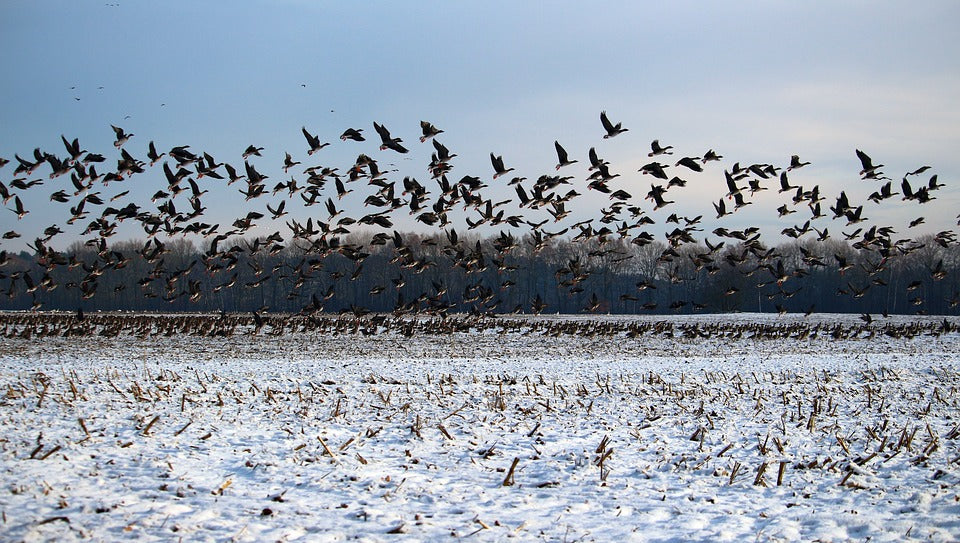
How landmarks, smells, and memory guide birds
Birds also use information from the ground. Large, stable features can help them stay on a route or recognize a familiar area.
Useful landmarks may include:
- Coastlines
- Large rivers
- Mountain ranges
- Lakes
- Forest edges
- Deserts
- Islands
- Open fields
- City skylines and other human-made features
Landmarks are most useful when a bird has enough visibility and has learned the area. They are less dependable over open ocean, in heavy fog, or during storms.
Smell can create a regional map
Some birds appear to use odors carried by the wind. Different landscapes have different chemical scents from plants, soil, water, and human activity. A bird may learn the smell of its home region and use changes in odor to help determine location.
Studies of homing pigeons helped establish the idea that birds can use atmospheric odors. Migratory seabirds and other species may also use smell, though the strength of this ability varies.
Smell is not a universal explanation for migration. It works best as one part of a larger system, especially when birds approach a familiar breeding or wintering area.
Memory improves navigation with age
Older birds often navigate more efficiently than first-year migrants. They have had more time to learn:
- Safe stopover locations
- Food-rich habitats
- Wind patterns
- Mountain passes
- Dangerous weather zones
- The timing of local conditions
- The location of their breeding or wintering site
This does not mean young birds are helpless. Many species inherit a general direction and travel distance. Experience then helps them refine the route.
How inherited behavior and learning work together
Bird migration is partly genetic and partly learned.
A young bird may inherit:
- The season when migration begins
- A general direction
- A preferred travel distance
- A tendency to migrate during the day or night
- A rough route or stopover pattern
The bird may then improve its performance through experience. This combination is called partial migration programming or, in some species, an inherited migratory program.
Young birds may migrate without their parents
Some migratory songbirds travel alone or at night. They do not need an adult escort to know the broad direction of travel. Their inherited program can guide the first journey.
Other species depend much more on social learning. Young geese and cranes may follow parents or older flock members. They learn routes, stopover sites, and flight habits from the group.
This creates an important difference:
- Solitary migrants often rely more on inherited direction plus environmental cues.
- Social migrants may gain major benefits from older birds with route experience.
Even within one species, the balance can vary between populations.

How birds correct their route when wind pushes them off course
Birds do not simply point south and hope for the best. They can respond to wind and weather.
A crosswind can push a bird east or west of its intended path. To compensate, the bird may change its heading. This behavior is called wind drift compensation.
Birds may also choose not to fight a strong wind. Instead, they may:
- Delay departure
- Land and wait
- Fly at a different altitude
- Change direction temporarily
- Use a tailwind to reduce energy costs
- Follow a different route around a storm
Weather radar shows large movements of migrating birds across the United States. Forecasters and conservation groups use these data to identify nights when migration is heavy.
The BirdCast project uses weather radar and other information to forecast bird migration across the United States. These forecasts can help communities plan outdoor lighting and reduce collision risks.
Wind changes the cost of migration
Flight is expensive. A tailwind can reduce the energy needed to travel, while a headwind can increase it. Birds often balance route length, food availability, wind, and safety.
A longer route may be better if it offers reliable food or favorable winds. A shorter route may be dangerous if it crosses a desert, open ocean, or region with little shelter.
How birds find their final destination
Finding the right general direction is only part of migration. Many birds must locate a specific breeding site, wintering area, or stopover habitat.
A bird may narrow its search by combining:
- A broad inherited direction
- Magnetic information
- The sun or stars
- Regional landmarks
- Smell
- Memory of earlier trips
- Social information from other birds
Some birds return to the same small area each year. Arctic terns may travel between high-latitude breeding and wintering areas. Salmon-eating bald eagles may return to familiar nesting territories. Many songbirds show strong site fidelity, meaning they return to the same breeding or wintering region.
The precision of return varies. A bird may return to the same neighborhood, forest patch, wetland, or nesting territory, but not every journey follows an identical line.
What happens when migration cues fail?
Bird navigation is highly effective, but it is not perfect. Problems can occur when normal cues are blocked, altered, or confused.
Common disruptions include:
- Cloud cover that blocks the sun or stars
- Fog over coastlines and mountains
- Storms and strong winds
- Artificial light at night
- Glass buildings
- Habitat loss at stopover sites
- Magnetic disturbances
- Sudden weather changes
- Fatigue and poor food supplies
- Human-made barriers
Young birds may be more vulnerable because they have less experience. Birds can also become disoriented when several cues disagree.
For example, a bird flying through low clouds near a brightly lit city may lose the visual reference from the stars. Artificial light may draw it toward buildings, where collision risk is high. Turning off nonessential lights during migration can reduce this danger.

Do birds use GPS to navigate?
Birds do not use satellite GPS in the same way people use a phone or navigation device. There is no evidence that wild birds receive signals from human GPS satellites and convert them into directions.
However, birds may have a natural positioning system that can seem GPS-like. They can combine magnetic field information, celestial cues, landmarks, smell, and memory to estimate direction and location.
Researchers use GPS tags and satellite transmitters to track birds. Those devices help humans learn where birds travel. They do not explain how the birds themselves navigate.
This distinction matters. A tracking tag may show a bird’s route, but it does not prove which cue the bird used at each point.
How scientists study bird navigation
Researchers use several methods to test bird navigation.
Orientation cages
In a funnel-shaped cage, a bird may leave scratches in the direction it tries to fly. Scientists can compare the bird’s preferred direction under different conditions.
Researchers may change:
- The star pattern
- The light-dark cycle
- The magnetic field
- The view of the landscape
- The presence of odors
- The time of year
These tests help isolate individual navigation cues.
Tracking devices
Small tags can record migration routes, speed, altitude, and stopover locations. Common tools include:
- GPS tags
- Satellite transmitters
- Geolocators
- Radio transmitters
- Radar
- Weather surveillance data
Each tool has limits. A device may be too heavy for a small bird, lack real-time data, or provide location estimates rather than exact positions.
Banding and recovery records
Bird banding links birds to later sightings or recoveries. In the United States, the U.S. Geological Survey Bird Banding Laboratory manages a national banding program.
Band data can reveal:
- Migration timing
- Survival
- Return rates
- Travel distances
- Connections between breeding and wintering areas
Banding usually does not show the complete route, but it provides long-term evidence across many birds.
A simple example: how a bird may travel from the United States to Central America
Consider a hypothetical songbird breeding in the northeastern United States.
- Seasonal timing: Changes in daylight and internal biology help trigger migration.
- Initial direction: An inherited program points the bird generally south or southeast.
- Night orientation: The bird uses stars, magnetic cues, and possibly polarized light.
- Weather decisions: It waits for or uses favorable winds.
- Route correction: It adjusts its heading if crosswinds cause drift.
- Stopover use: It lands in forests, wetlands, or coastal habitats to refuel.
- Regional recognition: Landmarks, odors, and magnetic information help as it nears its destination.
- Site selection: Memory and local cues help it reach a suitable wintering or breeding area.
This example is a model, not a rule for every species. A shorebird crossing the Atlantic, a goose flying in a family group, and a hummingbird crossing the Gulf of Mexico may use different strategies.

Common myths about bird migration
Myth: Birds follow the same road every year
Some birds follow highly consistent routes, but wind, food, age, weather, and habitat conditions can change the path. Migration is often a flexible corridor rather than a single fixed line.
Myth: Birds navigate only with the magnetic field
Magnetic sensing is important, but birds also use light, stars, landmarks, smell, memory, and weather. Multiple cues make navigation more reliable.
Myth: Birds always fly nonstop
Many species stop to feed and rest. Some journeys include dozens of stopovers. Others, such as certain seabirds, can travel very long distances with few opportunities to land.
Myth: Every bird migrates
Many birds remain in the same region year-round. Some populations migrate while others of the same species do not. This pattern is called partial migration.
Myth: Bright city lights help birds find their way
Artificial light may attract or disorient night migrants. It can increase the risk of building collisions, especially during cloudy or foggy weather.
What bird watchers can learn from migration science
You do not need special equipment to observe migration. A few habits can make your observations more useful:
- Check local migration forecasts before dawn or after sunset.
- Watch wetlands, shorelines, forest edges, and parks with native plants.
- Keep cats indoors, especially during migration seasons.
- Turn off unnecessary outdoor lights at night.
- Add window markers or screens to reduce glass collisions.
- Record sightings with a trusted birding platform or local conservation group.
- Avoid disturbing resting or feeding birds.
In the United States, migration peaks vary by region. Spring migration often moves north from late winter into late spring. Fall migration may begin in late summer and continue into autumn. Local timing depends on latitude, weather, habitat, and species.

Key takeaways
- Birds navigate migration with several systems rather than one tool.
- Earth’s magnetic field may provide direction and regional position.
- The sun and stars act as time-based or visual compasses.
- Landmarks, odors, weather, and memory help birds refine their route.
- Young birds may inherit a general travel program, while adults improve through experience.
- Wind can change both the route and energy cost of migration.
- Artificial light and habitat loss can disrupt migration and increase danger.
- Bird navigation is flexible, species-specific, and still an active area of research.
Frequently asked questions
How do birds know when to migrate?
Birds respond to changes in daylight, temperature, food supply, hormones, and inherited seasonal rhythms. Day length is a major trigger for many species, but weather and local food conditions also affect the exact departure date.
Can birds get lost during migration?
Yes. Storms, fog, artificial light, habitat loss, magnetic disturbances, and exhaustion can cause birds to change course or become disoriented. Most birds still use several backup cues, which improves the chance of recovery.
Do birds migrate by day or night?
Both. Many songbirds migrate at night, while hawks, swallows, geese, cranes, and many other species often migrate during the day. The choice depends on species, weather, predators, feeding needs, and flight style.
How far can a bird migrate?
Distances range from a few miles to tens of thousands of miles each year. Some local migrants move between nearby elevations, while Arctic terns make one of the longest known annual migrations between the Arctic and Antarctic regions.
Can birds recognize their destination?
Many birds can return to familiar breeding or wintering areas. They may use memory, landmarks, smells, magnetic information, and learned habitat cues. The accuracy differs by species and by the bird’s age and experience.
Conclusion
Birds navigate migration by combining inherited behavior with sensory information and learning. Their magnetic sense may provide a broad compass, while the sun, stars, landmarks, smells, winds, and memory help them stay on course and reach a suitable destination.
The best way to understand migration is to see it as a flexible system with backups. When one cue fails, another may help. That flexibility allows birds across the United States and the world to complete journeys that may span deserts, oceans, mountains, and multiple countries.