How Tall Is A Crane Bird: Height Facts And Comparisons
A crane bird can stand anywhere from about 3 feet to nearly 6 feet tall, depending on the species. In the United States, the sandhill crane usually stands about 3.2 to 4 feet tall, while the endangered whooping crane reaches about 4.5 to 5 feet. Worldwide, the sarus crane is among the tallest crane species, reaching roughly 5.9 feet.
The word “crane” can mean many species in the bird family Gruidae. So, there is no single height for every crane. Age, sex, posture, and measuring method can also affect the result.
Introduction
For people watching cranes in the United States, the bird’s long legs and neck can make it look taller than expected. A sandhill crane seen in a wetland may rise well above a person’s waist, while a whooping crane can approach the height of a small adult.
The best quick estimate is:
- Most common U.S. crane: 3.2–4 feet tall
- Tallest U.S. crane: about 5 feet tall
- Tallest crane species worldwide: about 5.9 feet tall
- Largest wingspan among common U.S. cranes: about 7 feet or more
Height means the bird’s standing height from the ground to the top of its head. It does not include the length of its neck when stretched forward or the height of its wings in flight.
How Tall Are the Main Crane Species?
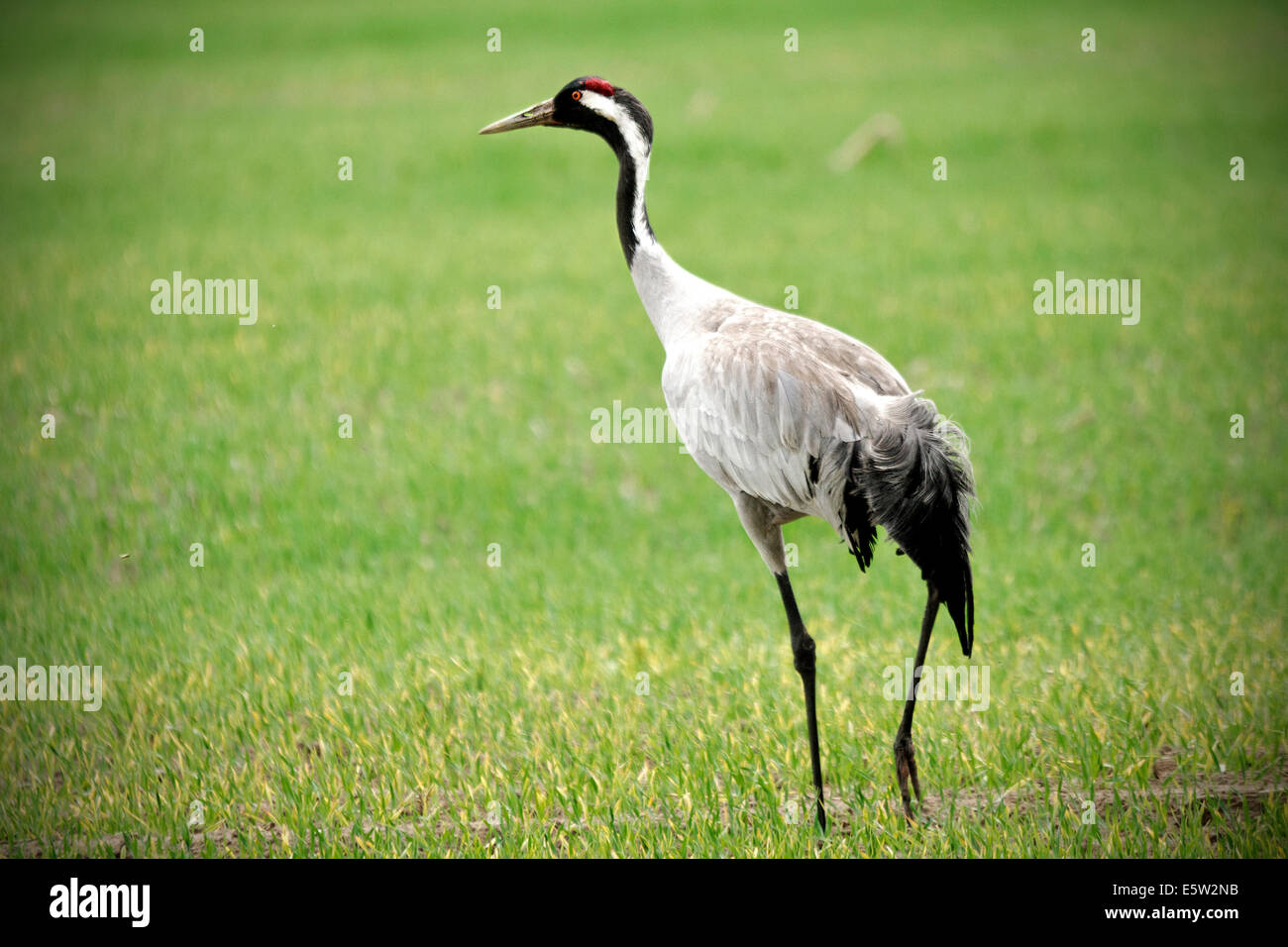
Crane height changes widely by species. The table below compares several well-known cranes using approximate adult standing heights.
| Crane species | Typical standing height | Where it is found |
|---|---|---|
| Sandhill crane | 3.2–4 feet | United States, Canada, and parts of Mexico |
| Whooping crane | 4.5–5 feet | United States and Canada |
| Demoiselle crane | About 2.8–3.3 feet | Europe and Asia |
| Blue crane | About 3.3–4 feet | Southern Africa |
| Red-crowned crane | About 4.5–5.2 feet | East Asia |
| Wattled crane | About 5–5.5 feet | Central and southern Africa |
| Sarus crane | About 5–5.9 feet | South Asia and Southeast Asia |
These values are useful field estimates, not fixed limits. A large male may stand taller than a small female of the same species. A crane also appears shorter when it bends its neck, feeds, rests, or walks through tall grass.
Sandhill crane height
The sandhill crane (Antigone canadensis) is the most widespread crane in North America. Adult sandhill cranes generally stand about 3.2 to 4 feet tall.
A sandhill crane’s height comes mostly from its long legs and neck. Its body is much smaller than its full standing profile suggests. The species has a wingspan of roughly 6.5 to 7.5 feet, which can make it look even larger when it flies overhead.
Sandhill cranes live in many parts of the United States. They breed in northern states and Alaska, and many migrate through or winter in the central and southern United States.
Whooping crane height
The whooping crane (Grus americana) is the tallest bird in North America. It generally stands about 4.5 to 5 feet tall, with a wingspan of about 7 to 7.5 feet.
Its white body, black wing tips, red crown, and long black legs make it easy to identify. The whooping crane remains one of North America’s most endangered birds, although conservation work has helped its population recover from historic lows.
A whooping crane standing beside a sandhill crane may look only somewhat taller. The difference becomes clearer when both birds stand fully upright.
Sarus crane height
The sarus crane (Antigone antigone) is often listed as the tallest flying bird. Large adults can reach about 5.9 feet, or roughly 1.8 meters, in standing height.
Sarus cranes are native to parts of South Asia, Southeast Asia, and Australia. They are not wild native birds of the United States. Their very long legs and neck give them a taller profile than the sandhill and whooping cranes commonly seen in North America.

What Is the Tallest Crane Bird?
The sarus crane is generally considered the tallest crane species, with some adults reaching close to 6 feet tall.
The exact record can vary because sources may measure birds in different ways. Some measurements use a fully upright bird. Others use a typical standing posture. Sex, age, and local population also matter.
The sarus crane is not always the heaviest crane, and “tallest” does not mean “largest in every measurement.” A bird may have:
- Greater standing height
- A longer wingspan
- A heavier body
- A longer bill
- Longer legs or neck
These traits do not always occur in the same species.
Tallest crane in North America
The whooping crane is the tallest crane native to North America. It reaches about 5 feet in standing height.
The sandhill crane is more common and widespread, but it is shorter. Most adult sandhill cranes stand below the height of a whooping crane.
Largest crane by wingspan
Many large cranes have wingspans near or above 7 feet. The exact largest species can depend on whether the comparison includes maximum recorded measurements or typical adult measurements.
Wingspan is measured from one wingtip to the other. It does not show how tall the crane looks while standing. A crane with a slightly shorter body may still have a very broad wingspan.
How Tall Is a Crane Compared With a Person?
A crane’s height can be easier to understand through a human comparison.
- A 3-foot crane reaches around the thigh of many adults.
- A 4-foot crane may reach near the hip.
- A 5-foot crane can approach the shoulder of a shorter adult.
- A 6-foot crane may stand close to the height of an adult person.
This comparison is only approximate. Human height varies, and cranes do not hold their necks in the same position all the time.
A crane seen from far away may look smaller because its thin legs blend into grass or shallow water. The same bird can look much larger when it stands on open ground.

How Is a Crane’s Height Measured?
A crane’s standing height is measured from the ground to the top of its head while the bird stands upright.
Researchers and bird guides may also record other measurements, such as:
- Body length: From the bill to the end of the tail
- Wingspan: From one wingtip to the other
- Leg length: From the joint area to the foot
- Weight: The bird’s mass, often reported by sex and age
- Bill length: From the bill base to the tip
These measurements answer different questions. Body length does not equal standing height. A bird with a long neck may have a modest body length but a very tall upright profile.
A photo can also create errors. A crane close to the camera may look much taller than one farther away. For a reliable visual comparison, place the bird beside a known object at a similar distance.
Why Do Cranes Look So Tall?
Cranes look tall because they combine a compact body with long legs and a long neck. Their body is held high above the ground, which gives them a strong vertical shape.
The neck can change the bird’s apparent height:
- Fully upright: The crane looks tallest.
- Feeding posture: The neck extends forward or downward.
- Alert posture: The neck rises and the head points forward.
- Resting posture: The neck may curve back toward the body.
- Flying posture: The legs extend behind the body and the bird’s height is no longer easy to judge.
This is why two images of the same crane may give very different impressions of its size.
Crane Height Compared With Other Tall U.S. Birds
Cranes are not the only tall birds found in the United States. Great blue herons, American white pelicans, and some large storks can also appear very tall.
| Bird | Approximate standing height |
|---|---|
| Sandhill crane | 3.2–4 feet |
| Whooping crane | 4.5–5 feet |
| Great blue heron | About 3.2–4.5 feet |
| American white pelican | About 4–5 feet |
| American flamingo | About 3.5–5 feet |
A great blue heron may match or exceed a sandhill crane in height. However, herons have a different body shape, and their folded neck often makes them look shorter.
The whooping crane is one of the tallest birds regularly associated with North American wetlands. Its height, wingspan, and bright white plumage make it especially noticeable.

What Affects a Crane’s Height?
Several factors can change the measured or observed height of a crane.
Species
Species is the main factor. A sarus crane can stand nearly twice as tall as a small demoiselle crane.
Sex
In many crane species, males are somewhat larger than females. The difference may be small, so height alone is not a reliable way to identify a crane’s sex.
Age
Young cranes may be shorter and less strongly built than adults. Their feathers can also look different, which helps observers identify immature birds.
Posture
A crane standing alert with its neck extended will look taller than one feeding or resting.
Ground level
A bird standing in shallow water, tall grass, or uneven ground may be hard to measure. The visible leg length may not show the true ground level.
Measurement method
A published maximum may not represent the height of a typical bird. For practical bird-watching, a normal adult range is more useful than a single record value.
How to Estimate a Crane’s Height in the Field
You can estimate a crane’s height without approaching it.
- Identify the species first. Use the bird’s color, bill, head markings, habitat, and call.
- Wait for an upright posture. Do not judge height while the crane is feeding.
- Find a known object nearby. A fence post, road sign, or person at the same distance can provide scale.
- Allow for distance. Objects closer to you can look much larger than objects farther away.
- Use a range, not a single number. For example, call a sandhill crane about 3 to 4 feet tall rather than claiming an exact measurement.
- Keep your distance. Use binoculars or a spotting scope instead of walking toward the bird.
The best estimate is usually the simplest: identify the species, observe its posture, and compare it with a known object.
Common Mistakes When Estimating Crane Height
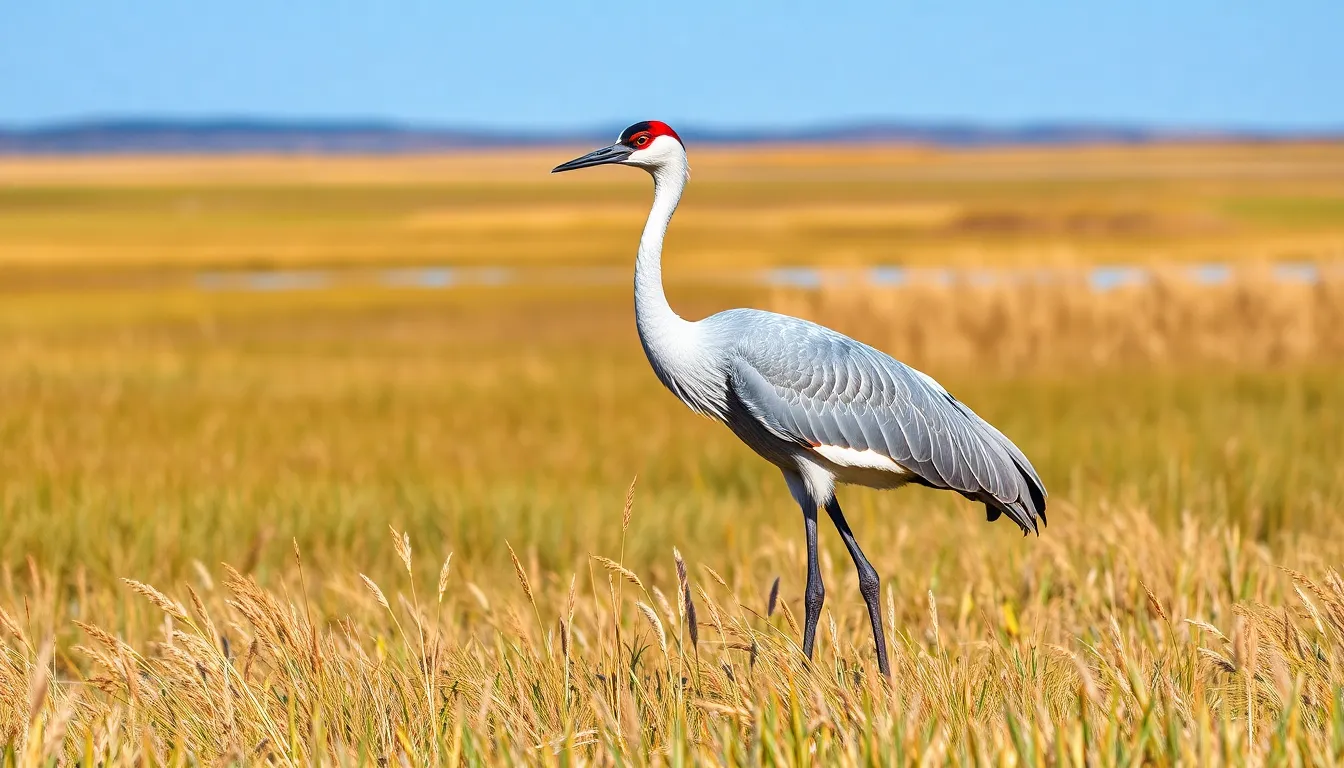
The most common mistake is confusing wingspan with height. A crane with a 7-foot wingspan is not 7 feet tall while standing.
Other common errors include:
- Measuring the bird’s neck length instead of standing height
- Comparing a crane close to the camera with a person farther away
- Assuming every crane in North America is a whooping crane
- Using the maximum height as the normal height
- Judging a bent or feeding crane
- Confusing a crane with a heron, egret, stork, or ibis
The term “crane bird” can also cause confusion. A bird crane is a member of the family Gruidae. A construction crane is a machine used to lift materials. These are entirely different meanings.
Are Cranes Taller Than Herons?
Some cranes are taller than herons, but not all of them are. A sandhill crane and a great blue heron can have similar standing heights.
Cranes usually have a more upright body and thicker legs. Herons often hold their neck in an S-shaped curve and have a narrower body. That shape can make a heron seem shorter, even when its standing height is similar.
The whooping crane and sarus crane are taller than most herons. A small crane species may not be.
Are Cranes Dangerous to People?
Wild cranes usually avoid people, but they can defend themselves if cornered, fed, or approached too closely. Their long bills and strong legs can cause injury.
Never try to touch, feed, chase, or block a crane. Keep dogs under control and follow local wildlife rules. In the United States, whooping cranes are protected under federal law, and disturbance may carry legal consequences.
The safest way to watch cranes is from a distance with binoculars or a camera with a long lens.
Frequently Asked Questions
How tall is a sandhill crane?
An adult sandhill crane usually stands about 3.2 to 4 feet tall. Its wingspan is often about 6.5 to 7.5 feet.
How tall is a whooping crane?
An adult whooping crane generally stands about 4.5 to 5 feet tall. It is the tallest crane species native to North America.
Is a crane taller than a person?
Some cranes can be nearly as tall as a person when they stand fully upright. The sarus crane can reach close to 6 feet, while most sandhill cranes are much shorter.
What is the tallest crane species?
The sarus crane is generally recognized as the tallest crane species. Large adults can reach approximately 5.9 feet.
How tall is a crane when it flies?
A flying crane does not have a useful “standing height.” Its body is held horizontally, with its neck extended forward and legs stretched behind it. In flight, wingspan is the more useful measurement.
How can I tell a crane’s height from a photograph?
Compare the bird with a known object at the same distance. A fence, vehicle, person, or sign can help. Avoid judging from a close-up image because camera distance and lens angle can distort size.
Key Takeaways
- Crane birds range from about 3 feet to nearly 6 feet tall.
- A sandhill crane usually stands 3.2–4 feet tall.
- A whooping crane usually stands 4.5–5 feet tall.
- The sarus crane can reach about 5.9 feet and is generally considered the tallest crane.
- Standing height is different from wingspan and body length.
- Posture, sex, age, distance, and measurement method can change the apparent size.
- Watch wild cranes from a safe distance and never feed or approach them.
Conclusion
A crane bird is usually about 3 to 5 feet tall, depending on the species. In the United States, expect a sandhill crane to stand around 3.2 to 4 feet tall and a whooping crane to reach about 5 feet. Worldwide, the sarus crane is the taller standout, with some adults approaching 6 feet.
For the most accurate estimate, identify the species first, then judge the bird while it stands upright. That simple step prevents confusion between height, body length, and wingspan.