Acana Vs Royal Canin Cat Food: Which Is Best?
Choosing the right dry kibble for your pet is tough. I spent weeks testing Acana vs Royal Canin cat food in my own home with my two cats. I wanted to see how each brand affects daily life, energy levels, and litter box habits.
This real-world test highlights which food is best for your budget and your cat’s health. One brand offers a high-protein, rustic approach, while the other focuses on precise scientific nutrition. Here is my honest experience feeding both dry foods daily.
Side-by-Side Specs Comparison
Before we look at how my cats reacted, let us check the actual numbers. Here is a quick look at the key specifications of both kibble brands.
| Feature | Acana Dry Food | Royal Canin Dry Food |
|---|---|---|
| Price per Pound | High | Medium-High |
| Protein Content | 37% | 32% |
| Fat % | 18% | 15% |
| Crude Fiber | 3% | 4.5% |
| Calorie Density | 440 kcal/cup | 350 kcal/cup |
| Bag Sizes | 4 lb, 12 lb | 3 lb, 7 lb, 15 lb |
| AAFCO Statement | All Life Stages | Adult Maintenance |
| Guarantee | Satisfaction | Yes |
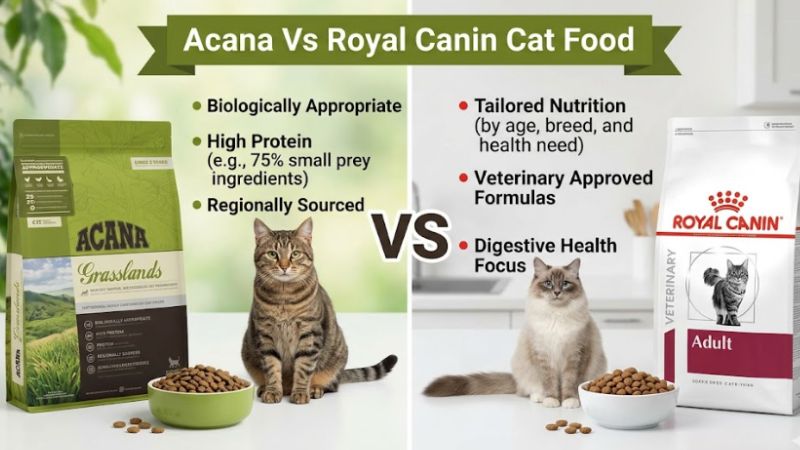
These numbers show that Acana has much higher protein content. Royal Canin focuses more on a balanced, lower-calorie profile for indoor cats.
Unboxing and First Impressions
The Acana bag felt heavy and premium when I first picked it up. However, I noticed right away that the tear-away top was hard to open neatly. A strong, oily smell of real fish and poultry escaped immediately. The kibble pieces were dark, flat discs that felt slightly greasy to the touch. My cats ran to the kitchen instantly to sniff the new scent.
The Royal Canin bag had a much more practical plastic zipper that opened smoothly. The smell was very mild and sweet, like toasted grains. The kibbles were lighter in color and had a unique star shape designed to encourage chewing. One cat immediately started playing with a dropped piece, enjoying the solid kibble crunch on the tile floor.
Ingredient Quality and Nutrition
Let us look past the marketing and examine the ingredient lists. The difference in ingredient quality between these two brands is quite surprising.
Acana uses rich, whole-animal proteins for its first five ingredients. You will see fresh chicken, turkey, and whole herring at the top of the list. This provides amazing protein bioavailability for active cats. It is a grain-free formula that avoids artificial additives, relying instead on natural rosemary extract for freshness.
Royal Canin takes a very different path with its grain-inclusive recipes. The first ingredient is often chicken by-product meal, followed by brewers rice and corn. While some owners avoid grains, these ingredients offer stable digestibility for sensitive stomachs. It meets the AAFCO statement for adult maintenance through synthetic vitamins and balanced minerals.
Palatability — Will Your Cat Actually Eat It?
A healthy food is useless if your cat refuses to touch it. Here is how my cats reacted to both options over several weeks.
On the very first day, the strong smell of Acana had great picky cat appeal. My male cat scarfed down his portion so fast that kibble scattered across the kitchen floor. However, after two weeks, he suddenly walked away from his bowl and refused to finish it. The rich taste seemed to tire him out after daily use.
Royal Canin did not cause the same initial excitement, but it won on long-term consistency. Both cats ate their daily portions steadily without any fuss. The unique texture and mild scent kept them coming back day after day. It is highly reliable for fussy eaters who dislike intense aromas.
Ingredient Quality and Digestibility
What goes into your cat will eventually end up in the litter box. Monitoring their digestion is the best way to judge any pet food.
Acana gave my cats amazing coat health and high energy levels within three weeks. Their fur felt incredibly plush and soft to the touch. However, the high protein content caused a very smelly litter box output. My female cat also had soft stools for the first few days of the transition.
Royal Canin was much easier on their digestive systems. Their stools became small, firm, and almost entirely odorless. I noticed a big drop in occasional vomiting and hairballs too. While their coats were not quite as shiny as they were on Acana, their digestive comfort was much better.
Freshness and Bag Life (Dry Food Only)
Keeping dry kibble fresh is a major challenge over a long month of feeding. Here is how the packaging preserved the food over time.
| Week | Acana Freshness | Royal Canin Freshness |
|---|---|---|
| Week 1 | Very strong, oily smell | Mild, dry, and crunchy |
| Week 2 | Smells slightly stale | Still crisp and fresh |
| Week 4 | Dust at bottom, lost scent | Fresh crunch remains |
The Acana bag freshness did not last because the bag clip did not hold tight enough. By the third week, the kibble went stale and lost its scent, so my cats lost interest. I had to pour the remaining food into an airtight plastic bin. Royal Canin stayed perfectly crisp until the very last cup because of its excellent zip seal.
Design and Packaging Quality
Good packaging prevents spills and keeps your kitchen smelling clean. Let us compare how these two bags hold up to daily handling.
| Feature | Acana | Royal Canin |
|---|---|---|
| Bag Material | Thick reinforced paper | Strong glossy plastic |
| Reseal Mechanism | Weak press-to-close | Secure plastic zip lock |
| Smell Containment | Poor after opening | Excellent |
The Royal Canin bag is much easier to store and handle. The zip lock prevents any smell from leaking into the pantry. The Acana bag tears easily and lets odors escape if you do not seal it with extra clips.
Smell — For You and Your Cat
The scent of your cat’s food can quickly fill up your entire living space. This is a vital point for anyone living in a small apartment.
Acana has a very heavy, fishy odor that hits you the moment you walk into the room. While this strong scent is great for initial picky cat appeal, it can be tough for humans to stomach. The oily smell lingered in the bowls long after the cats finished eating.
Royal Canin has a much more pleasant, neutral aroma. It smells faintly of baked grains and mild poultry, which does not linger in the kitchen at all. My cats still found it interesting enough to eat, but it did not leave any scent on my fingers after handling.
Serving and Portion Control
Keeping your cat at a healthy weight requires accurate daily measuring. Here is how both brands compare when managing daily portions.
| Feature | Acana | Royal Canin |
|---|---|---|
| Scoop Included | No | No |
| Free-Feed Friendly | No (too rich) | Yes |
| Calorie per Cup | 440 kcal | 350 kcal |
Because Acana is so high in calorie density, you must avoid free-feeding. I had to use a strict measuring cup to prevent my indoor cat from gaining weight. Royal Canin is much safer for leaving a bowl out all day because of its lower calorie count.
Ease of Use and Daily Routine
Your daily feeding routine should be fast, clean, and completely stress-free. Here is how much effort each brand takes on a daily basis.
| Task | Acana | Royal Canin |
|---|---|---|
| Bowl Cleanup | Harder (oily residue) | Easy (dry crumbs) |
| Smell on Hands | Strong fishy scent | None |
| Speed of Serving | Fast | Fast |
Royal Canin is much easier to manage day after day. The kibble does not leave an oily film in the bowl, so washing up takes only a few seconds. Acana requires hot water and soap to remove the greasy residue left behind.
Cat Health Impact Over Time
After a month of testing, the physical changes in my cats were very clear. Both foods offered unique benefits for their overall well-being.
Acana gave them a massive boost in energy levels and coat health. Their coats looked stunningly glossy, and they seemed much more active during evening playtime. However, I noticed that the dust at the bottom of the bag made my sensitive cat sneeze during the final week.
Royal Canin kept their weight perfectly stable and resolved all stomach issues. There were no more midnight vomiting episodes or loose stools. Their energy was calm and consistent, and they never seemed bloated or lethargic after eating.
Price and Value for Money
Both of these options sit on the premium side of the market. Let us look at whether the price tag matches the results.
When comparing acana vs royal canin cat food, Acana costs more per bag but contains far more real meat. However, because it is so rich, you feed slightly less per serving. Royal Canin is also pricey, but the peace of mind it offers for digestive health makes it worth the cost. If your cat has a sensitive stomach, Royal Canin is the better value, but Acana wins on pure ingredient quality.
How It Compares to Similar Products
To get a complete picture, it helps to see how these brands compare to other premium options. Here is how they stack up against the competition.
Orijen Cat Food
Orijen is the high-protein sibling of Acana, offering even more fresh meat ingredients. It is excellent for highly active outdoor cats but can be too rich for indoor pets.
Hill’s Science Diet
Hill’s is very similar to Royal Canin in its scientific, grain-inclusive approach. It offers reliable digestibility and great veterinary support at a slightly lower price point.
Who Should Buy Which?
- Buy Acana if you want a grain-free, meat-first recipe that builds a shiny coat and boosts energy.
- Buy Royal Canin if your cat has a sensitive stomach, needs precise weight control, and dislikes strong smells.
- Consider Neither If you are looking for a budget-friendly supermarket brand with cheap ingredients.
Long-Term Feeding Considerations
Feeding a diet over many years requires thinking about consistency and aging. Acana offers superb protein content, but the rich formula might be too heavy for older, less active cats. Royal Canin is highly reliable for long-term feeding because its scientific formulas support specific life stages and kidney health.
You should also consider the yearly cost, as both brands will require a significant budget. The zip seal on the Royal Canin bag will hold up year after year, saving you from stale food waste. Both brands meet AAFCO standards, but Royal Canin is easier to scale as your cat ages.
Calorie Density and Weight Management: Acana vs Royal Canin Cat Food
Managing your cat’s weight is all about watching the calories in their daily bowl. Let us compare how both options affect your cat’s waistline.
When looking at acana vs royal canin cat food, Acana has a high calorie density of 440 kcal per cup. This makes it very easy to accidentally overfeed your pet, especially if you free-feed. It is best suited for growing kittens or highly active outdoor cats.
Royal Canin has a much lower density of 350 kcal per cup, making it perfect for indoor weight control. It is very auto-feeder friendly because the dry kibbles do not stick together. It is the ideal choice for multi-cat households where some cats tend to overeat.
Final Verdict
In the battle of Acana vs Royal Canin cat food, the best choice depends entirely on your cat’s individual needs. Royal Canin is the overall winner for my home because of its stellar digestibility, easy portion control, and fresh packaging seal. It is the perfect daily food for indoor cats who need stable stomachs.
However, Acana is still an amazing option if you want to feed a rustic, high-protein diet. If your cat is active and has a strong stomach, the real-meat ingredients of Acana will give them an incredibly beautiful, glossy coat.