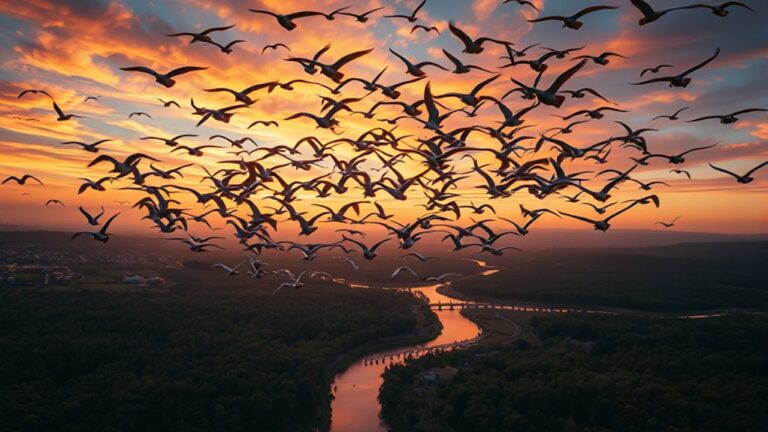
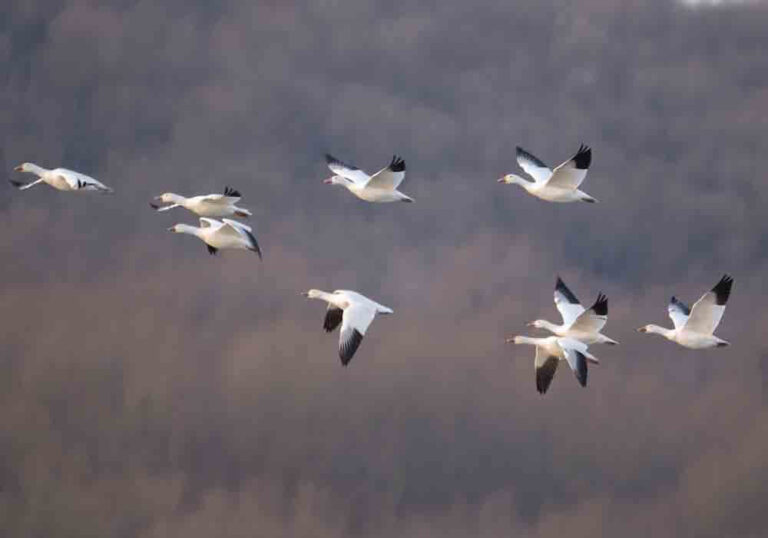
How Do Birds Move: Bird Movement Explained
Birds in the United States move in several ways: they fly, walk, run, hop, climb, swim, dive, and glide. A bald eagle may soar over Alaska, a peregrine falcon may dive near a city, and an American robin may walk across a lawn. Each movement depends on the bird’s body shape, muscles, bones, feathers, feet, and habitat.
Bird movement works because birds turn muscle power into force. Wings help birds create lift and thrust. Legs and feet support walking, running, hopping, swimming, and climbing. The tail helps with balance, braking, steering, and control.

How Do Birds Fly?
Birds fly by moving their wings to create lift and thrust. Lift pushes the bird upward, while thrust moves it forward. The bird’s wing shape, feathers, muscles, and flight style all affect how it moves through the air.
The basic parts of bird flight include:
- Lift: The upward force that keeps a bird in the air.
- Thrust: The forward force created mainly by wingbeats.
- Drag: Air resistance that slows the bird.
- Weight: The downward force caused by gravity.
A bird must create enough lift to balance its weight. It must also create enough thrust to overcome drag.
How wingbeats create movement
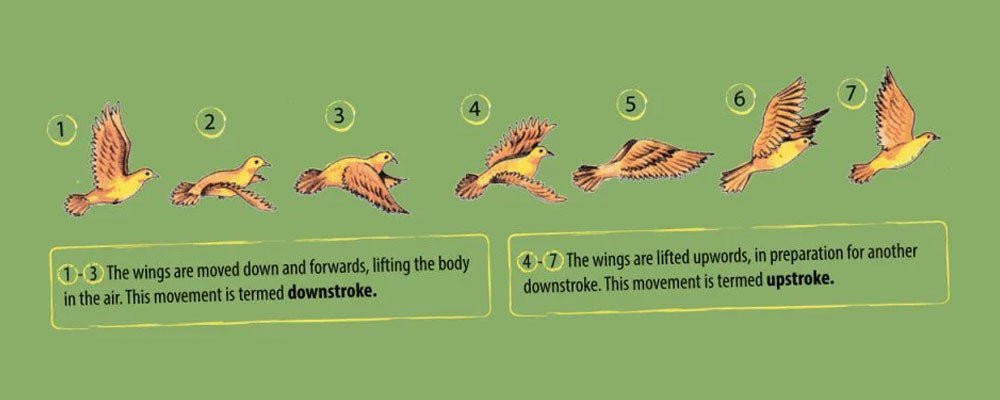
During the downstroke, a bird pushes air downward and backward. This action helps produce both lift and forward motion. During the upstroke, the bird often folds, twists, or partly closes its wings to reduce resistance.
Flight feathers help direct air. The long feathers at the wing tips help control airflow and reduce energy loss. The primary feathers, which are attached to the outer wing, are especially important for thrust and steering.
Bird wings do not all have the same shape. Their shape often matches the bird’s usual flight style:
| Wing type | Typical movement | Examples in the United States |
|---|---|---|
| Broad wings with separated tips | Soaring and gliding | Bald eagle, turkey vulture |
| Long, narrow wings | Fast, efficient flight | Common tern, albatrosses seen offshore |
| Short, rounded wings | Quick turns and bursts | Ruffed grouse, American woodcock |
| Long, pointed wings | Fast flight over open areas | Peregrine falcon, swallows |
| Small wings with rapid beats | Hovering and precise control | Ruby-throated hummingbird |
These categories are useful, but a single bird may use more than one flight method.
flapping flight
Flapping flight uses repeated wingbeats. Birds use this method when taking off, gaining height, flying against wind, or moving through areas where rising air is weak.
A bird’s large chest muscles power the downstroke. The pectoralis muscle pulls the wing down. A second major muscle, the supracoracoideus, helps raise the wing. A strong internal bone system allows these muscles to work without forcing the bird to carry heavy, solid bones.
Soaring and gliding
Soaring birds use air currents to stay aloft with fewer wingbeats. They may circle in rising columns of warm air called thermals. They may also use wind that rises over hills, cliffs, or large waves.
A bald eagle can spread its broad wings and glide while searching for food. A turkey vulture uses rising air to travel with little flapping. This saves energy, which is helpful during long flights.
Soaring does not mean a bird stops moving. The bird constantly adjusts its wings, tail, and body to manage speed, height, and direction.
Hovering
Hovering means staying in nearly one place in the air. Hummingbirds are the best-known hovering birds in the United States. Their wings move in a pattern that creates lift during both parts of the wing cycle.
A hummingbird can also fly backward for short periods. This ability comes from its flexible shoulder joints and specialized wing movement. Most birds cannot hover in the same way because their wings are built for forward flight.
Turning, braking, and landing
Birds steer by changing the angle and shape of their wings and tail. They can:
- Raise one wing to begin a turn.
- Spread or fan the tail to slow down.
- Tilt the body to change direction.
- Fold the wings partly to descend.
- Extend the legs and feet before landing.
Landing requires careful control because the bird must lose speed without losing too much lift. A bird may spread its wings wide, lift its tail, and use its legs as shock absorbers.
The Cornell Lab of Ornithology explains bird flight through the interaction of wing shape, feather structure, body design, and muscle power. The Smithsonian National Air and Space Museum also describes how birds use wings to generate lift and control their flight.

How Do Birds Walk, Run, and Hop?
Birds walk, run, and hop by using their legs, feet, toes, and body posture. Their leg joints are arranged differently from those of humans. What looks like a backward-facing knee is usually the ankle joint. The true knee is higher and often hidden by feathers.
Most birds stand and move on their toes. This posture helps reduce the weight of the lower leg and makes quick movement easier.
Walking
Walking uses an alternating pattern. One foot moves forward while the other supports the body. Birds may also move their heads as they walk.
A pigeon, for example, may appear to move its head forward and back. Research suggests that this movement helps the bird stabilize its view. During one part of the step, the head stays relatively still while the body moves forward. During the next part, the head moves quickly to a new position.
Birds that often walk on the ground include:
- American robins
- Crows
- Pigeons
- Wild turkeys
- Sandhill cranes
- Chickens
- Killdeer
Running
Running is faster than walking and may involve a different rhythm. Some birds keep one foot on the ground at a time. Others may have brief moments when both feet are off the ground.
Birds that run often have strong legs and bodies adapted for open habitats. A greater roadrunner can run across dry ground while chasing prey. Wild turkeys can run quickly when startled, even though they also fly.
Hopping
Many small perching birds move by hopping with both feet together. American robins may walk or hop, depending on the surface and activity. Sparrows often hop through grass or across soil.
Hopping can help a bird move through uneven ground. It may also be more efficient for a small bird with short legs. Some birds switch between walking and hopping based on speed, terrain, and body size.
Why some birds walk and others hop
Leg length, hip structure, body balance, and habitat all affect movement. Birds that search for food across open ground often walk. Birds that move through short grass, branches, or leaf litter may hop.
There is no single movement pattern for all birds. Even one species may change its gait when it searches for food, escapes danger, courts a mate, or carries nesting material.

How Do Birds Swim and Dive?
Birds swim by using their feet, legs, wings, or a combination of these parts. Water birds often have webbed feet that push against water. Some birds use their wings underwater like flippers.
Ducks and geese usually swim by paddling with webbed feet. Their toes are joined by skin, which creates a broad surface for pushing water backward. The water pushes back, moving the bird forward.
Surface swimming
A swimming bird uses its feet in repeated strokes. It often recovers the foot with less resistance by turning the webbed toes or bringing the foot forward in a different position.
A bird’s feathers also help it swim. The outer feathers interlock, and the bird spreads oil from a preening gland across its feathers. This treatment helps water bead on the surface instead of soaking through quickly.
Waterproofing is not absolute. A bird can become chilled or lose insulation if its feathers are damaged, contaminated, or heavily soaked.
Diving
Diving birds use different methods:
- Dabbling ducks tip their bodies forward to reach food below the surface.
- Diving ducks push down with their feet and swim underwater.
- Cormorants use their feet to move underwater.
- Loons use their feet, which are set far back on the body.
- Penguins use their wings as underwater flippers, although penguins do not live in the wild in the United States except in zoos and other managed settings.
A loon’s legs are excellent for underwater movement but less useful for walking on land. Their rear position helps the bird swim with power and control.
Why some birds float
A bird floats when the upward force from displaced water balances its weight. Air trapped among the feathers and in the body helps reduce overall density. A bird can also adjust its posture to keep more or less of its body below the surface.

How Do Birds Climb, Grip, and Move on Branches?
Birds climb and perch by using specialized feet, toes, tendons, and claws. Their feet are not just supports; they are active tools for movement and balance.
Most perching birds have three toes pointing forward and one toe pointing backward. This arrangement is called anisodactyl. The rear toe helps grip a branch from the opposite side.
How a bird grips a branch
Many perching birds can lock their toes around a branch with little active effort. When the bird bends its leg, tendons tighten and pull the toes around the perch. This helps the bird remain attached while resting.
A sleeping bird does not simply squeeze the branch with constant muscle effort. Its foot structure helps maintain the grip.
Different foot designs
Bird feet reflect the way a species moves and feeds:
- Perching feet: Common in songbirds and many other tree-dwelling species.
- Raptorial feet: Strong toes and sharp talons help hawks, eagles, and owls catch prey.
- Climbing feet: Woodpeckers often have two toes forward and two backward, which helps them grip tree trunks.
- Scratching feet: Chickens and wild turkeys use strong toes to move leaves and soil.
- Wading feet: Herons and egrets have long toes that spread weight over soft mud.
- Swimming feet: Ducks and other water birds use webbed toes for paddling.
Woodpeckers also use stiff tail feathers as a brace against tree trunks. Their feet grip the bark while the tail provides extra support.
Moving along branches
A bird may walk, hop, or sidestep along a branch. It constantly adjusts its wings, tail, and feet to stay balanced. Small body movements help it respond to wind and branch movement.

How Do Birds Use Their Tails to Move?
A bird’s tail acts as a control surface. It helps with balance, steering, braking, climbing, and landing.
During flight, a bird may spread its tail to increase drag and slow down. It may tilt the tail to change its direction or raise it to help climb. During landing, the tail often spreads wide while the wings slow the bird.
Tails also help birds on the ground. A bird may use its tail as a counterweight while climbing, hopping, or moving along a narrow branch.
Tail shape often matches a bird’s movement:
- Long, broad tails can improve control at low speeds.
- Forked tails can help some birds turn quickly.
- Short tails may reduce drag during fast flight.
- Stiff tails can help climbing birds brace against surfaces.
Tail feathers can be replaced through molting. A bird with damaged tail feathers may still fly, but its steering and braking control can be less precise until the feathers grow back.

What Body Parts Help Birds Move?
Bird movement depends on several body systems working together. The wings get most of the attention, but movement also requires strong bones, muscles, nerves, feathers, and sensory organs.
Bones
Bird bones provide support without adding unnecessary mass. Many flying birds have hollow bones, but “hollow” does not mean weak. Internal struts can strengthen the bone.
The breastbone, or sternum, often has a raised ridge called a keel. Large flight muscles attach to this area. Birds that do not fly may have smaller flight muscles and a less developed keel.
Muscles
The main flight muscles attach near the breast. Leg muscles power walking, running, jumping, and takeoff. Different birds have different muscle proportions based on their main movement style.
A diving bird may have powerful muscles for underwater swimming. A soaring bird may have broad wings and muscles suited to controlled gliding. A ground bird may have strong leg muscles for running and takeoff.
Feathers
Feathers are lightweight structures that provide lift, insulation, protection, and control. Wing feathers help shape airflow. Tail feathers help with steering and braking. Body feathers smooth the bird’s shape and help maintain body temperature.
Birds must maintain their feathers through preening. A damaged or dirty feather may not work as well, which can affect flight efficiency and insulation.
The nervous system and senses
Birds use vision, balance, and rapid muscle control to move safely. Their eyes help them judge distance, speed, and obstacles. The inner ear helps detect body position and motion.
This coordination allows a bird to adjust its wings and feet in a fraction of a second when wind changes or a branch moves.

Why Do Birds Move in Different Ways?
Birds use different forms of movement because each habitat creates different demands. A bird that lives in a forest needs tight turns and strong gripping feet. A bird that crosses open water may need long-distance flight and energy-saving glides.
Important factors include:
- Body size: Larger birds often need more energy to take off.
- Wing shape: Wing length and width affect speed, lift, and maneuverability.
- Leg position: Legs placed far back may help swimming but make walking harder.
- Foot shape: Toes and claws match perching, hunting, climbing, wading, or swimming.
- Habitat: Forests, wetlands, grasslands, deserts, and cities favor different movement styles.
- Food: Birds may need to hover, dive, climb, probe, run, or scratch to find food.
- Predators: Speed, sharp turns, hiding, and flock movement can improve survival.
- Migration: Long-distance travelers often benefit from energy-efficient flight.
For example, a hummingbird needs to hover near flowers. A woodpecker needs to climb tree trunks. A duck needs to swim and dive. A hawk needs to rise on thermal currents and control a fast descent.
Do All Birds Fly?
No. Some birds cannot fly, and others fly only for short distances.
The ability to fly depends on wing structure, muscle power, body weight, and evolution. In the United States, wild birds such as emus are not native, but several familiar flightless or nearly flightless birds may be seen in managed settings or special habitats. Wild turkeys, grouse, and chickens can fly, but their flights are often short and require strong wingbeats.
Some birds have reduced flight ability because they evolved in environments with few predators or because their bodies became specialized for running or swimming. Examples outside the United States include ostriches, kiwis, and penguins.
A bird that does not fly still moves through its environment. It may walk, run, swim, climb, or use its wings for balance, display, or propulsion underwater.

How Can You Tell How a Bird Is Moving?
You can identify a bird’s movement by watching its wings, body angle, feet, and tail.
Look for these signs:
- Fast, repeated wingbeats: Active flapping flight.
- Wide wings with few wingbeats: Gliding or soaring.
- Rapid wing motion in one place: Hovering.
- Wings held high and tail spread: Braking or landing.
- Feet moving one after another: Walking.
- Both feet moving together: Hopping.
- Body low in water with rhythmic foot motion: Swimming.
- Body close to a tree trunk: Climbing or bracing.
- Wings partly open during a jump: Takeoff, balance, or escape.
Use binoculars from a safe distance rather than approaching a bird. Do not chase, corner, or handle wild birds. Flight is physically demanding, and disturbance can force a bird to waste energy or abandon a nest.

Common Misconceptions About Bird Movement
“All birds fly in the same way.”
Birds use different wing shapes and flight methods. A hummingbird, hawk, duck, and woodpecker do not create movement in the same way.
“Birds have hollow bones, so their bones are fragile.”
Many flying birds have air-filled bones with internal support. Their skeletons are adapted for strength and low mass.
“A bird’s wing only moves up and down.”
A wing changes angle, shape, and position during every beat. Birds twist their wings and feathers to manage lift, thrust, drag, and steering.
“Birds always hop instead of walk.”
Some birds mainly hop, while others mainly walk. Many species use both patterns based on speed and terrain.
“Birds can fly safely after any feather damage.”
Small damage may have little effect, but missing or broken flight feathers can reduce lift, balance, and control. A grounded or injured bird may need help from a licensed wildlife rehabilitator.

Frequently Asked Questions About How Birds Move
How do birds move through the air?
Birds move through the air by flapping, gliding, soaring, or hovering. Their wings create lift and thrust, while the tail and wing feathers help with steering, braking, and balance.
How do birds move on land?
Birds move on land by walking, running, hopping, jumping, or scratching. Their legs and feet are adapted to their habitat. Songbirds often hop, while cranes, robins, and turkeys commonly walk.
How do birds move in water?
Birds swim by paddling with webbed feet or by using their wings underwater. Ducks, loons, cormorants, and grebes use different combinations of feet, legs, and wings to dive and move through water.
Why do birds flap their wings?
Birds flap their wings to create lift and thrust. They flap more during takeoff, fast flight, climbing, and flight against wind. They may flap less when gliding or soaring.
Can birds move backward?
Some birds can move backward briefly. Hummingbirds are especially skilled at backward flight because their wing joints and flight muscles allow unusual control. Most birds mainly move forward.
What should I do if I find a bird that cannot fly?
Do not assume the bird is injured. Young birds may spend time on the ground while learning to fly. Keep pets and children away, and contact a local licensed wildlife rehabilitator if the bird has visible injuries, is bleeding, cannot stand, or is in immediate danger. In the United States, the U.S. Fish & Wildlife Service provides information about protected birds and wildlife regulations.
Conclusion
Birds move through air, on land, in trees, and underwater by using specialized body parts that work together. Wings create lift and thrust. Legs and feet support walking, running, hopping, climbing, and swimming. Feathers and tails help birds steer, brake, balance, and stay warm.
The best way to understand a bird’s movement is to connect its body design to its habitat. A bird’s wing shape, feet, tail, muscles, and posture reveal how it finds food, avoids danger, travels, and survives.