How Do Birds Stay Warm At Night: Winter Survival Tips
Birds in the United States stay warm at night through a mix of insulation, body heat, shelter, food, and behavior. Feathers trap warm air close to the skin. Birds also fluff their feathers, tuck in their bills, huddle, shiver, and choose protected roosts. Some species lower their body temperature at night to save energy.
A bird does not need a heated nest or blanket to survive most cold nights. Its body has built-in ways to limit heat loss. Still, extreme cold, strong wind, ice, wet feathers, and a lack of food can create serious risks.
How Do Birds Keep Warm at Night?
Birds keep warm at night by trapping air in their feathers, producing heat with their muscles, and limiting exposure to wind and moisture. Their high body temperature gives them a large heat loss problem, so they must use energy all night to stay warm.
Most birds are endothermic. This means they make heat inside their bodies instead of relying on the outside air. A bird may have a body temperature near 104–108°F (40–42°C), though the exact range differs by species and conditions.
The main ways birds stay warm include:
- Fluffing their feathers to trap still air
- Tucking the bill into the back feathers
- Pulling the feet close to the body
- Shivering to create muscle heat
- Eating enough food before nightfall
- Roosting in shelter
- Huddling with other birds
- Entering torpor when energy savings are vital
These methods work together. Feathers reduce heat loss, while food and muscle activity provide the heat that the feathers protect.
Feathers act like a winter coat
A bird’s feathers are its main form of insulation. When a bird relaxes the small muscles at the base of its feathers, the feathers lift away from the skin. This creates a layer of trapped air.
Still air conducts heat poorly. The trapped air slows the movement of body heat into the cold environment. Down feathers are especially useful because they are soft, light, and able to hold a large amount of air.
Birds often look larger on a cold night because they are “fluffed up.” This larger shape is not extra fat. It is an insulating layer of air between the skin and the outer feathers.
Wind can reduce this protection. Moving air strips away the warm air around the body. That is why a sheltered roost can be safer than an exposed branch, even when both places have the same air temperature.
Birds use muscle activity to make heat
Birds can shiver in the same basic way that people do. Rapid, small muscle movements create heat. Shivering costs energy, so a bird must have enough fuel stored in its body or available from recent feeding.
A bird may also raise its metabolic rate without obvious shivering. Its cells can release more heat as the body works harder to maintain a stable temperature.
This process takes energy. A small bird can face a serious challenge because it has a large surface area compared with its body mass. It can lose heat quickly, especially during a long winter night.
Birds protect their most vulnerable body parts
A bird may tuck its bill into its shoulder or back feathers. The feathers warm the air that the bird breathes, which can reduce heat loss from the respiratory system.
Many birds also stand on one foot and pull the other foot into their belly feathers. They may switch feet during the night. This keeps less skin exposed to cold air.
Birds have scales on their legs and feet, and blood vessels in those areas are arranged to reduce heat loss. Warm blood moving from the body passes close to colder blood returning from the feet. Heat can move between the vessels before the blood reaches the body core. This is called countercurrent heat exchange.
The system keeps a bird’s feet cooler than its core. That may sound harmful, but it lowers the amount of heat lost through the feet. Many birds can safely stand on ice or frozen ground for short periods because of this design.
Where Do Birds Sleep on Cold Nights?
Birds sleep in places that block wind, rain, snow, and ice. A roost may be inside a dense shrub, a tree cavity, a barn, a bridge, a cliff crack, or a purpose-built nest box.
A winter roost is not always the same place where a bird nests in spring. Nest sites are built for raising young. Roost sites are chosen mainly for safety and protection from weather and predators.
Common roost locations include:
- Dense evergreen trees
- Thick shrubs and hedges
- Tree cavities
- Woodpecker-made holes
- Nest boxes with drainage and ventilation
- Rock crevices
- Under bridges
- Barns, sheds, and other open structures
- Reed beds and marsh vegetation
Evergreen trees can provide good cover because their needles remain in place during winter. Dense branches slow wind and may keep snow off a bird’s body.
Tree cavities can also help. Wood, bark, and surrounding air provide some protection from wind. However, a cavity must stay dry and have enough air exchange. A fully sealed space can collect moisture and create other dangers.
Do birds sleep in birdhouses during winter?
Some birds use nest boxes as winter roosts, but not every bird will use one. Chickadees, bluebirds, nuthatches, wrens, and some other cavity-using birds may enter boxes in cold weather.
A birdhouse can help when it is:
- Placed in a sheltered location
- Dry inside
- Free of old nesting material and parasites
- Mounted securely
- Designed with suitable ventilation
- Protected from direct rain and strong wind
- Equipped with a suitable entrance hole for local species
Do not seal a birdhouse shut to “keep heat in.” Birds need air exchange, and trapped moisture can lead to damp feathers. A box that is too large may also be less useful because it takes more energy for a small bird to warm the space.
Some winter roost boxes have perches inside. A normal nest box often does not. Follow the design guidance for the species and region rather than adding features at random.
Do birds sleep together to stay warm?
Some birds roost together, and group roosting can reduce heat loss. A group may share a protected space and expose less surface area to cold air.
Chickadees and other small birds may roost in tree cavities. Bluebirds may gather in boxes or cavities during cold weather. Crows, ravens, starlings, and some blackbirds may form large communal roosts.
Group roosting also has costs. More birds can mean more competition, waste, parasites, and disease spread. A bird will balance the warmth of a group against the risk of crowding and predators.
Not all birds huddle. Many species sleep alone, especially if they have a safe cavity, dense cover, or a body size that helps them retain heat.
How Do Birds Stay Warm Without Food at Night?
Birds use energy stored from daytime feeding to survive the night. Before roosting, many birds eat seeds, insects, berries, nectar, or other high-energy foods. Digestion then supplies fuel while the bird rests.
Small birds have limited energy reserves. A chickadee, sparrow, or kinglet may need to feed soon after sunrise because it has used much of its stored energy overnight.
Birds can store energy in several forms:
- Body fat
- Glycogen stored in the liver and muscles
- Food held in the digestive tract
- Food cached for later use
Fat is especially useful because it contains a large amount of energy for its weight. Birds that face cold nights may increase food intake during the day and build suitable fat reserves.
This does not mean that feeding birds always makes them dependent on people. Wild birds normally use many food sources. A feeder can supplement natural food, but it cannot replace habitat, shelter, clean water, or insect populations.
Why winter food matters
Cold weather raises the cost of survival. A bird may need more energy to maintain body temperature when the air is cold or the wind is strong.
Food shortages can become dangerous after:
- Heavy snow covers seeds and berries
- Ice coats branches and feeders
- Rain soaks feathers
- Insects become hard to find
- A storm lasts for several days
- Habitat has been cleared or reduced
High-energy foods can help some birds. Black-oil sunflower seeds attract many common backyard species. Suet can provide dense energy for woodpeckers, nuthatches, chickadees, and other birds that eat it.
Food should be fresh and offered in clean feeders. Spoiled food, wet seed, and dirty feeding areas can spread disease.
Why water still matters in winter
Birds need water in winter, even when temperatures are below freezing. They need it for drinking and bathing. Clean feathers provide better insulation than dirty or oily feathers.
A shallow basin with fresh water can help. Keep it clean and change the water often. If you use a heated birdbath, choose equipment made for outdoor use and follow its safety directions. Keep electrical cords away from standing water and inspect them for damage.
Do not add antifreeze, salt, sugar, or other chemicals to bird water. These substances can harm birds and other wildlife.
Do Birds Get Cold at Night?
Birds can become cold, but healthy wild birds usually manage normal winter conditions through insulation and behavior. Cold becomes more dangerous when a bird is wet, exposed to wind, injured, sick, underfed, or unable to find shelter.
A bird’s feathers work best when they are dry and properly maintained. Preening helps keep feathers aligned and distributes oil from the preen gland. This oil helps some feathers resist water.
However, feather oil does not make a bird waterproof in every situation. Heavy rain, freezing rain, wet snow, and immersion can defeat a bird’s insulation. Wet feathers also become heavy and may lose their ability to trap air.
Wind chill affects heat loss
Wind does not lower the actual air temperature, but it can increase heat loss from an exposed bird. Wind removes the layer of warm air close to the feathers.
A bird in a dense shrub may lose less heat than a bird on an open wire. This is why natural windbreaks matter. Evergreen branches, brush piles, hedges, and thick native plants can provide useful cover.
Extreme cold can be fatal
Birds may die during severe cold, especially when cold weather combines with starvation or wet conditions. Young birds, old birds, migrants, and birds with injuries may have less ability to cope.
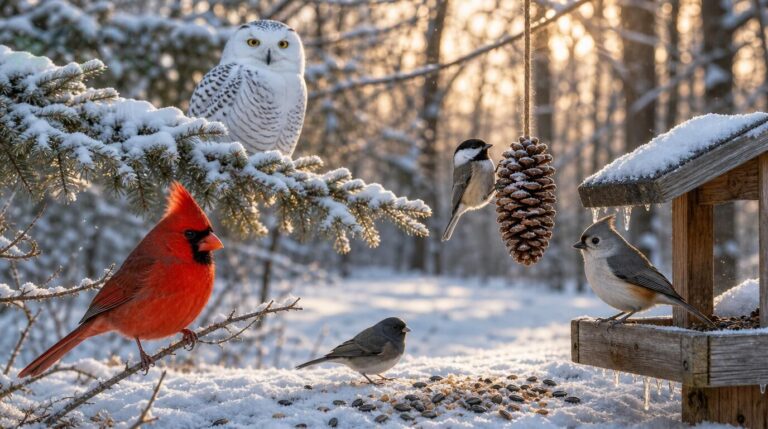
Some species are well adapted to winter in the United States. Black-capped chickadees, dark-eyed juncos, white-breasted nuthatches, downy woodpeckers, and many sparrows can tolerate cold conditions. Other species migrate south or move to warmer areas when winter arrives.
Migration is not a failure to handle cold. It is a survival strategy that helps a bird reach food and conditions that support its energy needs.
Do Birds Lower Their Body Temperature at Night?
Some birds lower their body temperature at night through torpor. Torpor is a short-term state in which the body slows down to save energy.
Torpor is different from normal sleep. During torpor, a bird may lower its body temperature, heart rate, breathing rate, and metabolism. The change can reduce the amount of energy needed to survive a cold night.
Hummingbirds and torpor
Hummingbirds are well-known for using torpor. Their small bodies lose heat quickly, and hovering flight uses a great deal of energy. At night, some hummingbirds enter deep torpor and allow their body temperature to fall far below its daytime level.
A torpid hummingbird may look still or unresponsive. It can take time to warm up after sunrise. Do not assume that a motionless hummingbird is dead unless you have checked carefully and know what signs to look for.
Hummingbirds are not the only birds that use torpor. Some swifts, swallows, mousebirds, doves, and other species may use forms of controlled cooling. The depth and frequency of torpor vary by species, weather, food supply, and health.
Torpor saves energy, but it has risks. A bird may be slower to respond to predators while its body is cool. It must also spend energy to warm up again.
Why most birds do not enter deep torpor
Many birds maintain a fairly stable body temperature through the night. Deep torpor is not suitable for every species or every situation.
A bird that stays alert may respond faster to predators. Some birds also need to maintain enough body heat for normal movement and rapid escape. Each species has evolved a different balance between energy savings and readiness.
How Can You Help Birds Stay Warm in Winter?
The best way to help birds stay warm is to protect natural shelter and provide safe, clean food and water. Birds need places that block wind and moisture more than they need artificial heat.
1. Keep natural cover
Leave dense shrubs, evergreen trees, vines, and brush piles in suitable parts of your yard. Avoid removing every dead branch or fallen log. These features can offer insects, seeds, cover, and roosting sites.
Choose plants that grow well in your part of the United States. Native plants often support local insects and produce food at useful times of year, though plant value depends on the species and region.
2. Place feeders near shelter, but not too close
Feeders should be close enough to shrubs or trees for birds to escape quickly. They should not be so close that a cat can hide beside them and ambush feeding birds.
A practical layout gives birds nearby cover while leaving an open view around the feeder. This lets birds spot predators before they land.
3. Keep feeders clean
Clean feeders on a regular schedule. Remove wet or moldy food. Wash the feeder with hot, soapy water, rinse it well, and let it dry before refilling.
If you see sick birds, pause feeding for a short period and clean the area. Follow current guidance from wildlife agencies in your state, because disease risks and recommendations can change.
4. Offer suitable food
Use food that local birds can eat safely. Sunflower seed, millet, safflower, peanuts, and suet may attract different species.
Avoid moldy food, heavily salted food, seasoned scraps, and foods that can spoil quickly. Do not place large amounts of food on the ground if it attracts rodents or creates a sanitation problem.
5. Provide safe water
Use a shallow water source and keep it free of ice when possible. Clean it often. A water source should have a rough surface or shallow edge so birds can stand securely.
Do not force a bird into water. Do not bring wild birds indoors simply because they appear quiet on a cold morning.
6. Protect roost boxes
If you install a winter roost box, use a design intended for birds in your region. Mount it securely and place it away from strong wind and direct weather.
Inspect the box before winter. Repair damage, remove harmful debris, and confirm that drainage and ventilation remain open.
What Should You Do If You Find a Cold or Motionless Bird?
A motionless bird may be sleeping, using torpor, stunned, injured, or sick. Observe it from a distance before touching it.
Look for these warning signs:
- It cannot fly when approached
- It has a drooping wing
- It is bleeding
- It is caught in a fence, net, or string
- It has trouble breathing
- It is lying on the ground
- It allows easy handling
- It has been attacked by a cat or dog
- It has visible swelling or an abnormal posture
If a bird is in immediate danger, move it only when necessary to prevent further harm. Use clean gloves or a towel, place it in a ventilated cardboard box, keep the box dark and quiet, and contact a licensed wildlife rehabilitator.
Do not give the bird food or water unless a rehabilitator tells you to do so. Do not try to warm an injured bird with a heating pad, hair dryer, fireplace, or hot-water bottle. Too much heat can cause harm, and handling can increase stress.
In the United States, wildlife rehabilitation is regulated by state and federal rules. A licensed rehabilitator is the right source of care for an injured wild bird.
Common Myths About Birds Staying Warm
Myth: Birds sleep inside nests all winter
Birds may use nests in some conditions, but many winter roosts are tree cavities, shrubs, dense branches, or other sheltered spaces. A nest is not always the warmest or safest place.
Myth: Birds need a heated birdhouse
Most healthy wild birds do not need a heated birdhouse. Artificial heat can create fire, burn, electrical, and moisture risks. Good shelter, food, and clean water are usually more useful.
Myth: Birds freeze to branches
Birds do not normally freeze to branches. Their feet have tendons and gripping structures that help them hold a perch without constant muscle effort. Their circulation also reduces heat loss through the feet.
A bird can suffer frostbite or cold injury under severe conditions, but this is not the same as becoming stuck to an ordinary branch.
Myth: A bird fluffed up is always healthy
Fluffed feathers are normal in cold weather. However, a bird that remains puffed up during the day, sits still for a long time, falls to the ground, or fails to flee may be ill or injured.
Behavior, posture, breathing, and movement matter more than feather fluff alone.
Frequently Asked Questions
Where do birds go at night in winter?
Birds may sleep in dense trees, shrubs, tree cavities, nest boxes, barns, bridges, cliffs, and other protected spaces. The best site usually blocks wind and keeps the bird dry.
Do birds sleep while flying?
Most birds sleep while perched or resting. A few species, including some frigatebirds and swifts, can sleep during flight or remain airborne for long periods, but this is not how most backyard birds spend the night.
Do birds feel cold in their feet?
Birds can lose heat through their feet, but special circulation helps limit that loss. Their feet may become much colder than their body core without harming the bird under normal conditions.
Should I cover a bird feeder at night?
Covering a feeder is not usually needed. Birds do not need food left out overnight in most situations. Keeping the feeder clean, dry, and stocked during daylight is more useful.
Can birds survive a freezing night without a nest?
Yes. Healthy birds can survive cold nights without a nest by using feathers, body heat, food reserves, shelter, and species-specific behaviors. Extreme cold, wet weather, starvation, and injury can change the outcome.
Key Takeaways
- Birds stay warm at night mainly through feathers, body heat, food, and shelter.
- Fluffed feathers trap warm air close to the skin.
- Birds tuck their bills and feet into feathers to reduce heat loss.
- Some birds huddle, while others roost alone in protected places.
- Hummingbirds and some other species use torpor to save energy.
- Dense plants, clean feeders, safe food, and unfrozen water can help backyard birds.
- Do not heat, feed, or treat an injured bird without guidance from a licensed wildlife rehabilitator.
Conclusion
Birds stay warm at night through a carefully balanced set of adaptations. Their feathers hold insulating air, their bodies create heat, and their behavior helps them avoid wind, rain, and predators.
You can help by keeping natural cover, maintaining clean feeders, offering suitable food and water, and leaving wildlife care to trained professionals when a bird appears injured. For most birds, a dry and sheltered roost is more valuable than artificial heat.