Purina Pro Plan Urinary Vs Royal Canin So Cat Food: 2026
Dealing with cat bladder issues is scary. I had to switch my adult cat to specialized wet food fast. This review compares Purina Pro Plan Urinary vs Royal Canin SO cat food based on weeks of real daily feedings.
Both wet foods aim to stop crystal growth, but they feel very different in the bowl. One budget option works well, while the other prescription diet offers maximum peace of mind. Here is my honest take on which wet can actually fits your cat and your wallet.
Side-by-Side Specs Comparison
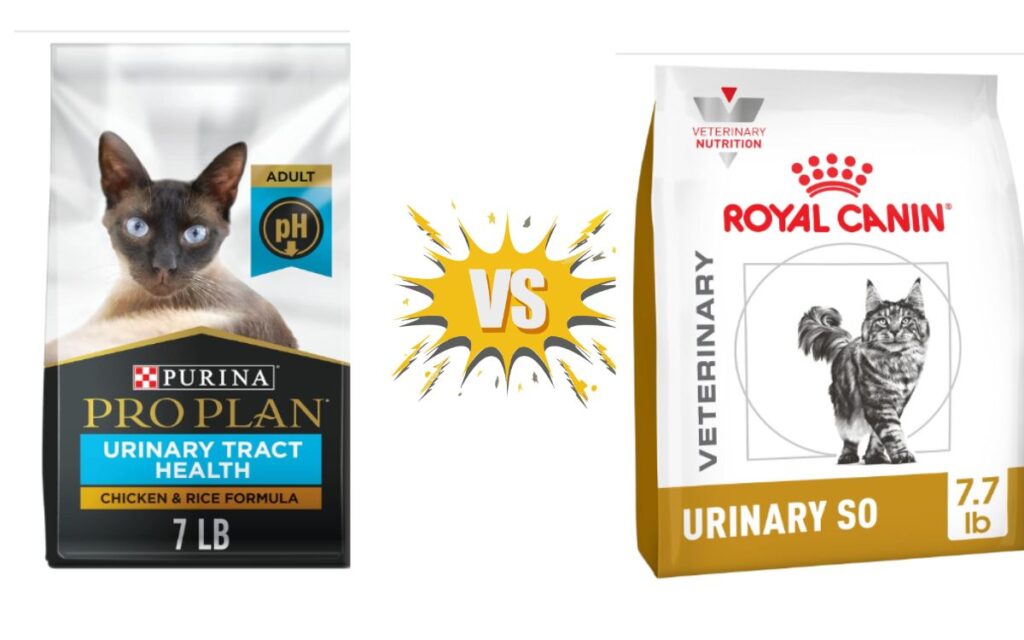
Let us look at the basic numbers for these two wet foods. These specs show how each wet can delivers protein and moisture to your cat daily.
| Feature | Purina Pro Plan Urinary | Royal Canin Urinary SO |
|---|---|---|
| Price | Around $1.80 per can | Around $3.50 per can |
| Protein % | 10.0% | 7.5% |
| Moisture % | 78.0% | 81.0% |
| Calorie Density (kcal/can) | 95 kcal/can (3 oz) | 124 kcal/can (5.1 oz) |
| Can / Pouch Size | 3 oz can | 5.1 oz can |
| Texture Style | Gravy with shreds | Morsels in gravy |
| AAFCO Statement | Adult Maintenance | Adult Maintenance |
| Guarantee | Urinary tract health | Crystal prevention |
These basic values reveal how much water your cat gets with each meal. Now, let us check the mineral targets that help prevent crystals.
| Feature | Purina Pro Plan Urinary | Royal Canin Urinary SO |
|---|---|---|
| Target Urinary pH | 6.0 to 6.5 | 6.0 to 6.3 |
| Dietary Sodium % | Moderate | High (to promote drinking) |
| Prescription Required | No | Yes |
The key difference is that Royal Canin requires a prescription from your vet. Purina is available over the counter for proactive urinary tract care.
Unboxing and First Impressions
I opened the Purina Pro Plan 3-ounce can first. The smell of gravy and meat was strong but not bad. The pop-top lid was easy to pull, and the gravy did not splatter on my counter. My cat ran to the kitchen right away and licked his lips.
The Royal Canin SO 5.1-ounce can felt much heavier. The pull-tab was stiff, and a bit of gravy splattered on my clean floor when it popped open. The morsels inside looked very uniform, floating in a thick, pale sauce that had a mild, salty scent.
Ingredient Quality and Nutrition
Let us dive into what actually goes into these cans. Both brands use science to target urinary health, but their ingredient lists are quite different.
First Five Ingredients
Purina starts with real meat, poultry by-products, and wheat gluten. Royal Canin begins with water, pork by-products, pork liver, chicken by-products, and chicken liver. Purina puts whole animal protein higher on the list. Royal Canin relies heavily on organ meats and water for its base.
Protein Source Quality
Purina uses real meat and poultry to keep the protein content high. Royal Canin uses highly digestible pork and chicken organs. Both sources offer great amino acids. However, Purina feels closer to a natural diet for a carnivore.
Grain-Free or Grain-Inclusive
Both of these wet foods are grain-inclusive formulas. They use wheat gluten and corn starch to thicken the gravy and bind the meat chunks. If your cat has a grain allergy, you will need to look elsewhere.
Additive and Preservative Profile
These brands use safe, standard additives to keep the food fresh. You will find added vitamins, taurine, and minerals like zinc and iron. There are no harsh artificial preservatives in either can, which makes me feel safe.
AAFCO Life Stage Suitability
Purina is formulated for adult maintenance. Royal Canin is also for adult cats but specifically for urinary therapy under vet care. Neither food is suitable for growing kittens.
Palatability — Will Your Cat Actually Eat It?
Cats are notoriously picky when they do not feel well. I wanted to see if my cat would actually finish his bowl of each brand.
When I served Purina, my cat ate the gravy shreds instantly. The rich meat smell kept him interested, and he did not leave a single bite. After three weeks, he still ran to the bowl every time he heard the can open.
Royal Canin had a different result. He licked only the gravy and left the chunks to dry out. The pâté texture version worked better, but the morsels in gravy often got wasted. I had to mash the chunks with a fork to get him to eat them.
Ingredient Quality and Digestibility
Digestibility is key when your cat eats the same food daily. Here is what I noticed in the litter box and on his coat.
My cat’s litter box output was very stable on both diets. His stools were firm and did not smell extra bad. I noticed his coat health improved, showing less dry dander after a month. His energy level stayed high, and he did not throw up any hairballs while eating these wet foods.
Moisture and Hydration Impact
Urinary health is all about water. These wet foods must provide high moisture content to keep the bladder flushed.
Royal Canin has a higher moisture content at 81%, which is great for low water drinkers. Purina sits at 78% moisture, which still helps a lot. Feeding these wet options made my cat pee more often, which is exactly what we wanted to see.
Design and Packaging Quality
Good cans make mealtime much easier. Let us compare how these containers hold up in the kitchen.
| Feature | Purina Pro Plan Urinary | Royal Canin Urinary SO |
|---|---|---|
| Material | Aluminum | Steel |
| Lid or Ring Pull | Easy-pull metal ring | Stiff metal pull-ring |
| Label Clarity | Excellent, clear warnings | Medical layout, clear text |
| Smell Containment | Great when sealed | Smelly once open in fridge |
| Storage Footprint | Small 3 oz cans stack easy | Bulkier 5.1 oz cans |
| Overall Feel | Light and modern | Sturdy and clinical |
Purina’s smaller cans are much easier to stack in the pantry. The Royal Canin cans feel heavy and require more force to open without spilling gravy on your fingers.
Smell — For You and Your Cat
The smell of wet cat food can quickly fill a small kitchen. Purina has a very strong, meaty aroma that my cat loves. It smells like real poultry gravy, but the scent goes away quickly once the bowl is washed. I did not mind opening it in my small apartment at all.
Royal Canin has a more clinical, salty smell. Once opened, leftovers smelling strongly in the fridge by day two became a real issue. I had to use a tight silicone lid to stop my whole fridge from smelling like pork liver. My cat seemed to like the smell, but it was less pleasant for me.
Serving and Portion Control
Managing daily portions is vital to keep your cat at a healthy weight. Here is how easy it is to serve these foods.
| Feature | Purina Pro Plan Urinary | Royal Canin Urinary SO |
|---|---|---|
| Serving Size Fit | Perfect for one meal | Often too large for one meal |
| Leftover Storage | Rarely any left over | Needs refrigeration daily |
| Feeding Guide Clarity | Simple weight-based guide | Detailed vet-prescribed guide |
| Multi-Cat Suitability | Easy to split | Harder due to high cost |
| Bowl Mess Level | Low, neat lick | High, gravy splatters |
| Meal Prep Time | Under 30 seconds | 1 minute (due to mashing) |
The 3-ounce Purina can is the perfect size for a single serving. With Royal Canin’s 5.1-ounce can, I always had to store leftovers, which ended up drying to a hard crust within 20 minutes if left in the bowl later.
Ease of Use and Daily Routine
Your daily feeding routine should be smooth and mess-free. Let us look at how these foods perform during daily cleanup.
| Task | Purina Pro Plan Urinary | Royal Canin Urinary SO |
|---|---|---|
| Bowl Cleanup | Easy, rinse with warm water | Sticky residue needs scrubbing |
| Smell on Hands After | None, clean pull-tab | Slight liver smell occasionally |
| Storage Convenience | Takes very little cabinet space | Takes more space plus fridge space |
| Travel or Boarding Use | Easy to pack and go | Needs prescription paperwork |
| Speed of Serving | Very fast | Medium (scooping out leftovers) |
| Waste Per Serving | Zero waste | Moderate (dried out leftovers) |
Purina wins the daily routine battle easily. It is fast to serve, leaves no waste, and the bowl rinses clean in seconds without sticky residue.
Cat Health Impact Over Time
After feeding both foods, my cat’s urinary health stayed excellent. He had no straining in the litter box, and his urine output remained high. His coat health was shiny, and his energy level stayed playful and steady. He did not gain any extra weight on either diet.
I noticed that his picky cat appeal was much higher with Purina. He looked forward to meals more, which reduced my stress. For long-term feeding, I prefer Purina because it is easier to keep him eating it without food fatigue.
Price and Value for Money
Cost is a huge factor when dealing with long-term urinary issues. These foods have a very wide price gap.
Purina Pro Plan is much cheaper and sold at most pet stores without a prescription. Royal Canin SO is a premium veterinary diet that requires a doctor’s script and costs almost double per ounce. If your cat has severe, recurring stones, the high cost of Royal Canin is justified. For general urinary maintenance, Purina offers incredible value and saves you a lot of money every month.
How It Compares to Similar Products
Let us see how these two options stack up against other popular urinary wet foods on the market.
Hill’s Prescription Diet c/d Multicare Wet Cat Food
Hill’s c/d is the main rival to Royal Canin SO in vet clinics.
It offers similar clinical bladder protection but has a very strong, distinct smell. Some cats refuse the thick stew texture, making Purina a more appealing choice for picky eaters.
Iams ProActive Health Urinary Tract Health Wet Cat Food
Iams is a budget-friendly retail alternative to Purina Pro Plan.
It is cheap and easy to find, but it uses more artificial additives and fillers. Purina offers better protein quality and more reliable litter box output for a slight price step up.
Who Should Buy Which?
- Buy Purina Pro Plan Urinary if: You want an affordable, over-the-counter wet food that your picky cat will love to eat without needing a vet prescription.
- Buy Royal Canin SO if: Your vet specifically prescribed it to dissolve active struvite crystals and your budget allows for a premium medical diet.
- Consider Neither If: Your cat requires a strictly grain-free wet diet or has severe allergies to pork and poultry by-products.
Long-Term Feeding Considerations
Feeding a urinary diet means sticking with it for years to prevent relapse. Purina has shown great ingredient quality consistency across different batches, and the cans never arrive dented. The cost per year is much lower, which helps you stay consistent without stressing your budget.
Royal Canin is great for clinical safety, but the high annual cost can be tough to sustain. Both foods meet AAFCO standards for adult maintenance, keeping your cat’s coat health and weight management stable over their life stages.
Calorie Density and Weight Management: Purina Pro Plan Urinary vs Royal Canin SO cat food
Managing your cat’s weight is vital when feeding a therapeutic diet. Purina Pro Plan Urinary vs Royal Canin SO cat food both offer controlled calorie density, but their serving sizes differ. Purina’s 3-ounce can has around 95 calories, making portion control very easy for scheduled feeding. Royal Canin’s larger can has about 124 calories, which can lead to overfeeding if you do not measure carefully.
For multi-cat households, Purina is much easier to manage because you can open fresh cans for each cat. Royal Canin requires you to store half-cans, which can dry out and go to waste. Scheduled feeding with Purina helps keep overweight cats fit while ensuring they get the bladder protection they need.
Final Verdict
Both of these wet foods successfully support your cat’s bladder health. However, Purina Pro Plan is the overall practical winner for most households because of its great value, high palatability, and convenience.
If your vet insists on a prescription formula for severe stone issues, stick with Royal Canin SO. For everyday proactive care that keeps your cat happy and your budget safe, Purina is the smart, stress-free choice.