Acana Vs Orijen Cat Food: The 2026 Winner
Choosing between Acana vs Orijen cat food is tough for any pet parent. Both brands make bold claims about high-meat recipes. I wanted to see how they compared in a real home, so I bought both to test with my own cat.
My active four-year-old cat, Leo, ate each dry food for six weeks. Acana works best for owners who want premium nutrition on a budget. Orijen is ideal for those who want maximum meat content for their pets. This real-world test helped me see which bag is truly worth your money.
Side-by-Side Specs Comparison
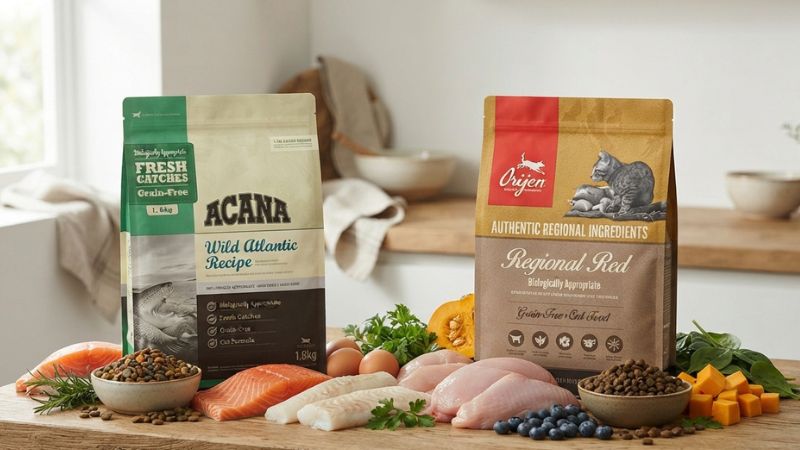
To start, we should look at the basic facts for both foods. This quick look shows the numbers and details for both bags. I weighed the portions and checked the labels carefully to make sure these numbers are accurate.
| Feature | Acana Wild Prairie | Orijen Original Cat |
|---|---|---|
| Price | Moderate | High |
| Protein % | 37% | 40% |
| Fat % | 18% | 20% |
| Crude Fiber % | 3% | 3% |
| Calorie Density (kcal/cup) | 412 kcal/cup | 506 kcal/cup |
| Bag Sizes Available | 4 lb, 12 lb | 4 lb, 12 lb |
| AAFCO Statement | All Life Stages | All Life Stages |
| Warranty / Guarantee | 100% Satisfaction | 100% Satisfaction |
These numbers show that both brands offer high levels of protein. Orijen has a slightly higher calorie density per cup. This means you will need to feed slightly less of it each day to keep your cat at a healthy weight.
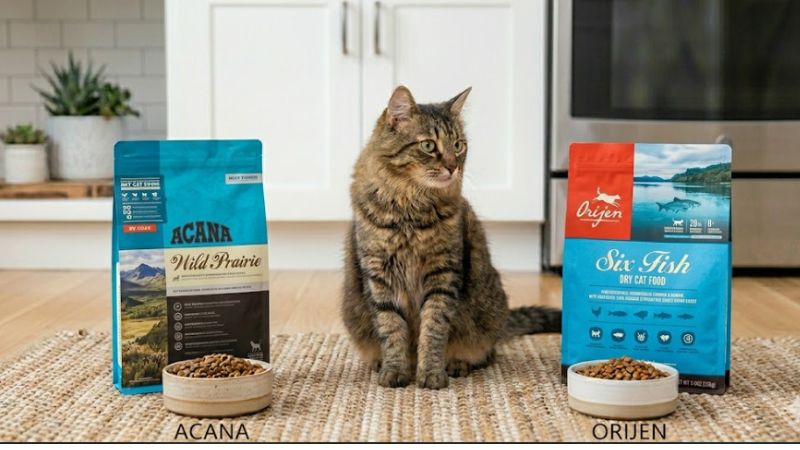
Unboxing and First Impressions
When the bags arrived, I noticed the packaging felt tough and thick. Both bags use strong plastic that does not rip easily. When I opened the Acana bag, a mild chicken smell came out, which did not bother me at all. The kibbles are small, flat, round discs that look easy for a cat to bite.
The Orijen bag had a much stronger fishy smell that hit me right away. It was not bad, but it was very noticeable in my small kitchen. The kibbles felt slightly oily to the touch compared to Acana. When I put the first bowl down, Leo ran over and sniffed both sides with great interest.
Ingredient Quality and Nutrition
I like to know exactly what goes into my cat’s bowl each day. Both of these brands focus on fresh animal ingredients instead of cheap plant fillers. Here is a direct look at the first five ingredients of each dry food.
| Ingredient Position | Acana Wild Prairie | Orijen Original Cat |
|---|---|---|
| First Ingredient | Fresh Chicken | Fresh Chicken |
| Second Ingredient | Raw Turkey | Fresh Turkey |
| Third Ingredient | Fresh Chicken Giblets | Fresh Whole Herring |
| Fourth Ingredient | Dehydrated Chicken | Dehydrated Chicken |
| Fifth Ingredient | Dehydrated Turkey | Dehydrated Turkey |
This table shows how both brands prioritize real meat. Now, let us dive into the details of their nutrition profiles.
First Five Ingredients
The first five ingredients in both foods are almost entirely fresh or raw meats. Acana uses a mix of chicken and turkey to build its protein base. Orijen adds fresh whole herring to its top ingredients, which explains the stronger fish smell. Both brands avoid using cheap corn, wheat, or soy fillers.
Protein Source Quality
Orijen gets its protein from a wider variety of animals, including poultry, fish, and nests of eggs. Acana keeps its protein sources slightly simpler but still uses high-quality whole prey meats. Both brands use organ meats like liver and heart, which provide natural vitamins and minerals.
Grain-Free or Grain-Inclusive
Both of these specific bags are grain-free options. They use whole peas, lentils, and chickpeas to help bind the kibble together. Leo had no trouble digesting these grain-free carbs, and they did not cause any soft stool issues during our weeks of testing.
Additive and Preservative Profile
These brands use natural mixed tocopherols, which are forms of vitamin E, to keep the kibble fresh. I did not find any artificial colors, artificial flavors, or chemical preservatives on either label. Synthetic additives are kept to a minimum because the whole prey ingredients carry so many natural nutrients.
AAFCO Life Stage Suitability
Both foods meet the AAFCO profiles for all life stages. This means you can feed them to growing kittens as well as older adult cats. The high protein and fat levels are especially great for active young cats who burn lots of energy.
Palatability — Will Your Cat Actually Eat It?
Leo can be very picky when I change his food. On day one with Acana, he walked up, sniffed the bowl, and walked away. He came back an hour later and ate the whole portion with some loud, happy crunches. The kibble crunch seemed very satisfying to him.
Orijen was an instant hit. The strong, oily smell of the kibble seemed to call to him from across the room. He ate his entire first serving of Orijen without stopping once. Over the next six weeks, he never lost interest in the Orijen bowl, while he occasionally left a few kibbles of Acana behind.
Ingredient Quality and Digestibility
After three weeks on Acana, I noticed Leo’s litter box output was very consistent. His stools were firm, dark, and did not have an overpowering smell. His coat felt soft, and he did not throw up any hairballs during this time. His energy level remained normal and playful.
When we switched to Orijen, his coat became even shinier and smoother within a month. However, the higher richness of Orijen caused a slight change in the litter box. His stools became slightly softer for the first week of the transition, and the litter box odor was stronger. If your cat has a very sensitive stomach, the lower fat level in Acana might be safer.
Freshness and Bag Life (Dry Food Only)
Dry kibble can go stale quickly if the bag does not seal well. Acana uses a classic press-to-close zipper that requires some effort to align perfectly. If you do not press it all the way, air gets in, and the kibble loses its crunch. I had to use a bag clip to keep it tight.
Orijen features a Velcro-like hook-and-loop strip that closes easily on the first try. It keeps the strong fishy smell inside the bag and keeps the kibble fresh for weeks. After four weeks, the bottom of the Acana bag had some fine brown dust. The Orijen bag stayed clean and dust-free all the way to the bottom.
Design and Packaging Quality
The bag design is important when you handle the food twice a day. Both bags look nice on the shelf, but they function a bit differently in daily use. Here is how their physical packaging compares.
| Feature | Acana Wild Prairie | Orijen Original Cat |
|---|---|---|
| Material | Thick Matte Plastic | Glossy Reinforced Plastic |
| Reseal Mechanism | Standard Pinch Zipper | Hook-and-Loop Velcro |
| Label Clarity | Clear and Easy to Read | Very Detailed but Small Text |
| Smell Containment | Good | Excellent |
| Storage Footprint | Tall and Narrow | Wide and Flat |
| Overall Feel | Premium | Ultra-Premium |
The Orijen bag is much easier to open and close every morning. The Velcro seal does not get clogged with kibble crumbs like the Acana ziplock does. Orijen also keeps the strong aroma of the food locked away so your pantry does not smell like fish.
Serving and Portion Control
Getting the portion sizes right is key to keeping your cat healthy. Since Orijen is more calorie-dense, you must be careful not to overfeed. This table shows how the serving requirements compare for both options.
| Feature | Acana Wild Prairie | Orijen Original Cat |
|---|---|---|
| Scoop Included | No | No |
| Feeding Guide Clarity | Clear | Detailed |
| Free-Feed Friendly | Yes | No (Too Rich) |
| Calorie Per Cup | 412 kcal | 506 kcal |
| Multi-Cat Suitability | High | Moderate |
| Meal Prep Time | Under 1 Minute | Under 1 Minute |
Because Orijen has more calories per cup, I had to use a smaller scoop. If you leave a full bowl of Orijen out for free-feeding, your cat might gain weight quickly. Acana is much more forgiving if you prefer to let your cat graze throughout the day.
Ease of Use and Daily Routine
A good dry food should fit easily into your morning and evening schedule. I tracked how much time and effort went into feeding Leo both brands. This table covers the daily tasks and how each food performed.
| Task | Acana Wild Prairie | Orijen Original Cat |
|---|---|---|
| Bowl Cleanup | Easy (No Residue) | Easy (Slight Oil Residue) |
| Smell on Hands After | None | Mild Fish Smell |
| Storage Convenience | Easy to fit in cupboard | Needs a wider shelf |
| Travel or Boarding Use | Excellent | Excellent |
| Speed of Serving | Fast | Fast |
| Waste Per Serving | None | None |
Acana is slightly cleaner to handle because it is less oily. I did not need to wash my hands after scooping Acana, but I felt the need to after touching Orijen. However, both foods are much faster and cleaner to serve than wet or raw options.
Cat Health Impact Over Time
During our six weeks on Acana, Leo kept a steady weight of twelve pounds. He had plenty of energy for his evening zoomies, and his eyes looked bright and clear. His coat was healthy, though it did not change much from his baseline. It is a solid, reliable food that keeps a cat in good shape.
Orijen showed its power in Leo’s fur. Within four weeks, his black patches looked darker and had a beautiful glossy shine. He also seemed to have a bit more stamina during playtime. The high protein and fat levels in Orijen really show up in the cat’s physical appearance and energy.
Price and Value for Money
There is a noticeable price gap when you look at Acana vs Orijen cat food on the shelf. Acana is cheaper per pound, making it a great middle-ground option. You can buy both brands at local pet specialty stores or online retailers.
For a single-cat household, a twelve-pound bag of Acana lasts about three months and fits most budgets easily. Orijen costs more upfront, but because it is nutrient-dense, you feed slightly less. The price gap is justified if you want the highest meat content, but Acana offers better overall value for the average owner.
How It Compares to Similar Products
It helps to see how these two brands stack up against other high-end options on the market. Let us look at how they compare to some other popular premium dry foods.
Wellness CORE Grain-Free
Wellness CORE is another high-protein option that cats enjoy. It has a similar price to Acana but uses more potato fillers to bind the kibble. Orijen has higher meat quality and more fresh animal sources than Wellness CORE.
Blue Buffalo Wilderness
Blue Wilderness is very easy to find in local supermarkets. However, it relies more on plant proteins like pea protein to boost its numbers. Both Acana and Orijen offer far better meat sourcing and fewer synthetic additives.
Who Should Buy Which?
Every cat and every household budget is a little bit different. Here is my simple guide to help you decide which bag to buy.
- Buy Acana if your cat has a sensitive stomach and you want to save money. The slightly lower fat level is easier on digestion, and the price is much friendlier for tight budgets.
- Buy Orijen if you have an active cat and want the absolute best coat shine. The rich, fresh fish and meat ingredients provide top-tier nutrition that shows in your cat’s energy and fur.
- Consider Neither If your cat needs high moisture for urinary health. Both of these are dry kibbles and will not provide the hydration that wet food offers.
Long-Term Feeding Considerations
If you plan to feed either food for years, consistency is very important. I found that both brands maintain very high quality from batch to batch. The bags did not have crushed kibble at the bottom, and the smell was the same in every new bag.
Keep in mind that Orijen’s high calorie density requires strict portion control over the years. An older, less active cat might easily become overweight on Orijen. Acana is a safer long-term choice for older cats who spend most of their day sleeping on the couch.
Calorie Density and Weight Management: Acana vs Orijen Cat Food
Managing your cat’s weight is simple if you pay attention to the calorie counts. The focus keyword, acana vs orijen cat food, highlights a major difference in energy density between these two choices.
Acana Wild Prairie offers a moderate 412 calories per cup, making it easy to manage portions. Orijen Original packs a heavy 506 calories per cup. If you use automatic feeders, you must calibrate them carefully so your cat does not get too many calories in a single day.
Final Verdict
Both of these dry foods are excellent choices that beat most grocery store brands. They focus on real meat, avoid cheap fillers, and keep cats interested at mealtime.
For my home, Acana is the practical winner because it offers great nutrition without the premium price tag. However, if budget is not an issue and you want your cat to have a stunning, glossy coat, Orijen is well worth the extra money.